3 days
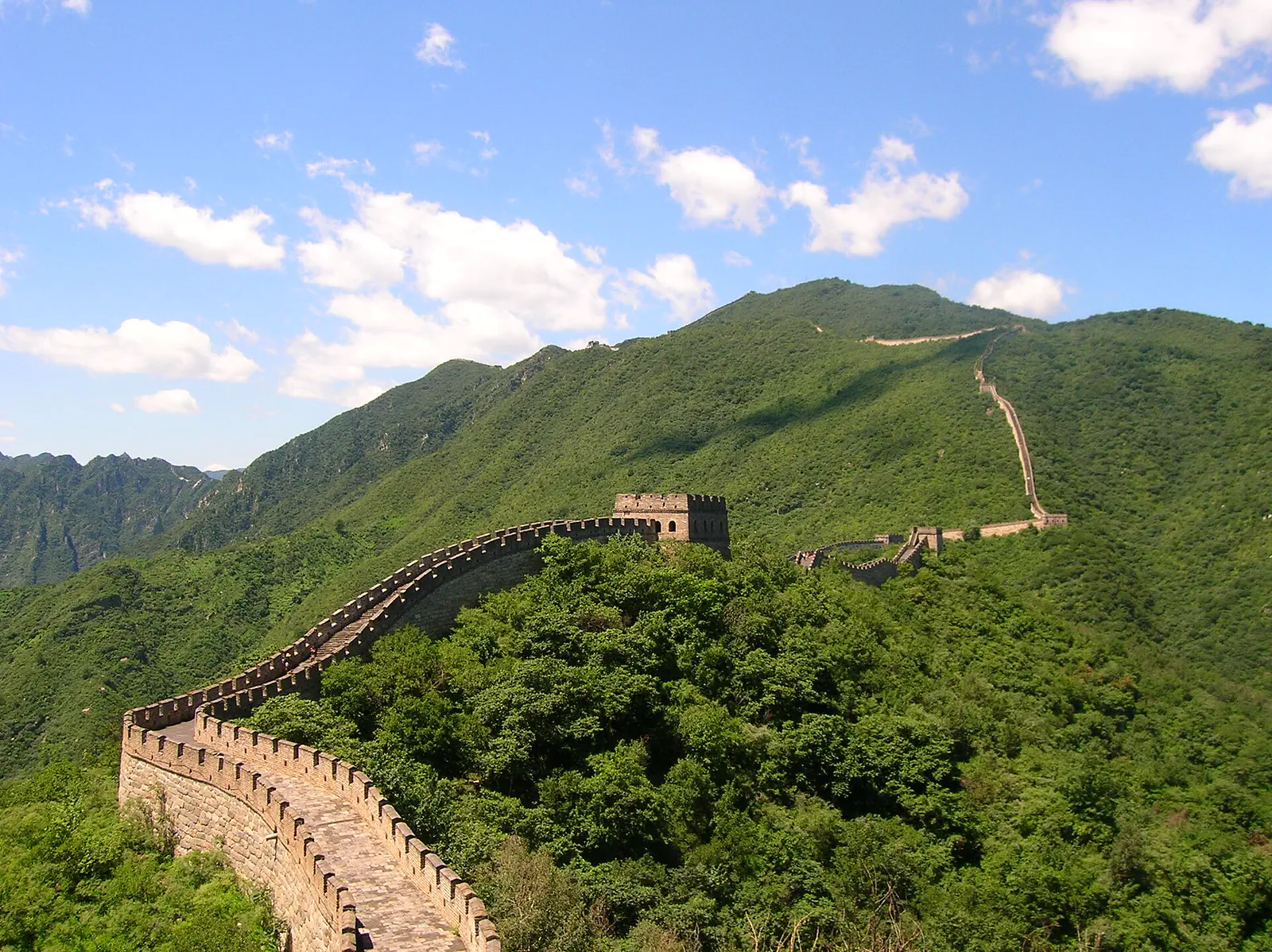
Day 1: Forbidden City + Tiananmen + Jingshan sunset. Day 2: Mutianyu Great Wall (full day). Day 3: Temple of Heaven morning, hutong walk via Houhai, Peking duck dinner.
Municipality · North China
北京市 · Běijīng Shì — capital Beijing, beijing (imperial-style roast duck, jiaozi, zhajiangmian).
History & character
Beijing has been a national capital, in one form or another, for most of the past eight hundred years. The Liao made it a secondary capital in the 10th century. The Jin dynasty raised the city as Zhongdu. Kublai Khan rebuilt it as Dadu, the seat of the Yuan empire. The Ming relocated their capital here in 1421 and laid out the axial plan that still defines the central districts today — the Forbidden City on the north–south spine, the Temple of Heaven to the south, the Drum and Bell Towers to the north.
The Qing inherited that grid and expanded it. The 19th and 20th centuries layered on Western legation quarters, Soviet-era ministries, the wide processional axis through Tiananmen, and finally the 21st-century ring roads and the Olympic Park. The CBD towers around Guomao sit a brisk walk from hutong courtyards that predate the United States.
The character that emerges from this layering is bureaucratic, cultural, and stubbornly local. Beijing is where decisions are made and where elite cultural institutions have settled — universities, opera companies, museums, the major think tanks. It is also a city of strong neighbourhood identities: hutong life around the Drum Tower, university culture in Wudaokou, embassy quiet in Sanlitun's quieter corners, art studios in 798. The food is heavier and saltier than in the south, the people more direct, the winters genuinely cold.
When to visit
Late September to early November is reliable — clear skies, cool air, autumn light on the Western Hills. Mid-April to mid-May is the spring window before summer humidity builds. Avoid the May Day and National Day public-holiday weeks for major monuments.
How to get there
Two international airports: Beijing Capital (PEK) and Beijing Daxing (PKX). High-speed rail from every major Chinese city — Shanghai 4h30m, Guangzhou 8h, Xi'an 4h30m. Long-distance trains from Mongolia (Ulaanbaatar) and Russia (Moscow via the Trans-Mongolian).
Key cities
All cities →More attractions in Beijing
Sample itineraries
Day 1: Forbidden City + Tiananmen + Jingshan sunset. Day 2: Mutianyu Great Wall (full day). Day 3: Temple of Heaven morning, hutong walk via Houhai, Peking duck dinner.
Add: Summer Palace + 798 art district (Day 4); Ming Tombs + Shichahai (Day 5); Lama Temple + Confucius Temple + Wangfujing (Day 6); day trip to Chengde or Tianjin (Day 7).
Dishes of Beijing
Beijing-Mongolian style hot pot — clear broth, thinly-sliced lamb, sesame-paste dipping sauce.
Wheat-wrapper dumplings filled with pork-and-cabbage, lamb-and-leek, or vegetable, boiled and served with vinegar.
Small thumbnail-pinched Shanxi pasta, shaped like cat's ears. Stir-fried with vegetables or in soup.
Tianjin's signature steamed pork buns. The original house, founded 1858, is still operating.
Boiled mutton eaten with the hands. The social centrepiece of an Inner Mongolian steppe meal.
Northern Chinese breakfast crepe: thin wheat-and-mung-bean batter, egg, scallion, hoisin, chilli, optional crispy cracker.
Itineraries touching Beijing
3d · One day on Beijing's sites, a day-trip to Tianjin's Italian quarter and food street, return same evening.
3d · Three full days in Beijing covering the Forbidden City, Great Wall at Mutianyu, the Temple of Heaven and the hutong lanes — the absolute core of the capital for visitors with limited time.
3d · Three days in Beijing covering the Forbidden City, Great Wall at Mutianyu and the Temple of Heaven — the irreducible core of the capital, managed at a pace that avoids pure exhaustion.
4d · Forbidden City, Wall, Temple of Heaven, hutongs, museums.
Other North China regions
Spotted something out of date? Submit a correction.
Research
Cross-checked against primary sources
Verified
Address, hours, fees confirmed at the date shown
Updated
Re-verified periodically; corrections welcome