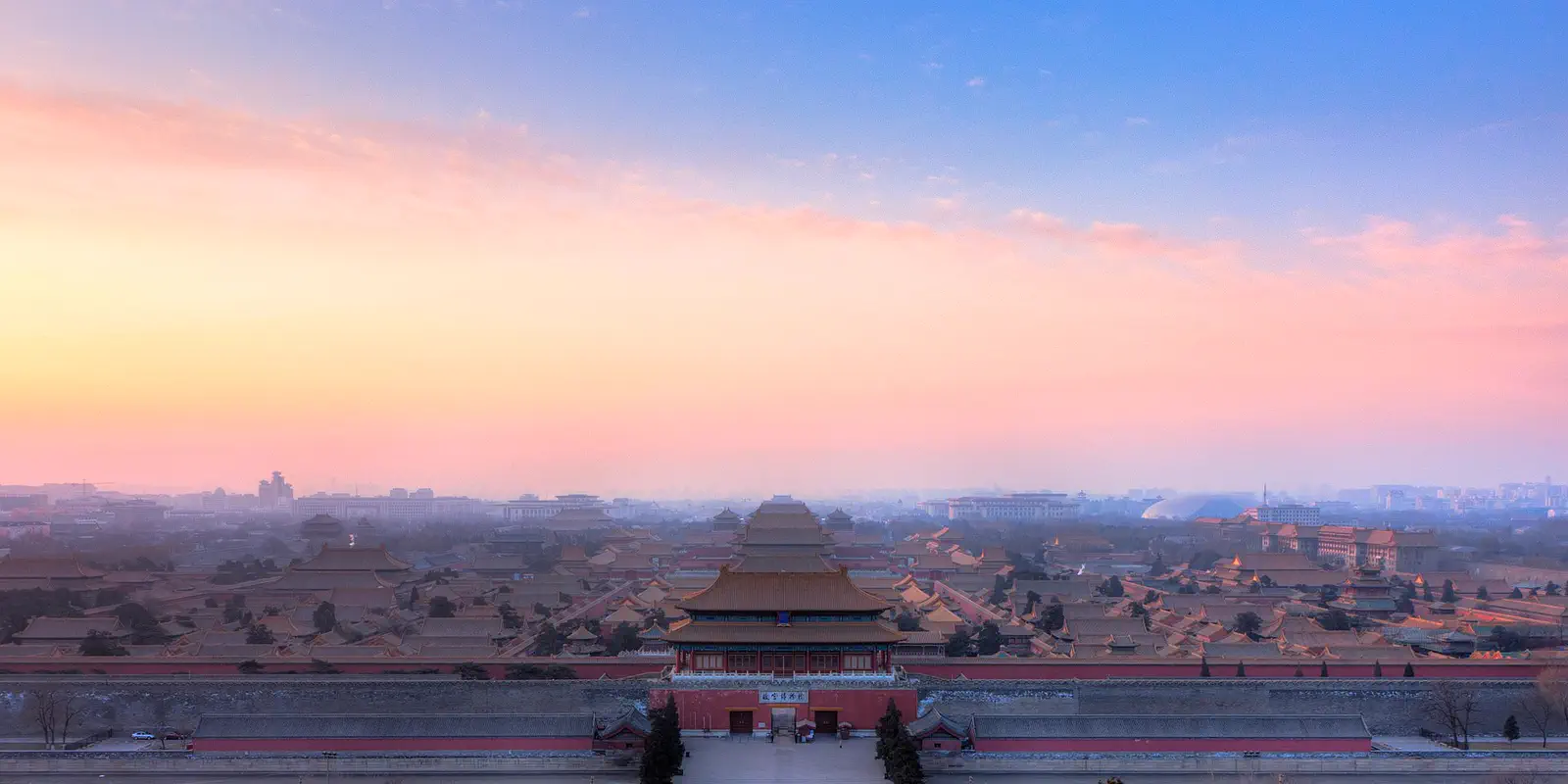
CITY · BEIJING MUNICIPALITY
Beijing
北京 · Běijīng
Overview
China's capital and political centre — imperial palaces, the Great Wall on its doorstep, hutong neighbourhoods, world-class museums, and the most thoroughly walkable historic core in the country.
Beijing has been the capital of unified China, on and off, for around 800 years. Three imperial dynasties — Yuan, Ming and Qing — built the central palace complex, the temple districts and the lattice of grey-brick lanes (hutongs) that still defines the inner city. The result is a tourist circuit denser than any other Chinese city: in a week you can stand in the Forbidden City, walk a section of the Great Wall, see the Temple of Heaven, eat Peking duck where the recipe was codified, and ride a metro line that has carried more passengers than the entire London Underground.
The city is built on a rigid north-south axis. The Forbidden City sits dead centre. Tiananmen Square is immediately south. Beyond the second ring road the city becomes the modernist megacity that hosts the central government, the largest universities in the country, and the embassy district. The third, fourth, fifth and sixth ring roads spread out concentrically through suburbs, tech parks and the airport hinterland.
The climate divides the year sharply. Winters are dry, blue-skied and properly cold (below freezing through January and February). Summers are hot, humid and increasingly broken by short violent thunderstorms. Spring is short but pretty when the cherry blossom hits the parks; autumn is the consensus best season — clear, crisp, dry, and the only time the Forbidden City photographs the way the postcards promise. Air quality has improved markedly since the 2010s but still varies; an AQI app is worth installing.
Language is Mandarin with the characteristic Beijing erhua (the rhotic 'r' suffix on many words). English signage is reliable in the metro, at major sights, in international hotels and in the embassy district. Outside those zones, Mandarin or pictures of where you want to go are the practical tools. Translation apps are essential.
Cultural & access notes
Photography inside active worship halls at the Lama Temple is restricted — check signs. The Forbidden City requires advance online booking (passport-linked) and entry only through Meridian Gate. Tiananmen Square has airport-style security at every entrance. The Mausoleum of Mao Zedong is closed Mondays; bags must be checked at a separate facility before entering. Bring cash (small notes) for temple donation boxes and small market stalls.
What to see
- Forbidden City (Palace Museum) — full day; book online
- Tiananmen Square and the National Museum
- Temple of Heaven Park — early morning to see locals doing tai chi, opera and ballroom dancing
- Summer Palace — Empress Dowager Cixi's lakeside retreat, half-day minimum
- Great Wall: Mutianyu (most accessible from Beijing), Jinshanling (better for hikers), Jiankou (unrestored, for the experienced)
- Hutong neighbourhoods — Nanluoguxiang, Wudaoying, Houhai lakes, Yangmeizhu Xiejie
- 798 Art District — converted military electronics factory, contemporary galleries
- Lama Temple (Yonghe Gong) — active Tibetan Buddhist monastery in the city
- Old Summer Palace (Yuanmingyuan) — the burnt-out ruin
- Ming Tombs and Sacred Way — half-day combined with a Wall section
What to eat
- Peking duck (Quanjude, Bianyifang and Da Dong are the canonical houses; many cheaper neighbourhood places do it well)
- Zhajiangmian (炸酱面) — wheat noodles with fermented soybean and pork sauce
- Jianbing — savoury crepe, the standard Beijing breakfast
- Lamb hot pot, especially in winter — Donglaishun is the institution
- Lu da gun, ai wo wo, and other steamed glutinous-rice old-Beijing snacks (try Niu Jie Snack Street)
- Imperial banquet cuisine at restaurants in the Houhai or Liulichang area
Getting there
Beijing has two major airports. Beijing Capital (PEK) handles most international and domestic flights, with Terminals 2 and 3; the Airport Express train runs from T3 to Sanyuanqiao on Line 10 (¥25, 25 minutes). Beijing Daxing (PKX), opened 2019, is the southern airport — much newer, much quieter — connected by a dedicated express line to central Beijing in 19 minutes. By rail, Beijing is the northern hub of the high-speed network: Shanghai 4h 28m, Xi'an 4h 30m, Guangzhou 8h, Hong Kong West Kowloon ~9h. Long-distance buses are not recommended over rail.
Getting around
The metro is the fastest way to move. 27+ lines, English signage and announcements, ¥3–¥9 per ride paid by Alipay or WeChat Pay QR. Avoid the morning (8–9am) and evening (6–7pm) peaks if you can. Taxis are easy to flag and metered (¥13 starting fare). Didi is the dominant ride-hailing app with an English version. The hutong areas around Houhai and Nanluoguxiang are walkable; renting a bike-share (Meituan Bike, Hello) is the local way to do them. Bus is comprehensive but harder for non-Mandarin speakers.
Where to stay
First-time visitors typically base in Wangfujing or Qianmen — central, walkable to the Forbidden City and Tiananmen, full of restaurants. The Houhai lakes area gives you hutong courtyard hotels with more atmosphere. Sanlitun is the international/embassy district with bars, malls, contemporary restaurants. Gulou (Drum Tower) area is younger, with independent cafes and music venues. Avoid hotels in the financial district unless you have business there — quiet at night and far from the sights.
We list neighbourhoods, not specific hotels — we don't endorse hotels.
When to go
September to mid-November is the consensus best window — clear skies, cool dry air, autumn colour in the parks, the Forbidden City in its best light. April and early May are the next best, with cherry blossom but more crowds at the Wall and Forbidden City. Avoid the Spring Festival week (around late January or February) and the Golden Week (1–7 October) — domestic tourism volumes turn the major sights into queues. Summer (June–August) is hot, humid and prone to short thunderstorms but works for late-evening hutong wandering. Winter is cold and dry; the Wall in snow is striking but layers and proper boots are non-negotiable.
Budget guide (CNY per day)
| Backpacker | ¥350 |
| Mid-range | ¥750 |
| Comfortable | ¥1800 |
Safety notes
Beijing is safe for tourists by international standards. The classic risks are the airport-taxi scam (use the official taxi rank, not solicitors at arrivals), the tea-house scam in Wangfujing (a friendly stranger invites you to a 'tea ceremony' that ends with a four-digit bill), and the art-student scam ('come to my graduation exhibition' = pressure to buy a painting). Pickpocketing on busy metro lines is the only real petty-crime concern. Air quality on bad days can be irritating to anyone with respiratory conditions; mask if AQI exceeds 150.
Nearby attractions
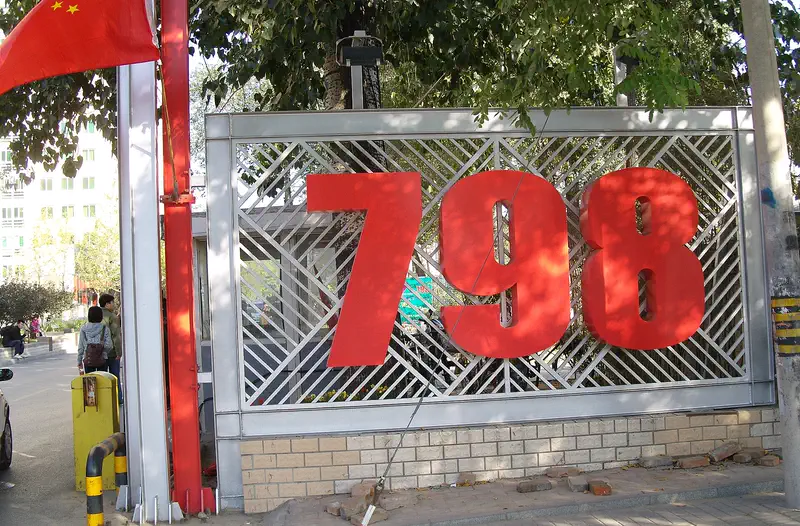
798 Art District 798艺术区
Converted East German-built electronics factory in northeast Beijing, now China's most established contemporary-art district.
China Visit Guide
Beihai Park
Beihai Park 北海公园
1,000-year-old imperial garden directly northwest of the Forbidden City. Centred on Beihai Lake with the White Pagoda on Jade Flower Island.
China Visit Guide
Capital Museum
Capital Museum 首都博物馆
Beijing's history museum — bronze, ceramics, paintings, and a strong narrative of the city's evolution from Yan kingdom through the present.
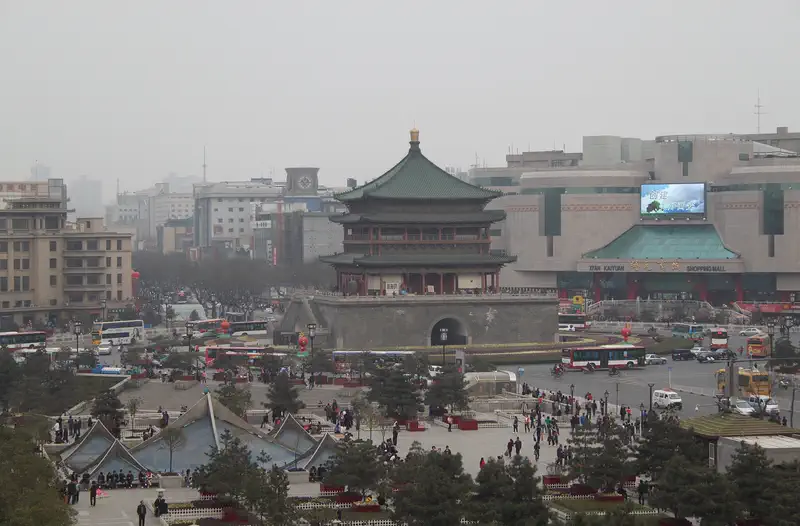
Drum Tower and Bell Tower 鼓楼钟楼
Yuan-dynasty drum and bell towers that kept official time for imperial Beijing. Climbable; daily drum performances.
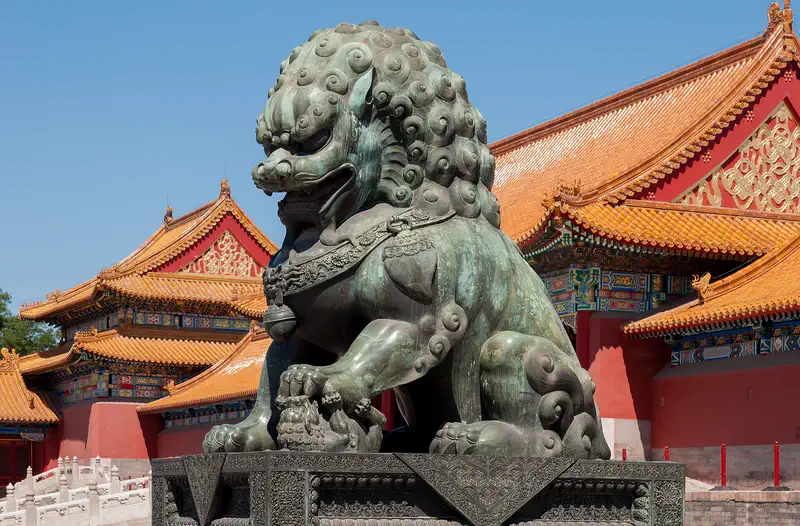
Forbidden City (Palace Museum) 故宫
The largest preserved imperial palace complex in the world, residence of 24 emperors of the Ming and Qing dynasties.
China Visit Guide
Fragrant Hills (Xiangshan)
Fragrant Hills (Xiangshan) 香山
Forested hills in the northwest suburbs. Famous for the maple-and-smoke-tree autumn leaves; cable car to the summit.
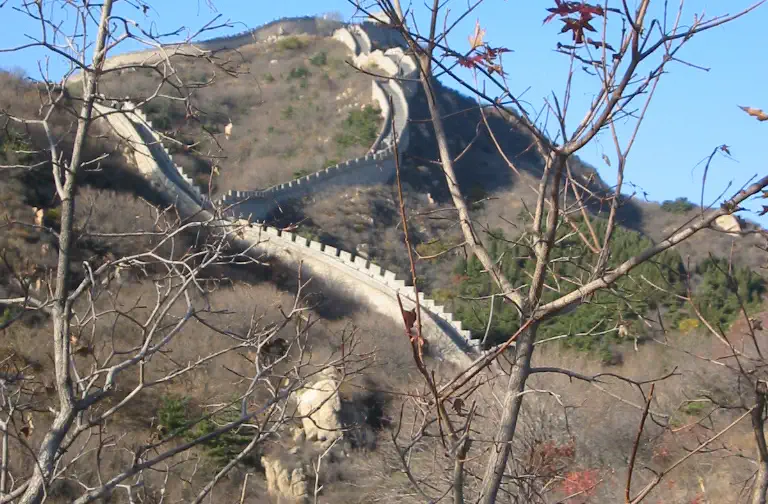
Great Wall — Badaling 八达岭长城
The closest and most-visited Great Wall section. Heavily restored, fully accessible, and packed with domestic tour groups. Useful if time is short.
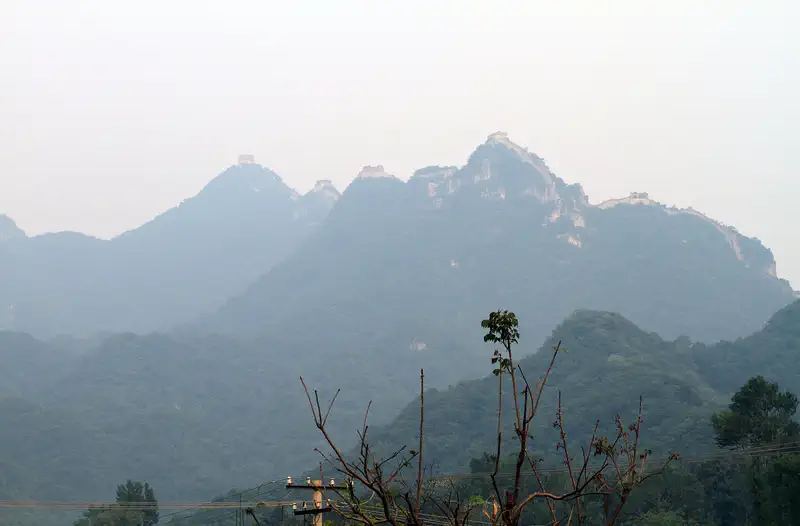
Great Wall — Jiankou 箭扣长城
Unrestored, partially collapsed Wall section in steep terrain. For experienced hikers only — the most photogenic 'wild Wall' segment near Beijing.
See all 26 Beijing attractions →
Day trips within 150 km
More on Beijing
Travelling with children?
Beijing has family-friendly attractions, accessible transport, and good medical facilities. Our guide covers what works and what to prepare for.
China with kids: family travel guide →Living here?
We have a dedicated expat guide covering cost of living, neighbourhoods, international schools, hospitals, and community life in Beijing.
Beijing expat living guide →Itineraries visiting Beijing
- Beijing–Tianjin long weekend in 3 days
3d · One day on Beijing's sites, a day-trip to Tianjin's Italian quarter and food street, return same evening.
- Beijing 3-day blitz — first-timer fast pass
3d · Three full days in Beijing covering the Forbidden City, Great Wall at Mutianyu, the Temple of Heaven and the hutong lanes — the absolute core of the capital for visitors with limited time.
- Beijing weekend — 3 days in the capital
3d · Three days in Beijing covering the Forbidden City, Great Wall at Mutianyu and the Temple of Heaven — the irreducible core of the capital, managed at a pace that avoids pure exhaustion.
- Beijing in 4 days
4d · Forbidden City, Wall, Temple of Heaven, hutongs, museums.
Food of Northern China
- Beijing Lamb Hot Pot涮羊肉
Beijing-Mongolian style hot pot — clear broth, thinly-sliced lamb, sesame-paste dipping sauce.
- Boiled Dumplings (Shuijiao)水饺
Wheat-wrapper dumplings filled with pork-and-cabbage, lamb-and-leek, or vegetable, boiled and served with vinegar.
- Cat's Ear Noodles猫耳朵
Small thumbnail-pinched Shanxi pasta, shaped like cat's ears. Stir-fried with vegetables or in soup.
- Goubuli Baozi狗不理包子
Tianjin's signature steamed pork buns. The original house, founded 1858, is still operating.
Beijing weather by month
| Month | Jan | Feb | Mar | Apr | May | Jun | Jul | Aug | Sep | Oct | Nov | Dec |
|---|---|---|---|---|---|---|---|---|---|---|---|---|
| High °C | 3 | 6 | 15 | 21 | 28 | 33 | 32 | 30 | 27 | 19 | 10 | 2 |
| Low °C | -7 | -5 | 1 | 8 | 14 | 20 | 22 | 21 | 17 | 8 | 0 | -7 |
| Rain mm | 2 | 9 | 12 | 17 | 25 | 65 | 224 | 147 | 71 | 22 | 21 | 5 |
| Rain days | 1 | 2 | 4 | 3 | 4 | 6 | 14 | 11 | 6 | 3 | 3 | 1 |
2019–2023 average via Open-Meteo ERA5 (ERA5 reanalysis). "Rain days" = days per month with ≥1 mm precipitation.
Frequently asked questions
- When is the best time to visit Beijing?
- The best months to visit Beijing are April, May, September, and October. September to mid-November is the consensus best window — clear skies, cool dry air, autumn colour in the parks, the Forbidden City in its best light. April and early May are the next best, with cherry blossom but more crowds at the Wall and Forbidden City.
- How many days do you need in Beijing?
- Plan 4 to 5 days for Beijing if you want to see the headline sights without rushing — Forbidden City (Palace Museum), Tiananmen Square and the National Museum, Temple of Heaven Park. Add an extra day for day trips from the city or for repeat visits to your favourite neighbourhood.
- Is Beijing safe for tourists?
- Beijing is safe for tourists by international standards. The classic risks are the airport-taxi scam (use the official taxi rank, not solicitors at arrivals), the tea-house scam in Wangfujing (a friendly stranger invites you to a 'tea ceremony' that ends with a four-digit bill), and the art-student scam ('come to my graduation exhibition' = pressure to buy a painting). Pickpocketing on busy metro lines is the only real petty-crime concern.
- How do you get around Beijing?
- The metro is the fastest way to move. 27+ lines, English signage and announcements, ¥3–¥9 per ride paid by Alipay or WeChat Pay QR. Avoid the morning (8–9am) and evening (6–7pm) peaks if you can.
- What's the daily budget for Beijing?
- Budget guide for Beijing: backpackers from around ¥350/day, mid-range travellers ¥750/day, comfortable trips from ¥1800/day. These ranges cover accommodation, food, local transport and one paid sight per day, and exclude flights to and from the city.
- Where should you stay in Beijing?
- First-time visitors typically base in Wangfujing or Qianmen — central, walkable to the Forbidden City and Tiananmen, full of restaurants. The Houhai lakes area gives you hutong courtyard hotels with more atmosphere. Sanlitun is the international/embassy district with bars, malls, contemporary restaurants.
Spotted something out of date? Submit a correction.
Research
Cross-checked against primary sources
Verified
Address, hours, fees confirmed at the date shown
Updated
Re-verified periodically; corrections welcome