3 days
Day 1: Hohhot — Inner Mongolia Museum, Dazhao Temple, Hui quarter food street. Day 2: Xilamuren grassland, yurt overnight. Day 3: Resonant Sand Bay (Kubuqi desert).
Autonomous region · North China
内蒙古自治区 · Nèiměnggǔ Zìzhìqū — capital Hohhot, mongolian (lamb hot pot, hand-grabbed mutton, milk tea, dairy).
History & character
Inner Mongolia stretches 2,400 kilometres along China's northern frontier — the Soviet (now Russian) and Mongolian borders. It is the third-largest provincial-level division in China by area, and one of the least densely populated. Ethnic Mongols constitute roughly 17 percent of the population; the majority are Han Chinese who have arrived in successive waves since the late Qing.
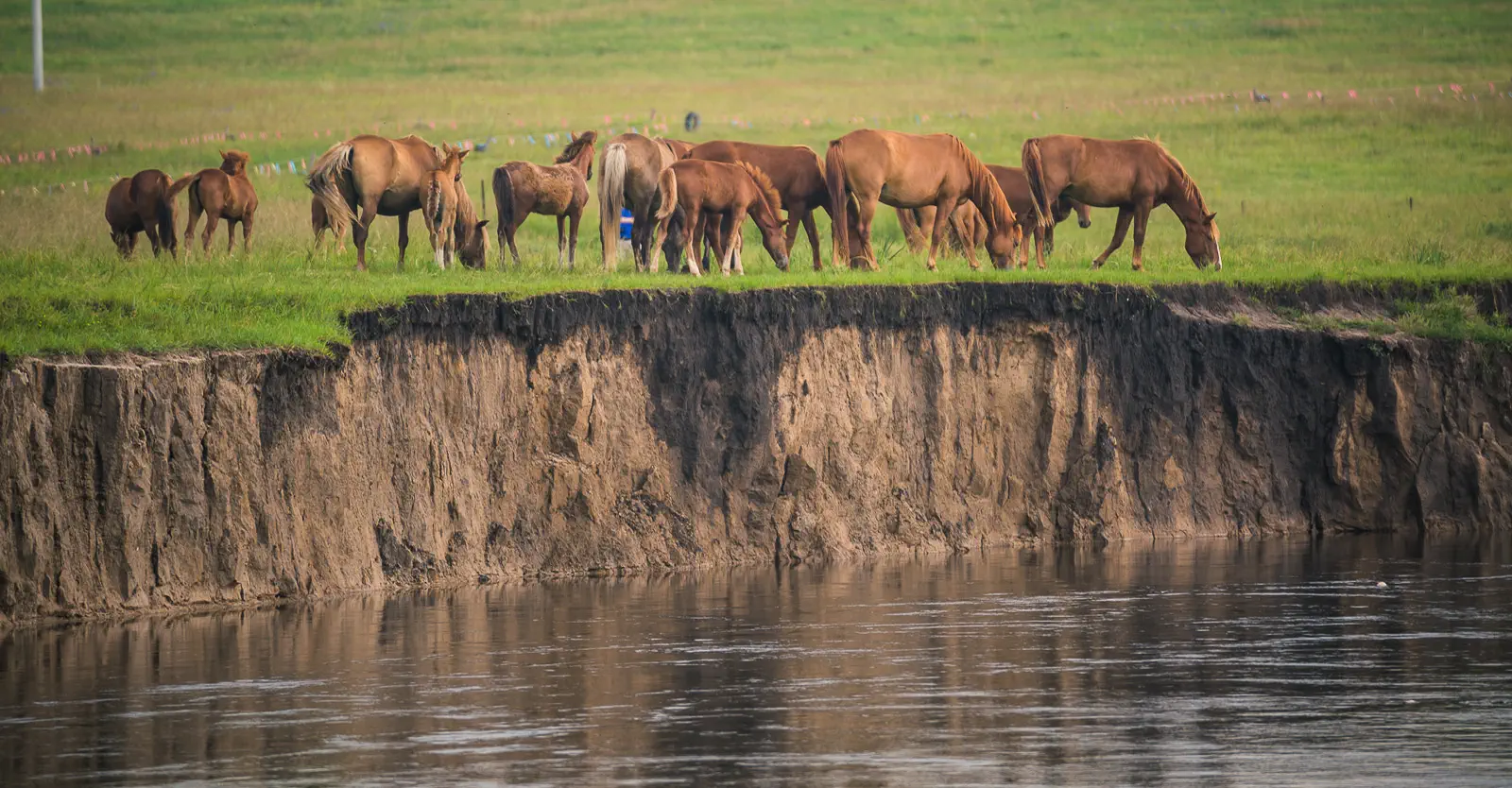
The grasslands of the central and eastern parts of the region — Xilingol, Hulunbuir — are what most Chinese visitors come to see. Yurts (Mongolian gers) and horseback riding, Naadam-festival wrestling and archery, fermented mare's milk and lamb cooked over open flame. The western desert regions — the Gobi, the Badain Jaran — are vast, lightly inhabited, and increasingly visited for sand-dune scenery and stargazing.
Major cities include Hohhot (the capital, with a strong Hui Muslim quarter and the Inner Mongolia Museum), Baotou (steel and rare-earth manufacturing), and Erdos (boom town from coal). The Naadam festival in late July or early August is the cultural high point.
When to visit
June–August for the grasslands (the only window when they are green and the weather is warm enough to camp). January–February for the ice-sculpture festival in Hulunbuir. Avoid spring — dust storms.
How to get there
Hohhot Baita Airport (HET); Baotou, Erdos, and Hailar all have airports. Train from Beijing to Hohhot 8–10h overnight or 2h30m by HSR.
Key cities
All cities →More cities in Inner Mongolia
More attractions in Inner Mongolia
Sample itineraries
Day 1: Hohhot — Inner Mongolia Museum, Dazhao Temple, Hui quarter food street. Day 2: Xilamuren grassland, yurt overnight. Day 3: Resonant Sand Bay (Kubuqi desert).
Eastern loop: Hailar → Hulunbuir grassland → Manzhouli (Russian-border town) → Genhe forests. Allow 5–7 days minimum given the distances involved.
Dishes of Inner Mongolia
Beijing-Mongolian style hot pot — clear broth, thinly-sliced lamb, sesame-paste dipping sauce.
Wheat-wrapper dumplings filled with pork-and-cabbage, lamb-and-leek, or vegetable, boiled and served with vinegar.
Small thumbnail-pinched Shanxi pasta, shaped like cat's ears. Stir-fried with vegetables or in soup.
Tianjin's signature steamed pork buns. The original house, founded 1858, is still operating.
Boiled mutton eaten with the hands. The social centrepiece of an Inner Mongolian steppe meal.
Northern Chinese breakfast crepe: thin wheat-and-mung-bean batter, egg, scallion, hoisin, chilli, optional crispy cracker.
Itineraries touching Inner Mongolia
5d · A focused grassland trip timed to coincide with Naadam festival — wrestling, horseracing, and archery competitions on the open steppe near Hohhot or Xilinhaote.
7d · From Hohhot's Mongolian temples and lamb hotpot to the Sea of Grass at Hulunbuir near the Russian border — Inner Mongolia's full grassland sweep.
7d · Hohhot to Hailar to Manzhouli to Hulunbuir in winter — frozen lakes, reindeer sledding with Ewenki communities, the Russian-Chinese frontier at Manzhouli, and the Mongolian steppe under snow. For specialist visitors seeking winter wilderness and cultural depth over beach and city tourism.
10d · Overnight train from Beijing north through Zhangjiakou and Hohhot to the Mongolian steppe — combining Great Wall railway heritage, Inner Mongolia grasslands, and the ruined Xanadu of Kublai Khan.
Other North China regions
Spotted something out of date? Submit a correction.
Research
Cross-checked against primary sources
Verified
Address, hours, fees confirmed at the date shown
Updated
Re-verified periodically; corrections welcome