3 days
Day 1: Pingyao walled city + Rishengchang banking museum. Day 2: Wang Family Compound, Shuanglin Temple. Day 3: HSR to Datong, Yungang Grottoes.
Province · North China
山西省 · Shānxī Shěng — capital Taiyuan, shanxi (vinegar in everything, hand-pulled noodles in dozens of shapes, lamb).
History & character
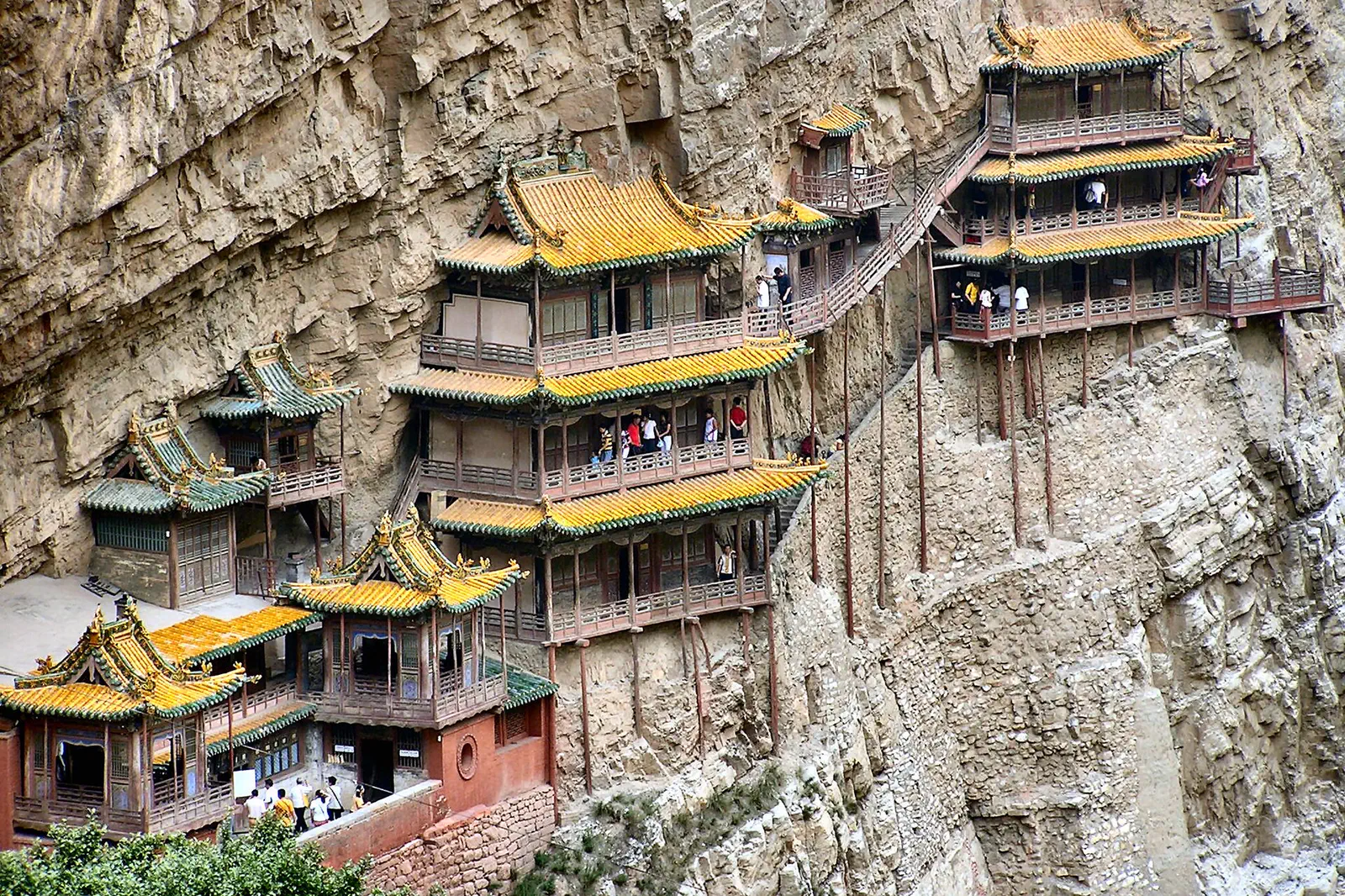
Shanxi is one of the densest concentrations of pre-Qing architecture in China. The loess plateau here was settled by Han Chinese long before the Yangtze regions, and the dry climate plus relative inland isolation meant that wooden temples, courtyard houses, and walled towns survived where they would have rotted away further south.
Pingyao Ancient City — UNESCO listed — is the most complete Ming–Qing walled city left in the country. It functioned as China's banking capital in the 19th century; the modern Chinese banking-business model was effectively invented in its courtyards. Datong, in the north, sits beside the Yungang Grottoes — Northern Wei Buddhist cave sculptures from the 5th century, predating Mogao at Dunhuang. Wutai Shan, one of the four sacred mountains of Chinese Buddhism, has dozens of working monasteries.
The economy has long depended on coal — Shanxi remains the country's largest producer — and the air quality has historically been poor. Recent years have seen aggressive shutdowns of small mines and a tourism push that has rebranded the province around its heritage rather than its industry.
When to visit
Late spring (May) and autumn (September–October) are optimal. Summers are hot and dusty in the loess country. Wutai Shan is cool year-round and snow-covered November to March.
How to get there
Taiyuan Wusu Airport (TYN) and Datong have airports. HSR from Beijing to Taiyuan in 2h30m, to Datong in 1h40m. Pingyao is on the slower Beijing–Xi'an line, 3h from Taiyuan or via dedicated HSR from Xi'an.
Key cities
All cities →Key attractions
All attractions →More cities in Shanxi
Sample itineraries
Day 1: Pingyao walled city + Rishengchang banking museum. Day 2: Wang Family Compound, Shuanglin Temple. Day 3: HSR to Datong, Yungang Grottoes.
Add Wutai Shan (2 days), Hanging Monastery, Hukou Waterfall, Jinci Temple in Taiyuan.
Dishes of Shanxi
Beijing-Mongolian style hot pot — clear broth, thinly-sliced lamb, sesame-paste dipping sauce.
Wheat-wrapper dumplings filled with pork-and-cabbage, lamb-and-leek, or vegetable, boiled and served with vinegar.
Small thumbnail-pinched Shanxi pasta, shaped like cat's ears. Stir-fried with vegetables or in soup.
Tianjin's signature steamed pork buns. The original house, founded 1858, is still operating.
Boiled mutton eaten with the hands. The social centrepiece of an Inner Mongolian steppe meal.
Northern Chinese breakfast crepe: thin wheat-and-mung-bean batter, egg, scallion, hoisin, chilli, optional crispy cracker.
Itineraries touching Shanxi
4d · Xi'an Terracotta Warriors, Muslim Quarter, and Tang dynasty sites followed by Pingyao — China's best-preserved Ming and Qing walled county town. A tight, focused circuit for heritage travellers who want depth over breadth.
10d · China's four sacred Buddhist mountains in sequence: Wutai (Shanxi), Jiuhua (Anhui), Emei (Sichuan), and Putuo (Zhejiang) — each dedicated to a different bodhisattva.
10d · Ten days visiting the Four Sacred Buddhist Mountains of China — Putuo (Guanyin), Wutai (Manjushri), Emei (Samantabhadra) and Jiuhua (Ksitigarbha) — each with its own character and monastic tradition.
12d · Datong, Luoyang, Tianshui, and Dunhuang — China's four great cliff-carved Buddhist sanctuaries in sequence.
Other North China regions
Spotted something out of date? Submit a correction.
Research
Cross-checked against primary sources
Verified
Address, hours, fees confirmed at the date shown
Updated
Re-verified periodically; corrections welcome