Museum · BEIJING
National Art Museum of China (NAMOC)
中国美术馆 · Zhōngguó Měishùguǎn
About
China's premier museum of modern Chinese art. Free entry; rotating exhibitions of 20th- and 21st-century painting, calligraphy, sculpture.
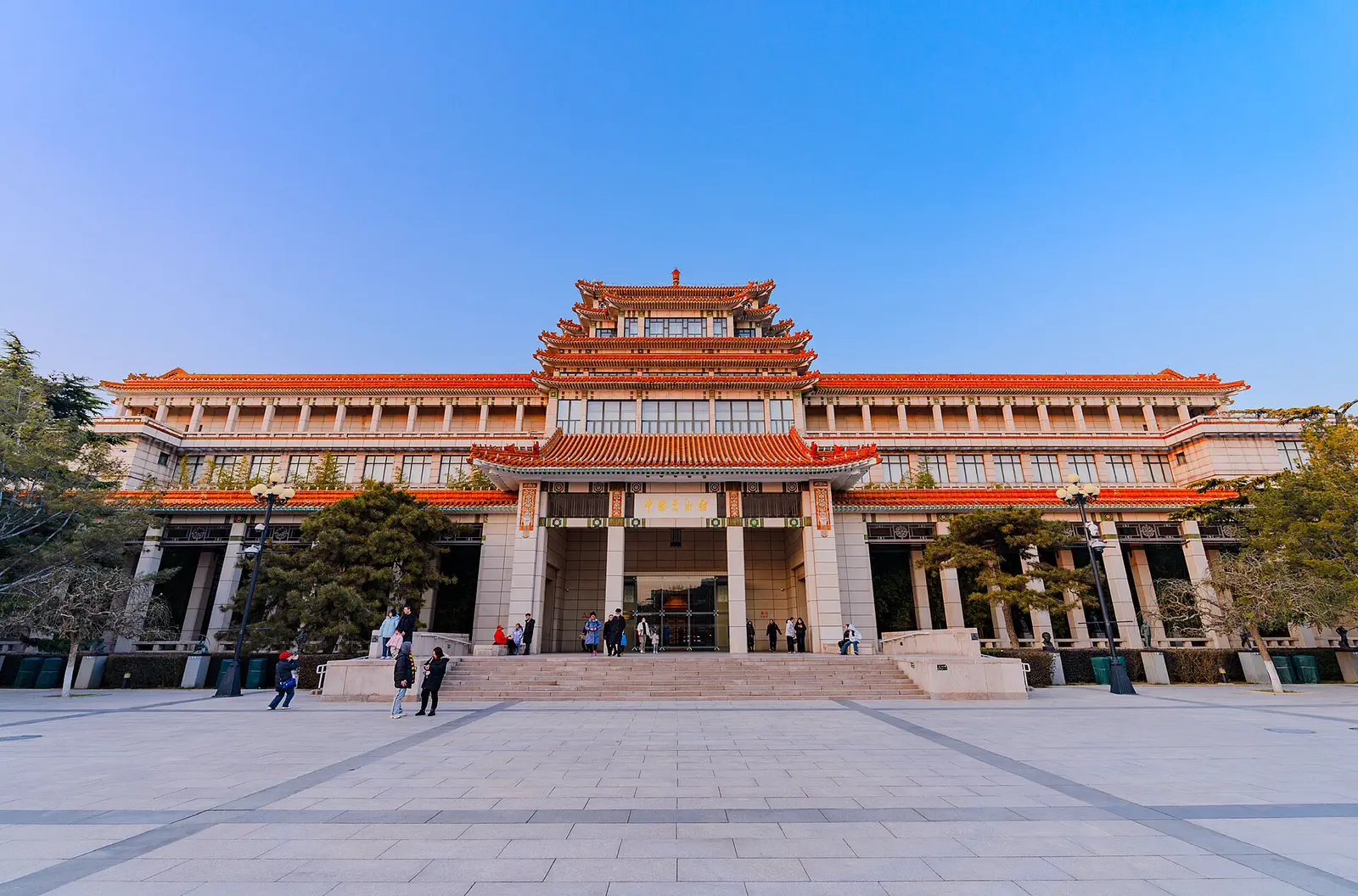
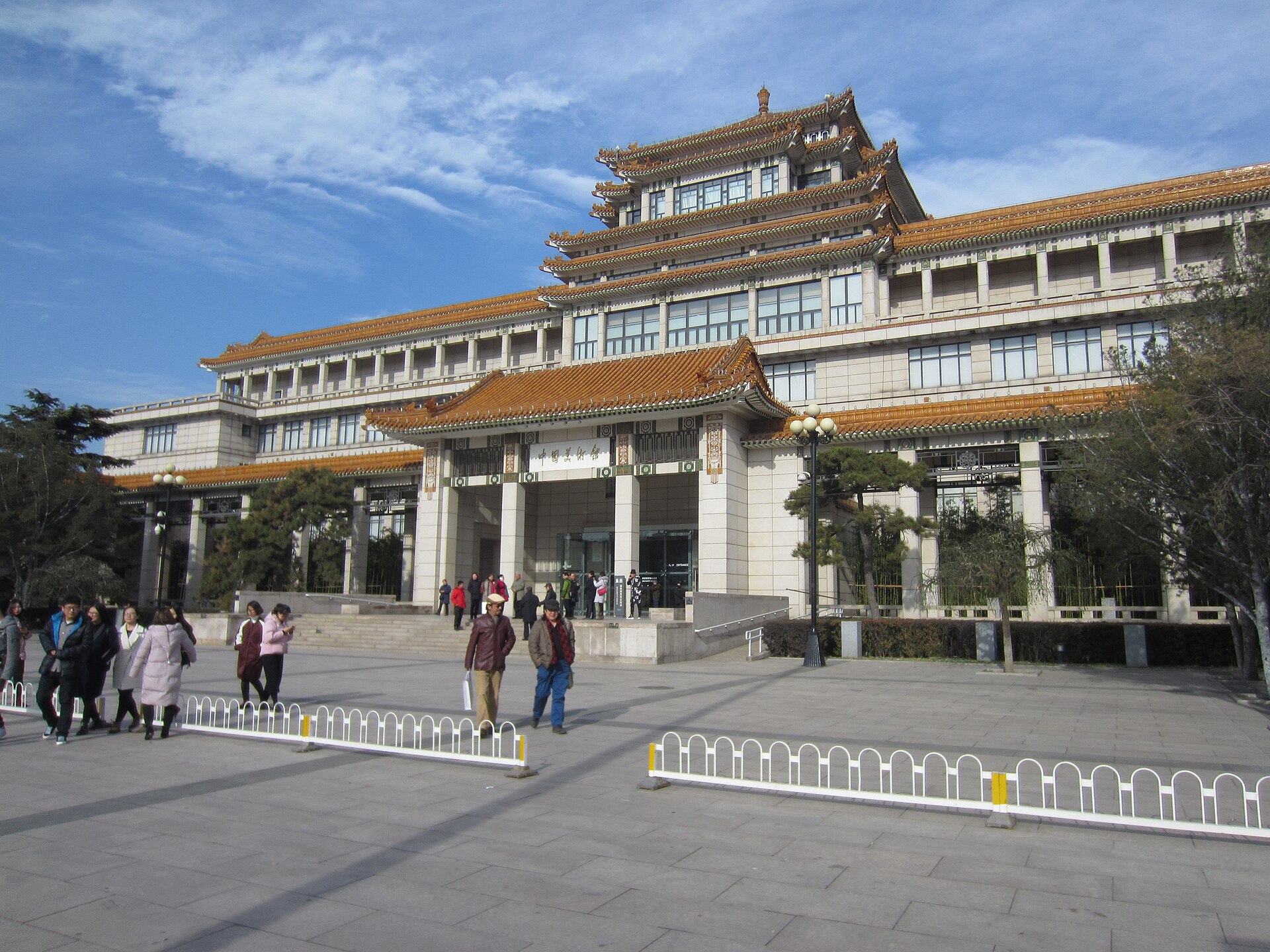
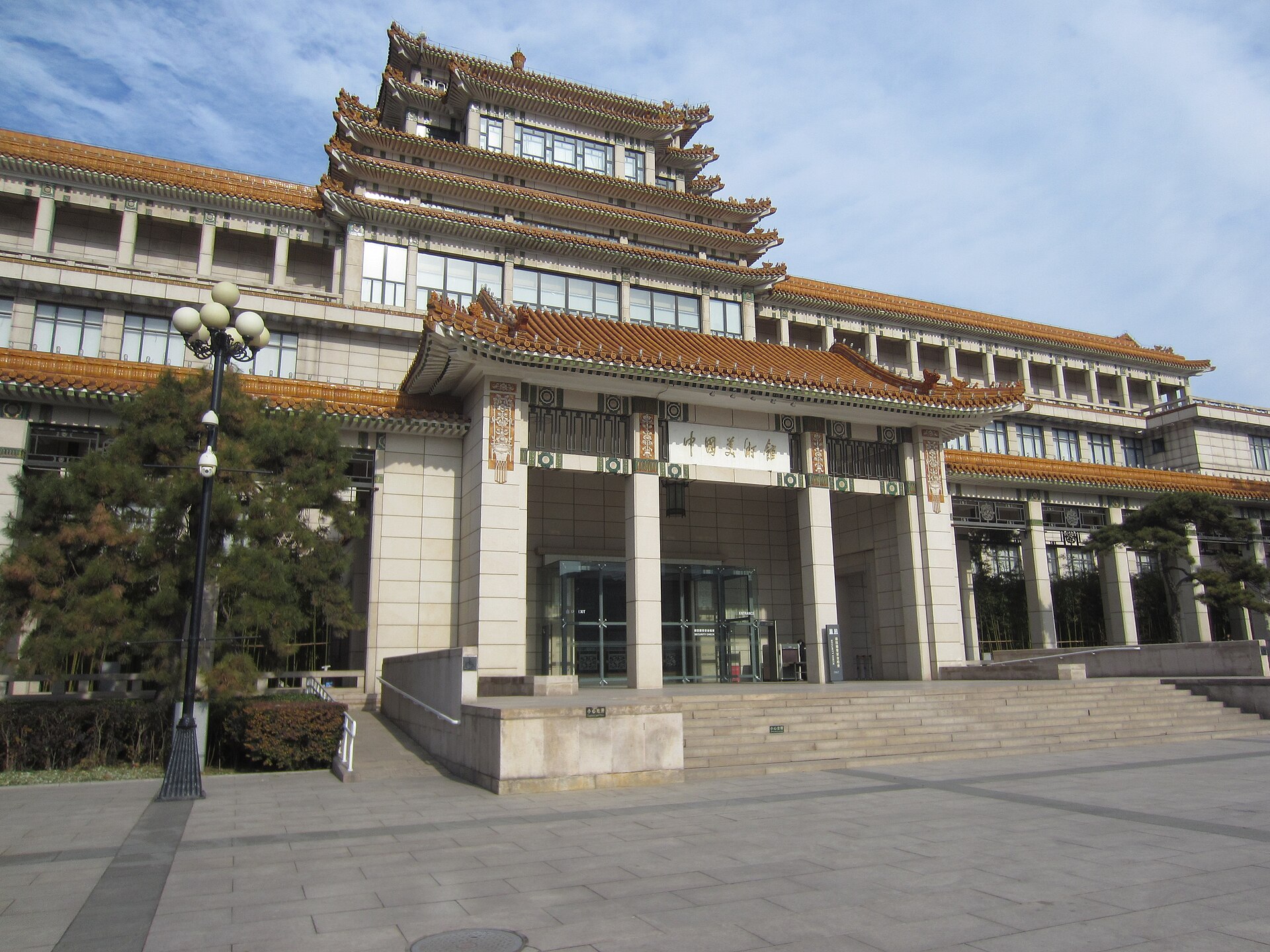
The National Art Museum of China — known by its acronym NAMOC — was founded in 1963 and occupies a building completed in 1958, a distinctive example of the 'socialist classical' architectural style promoted in the early PRC period: a multi-storey pavilion with yellow-glazed-tile pagoda-style roofing over reinforced concrete construction, the Soviet Beaux-Arts influence domesticated into Chinese traditional forms. The building itself is considered a significant piece of 20th-century architectural history.
NAMOC holds the most extensive permanent collection of 20th-century Chinese art in the country — around 110,000 works across painting, calligraphy, printmaking, sculpture, photography, and craft. The names that anchored the collection were the major figures of Chinese modernism: Qi Baishi, who synthesised traditional literati painting with popular subject matter; Xu Beihong, trained in Paris and famous for horses; Zhang Daqian, a master forger turned original artist; and Lin Fengmian, who developed a synthesis of European Post-Impressionism and Chinese ink painting. The collection includes works from the Republican era, wartime propaganda posters, Cultural Revolution-period production, and contemporary practice from the reform era onwards.
The exhibition programme is mixed: alongside the permanent highlights, special exhibitions of variable quality rotate through the ground-floor galleries. Entry is free with a passport-linked online reservation. The museum is close to the Dongsi metro station and sits a short walk from the Confucius Temple and the Imperial College, which makes for a natural combined afternoon in the northeastern part of the old city. Allow two hours minimum.
How to get there
Metro Line 5 to Dongsi or Line 6 Beihai North.
When to visit
Weekday morning.
History and context
NAMOC (National Art Museum of China) opened in 1963 on Wusi Dajie in central Beijing and holds around 120,000 works spanning modern Chinese art — painting, calligraphy, printmaking — folk art and international modern pieces. The current building is a Chinese-style pastiche of Tang architecture: reinforced concrete construction beneath yellow-glazed-tile pagoda roofs — a domesticated Soviet Beaux-Arts form that was itself typical of early PRC public architecture.
What the visit is like
Entry is free but you must show a passport at the gate for ID registration. Allow 2–3 hours across five main floors. The building is wheelchair accessible with lifts to all levels. Temporary exhibitions rotate roughly quarterly and vary in quality — some are strong retrospectives, others institutional filler. English signage is patchy: major works usually have short bilingual labels but wall texts and catalogues are often Chinese only.
Photography
No flash and no tripods anywhere in the museum. Phone and handheld camera photography is generally permitted in the permanent galleries — the modern Chinese painting and sculpture floors — but rules for temporary exhibitions vary by lender and are posted at each gallery entrance. Some loan shows prohibit photography entirely. Drones are not applicable — the museum is an indoor site in central Beijing and the surrounding airspace is restricted.
Overlooked details
The folk-art collection on the top floor — paper cuts, kites and opera masks — is often skipped by visitors who stop at the painting floors. The small courtyard sculpture garden to the side of the main entrance is also easy to miss. Look for the rare pre-1949 oil paintings associated with the Shanghai Chinese Painting Movement — figures like Xu Beihong and Lin Fengmian — preserved through the Cultural Revolution and shown in rotation rather than permanently.
Where to eat nearby
Wangfujing pedestrian street is about 10 minutes' walk south — plentiful options but touristy and overpriced. A better bet is Nanluoguxiang — a hutong lane 5 minutes north with small cafes and noodle shops. For cheaper traditional Beijing food try the historic Xijie Snack Street nearby — jianbing, baozi and lamb skewers at local prices. Avoid the museum's own cafe which is limited and expensive.
Common misconceptions
NAMOC is not the Palace Museum inside the Forbidden City — that is a separate site 15 minutes south holding imperial collections. It is also not the National Museum of China on Tiananmen Square — which focuses on Chinese history and archaeology rather than art. Free entry does not mean walk-in: you must present a passport at the gate for ID registration and on busy days a timed online reservation is also required.
Gallery
Other attractions in Beijing
Itineraries featuring this site
- Accessible China — mobility-friendly 7 days in Beijing and Shanghai
7d · Seven days in Beijing and Shanghai planned for visitors with mobility limitations — step-free access, English-language signage, accessible transport and accommodation notes throughout.
- Modern architecture tour — Shanghai, Beijing and Guangzhou, 7 days
7d · Seven days focused on China's architectural output since 1990 — Shanghai's Pudong towers, Beijing's Olympic-era structures and Guangzhou's Zaha Hadid and Rem Koolhaas commissions.
Other museums in China
- Capital Museum首都博物馆
Beijing's history museum — bronze, ceramics, paintings, and a strong narrative of the city's evolution from Yan kingdom through the present.
- China National Tea Museum中国茶叶博物馆
Comprehensive museum of Chinese tea history, varieties, and culture. Free entry; in the Longjing tea-growing hills.
- Han Yangling Mausoleum Museum汉阳陵博物馆
A world-class Han Dynasty imperial mausoleum museum near Xi'an presenting thousands of miniature terracotta tomb figures, including nude figurines originally dressed in silk, excavated from pits surrounding the burial mound of Emperor Jing (reigned 157–141 BCE).
- Hong Kong Museum of Art香港艺术馆
Hong Kong's premier art museum on the Tsim Sha Tsui waterfront. Strong Chinese painting and contemporary HK art collections.
- Hong Kong Museum of History香港历史博物馆
Comprehensive museum of Hong Kong's history from prehistoric to the 1997 handover. Free entry.
- Hubei Provincial Museum湖北省博物馆
Major provincial museum east of central Wuhan. Famous for the Bianzhong bell-set of the Marquis Yi of Zeng.
- Imperial Kiln Museum御窑博物馆
A museum of imperial Chinese porcelain built directly over the excavated site of the Ming and Qing imperial kilns, designed by architect Zhu Pei with brick-vaulted galleries that echo the form of the kilns themselves.
- Jinsha Site Museum金沙遗址博物馆
Bronze Age site museum on a 3,000-year-old ritual centre discovered in Chengdu in 2001. The Sun Bird gold disc is the symbol of Chengdu.
Frequently asked questions
- How much does National Art Museum of China (NAMOC) cost to visit?
- Entry to National Art Museum of China (NAMOC) is free. Free; passport-linked online reservation required.
- When is National Art Museum of China (NAMOC) open?
- National Art Museum of China (NAMOC) opening hours: 9am–5pm, closed Mondays.
- How long do you need at National Art Museum of China (NAMOC)?
- Allow 2–3 hours for National Art Museum of China (NAMOC). Add buffer time if you plan to visit at peak season or include nearby sights in the same trip.
- When is the best time to visit National Art Museum of China (NAMOC)?
- Weekday morning.
- How do you get to National Art Museum of China (NAMOC)?
- Metro Line 5 to Dongsi or Line 6 Beihai North.
Spotted something out of date? Submit a correction.
Research
Cross-checked against primary sources
Verified
Address, hours, fees confirmed at the date shown
Updated
Re-verified periodically; corrections welcome