Historic site · BEIJING · UNESCO
Great Wall — Mutianyu
慕田峪长城 · Mùtiányù Chángchéng
About
The most accessible restored Great Wall section from Beijing, with cable car, watchtowers and a toboggan ride down. Less crowded than Badaling, more polished than the wilder sections.
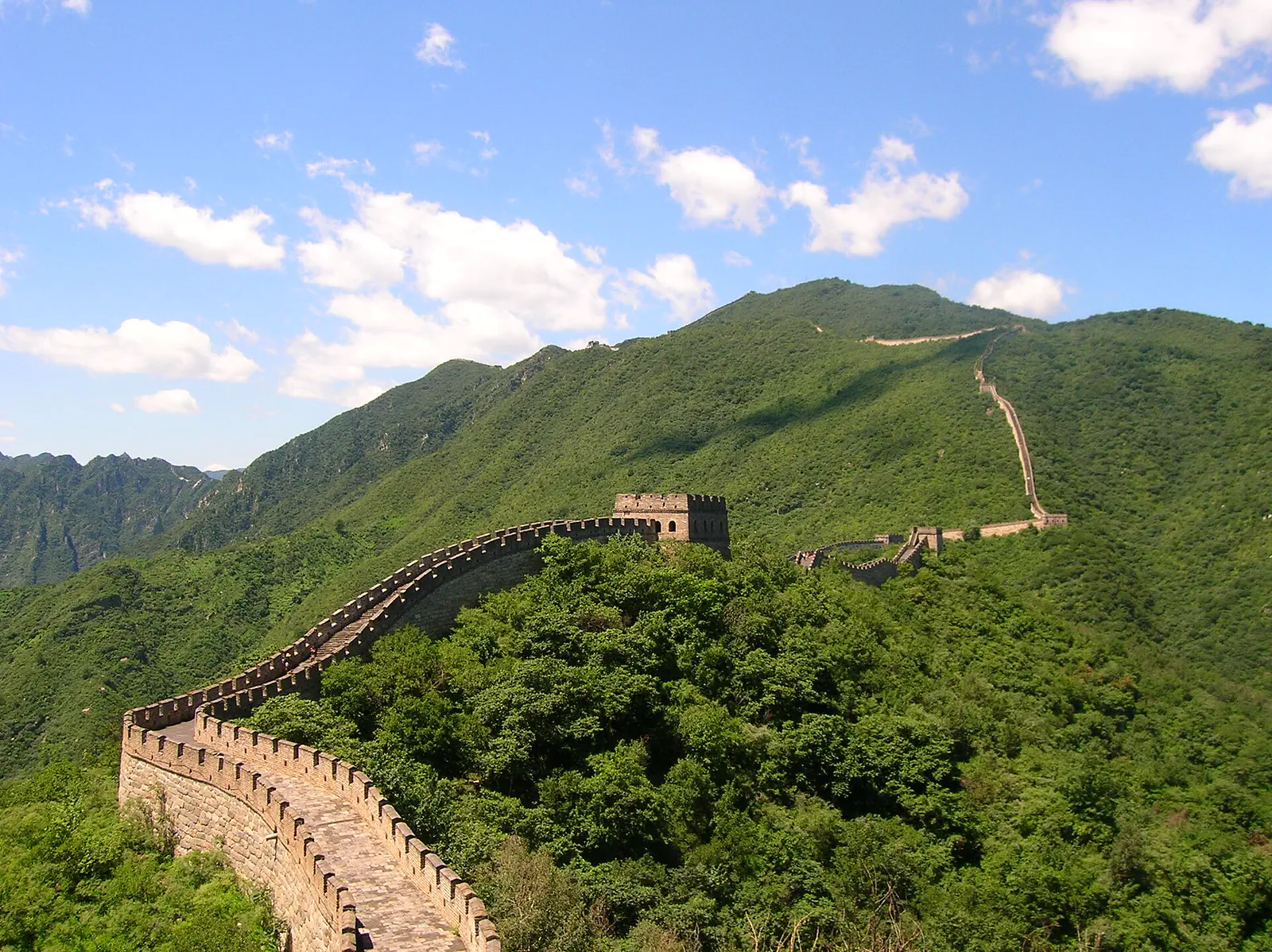
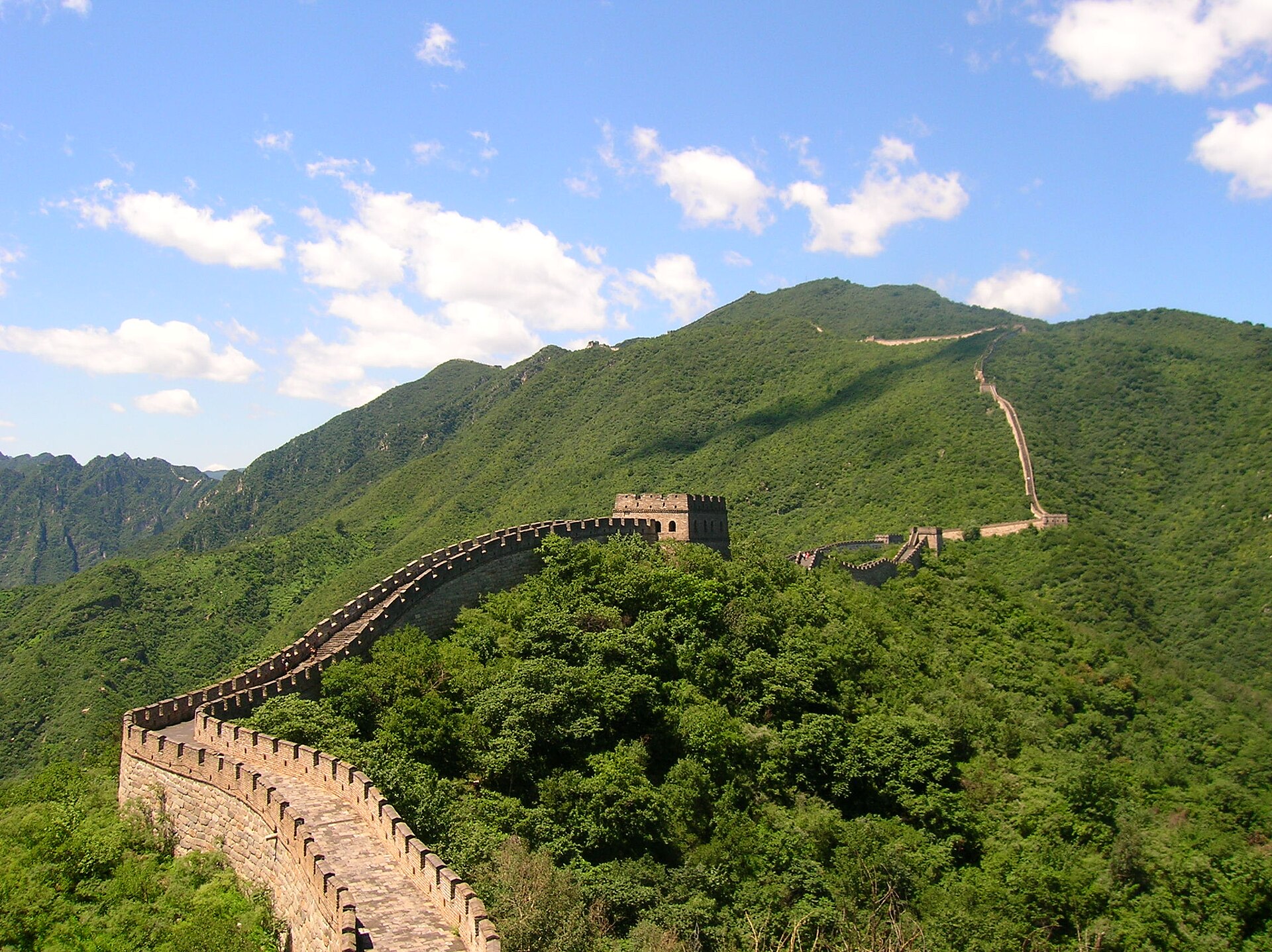
Mutianyu sits 70 km northeast of central Beijing. The 2,250m restored section dates to the Ming dynasty (1368) and was rebuilt on Northern Qi foundations. 22 watchtowers run along the ridge. The site is the standard Western-traveller pick — quieter than Badaling (which is closer to Beijing and gets the bulk of domestic-tour-group traffic), more user-friendly than Jinshanling (which is for hikers) and impossible to reach as casually as Jiankou (which is unrestored and dangerous in places).
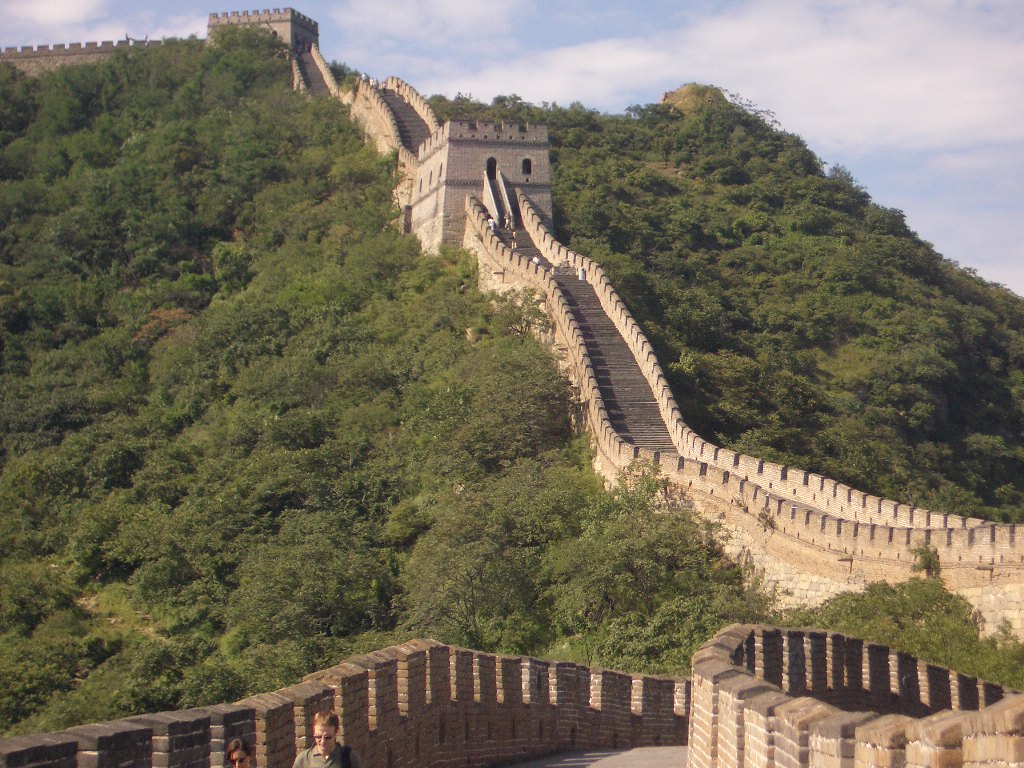
A cable car runs to Watchtower 14, a chairlift runs to Watchtower 6, and a toboggan slide returns you to the base. Walking from Tower 1 to Tower 23 takes around 3 hours including stops; the popular middle stretch (Towers 6 to 14) is 60–90 minutes.
How to get there
Tour buses from Dongzhimen Bus Station. Or hire a driver/Didi for the day (¥600–¥900 round trip with wait).
When to visit
Early morning for clear views. Spring (April–May) for greenery; autumn (October) for clear skies and turning leaves.
Crowds: Avoid public holidays. Tuesdays and Wednesdays are quietest.
Official channels
Verified official contacts and booking flow — no affiliate links.
- Website
- www.mutianyugreatwall.com/en
- Booking flow
- Ticket window on-site OR online booking accepted. Passport ID required at booking / gate.
- Notes
- Tickets sold at the visitor centre or on the official site. Cable car + toboggan sold separately.
History and context
The ridge was first walled during the Northern Qi (6th century) as a rammed-earth frontier line. The stone-and-brick section standing today was rebuilt from 1368 under the Ming general Xu Da to protect Beijing from Mongol and later Jurchen incursions from the steppe. The section fell out of military use after the Qing consolidation and lay in disrepair until a state-funded restoration through the 1980s reopened it for foreign tourism.
What the visit is like
A cable car climbs to Tower 14 and a chairlift to Tower 6 — both are ticketed separately from entry (¥120 round trip). The toboggan descends from Tower 6 on a metal chute. The standard walk runs Towers 6 to 14 across the restored middle stretch — around 90 minutes with photo stops. Continuing 14 to 20 adds steeper gradients and uneven brick steps that catch out visitors in trainers.
Photography
The west-facing ridge catches golden hour from around 5pm — guard-tower silhouettes read cleanly against the sky. Autumn colour peaks late October to mid-November when the surrounding oaks and maples turn. Winter dustings after a cold front give the cleanest tower profiles. Drones are banned across the restored sections and enforcement is active at the ticket gate — leave the aircraft in Beijing.
Overlooked details
The watchtowers here are pierced with arrow windows on both the inner and outer walls — a design detail reflecting that raiding parties broke through in both directions once the frontier held. Original Ming bricks (darker, hand-cut, irregular) sit alongside 1980s replacements (uniform grey machine-cut) — the contrast is visible around Tower 8. A small archaeological workshop at the base of the access path holds bricks pulled during restoration.
Where to eat nearby
Nongjiale farm-stays in the surrounding villages serve set lunches — stir-fried mountain vegetables, hand-pulled noodles and free-range chicken for around ¥60 a head. The Yanqi Lake reservoir 20 minutes' drive south does roast trout pulled from the water that morning. Skip the coach-park restaurants immediately at the entrance — they run tourist-menu markups on reheated dishes.
Common misconceptions
Mutianyu is not the only authentic Great Wall — Jinshanling and Jiankou preserve wilder unrestored stretches but demand fitness and a driver. The polished crenellations here are 20th-century rebuilds on Ming foundations — visitors expecting untouched 14th-century masonry come away confused. The cable car is optional not required — the stone stairway up from the ticket gate is steep but walkable in 30–40 minutes at a moderate pace.
Gallery
Other attractions in Beijing
Itineraries featuring this site
- Beijing 3-day blitz — first-timer fast pass
3d · Three full days in Beijing covering the Forbidden City, Great Wall at Mutianyu, the Temple of Heaven and the hutong lanes — the absolute core of the capital for visitors with limited time.
- Beijing weekend — 3 days in the capital
3d · Three days in Beijing covering the Forbidden City, Great Wall at Mutianyu and the Temple of Heaven — the irreducible core of the capital, managed at a pace that avoids pure exhaustion.
- Beijing in 4 days
4d · Forbidden City, Wall, Temple of Heaven, hutongs, museums.
- China in 5 days: fastest first-timer route
5d · Beijing's big three sights, a flight south, and two days navigating Shanghai's contrasts.
Other historic sites in China
- Ancient Villages of Southern Anhui — Xidi and Hongcun皖南古村落—西递、宏村
UNESCO · UNESCO-listed pair of Ming-Qing Huizhou merchant villages in southern Anhui, renowned for whitewashed walls, inky horsehead gables and moon-shaped ponds.
- Anqing Zhenfeng Pagoda安庆振风塔
A seven-storey Ming Dynasty pagoda standing on the bank of the Yangtze River in Anqing, considered one of the finest riverside pagodas in southern China and long used as a navigation landmark by Yangtze river pilots.
- Archaeological Ruins of Liangzhu City良渚古城遗址
UNESCO · UNESCO-listed archaeological site in Hangzhou preserving the remains of a 5,000-year-old city with a sophisticated water-management system, jade ritual culture and social hierarchy — regarded as one of the earliest state-level societies in East Asia.
- Capital Cities and Tombs of the Ancient Koguryo Kingdom高句丽王城、王陵及贵族墓葬
UNESCO · UNESCO-listed capital cities and royal tombs of the Koguryo Kingdom in Jian, Jilin — the Chinese portion of a transnational heritage property shared with North Korea, representing one of the most powerful states of ancient East Asia.
- Classical Gardens of Suzhou (UNESCO)苏州古典园林
UNESCO · UNESCO-listed collection of private gardens in Suzhou — four inscribed in 1997 and five more added in 2000 — representing the pinnacle of Chinese garden design through the refined integration of architecture, water, rock and plant.
- Danba Tibetan Watchtowers丹巴碉楼
Clusters of ancient stone watchtowers rising above Tibetan village complexes in the Dadu River valley, said to be among the oldest surviving examples of Tibetan defensive architecture.
- Drum Tower and Bell Tower鼓楼钟楼
Yuan-dynasty drum and bell towers that kept official time for imperial Beijing. Climbable; daily drum performances.
- Dujiangyan Irrigation System都江堰
UNESCO · 2,300-year-old irrigation system on the Min River. Still in use. UNESCO-listed jointly with Mt Qingcheng. Engineering rather than architecture, but one of the great works.
Other UNESCO World Heritage sites in China
- Ancient Villages of Southern Anhui — Xidi and Hongcun皖南古村落—西递、宏村
UNESCO-listed pair of Ming-Qing Huizhou merchant villages in southern Anhui, renowned for whitewashed walls, inky horsehead gables and moon-shaped ponds.
- Archaeological Ruins of Liangzhu City良渚古城遗址
UNESCO-listed archaeological site in Hangzhou preserving the remains of a 5,000-year-old city with a sophisticated water-management system, jade ritual culture and social hierarchy — regarded as one of the earliest state-level societies in East Asia.
- Badain Jaran Desert — Lakes and Dunes巴丹吉林沙漠—沙山湖泊群
UNESCO Natural World Heritage site in Inner Mongolia — the third largest desert in China, featuring some of the world's tallest stationary dunes and a unique network of freshwater and saline lakes sustained by a still-unexplained subterranean water system.
- Capital Cities and Tombs of the Ancient Koguryo Kingdom高句丽王城、王陵及贵族墓葬
UNESCO-listed capital cities and royal tombs of the Koguryo Kingdom in Jian, Jilin — the Chinese portion of a transnational heritage property shared with North Korea, representing one of the most powerful states of ancient East Asia.
- China Danxia中国丹霞
UNESCO Natural World Heritage site — a serial property of six Danxia landscapes across six provinces, representing China's defining red-cliff-and-pillar sandstone landform type, including Danxia Mountain, Zhangye, Taining and Langshan.
- Classical Gardens of Suzhou (UNESCO)苏州古典园林
UNESCO-listed collection of private gardens in Suzhou — four inscribed in 1997 and five more added in 2000 — representing the pinnacle of Chinese garden design through the refined integration of architecture, water, rock and plant.
- Couple's Retreat Garden耦园
UNESCO-listed Suzhou garden organised symmetrically around a central residence. Less crowded than the four most-visited gardens.
- Drepung Monastery哲蚌寺
Once the largest monastery in the world (10,000+ monks). 8 km west of Lhasa. Active Gelugpa monastery; debating courtyard sessions in the afternoon.
Frequently asked questions
- How much does Great Wall — Mutianyu cost to visit?
- Adult entry to Great Wall — Mutianyu is ¥45, ¥25 for children. Cable car ¥120 round trip; toboggan ¥120.
- When is Great Wall — Mutianyu open?
- Great Wall — Mutianyu opening hours: 7:30am–5:30pm Apr–Oct; 8am–5pm Nov–Mar.
- How long do you need at Great Wall — Mutianyu?
- Allow 3–5 hours for Great Wall — Mutianyu. Add buffer time if you plan to visit at peak season or include nearby sights in the same trip.
- When is the best time to visit Great Wall — Mutianyu?
- Early morning for clear views. Spring (April–May) for greenery; autumn (October) for clear skies and turning leaves.
- How do you get to Great Wall — Mutianyu?
- Tour buses from Dongzhimen Bus Station. Or hire a driver/Didi for the day (¥600–¥900 round trip with wait).
- How do you avoid the crowds at Great Wall — Mutianyu?
- Avoid public holidays. Tuesdays and Wednesdays are quietest.
Spotted something out of date? Submit a correction.
Research
Cross-checked against primary sources
Verified
Address, hours, fees confirmed at the date shown
Updated
Re-verified periodically; corrections welcome