Historic site · BEIJING
Lugou (Marco Polo) Bridge
卢沟桥 · Lúgōuqiáo
About
12th-century stone bridge southwest of Beijing, with 281 carved-stone lions. The site of the 1937 incident that began the Sino-Japanese War.
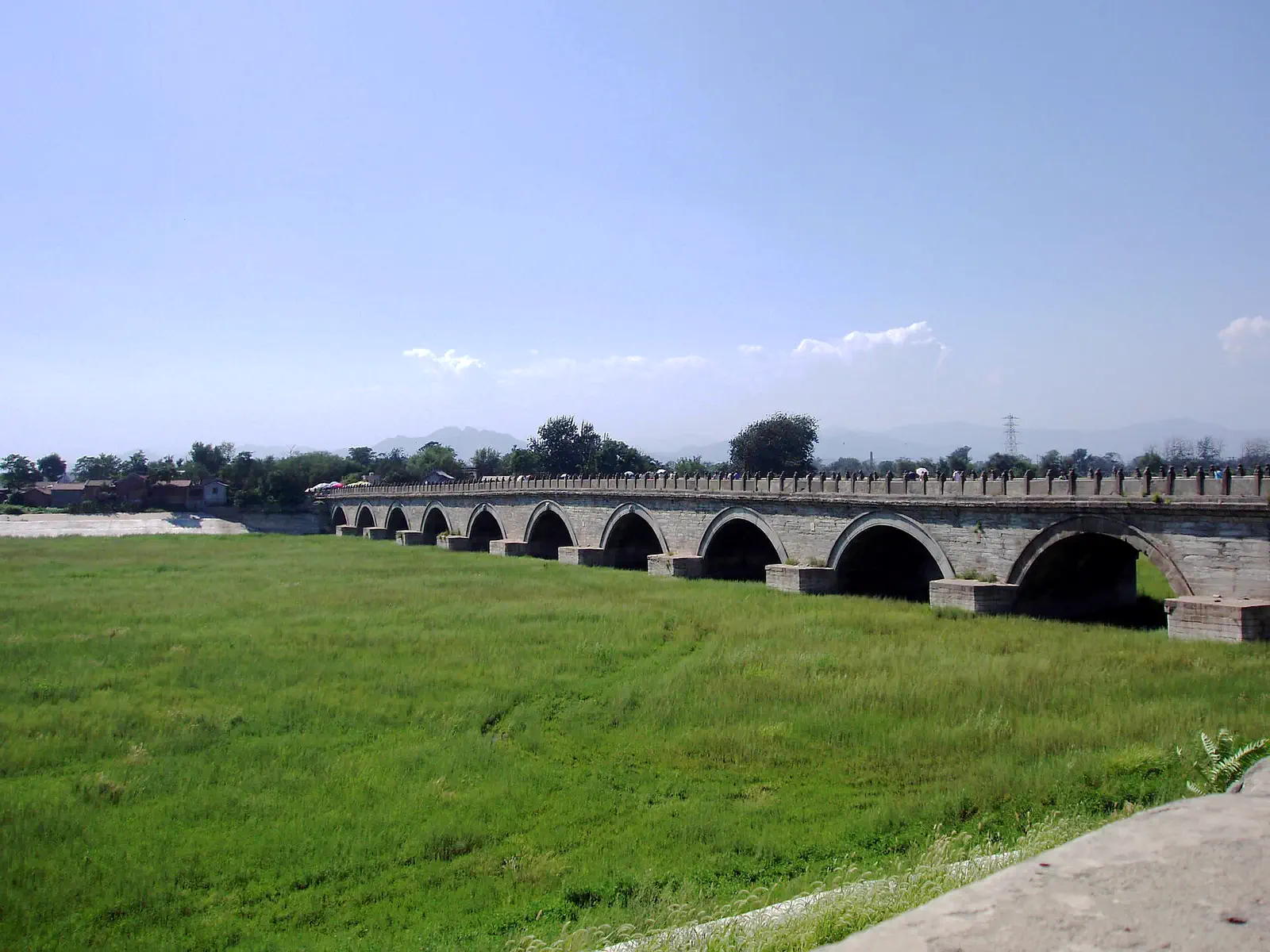
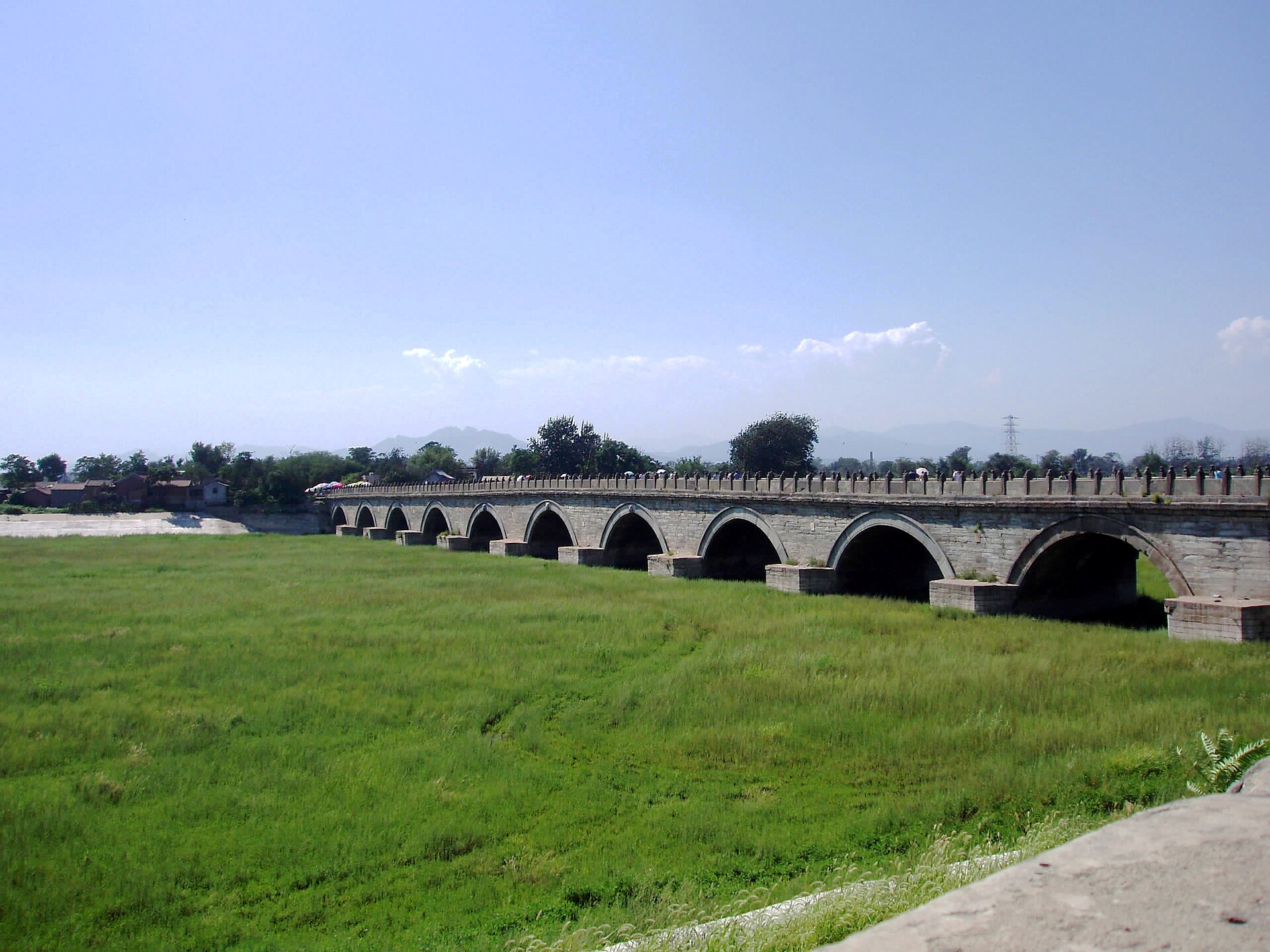
The Lugou Bridge — called Marco Polo Bridge in most Western sources — crosses the Yongding River about 15 kilometres southwest of central Beijing. The current stone structure was completed in 1192 during the Jin dynasty, making it one of the oldest surviving stone arch bridges in northern China. It is 265 metres long and supported by 11 arches. The balustrades are decorated with 281 stone lions, each individually carved and varying slightly in posture and expression — Marco Polo, who travelled through China in the late 13th century, described the bridge and its lions in his account of his journeys, though the accuracy of his specific claims about China is debated.
The bridge's historical weight in China today derives overwhelmingly from the events of 7 July 1937. A night military exercise by Japanese troops near Wanping — whose walled fortress town sits at the eastern bridgehead — escalated into an exchange of gunfire. The precise sequence of events remains disputed, but the 'Marco Polo Bridge Incident' is the date Chinese history marks as the beginning of the full-scale Second Sino-Japanese War, which killed between 14 and 20 million Chinese civilians and combatants over the following eight years. The date is formally commemorated annually, and 7 July anniversaries draw large gatherings.
The Wanping Fortress, whose Ming-dynasty walls are well preserved, contains the Museum of the War of Chinese People's Resistance Against Japanese Aggression — a large, soberly presented military and historical museum covering the 1937–1945 period. It is one of the more substantial war-memorial museums in China outside of Nanjing. The bridge itself is walkable (entry ticket required); the lion-counting and the river views are pleasant. Combine with the Wanping Fortress and museum for a meaningful three-to-four-hour visit.
How to get there
Bus 339 or 458 from southwest Beijing.
When to visit
Morning. The 7 July anniversary is heavily attended.
Gallery
Other attractions in Beijing
Other historic sites in China
- Ancient Villages of Southern Anhui — Xidi and Hongcun皖南古村落—西递、宏村
UNESCO · UNESCO-listed pair of Ming-Qing Huizhou merchant villages in southern Anhui, renowned for whitewashed walls, inky horsehead gables and moon-shaped ponds.
- Anqing Zhenfeng Pagoda安庆振风塔
A seven-storey Ming Dynasty pagoda standing on the bank of the Yangtze River in Anqing, considered one of the finest riverside pagodas in southern China and long used as a navigation landmark by Yangtze river pilots.
- Archaeological Ruins of Liangzhu City良渚古城遗址
UNESCO · UNESCO-listed archaeological site in Hangzhou preserving the remains of a 5,000-year-old city with a sophisticated water-management system, jade ritual culture and social hierarchy — regarded as one of the earliest state-level societies in East Asia.
- Capital Cities and Tombs of the Ancient Koguryo Kingdom高句丽王城、王陵及贵族墓葬
UNESCO · UNESCO-listed capital cities and royal tombs of the Koguryo Kingdom in Jian, Jilin — the Chinese portion of a transnational heritage property shared with North Korea, representing one of the most powerful states of ancient East Asia.
- Classical Gardens of Suzhou (UNESCO)苏州古典园林
UNESCO · UNESCO-listed collection of private gardens in Suzhou — four inscribed in 1997 and five more added in 2000 — representing the pinnacle of Chinese garden design through the refined integration of architecture, water, rock and plant.
- Danba Tibetan Watchtowers丹巴碉楼
Clusters of ancient stone watchtowers rising above Tibetan village complexes in the Dadu River valley, said to be among the oldest surviving examples of Tibetan defensive architecture.
- Drum Tower and Bell Tower鼓楼钟楼
Yuan-dynasty drum and bell towers that kept official time for imperial Beijing. Climbable; daily drum performances.
- Dujiangyan Irrigation System都江堰
UNESCO · 2,300-year-old irrigation system on the Min River. Still in use. UNESCO-listed jointly with Mt Qingcheng. Engineering rather than architecture, but one of the great works.
Frequently asked questions
- How much does Lugou (Marco Polo) Bridge cost to visit?
- Adult entry to Lugou (Marco Polo) Bridge is ¥20, ¥10 for children. Bridge + memorial museum combined ¥35.
- When is Lugou (Marco Polo) Bridge open?
- Lugou (Marco Polo) Bridge opening hours: 8am–5pm.
- How long do you need at Lugou (Marco Polo) Bridge?
- Allow 3–4 hours for Lugou (Marco Polo) Bridge. Add buffer time if you plan to visit at peak season or include nearby sights in the same trip.
- When is the best time to visit Lugou (Marco Polo) Bridge?
- Morning. The 7 July anniversary is heavily attended.
- How do you get to Lugou (Marco Polo) Bridge?
- Bus 339 or 458 from southwest Beijing.
Spotted something out of date? Submit a correction.
Research
Cross-checked against primary sources
Verified
Address, hours, fees confirmed at the date shown
Updated
Re-verified periodically; corrections welcome