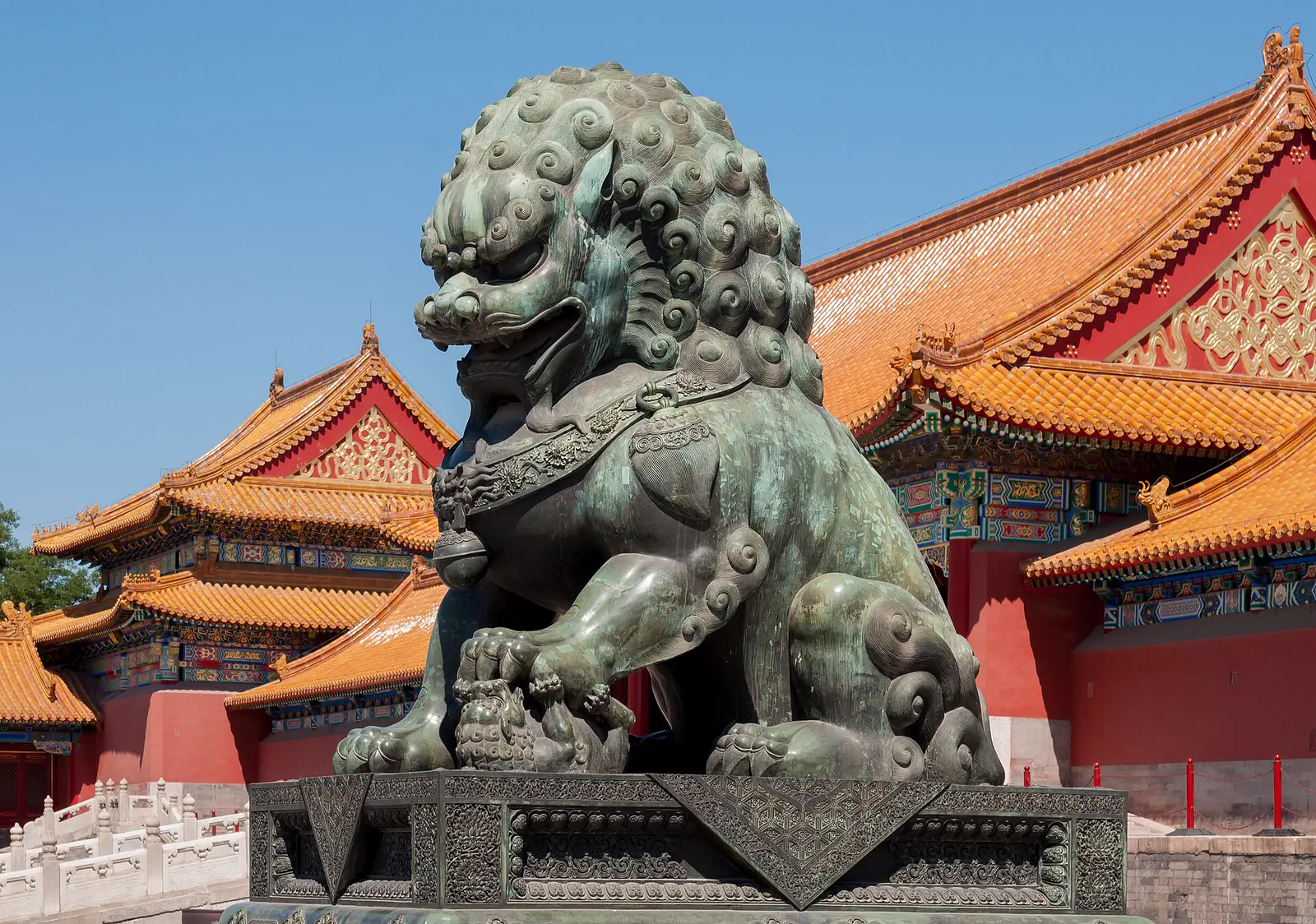
Historic site · BEIJING · UNESCO
Forbidden City (Palace Museum)
故宫 · Gùgōng
About
The largest preserved imperial palace complex in the world, residence of 24 emperors of the Ming and Qing dynasties.
The Forbidden City was the imperial residence from 1420, when the Yongle Emperor moved the Ming capital to Beijing, until the abdication of the last emperor Puyi in 1912. The complex covers 72 hectares and contains 980 surviving buildings arranged on a strict south-to-north axis. The southern outer court — Hall of Supreme Harmony, Hall of Central Harmony, Hall of Preserving Harmony — was for state ceremony. The northern inner court — Palace of Heavenly Purity, Palace of Earthly Tranquility — was the imperial residence. The complex is now the Palace Museum, with the largest collection of Chinese art in the world.
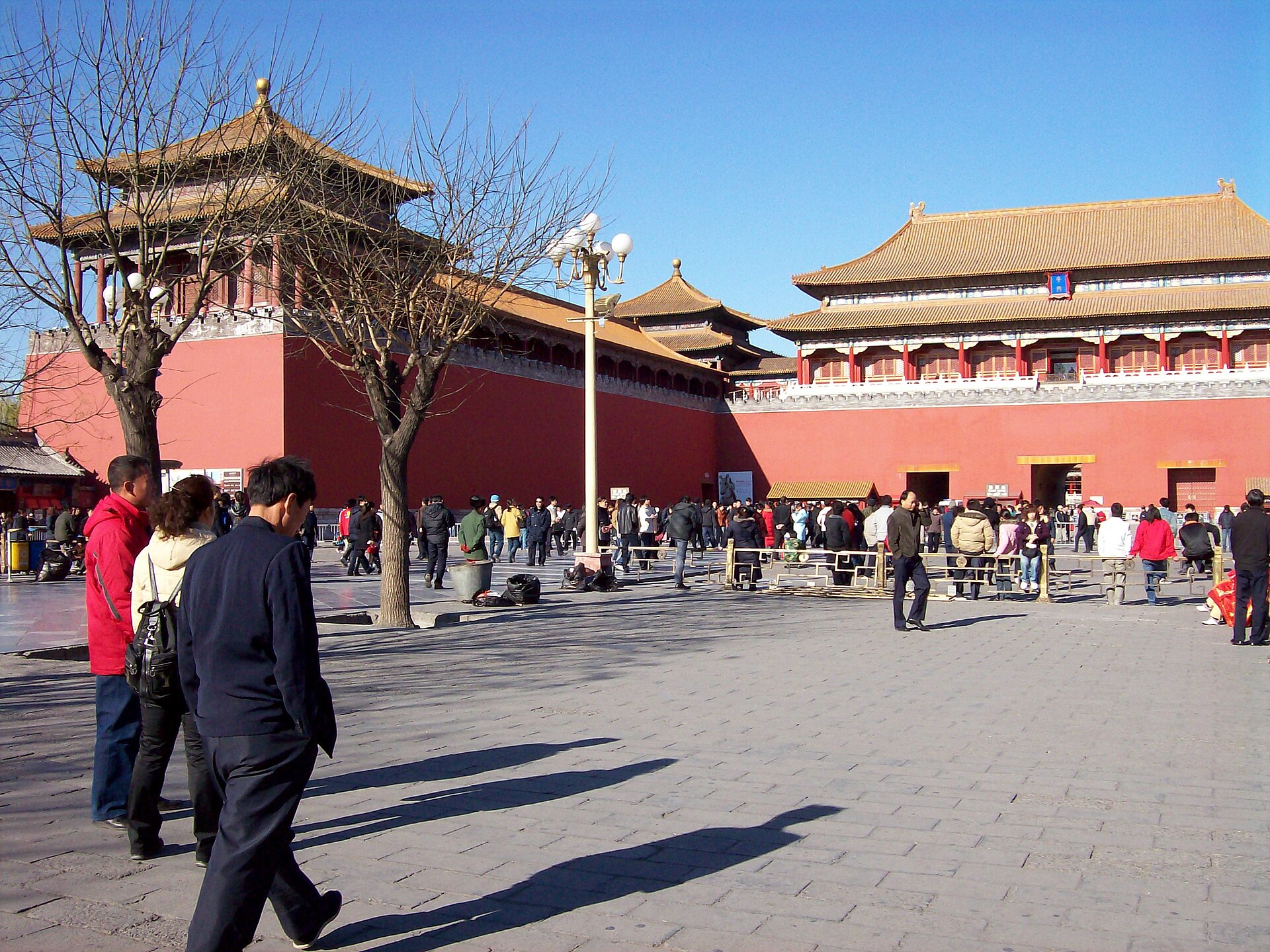
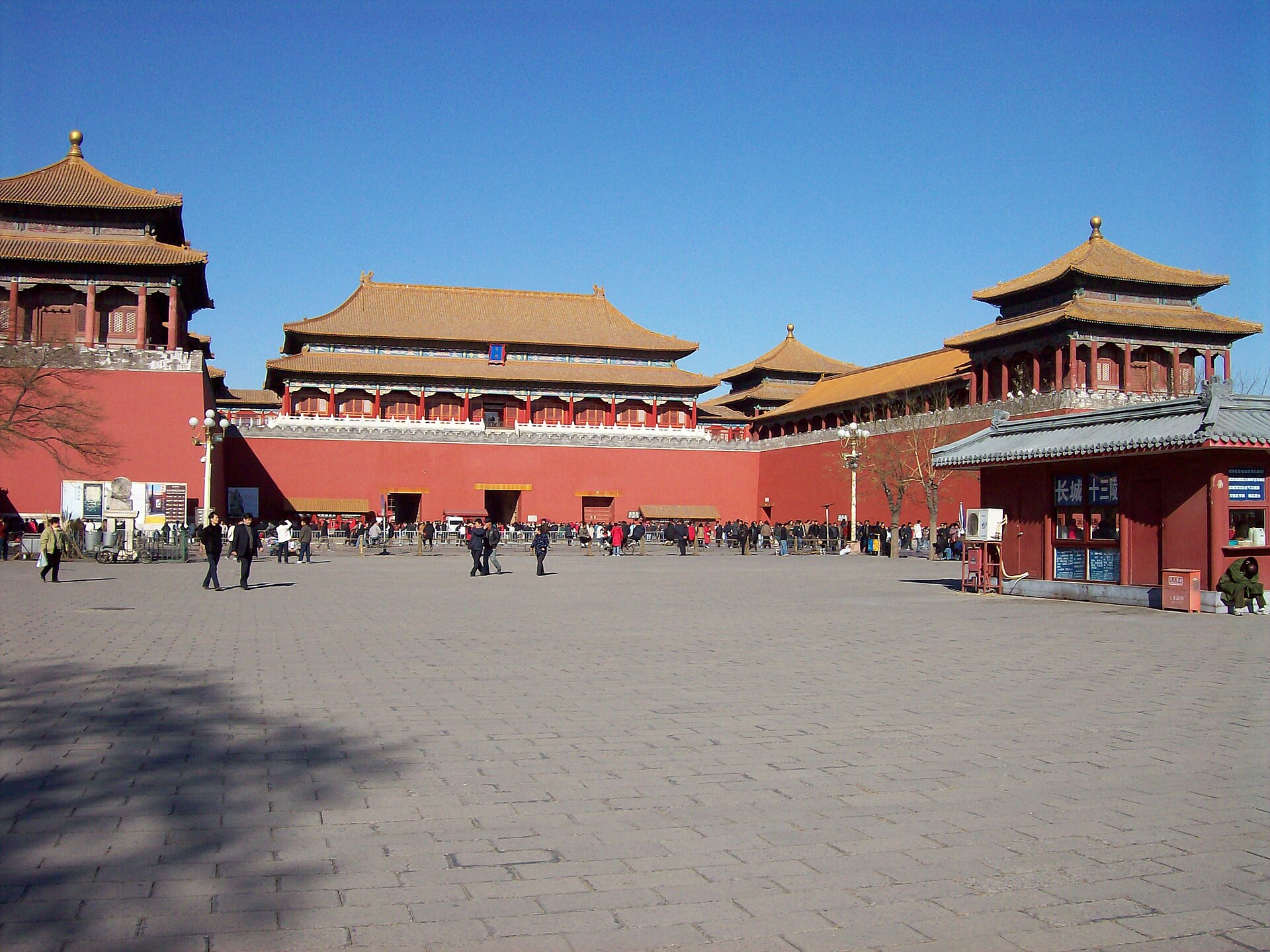
Visits are tightly managed. Entry is online-only via the Palace Museum website (or a verified Chinese travel agent), with passport details required. Daily visitor cap of 80,000 — book at least 7 days ahead in peak season. Entry only through Meridian Gate (south); exit at Gate of Divine Might (north) onto Jingshan Park, which has the best aerial view of the palace.
How to get there
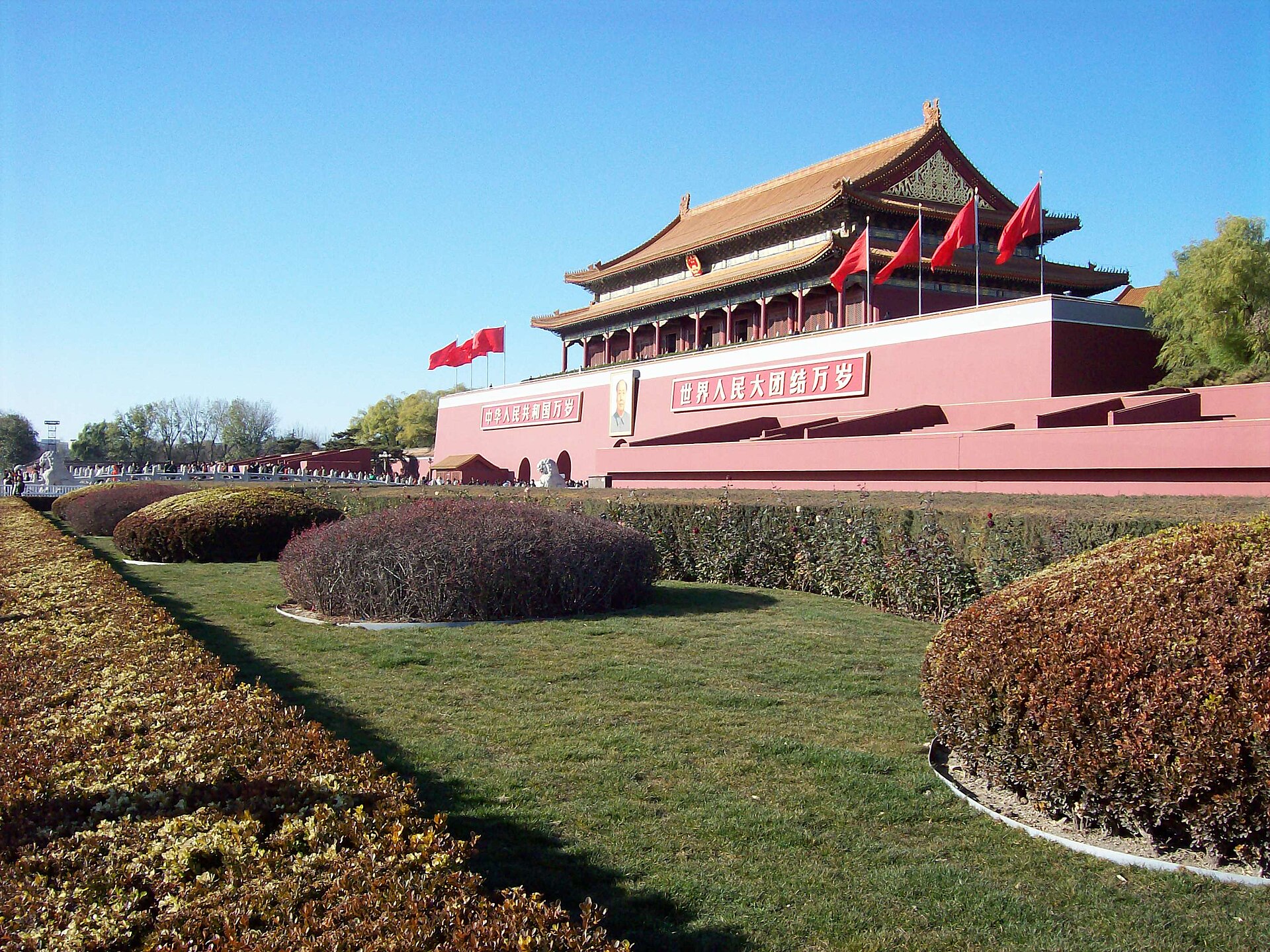
Metro Line 1 to Tiananmen East or Tiananmen West, then walk through Tiananmen Gate. Allow 15 minutes from metro to entry.
When to visit
Morning entry (8:30am) is calmer than midday. Afternoon entries 2–3 hours before close are good light for photography but the imperial halls are dim.
Crowds: Avoid Saturdays, Sundays and public holidays. Domestic-tour-group volume peaks 10am–2pm.
Accessibility
The outer court is largely level. The inner court has uneven flagstones and steps; not fully wheelchair-accessible. Wheelchairs available at the entrance.
Official channels
Verified official contacts and booking flow — no affiliate links.
- Website
- en.dpm.org.cn
- Booking flow
- Online booking required. Passport ID required at booking / gate. Book at least 7 days ahead.
- Notes
- Real-name booking required via the Palace Museum WeChat mini-programme or website; passport ID entered at booking. Same-day tickets extremely limited.
History and context
Construction began in 1406 under the Yongle Emperor of the Ming dynasty and finished in 1420, drawing on roughly a million labourers. Twenty-four emperors resided here across the Ming and Qing from 1420 until 1912, when the six-year-old Puyi abdicated. Puyi remained in the inner court until his eviction in 1924 and the complex opened as the Palace Museum in 1925. The grave axis runs 961 metres from Meridian Gate south to Divine Might Gate north.
What the visit is like
Plan four to six hours minimum — longer if you enter both gallery add-ons. The outer court state halls sit on raised marble terraces and were used for enthronements and imperial audiences; the inner court residences beyond feel domestic by contrast. The Treasure Gallery in the north-east and the Clock Gallery in the Hall of Ancestral Worship need separate ¥10 tickets each — both worthwhile. Afternoon queues build heavily along the Coral Wall side after 1pm.
Photography
Tripods are not permitted anywhere inside the complex and drones are strictly banned across central Beijing. Midday sun blows out the golden glazed roofs — shoot the tiles in raking morning or late-afternoon light instead. The empty Meridian Gate courtyard at dawn is achievable if you hold an 8:30am reservation and walk directly north. Interior halls are dim and shot through glass; a fast prime beats a zoom.
Overlooked details
Some hall roofs still carry original Ming glazed tiles — look for the slightly deeper yellow. The Nine-Dragon Screen sits in front of the Palace of Tranquil Longevity in the north-east. The West Six Palaces include the Hall of Mental Cultivation — the actual emperor bedroom from the Yongzheng reign onward — and Cixi's Storied Building where the Empress Dowager conducted government from behind a screen after 1861.
UNESCO inscription
“Seat of supreme power for over five centuries (1416-1911), the Forbidden City in Beijing, with its landscaped gardens and many buildings (whose nearly 10,000 rooms contain furniture and works of art), constitutes a priceless testimony to Chinese civilization during the Ming and Qing dynasties. The Imperial Palace of the Qing Dynasty in Shenyang consists of 114 buildings constructed between 1625–26 and 1783. It contains an important library and testifies to the foundation of the last dynasty that ruled China, before it expanded its power to the centre of the country and moved the capital to Beijing. This palace then became auxiliary to the Imperial Palace in Beijing. This remarkable architectural edifice offers important historical testimony to the history of the Qing Dynasty and to the cultural traditions of the Manchu and other tribes in the north of China.”
Where to eat nearby
Wangfujing snack street is touristy and cheap — fine for skewers and jianbing but not for a proper meal. Jing Zun Peking Duck near Qianmen is a solid roast-duck sit-down about fifteen minutes south. Jianbing carts at the Tiananmen East metro exit run ¥10–15 for breakfast. The on-site Palace Museum cafes are overpriced for what they serve — eat before or after.
Common misconceptions
It is not the largest palace complex in the world by any settled measure — that claim is disputed against Versailles and others depending on what you count. Only Meridian Gate is used for entry now; you exit at Divine Might Gate to the north and cannot walk back through. Most of the imperial collection is not here — Chiang Kai-shek shipped the finest pieces to Taiwan during the civil war and they sit in Taipei's National Palace Museum.
Gallery
Other attractions in Beijing
Itineraries featuring this site
- Beijing 3-day blitz — first-timer fast pass
3d · Three full days in Beijing covering the Forbidden City, Great Wall at Mutianyu, the Temple of Heaven and the hutong lanes — the absolute core of the capital for visitors with limited time.
- Beijing weekend — 3 days in the capital
3d · Three days in Beijing covering the Forbidden City, Great Wall at Mutianyu and the Temple of Heaven — the irreducible core of the capital, managed at a pace that avoids pure exhaustion.
- Beijing in 4 days
4d · Forbidden City, Wall, Temple of Heaven, hutongs, museums.
- China in 5 days: fastest first-timer route
5d · Beijing's big three sights, a flight south, and two days navigating Shanghai's contrasts.
Other historic sites in China
- Ancient Villages of Southern Anhui — Xidi and Hongcun皖南古村落—西递、宏村
UNESCO · UNESCO-listed pair of Ming-Qing Huizhou merchant villages in southern Anhui, renowned for whitewashed walls, inky horsehead gables and moon-shaped ponds.
- Anqing Zhenfeng Pagoda安庆振风塔
A seven-storey Ming Dynasty pagoda standing on the bank of the Yangtze River in Anqing, considered one of the finest riverside pagodas in southern China and long used as a navigation landmark by Yangtze river pilots.
- Archaeological Ruins of Liangzhu City良渚古城遗址
UNESCO · UNESCO-listed archaeological site in Hangzhou preserving the remains of a 5,000-year-old city with a sophisticated water-management system, jade ritual culture and social hierarchy — regarded as one of the earliest state-level societies in East Asia.
- Capital Cities and Tombs of the Ancient Koguryo Kingdom高句丽王城、王陵及贵族墓葬
UNESCO · UNESCO-listed capital cities and royal tombs of the Koguryo Kingdom in Jian, Jilin — the Chinese portion of a transnational heritage property shared with North Korea, representing one of the most powerful states of ancient East Asia.
- Classical Gardens of Suzhou (UNESCO)苏州古典园林
UNESCO · UNESCO-listed collection of private gardens in Suzhou — four inscribed in 1997 and five more added in 2000 — representing the pinnacle of Chinese garden design through the refined integration of architecture, water, rock and plant.
- Danba Tibetan Watchtowers丹巴碉楼
Clusters of ancient stone watchtowers rising above Tibetan village complexes in the Dadu River valley, said to be among the oldest surviving examples of Tibetan defensive architecture.
- Drum Tower and Bell Tower鼓楼钟楼
Yuan-dynasty drum and bell towers that kept official time for imperial Beijing. Climbable; daily drum performances.
- Dujiangyan Irrigation System都江堰
UNESCO · 2,300-year-old irrigation system on the Min River. Still in use. UNESCO-listed jointly with Mt Qingcheng. Engineering rather than architecture, but one of the great works.
Other UNESCO World Heritage sites in China
- Ancient Villages of Southern Anhui — Xidi and Hongcun皖南古村落—西递、宏村
UNESCO-listed pair of Ming-Qing Huizhou merchant villages in southern Anhui, renowned for whitewashed walls, inky horsehead gables and moon-shaped ponds.
- Archaeological Ruins of Liangzhu City良渚古城遗址
UNESCO-listed archaeological site in Hangzhou preserving the remains of a 5,000-year-old city with a sophisticated water-management system, jade ritual culture and social hierarchy — regarded as one of the earliest state-level societies in East Asia.
- Badain Jaran Desert — Lakes and Dunes巴丹吉林沙漠—沙山湖泊群
UNESCO Natural World Heritage site in Inner Mongolia — the third largest desert in China, featuring some of the world's tallest stationary dunes and a unique network of freshwater and saline lakes sustained by a still-unexplained subterranean water system.
- Capital Cities and Tombs of the Ancient Koguryo Kingdom高句丽王城、王陵及贵族墓葬
UNESCO-listed capital cities and royal tombs of the Koguryo Kingdom in Jian, Jilin — the Chinese portion of a transnational heritage property shared with North Korea, representing one of the most powerful states of ancient East Asia.
- China Danxia中国丹霞
UNESCO Natural World Heritage site — a serial property of six Danxia landscapes across six provinces, representing China's defining red-cliff-and-pillar sandstone landform type, including Danxia Mountain, Zhangye, Taining and Langshan.
- Classical Gardens of Suzhou (UNESCO)苏州古典园林
UNESCO-listed collection of private gardens in Suzhou — four inscribed in 1997 and five more added in 2000 — representing the pinnacle of Chinese garden design through the refined integration of architecture, water, rock and plant.
- Couple's Retreat Garden耦园
UNESCO-listed Suzhou garden organised symmetrically around a central residence. Less crowded than the four most-visited gardens.
- Drepung Monastery哲蚌寺
Once the largest monastery in the world (10,000+ monks). 8 km west of Lhasa. Active Gelugpa monastery; debating courtyard sessions in the afternoon.
Frequently asked questions
- How much does Forbidden City (Palace Museum) cost to visit?
- Adult entry to Forbidden City (Palace Museum) is ¥60, ¥20 for children. April–October ¥60; November–March ¥40. Online booking required.
- When is Forbidden City (Palace Museum) open?
- Forbidden City (Palace Museum) opening hours: 8:30am–5pm Apr–Oct; 8:30am–4:30pm Nov–Mar. Closed Mondays.
- How long do you need at Forbidden City (Palace Museum)?
- Allow 4–6 hours for Forbidden City (Palace Museum). Add buffer time if you plan to visit at peak season or include nearby sights in the same trip.
- When is the best time to visit Forbidden City (Palace Museum)?
- Morning entry (8:30am) is calmer than midday. Afternoon entries 2–3 hours before close are good light for photography but the imperial halls are dim.
- How do you get to Forbidden City (Palace Museum)?
- Metro Line 1 to Tiananmen East or Tiananmen West, then walk through Tiananmen Gate. Allow 15 minutes from metro to entry.
- How do you avoid the crowds at Forbidden City (Palace Museum)?
- Avoid Saturdays, Sundays and public holidays. Domestic-tour-group volume peaks 10am–2pm.
Spotted something out of date? Submit a correction.
Research
Cross-checked against primary sources
Verified
Address, hours, fees confirmed at the date shown
Updated
Re-verified periodically; corrections welcome