Historic site · BEIJING
Old Summer Palace (Yuanmingyuan)
圆明园 · Yuánmíngyuán
About
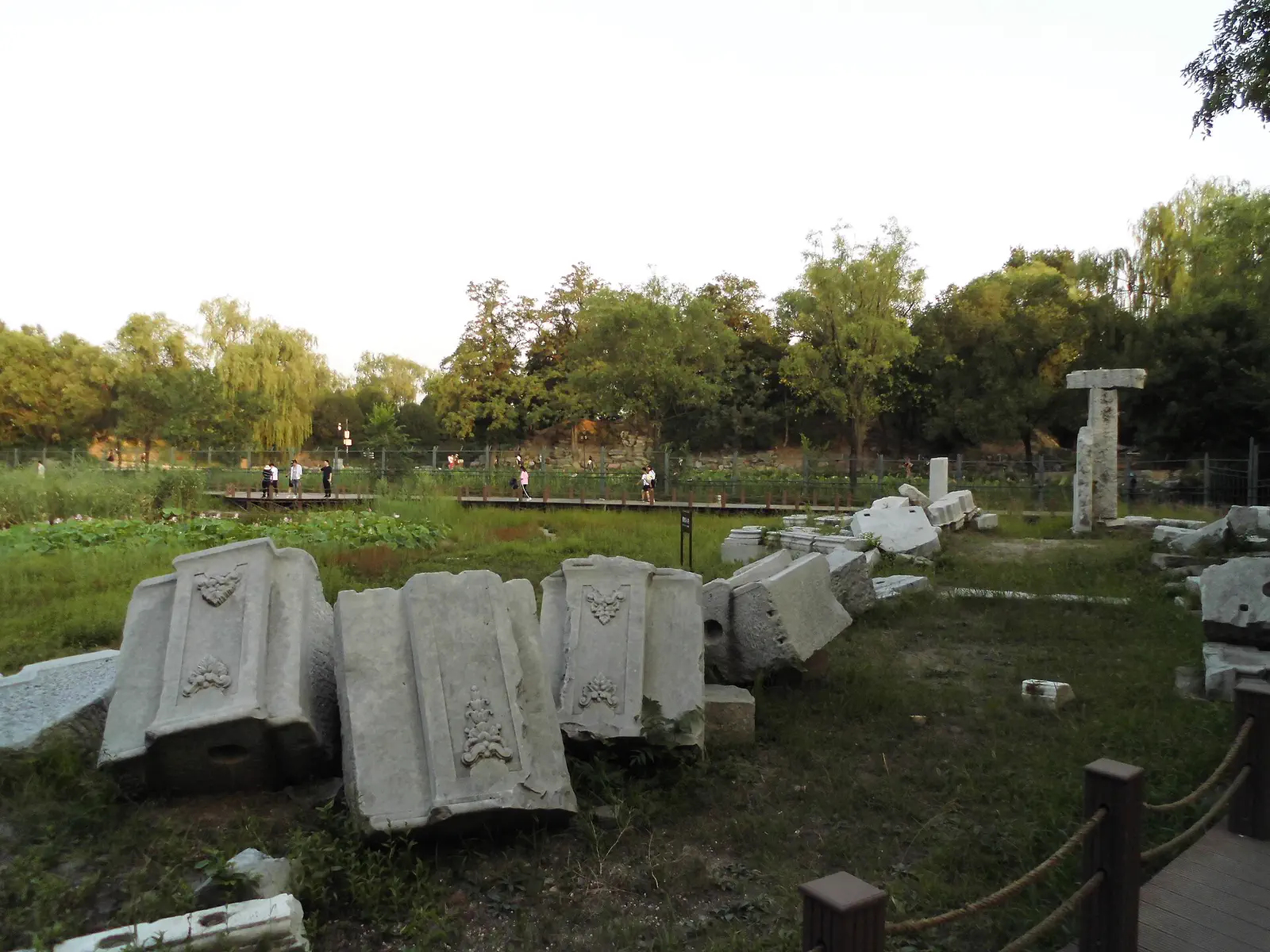
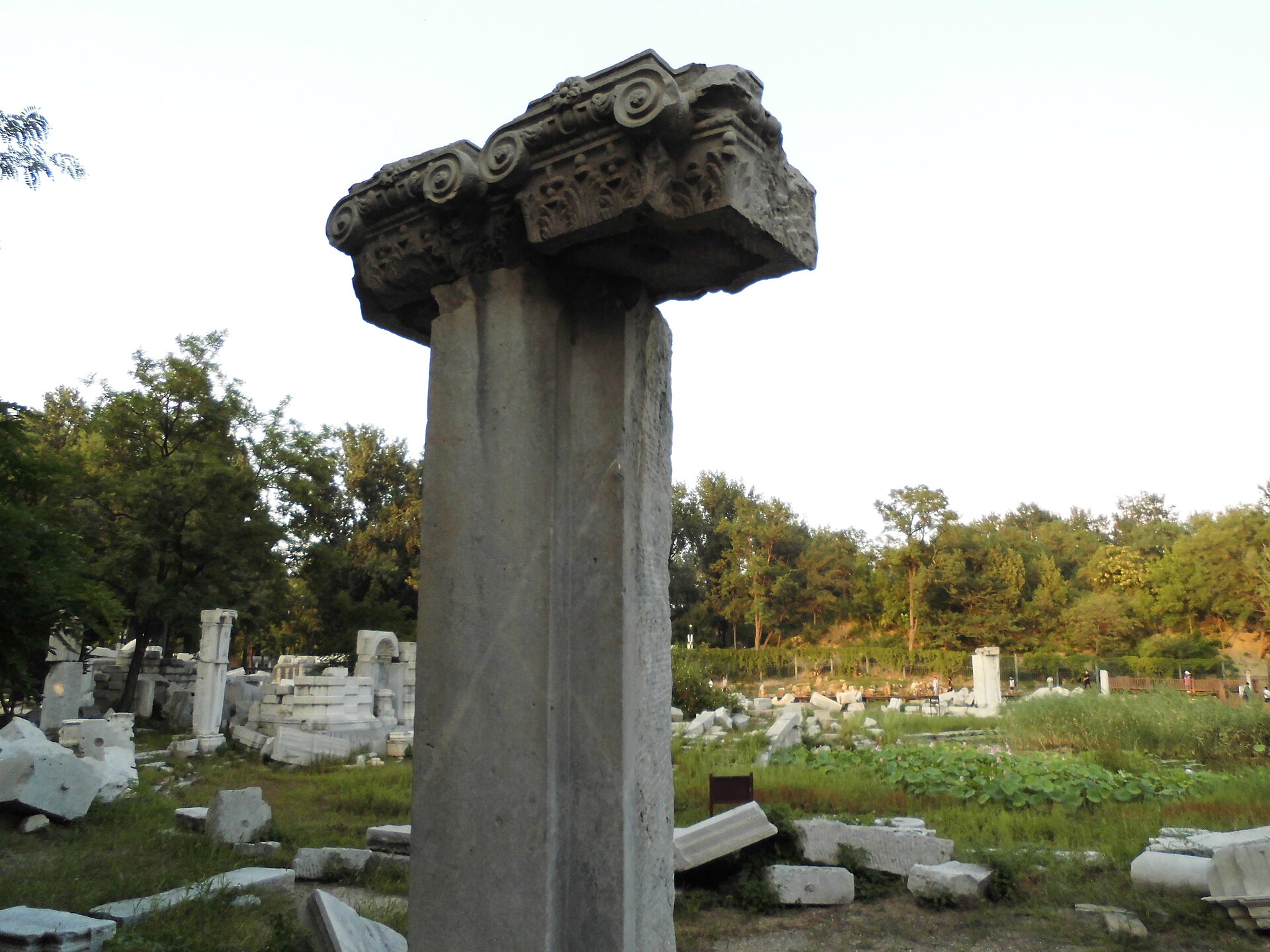
The burnt-out remains of the Qing imperial garden destroyed by Anglo-French troops in 1860. Substantial ruins, lakes, and the famous Western-Style Mansions stone fragments.
Yuanmingyuan — the Garden of Perfect Brightness — was the principal imperial residence of the Qing emperors from Yongzheng onward, expanded through the 18th century into a complex of three interconnected gardens covering 350 hectares. It was, by the accounts of European missionaries and diplomats who saw it, one of the most elaborate and beautiful landscape gardens ever created: an archipelago of artificial lakes, islands, pavilions, and landscape compositions drawing on Chinese classical garden tradition and, in one corner, on European Baroque architecture.
The European Baroque structures — known as the Western-Style Mansions (Xiyang Lou) — were the most unusual element. Designed by Jesuit architects Giuseppe Castiglione and Michel Benoist for the Emperor Qianlong in the 1740s–60s, they consisted of a series of marble fountains, arcaded galleries, and baroque façades overlaid with Chinese decorative details. Nothing like them existed elsewhere in Asia. In October 1860, during the Second Opium War, a combined British and French force looted and then systematically burned the entire garden complex over several days — an act of deliberate cultural destruction ordered in reprisal for the torture of British prisoners of war. The gardens were never rebuilt; the ruins were subsequently quarried for building materials. The Western-Style Mansions are the only surviving structural remnant, a field of shattered marble columns, fountain basins, and archways that has become the primary image of historical injury in Chinese national consciousness.
The 350-hectare site is now a public park. Most of the lakes, paths, and former island positions are accessible. The Western Mansions ruins require a separate through-ticket and are in the northeastern corner; budget at least an hour there alone. The broader park — walking the causeways, seeing the scale of the former lakes — takes a half-day. The adjacent Summer Palace is a 20-minute walk or short bus ride.
How to get there
Metro Line 4 to Yuanmingyuan Park.
When to visit
Spring or autumn. The Western Mansions ruins are most photogenic.
Gallery
Other attractions in Beijing
Other historic sites in China
- Ancient Villages of Southern Anhui — Xidi and Hongcun皖南古村落—西递、宏村
UNESCO · UNESCO-listed pair of Ming-Qing Huizhou merchant villages in southern Anhui, renowned for whitewashed walls, inky horsehead gables and moon-shaped ponds.
- Anqing Zhenfeng Pagoda安庆振风塔
A seven-storey Ming Dynasty pagoda standing on the bank of the Yangtze River in Anqing, considered one of the finest riverside pagodas in southern China and long used as a navigation landmark by Yangtze river pilots.
- Archaeological Ruins of Liangzhu City良渚古城遗址
UNESCO · UNESCO-listed archaeological site in Hangzhou preserving the remains of a 5,000-year-old city with a sophisticated water-management system, jade ritual culture and social hierarchy — regarded as one of the earliest state-level societies in East Asia.
- Capital Cities and Tombs of the Ancient Koguryo Kingdom高句丽王城、王陵及贵族墓葬
UNESCO · UNESCO-listed capital cities and royal tombs of the Koguryo Kingdom in Jian, Jilin — the Chinese portion of a transnational heritage property shared with North Korea, representing one of the most powerful states of ancient East Asia.
- Classical Gardens of Suzhou (UNESCO)苏州古典园林
UNESCO · UNESCO-listed collection of private gardens in Suzhou — four inscribed in 1997 and five more added in 2000 — representing the pinnacle of Chinese garden design through the refined integration of architecture, water, rock and plant.
- Danba Tibetan Watchtowers丹巴碉楼
Clusters of ancient stone watchtowers rising above Tibetan village complexes in the Dadu River valley, said to be among the oldest surviving examples of Tibetan defensive architecture.
- Drum Tower and Bell Tower鼓楼钟楼
Yuan-dynasty drum and bell towers that kept official time for imperial Beijing. Climbable; daily drum performances.
- Dujiangyan Irrigation System都江堰
UNESCO · 2,300-year-old irrigation system on the Min River. Still in use. UNESCO-listed jointly with Mt Qingcheng. Engineering rather than architecture, but one of the great works.
Frequently asked questions
- How much does Old Summer Palace (Yuanmingyuan) cost to visit?
- Adult entry to Old Summer Palace (Yuanmingyuan) is ¥25, ¥12 for children. Through-ticket including Western Mansions ¥45.
- When is Old Summer Palace (Yuanmingyuan) open?
- Old Summer Palace (Yuanmingyuan) opening hours: 7am–7pm Apr–Oct; 7am–5:30pm Nov–Mar.
- How long do you need at Old Summer Palace (Yuanmingyuan)?
- Allow 2–3 hours for Old Summer Palace (Yuanmingyuan). Add buffer time if you plan to visit at peak season or include nearby sights in the same trip.
- When is the best time to visit Old Summer Palace (Yuanmingyuan)?
- Spring or autumn. The Western Mansions ruins are most photogenic.
- How do you get to Old Summer Palace (Yuanmingyuan)?
- Metro Line 4 to Yuanmingyuan Park.
Spotted something out of date? Submit a correction.
Research
Cross-checked against primary sources
Verified
Address, hours, fees confirmed at the date shown
Updated
Re-verified periodically; corrections welcome