Historic site · SHANXI
Qiao Family Compound
乔家大院 · Qiáo Jiā Dàyuàn
About
Qing-era merchant compound that featured in Zhang Yimou's Raise the Red Lantern. 6 main courtyards with 313 rooms.
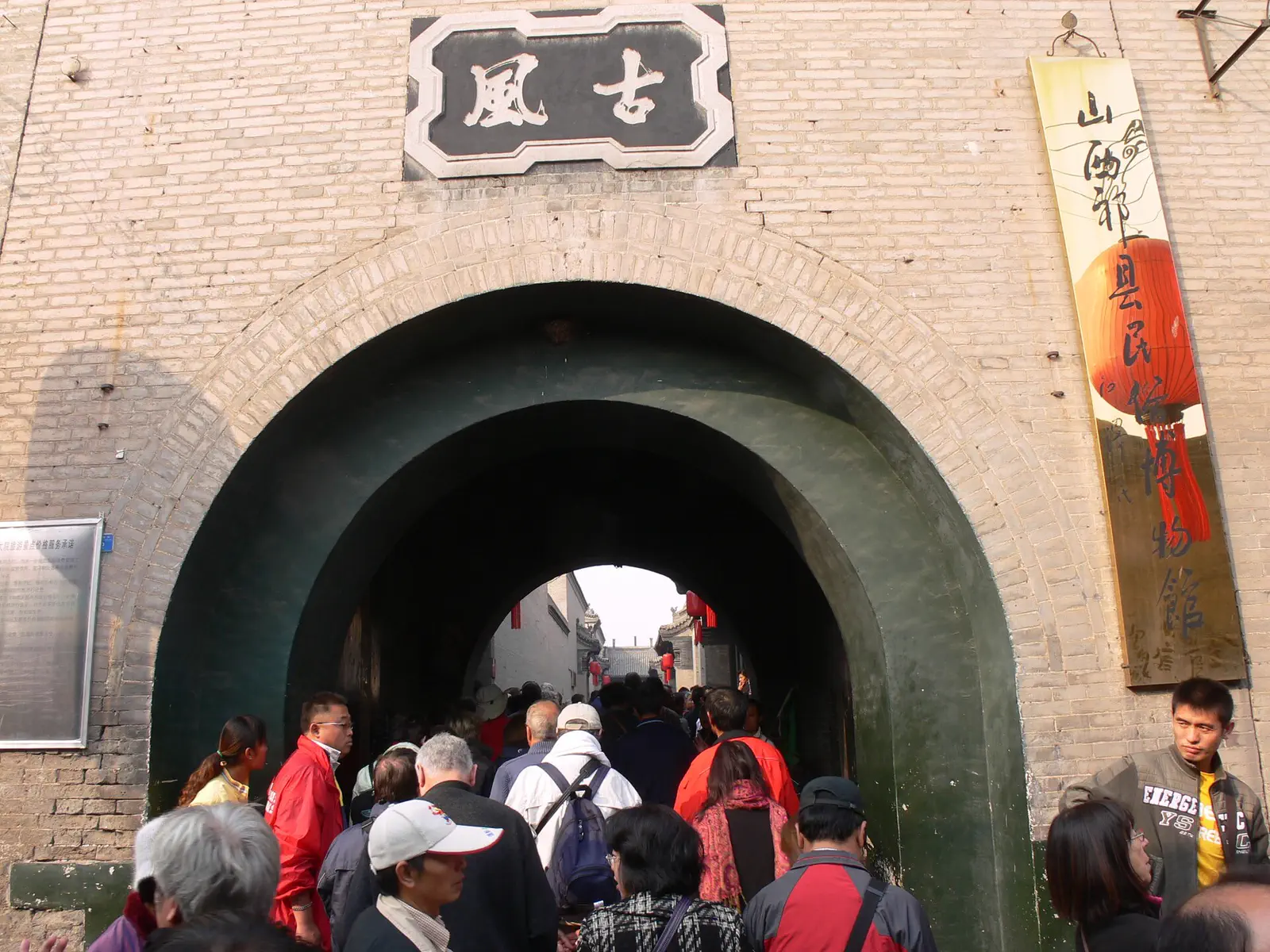
The Qiao Family Compound stands in Qixian County, approximately 50 kilometres north of Pingyao, and was the ancestral residence of the Qiao family — a Shanxi merchant dynasty whose wealth derived primarily from the Qing-era piaohao banking system that dominated financial transfers across north and northwest China in the 18th and 19th centuries. Construction on the compound began in the mid-Qing dynasty and was largely complete by the early 20th century, covering approximately 9,000 square metres across six large enclosed courtyard sections and a total of 313 rooms. The architecture is a concentrated example of northern Chinese merchant compound design: high outer walls presenting a blank face to the street, elaborate carved woodwork and brick carvings on interior gates and screens, and a spatial hierarchy that moves from public reception areas in the outer courtyards to private family quarters in the inner sections.
The compound's national profile rests substantially on Zhang Yimou's 1991 film Raise the Red Lantern, which used the compound as its primary location. The film's visual language — red lanterns suspended in the grey-walled courtyard alleys, the architectural claustrophobia of the inner quarters — drew on the actual spatial qualities of the Qiao compound. Visitors familiar with the film will recognise specific gates and yards; the connection to the film is actively marketed at the site. For those who have not seen it, the architectural quality stands on its own as a well-preserved example of late Qing merchant prosperity translated into built form.
The Qiao compound is smaller and architecturally tighter than the Wang Family Compound in nearby Lingshi County, which is spread across a hillside and represents a different register of merchant ambition. Most Shanxi tour itineraries combine Pingyao, the Qiao compound, and the Wang compound as a two-to-three-day circuit.
How to get there
Bus or driver from Pingyao (~30 min).
When to visit
Weekday morning.
Other attractions in Pingyao
Other historic sites in China
- Ancient Villages of Southern Anhui — Xidi and Hongcun皖南古村落—西递、宏村
UNESCO · UNESCO-listed pair of Ming-Qing Huizhou merchant villages in southern Anhui, renowned for whitewashed walls, inky horsehead gables and moon-shaped ponds.
- Anqing Zhenfeng Pagoda安庆振风塔
A seven-storey Ming Dynasty pagoda standing on the bank of the Yangtze River in Anqing, considered one of the finest riverside pagodas in southern China and long used as a navigation landmark by Yangtze river pilots.
- Archaeological Ruins of Liangzhu City良渚古城遗址
UNESCO · UNESCO-listed archaeological site in Hangzhou preserving the remains of a 5,000-year-old city with a sophisticated water-management system, jade ritual culture and social hierarchy — regarded as one of the earliest state-level societies in East Asia.
- Capital Cities and Tombs of the Ancient Koguryo Kingdom高句丽王城、王陵及贵族墓葬
UNESCO · UNESCO-listed capital cities and royal tombs of the Koguryo Kingdom in Jian, Jilin — the Chinese portion of a transnational heritage property shared with North Korea, representing one of the most powerful states of ancient East Asia.
- Classical Gardens of Suzhou (UNESCO)苏州古典园林
UNESCO · UNESCO-listed collection of private gardens in Suzhou — four inscribed in 1997 and five more added in 2000 — representing the pinnacle of Chinese garden design through the refined integration of architecture, water, rock and plant.
- Danba Tibetan Watchtowers丹巴碉楼
Clusters of ancient stone watchtowers rising above Tibetan village complexes in the Dadu River valley, said to be among the oldest surviving examples of Tibetan defensive architecture.
- Drum Tower and Bell Tower鼓楼钟楼
Yuan-dynasty drum and bell towers that kept official time for imperial Beijing. Climbable; daily drum performances.
- Dujiangyan Irrigation System都江堰
UNESCO · 2,300-year-old irrigation system on the Min River. Still in use. UNESCO-listed jointly with Mt Qingcheng. Engineering rather than architecture, but one of the great works.
Frequently asked questions
- How much does Qiao Family Compound cost to visit?
- Adult entry to Qiao Family Compound is ¥138, ¥69 for children.
- When is Qiao Family Compound open?
- Qiao Family Compound opening hours: 8am–6pm.
- How long do you need at Qiao Family Compound?
- Allow 3–4 hours for Qiao Family Compound. Add buffer time if you plan to visit at peak season or include nearby sights in the same trip.
- When is the best time to visit Qiao Family Compound?
- Weekday morning.
- How do you get to Qiao Family Compound?
- Bus or driver from Pingyao (~30 min).
Spotted something out of date? Submit a correction.
Research
Cross-checked against primary sources
Verified
Address, hours, fees confirmed at the date shown
Updated
Re-verified periodically; corrections welcome