CITY · SHANXI
Wutai Mountain
五台山 · Wǔtái Shān
Overview
The highest of China's Four Sacred Buddhist Mountains, a UNESCO World Heritage site in Shanxi with over 50 active monasteries set among alpine meadows at up to 3,058 metres.
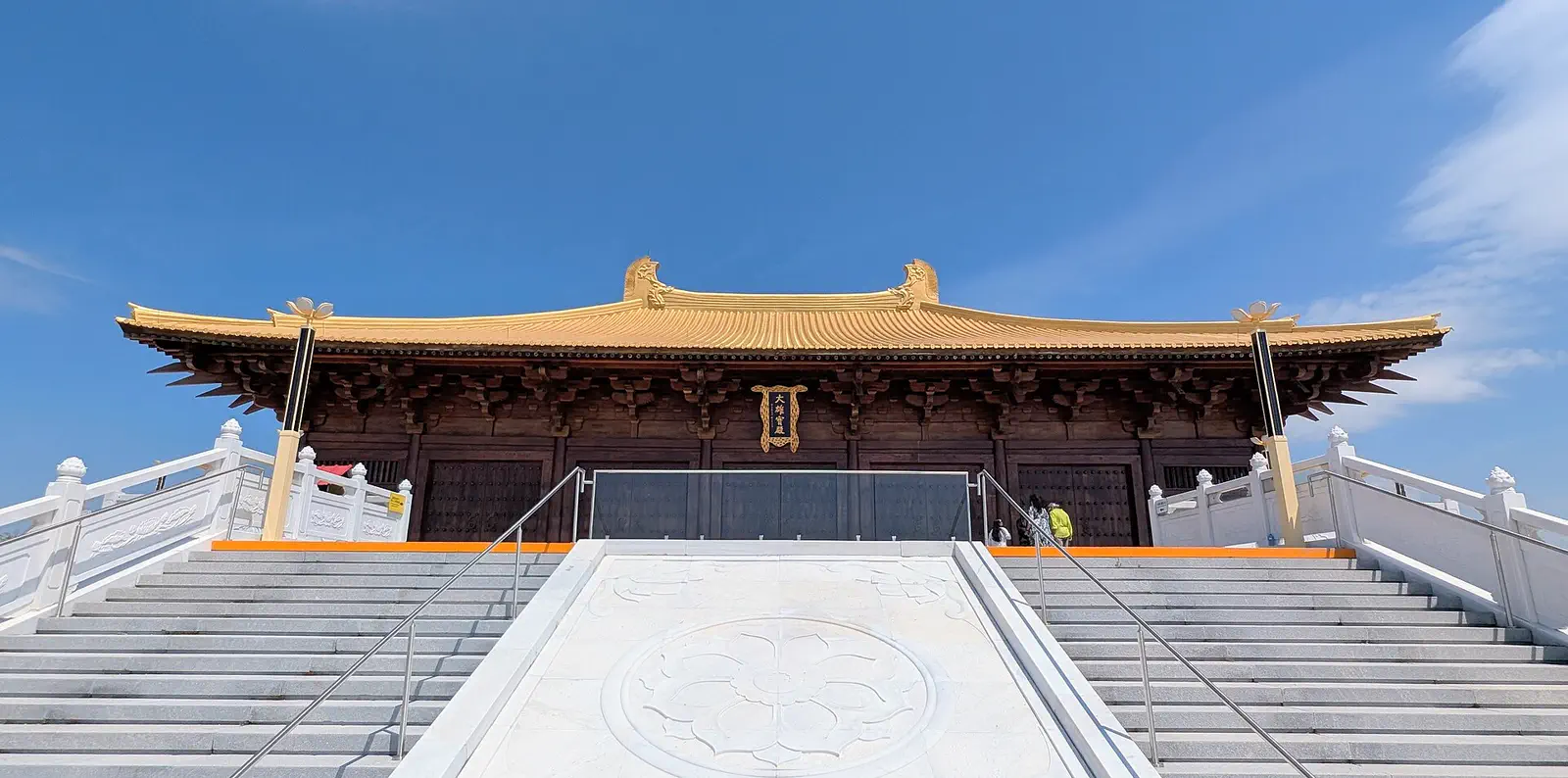
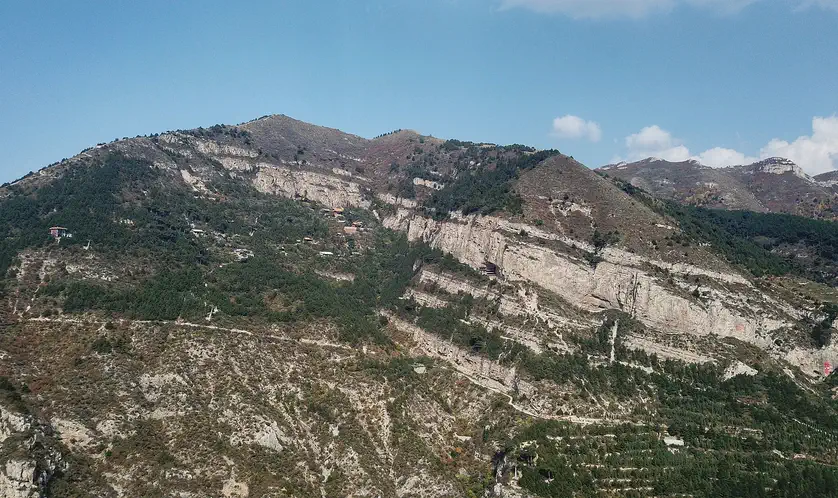
Wutai Mountain — Wutai Shan — is the highest of China's Four Sacred Buddhist Mountains and perhaps the most architecturally impressive, with over 50 active monasteries and temples concentrated in the mountain basin and on the five surrounding plateaux that give the range its name (Five Terrace Mountain). Inscribed as a UNESCO World Heritage Site in 2009, the complex represents more than 1,500 years of Buddhist construction spanning the Northern Wei through the Qing dynasties, including some of the oldest surviving wooden architecture in China.
The sacred mountain is associated with Manjushri, the Bodhisattva of Wisdom, and attracts pilgrims from across China and from Tibet, Mongolia and other Buddhist cultures. The Tibetan Buddhist tradition is as prominent here as the Han Chinese tradition — Qing emperors patronised the mountain heavily and Tibetan-style temples sit alongside older Chinese-style buildings. The Xiantong Temple is the oldest surviving complex, with a history extending back to the Han dynasty. The Tayuan Temple with its distinctive white pagoda is the most recognised landmark in the central town.
The mountain basin town of Taihuai is the administrative and commercial heart of the scenic area, situated at about 1,700 metres. The five terraces that define the landscape rise to North Terrace at 3,058 metres, the highest point in Shanxi province. At these elevations, snow is possible in any month and summer temperatures are genuinely cool even in July and August, making the mountain a traditional escape from the lowland heat.
The practical gateway city is Taiyuan, the Shanxi provincial capital, from which coaches run directly to Wutai Shan in about 3 hours. Some visitors come from Beijing by overnight train or coach.
Cultural & access notes
Both Han Chinese and Tibetan Buddhist traditions are practised here. Tibetan monks in maroon robes are a common presence. The mountain holds significant religious weight for Mongolian and Tibetan pilgrims as well as Han Chinese devotees. Prostrations, circuit walks and temple offerings are ongoing religious activities — give space and observe quietly.
What to see
- Tayuan Temple — the white pagoda and Manjushri hall, the mountain's central landmark
- Xiantong Temple — one of the oldest Buddhist complexes in China
- Shuxiang Temple — famous for its 500-arhat hall
- Bishan Temple — beautifully preserved Qing-dynasty nunnery
- North Terrace (Beitai, 3,058 m) — highest point, views across highland grassland
- Nanchan Temple and Foguang Temple — nearby Tang-dynasty timber halls, among the oldest wooden buildings in China
- Dawn pilgrimage circuit — walking the town temples at dawn with monks and pilgrims
What to eat
- Daoist and Buddhist vegetarian dishes — served at temple-affiliated restaurants
- Shanxi vinegar-dressed noodles (he lao mian, a highland style)
- Buckwheat noodles — grown at altitude in Shanxi
- Hot congee and steamed buns — widely available in Taihuai town
- Mountain mushroom and wild herb dishes in season
Getting there
From Taiyuan (TYN), coaches depart from the long-distance bus station to Wutai Shan; journey approximately 3 hours. From Beijing, direct long-distance coaches or an overnight train to Shahe then a local connection are used. Some pilgrimage tour groups go from Datong (2 hours by road). A scenic area entry fee applies at the main gate.
Getting around
The scenic area bus network connects the main monastery cluster in Taihuai with the five terraces. Minibuses and hired vehicles cover the outer temples. Walking between the clustered Taihuai temples is pleasant and takes 2–3 hours for the main loop.
Where to stay
Taihuai town has guesthouses, monasteries offering simple pilgrim rooms, and mid-range hotels. Booking well ahead in summer and during major Buddhist festivals (especially the 6th lunar month) is essential.
We list neighbourhoods, not specific hotels — we don't endorse hotels.
When to go
June–September is the primary season — the mountain is accessible, roads are open, and the highland landscape is green. July–August is peak pilgrim and tourist season; accommodation fills quickly. October brings clear skies and autumn colour but is cooling fast. November–May sees heavy snow above 2,000 m and most outer terrace roads close.
Budget guide (CNY per day)
| Backpacker | ¥220 |
| Mid-range | ¥480 |
| Comfortable | ¥950 |
Safety notes
Altitude at the terraces (above 3,000 m) can affect those arriving directly from sea level. The mountain road from Taiyuan climbs steeply; landslides are possible after heavy rain in summer. Bring warm clothing even in summer — night temperatures in Taihuai can drop below 10°C in July.
Nearby attractions
Day trips within 150 km
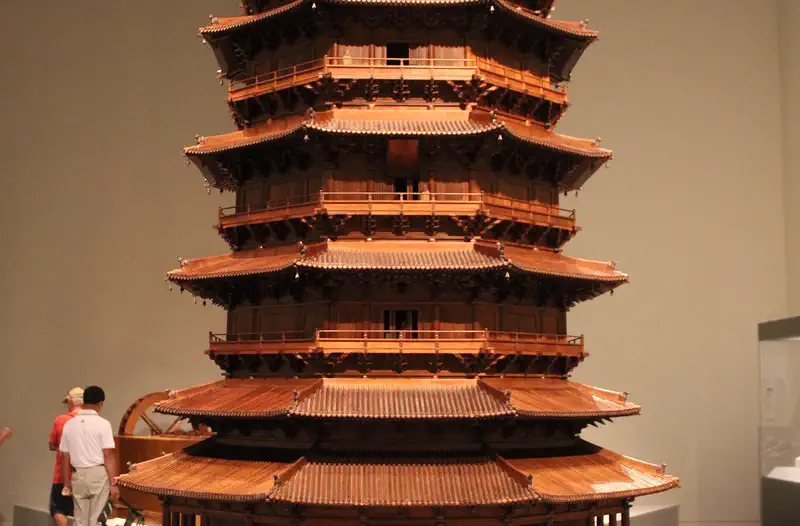
Wooden Pagoda of Yingxian 应县木塔
67m wooden pagoda built 1056 — the world's tallest existing wooden pagoda and the oldest fully timber-framed pagoda anywhere.
≈ 65 km from Wutai Mountain
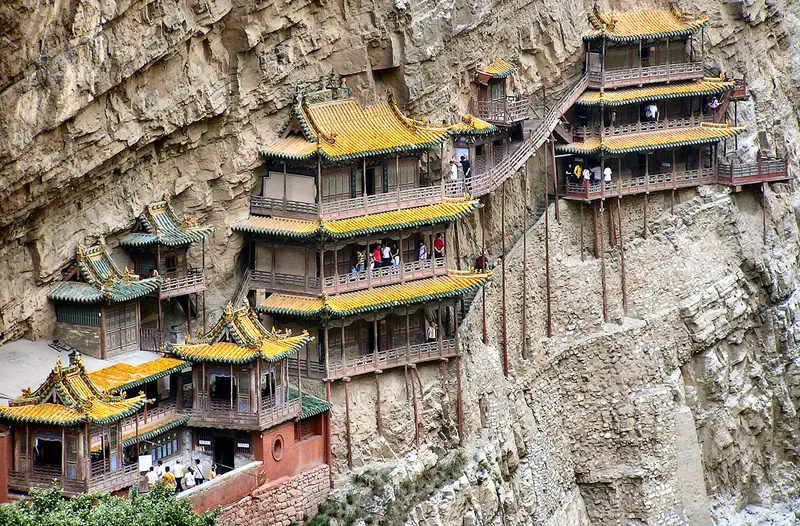
Hanging Temple 悬空寺
1,500-year-old wooden temple complex pinned to the side of a 75m cliff at Mt Heng. Engineered with horizontal posts driven into the rock face.
≈ 65 km from Wutai Mountain
Other cities in Shanxi
- Datong大同
Northern Shanxi gateway to the Yungang Grottoes (UNESCO) — the 5th-century Buddhist cliff carvings — and the cliff-side Hanging Temple at Mt Heng.
- Linfen临汾
Shanxi city in the Fen River valley, regarded in Chinese historiography as the legendary seat of Emperors Yao and Shun. Home to Hukou Waterfall — the largest yellow-water waterfall in the world — and a centre of coal-mining heritage now undergoing environmental transition.
- Pingyao平遥
UNESCO-listed Ming and Qing walled town in central Shanxi — the most completely preserved old walled city in China. Banking heritage and 6 km of intact city wall.
- Taiyuan太原
Capital of Shanxi, gateway to the Pingyao ancient walled town and the Yungang and Datong-area Buddhist cliff carvings. The home of vinegar.
Itineraries visiting Wutai Mountain
- Four Buddhist Mountains Circuit, 10 days
10d · China's four sacred Buddhist mountains in sequence: Wutai (Shanxi), Jiuhua (Anhui), Emei (Sichuan), and Putuo (Zhejiang) — each dedicated to a different bodhisattva.
- Buddhist pilgrimage — Putuoshan, Wutaishan, Emei and Jiuhua, 10 days
10d · Ten days visiting the Four Sacred Buddhist Mountains of China — Putuo (Guanyin), Wutai (Manjushri), Emei (Samantabhadra) and Jiuhua (Ksitigarbha) — each with its own character and monastic tradition.
Food of Northern China
- Beijing Lamb Hot Pot涮羊肉
Beijing-Mongolian style hot pot — clear broth, thinly-sliced lamb, sesame-paste dipping sauce.
- Boiled Dumplings (Shuijiao)水饺
Wheat-wrapper dumplings filled with pork-and-cabbage, lamb-and-leek, or vegetable, boiled and served with vinegar.
- Cat's Ear Noodles猫耳朵
Small thumbnail-pinched Shanxi pasta, shaped like cat's ears. Stir-fried with vegetables or in soup.
- Goubuli Baozi狗不理包子
Tianjin's signature steamed pork buns. The original house, founded 1858, is still operating.
Wutai Mountain weather by month
| Month | Jan | Feb | Mar | Apr | May | Jun | Jul | Aug | Sep | Oct | Nov | Dec |
|---|---|---|---|---|---|---|---|---|---|---|---|---|
| High °C | -12 | -10 | -3 | 0 | 7 | 12 | 13 | 12 | 8 | 1 | -6 | -13 |
| Low °C | -21 | -19 | -12 | -8 | -2 | 4 | 7 | 6 | 2 | -6 | -13 | -21 |
| Rain mm | 6 | 13 | 29 | 69 | 72 | 99 | 216 | 174 | 93 | 47 | 31 | 6 |
| Rain days | 2 | 3 | 6 | 10 | 14 | 16 | 21 | 20 | 13 | 8 | 5 | 2 |
2019–2023 average via Open-Meteo ERA5 (ERA5 reanalysis). "Rain days" = days per month with ≥1 mm precipitation.
Frequently asked questions
- When is the best time to visit Wutai Mountain?
- The best months to visit Wutai Mountain are June, July, August, and September. June–September is the primary season — the mountain is accessible, roads are open, and the highland landscape is green. July–August is peak pilgrim and tourist season; accommodation fills quickly.
- How many days do you need in Wutai Mountain?
- Plan 3 days for Wutai Mountain if you want to see the headline sights without rushing — Tayuan Temple, Xiantong Temple, Shuxiang Temple. Add an extra day for day trips from the city or for repeat visits to your favourite neighbourhood.
- Is Wutai Mountain safe for tourists?
- Altitude at the terraces (above 3,000 m) can affect those arriving directly from sea level. The mountain road from Taiyuan climbs steeply; landslides are possible after heavy rain in summer. Bring warm clothing even in summer — night temperatures in Taihuai can drop below 10°C in July.
- How do you get around Wutai Mountain?
- The scenic area bus network connects the main monastery cluster in Taihuai with the five terraces. Minibuses and hired vehicles cover the outer temples. Walking between the clustered Taihuai temples is pleasant and takes 2–3 hours for the main loop.
- What's the daily budget for Wutai Mountain?
- Budget guide for Wutai Mountain: backpackers from around ¥220/day, mid-range travellers ¥480/day, comfortable trips from ¥950/day. These ranges cover accommodation, food, local transport and one paid sight per day, and exclude flights to and from the city.
- Where should you stay in Wutai Mountain?
- Taihuai town has guesthouses, monasteries offering simple pilgrim rooms, and mid-range hotels. Booking well ahead in summer and during major Buddhist festivals (especially the 6th lunar month) is essential.
Spotted something out of date? Submit a correction.
Research
Cross-checked against primary sources
Verified
Address, hours, fees confirmed at the date shown
Updated
Re-verified periodically; corrections welcome