Itinerary · 12 days · balanced
Buddhist grottoes circuit in 12 days
Datong, Luoyang, Tianshui, and Dunhuang — China's four great cliff-carved Buddhist sanctuaries in sequence.
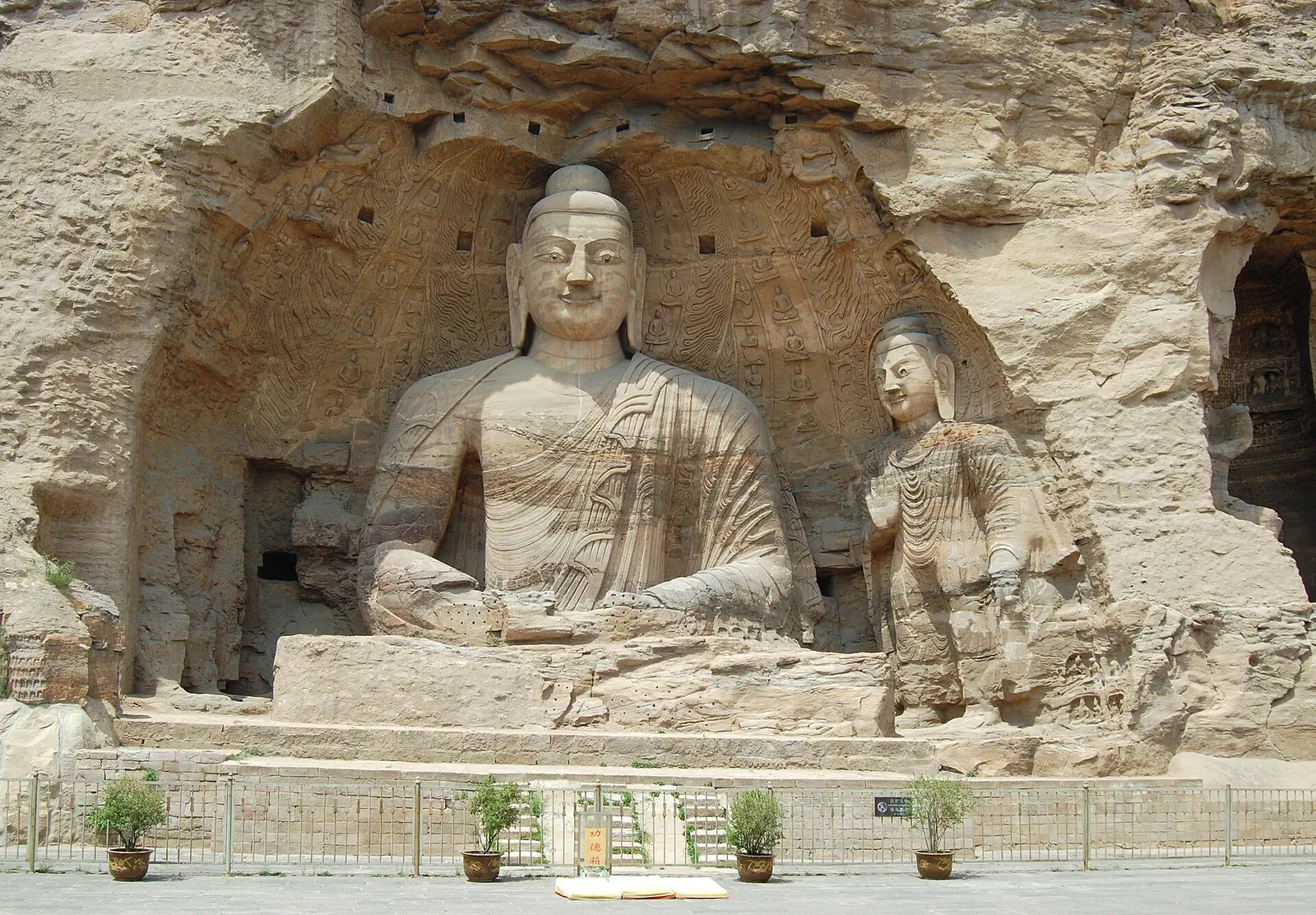
China's rock-cut Buddhist temples span fifteen centuries of patronage, from the Northern Wei state carvings at Yungang and Longmen through the Tang and later work at Maijishan and Mogao. Seeing them in sequence is not simply a checklist exercise: each site reveals something about how Buddhism adapted to Chinese political culture, aesthetic preference, and geography. The route runs roughly west along what was once the Silk Road, ending at Dunhuang where desert light makes the Mogao paintings look as they were always meant to look.
Day by day
Day 1 · datong
Arrive Datong — Yungang Grottoes
Datong is 2.5 hours from Beijing by high-speed rail. Head directly to Yungang after checking in — the grottoes are 16 km west and best seen in afternoon light when the west-facing facades catch the sun. Caves 5 and 6 are the most visited; caves 16–20 the most austere and moving.
Attractions: yungang-grottoes
Day 2 · datong
Datong — Hanging Temple and Wooden Pagoda
Day excursion south: the Hanging Temple (Xuankong Si) clings to a cliff above Jinlong Gorge and blends Buddhist, Taoist, and Confucian iconography in one narrow structure. On the return, the Wooden Pagoda of Yingxian (Fogong Temple Pagoda) — the world's oldest surviving all-wood pagoda, built 1056 CE — is a short detour.
Attractions: hanging-temple, wooden-pagoda-yingxian
Day 3 · luoyang
Travel to Luoyang — Longmen Grottoes afternoon
High-speed rail Datong to Luoyang via Taiyuan or Zhengzhou: approximately 4–5 hours with one change. Arrive midday. Afternoon at Longmen Grottoes — 2,300 caves carved over 400 years, with the colossal Vairocana Buddha of Fengxian Cave the centrepiece. Evening at the Old Street night food market.
Attractions: longmen-grottoes
Day 4 · luoyang
Luoyang — White Horse Temple and old city
White Horse Temple, nominally the oldest Buddhist temple in China (68 CE), sits 12 km east of central Luoyang. The grounds are large and include Tibetan, Indian, and Thai-style halls added in recent decades. Afternoon in the Luoyang Museum — its Han-dynasty tomb murals are a counterpoint to the Buddhist emphasis of the grottoes.
Attractions: white-horse-temple-luoyang
Day 5 · luoyang
Shaolin Temple day trip from Luoyang
Shaolin Temple at Dengfeng is 80 km from Luoyang — bus connections run from Luoyang coach station, roughly 2 hours. The temple and Pagoda Forest need 3–4 hours. Return by late afternoon.
Attractions: shaolin-temple, dengfeng-historic-monuments
Day 6 · xian
Travel to Xi'an — staging point
High-speed rail Luoyang to Xi'an: approximately 2 hours. Xi'an is not a grottoes destination on this itinerary but a necessary waypoint. Afternoon at the Shaanxi History Museum — the collection contextualises the Silk Road Buddhist transmission better than almost any other museum in China.
Attractions: shaanxi-history-museum, xian-city-wall
Day 7 · xian
Xi'an — Terracotta Army, then evening departure
Terracotta Army 45 minutes east of Xi'an — full morning. Book timed entry online. Return to Xi'an and depart on the afternoon or evening high-speed rail towards Tianshui (approximately 2.5 hours from Xi'an).
Attractions: terracotta-army
Day 8 · tianshui
Tianshui — Maijishan Grottoes
Tianshui is the base for Maijishan (Haystack Mountain) Grottoes. The site is 45 km south of town by bus or taxi. Maijishan is perhaps the most atmospheric of the four major grottoes — 194 caves cut into a dramatic isolated butte, connected by iron catwalks with vertiginous views. Some caves show Wei-dynasty carvings of exceptional quality.
Day 9 · lanzhou
Travel through Lanzhou to Dunhuang
Tianshui to Lanzhou by rail (1.5 hours), then Lanzhou to Dunhuang by high-speed rail (approximately 4 hours on the Lanzhou–Xinjiang line). Arrive Dunhuang evening. Check in.
Day 10 · dunhuang
Dunhuang — Mogao Caves
The Mogao Caves require advance booking — the standard ticket allows entry to 8 open caves plus the digital exhibition centre. Specialist tickets for a further 4 caves are available with separate booking. Morning session recommended. The cave murals span 1,000 years of Buddhist art and are the most complete surviving record of Silk Road visual culture.
Attractions: mogao-caves
Day 11 · dunhuang
Dunhuang — Crescent Lake, Mingsha Dunes, Yumen Pass
Morning at Crescent Lake and Mingsha Dunes — the oasis lake surrounded by sand dunes is a visual cliché but still striking in person. Afternoon drive to Yumen Pass (Jade Gate Pass) and the Western Han Great Wall beacon towers, which provide a grounding in how the Silk Road was actually administered.
Attractions: crescent-lake-mingsha
Day 12 · dunhuang
Dunhuang — Mogao revisit or depart
Optional second Mogao visit to different caves, or morning at the Dunhuang Research Institute museum. Depart from Dunhuang Airport — flights to Xi'an, Lanzhou, Urumqi, and Beijing.
Budget guide (CNY per day)
| Backpacker | ¥380 |
| Mid-range | ¥900 |
| Comfortable | ¥2100 |
Mogao Caves specialist tickets add CNY 200–300 per person; budget excludes return flight from Dunhuang.
Cities covered
Attractions covered
- Yungang Grottoes云冈石窟
UNESCO
- Hanging Temple悬空寺
- Wooden Pagoda of Yingxian应县木塔
- Longmen Grottoes龙门石窟
UNESCO
- White Horse Temple白马寺
- Shaolin Temple少林寺
UNESCO
- Historic Monuments of Dengfeng in 'The Centre of Heaven and Earth'登封'天地之中'历史建筑群
UNESCO
- Shaanxi History Museum陕西历史博物馆
- Xi'an City Wall西安城墙
- Terracotta Army兵马俑
UNESCO
- Mogao Caves莫高窟
UNESCO
- Crescent Lake & Mingsha Mountain月牙泉与鸣沙山
Other itineraries visiting Datong