CITY · SHANXI
Linfen
临汾 · Línfén
Overview
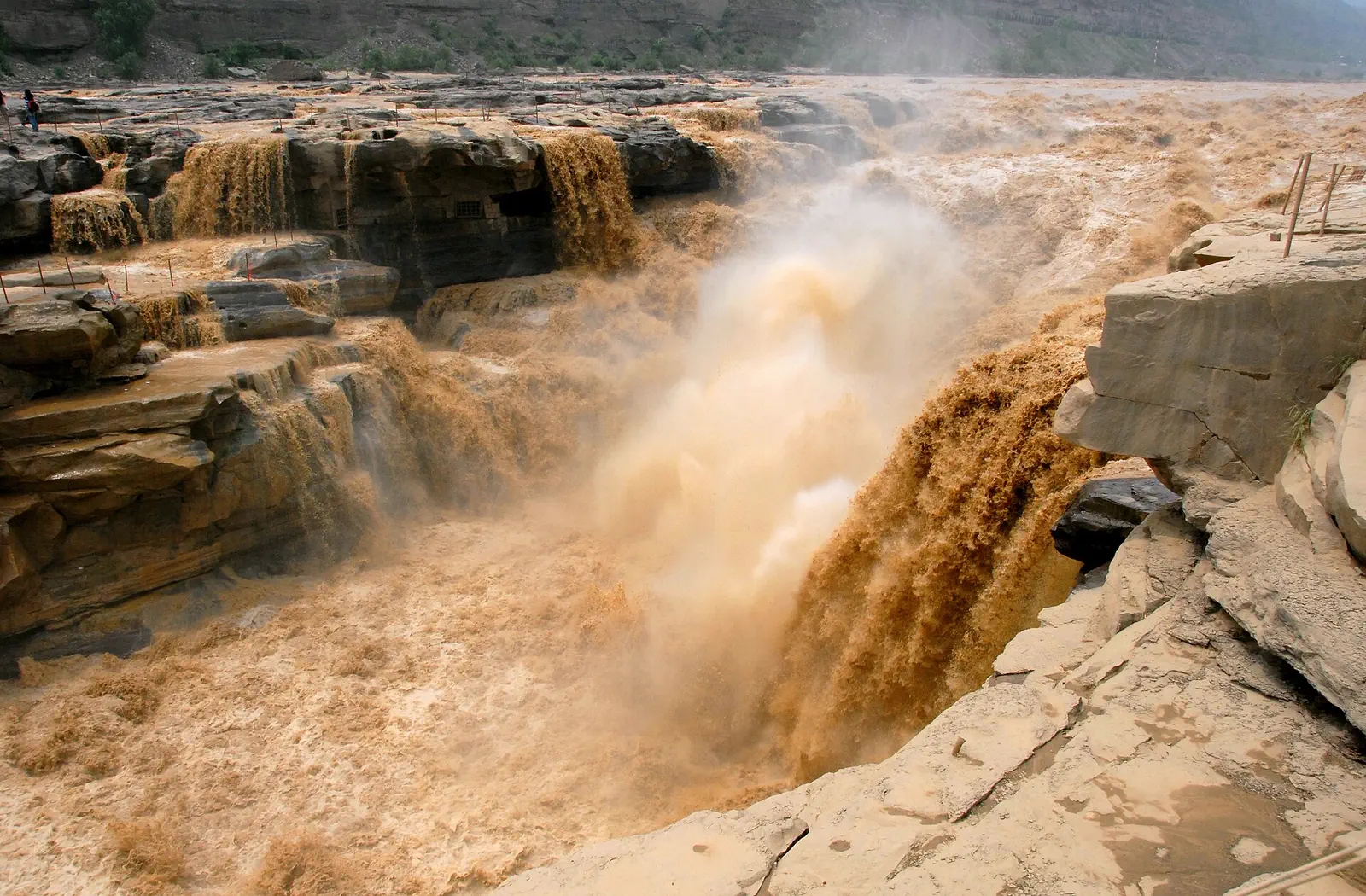
Shanxi city in the Fen River valley, regarded in Chinese historiography as the legendary seat of Emperors Yao and Shun. Home to Hukou Waterfall — the largest yellow-water waterfall in the world — and a centre of coal-mining heritage now undergoing environmental transition.
Linfen occupies a privileged place in Chinese origin mythology. The Fen River valley around the city is traditionally identified with the legendary Emperors Yao and Shun — the sage rulers of Chinese prehistory who appear in the earliest Chinese historical texts and who established the moral framework of Confucian governance long before the Zhou dynasty. Whether this is historical or mythological is a matter the archaeologists and historians still debate, but Linfen's identity as 'the place where civilisation began' is taken seriously locally, and the Yao Temple (Yaomiao) complex is the monument to that claim.
More immediately verifiable is Hukou Waterfall (壶口瀑布), approximately 165 km northwest of the city on the Yellow River. Hukou is the second largest waterfall in China by volume and the largest waterfall in the world whose waters run yellow — the suspended loess sediment of the Yellow River gives the falls their distinctive ochre colour. At its widest the falls span approximately 280 metres, and the roar of water through the narrow gorge is audible from considerable distance. The spring snowmelt (March–April) brings the most dramatic volume; summer brings flood-stage power. The waterfall straddles the Shanxi-Shaanxi border and is accessible from both sides.
Linfen was, for decades, rated among the most polluted cities in China due to coal-mining and processing activity in the surrounding Shanxi coalfields. Sustained industrial restructuring and environmental enforcement since the 2010s have substantially improved the situation, and the city is no longer in the top tier of pollution rankings, though coal industry infrastructure remains visible in the wider region.
The Guangsheng Temple complex at Hongtong, 50 km north, is a multi-pavilion Buddhist monastery housing a Ming-dynasty cannon-shaped pagoda and an extraordinary collection of Yuan-dynasty murals.
Cultural & access notes
The Yao-Shun mythology is central to Chinese cultural identity — these legendary emperors are presented as the founders of moral governance and the model for the Confucian ideal ruler. The Hongtong Stork Tree site relates to the large-scale forced migration of Han populations from Shanxi to repopulate northern China after the Yuan-dynasty devastation — a formative episode in northern Chinese genealogical memory.
What to see
- Hukou Waterfall — Yellow River's largest waterfall, 165 km northwest
- Yao Temple (Yaomiao) — mythological seat of Emperor Yao, large temple complex
- Guangsheng Temple (Hongtong) — Ming pagoda, Yuan murals
- Hongtong Stork Tree (Da Huaishu) — legendary immigration memorial, large-scale historical site
- Pingyao — the complete Ming-Qing walled city, 90 km north by road
- Unearthed Xia culture sites at Xiangfen — Taosi archaeological site (advance arrangement needed)
What to eat
- Shanxi knife-cut noodles (dao xiao mian) — the Shanxi staple, hand-shaved from a block of dough
- Vinegar-dressed cold noodles — Shanxi's famous Mature Vinegar (Chen Cu) used generously
- Steamed pork with lotus root (Shanxi banquet dish)
- Fen River fish — freshwater fish from the Fen River, braised or steamed
- Xiaomi congee — millet porridge, yellow millet grown on the loess plateau
- Huarong pastries — local sugar-sesame confections
Getting there
Linfen Qiaoli Airport (LFQ) operates flights to Beijing (1 hour) and other major cities. By high-speed rail: Linfen is on the Zhengzhou–Taiyuan high-speed corridor — trains to Taiyuan take 45 minutes, to Xi'an approximately 2 hours. Conventional rail connects to Beijing (5–6 hours).
Getting around
City buses are inexpensive but slow. Taxis are the practical option for Linfen city. Hukou Waterfall requires a hired car or a day tour (many available from Linfen or from Xi'an, which is closer to the Shaanxi-side access). Hongtong is reachable by bus from Linfen in about an hour.
Where to stay
Business hotels in the city centre and around the railway station. Limited English-language accommodation options — the international hotel chains present in Taiyuan are absent here.
We list neighbourhoods, not specific hotels — we don't endorse hotels.
When to go
Spring (April–May) and autumn (September–October) are the most pleasant. Hukou Waterfall is at its most dramatic in spring (March–April) when snowmelt peaks, and in summer (July–August) when flood-stage flow is at maximum. Winters are cold but dry, and the loess landscape has a stark quality that suits photography.
Budget guide (CNY per day)
| Backpacker | ¥150 |
| Mid-range | ¥300 |
| Comfortable | ¥600 |
Safety notes
Hukou Waterfall has slippery observation platforms — wear appropriate footwear and heed the barriers. The Yellow River in flood stage is powerful; do not enter restricted viewing zones. The coal-region roads around Linfen can be dusty and heavy with truck traffic.
Nearby attractions
Day trips within 150 km
Other cities in Shanxi
- Datong大同
Northern Shanxi gateway to the Yungang Grottoes (UNESCO) — the 5th-century Buddhist cliff carvings — and the cliff-side Hanging Temple at Mt Heng.
- Pingyao平遥
UNESCO-listed Ming and Qing walled town in central Shanxi — the most completely preserved old walled city in China. Banking heritage and 6 km of intact city wall.
- Taiyuan太原
Capital of Shanxi, gateway to the Pingyao ancient walled town and the Yungang and Datong-area Buddhist cliff carvings. The home of vinegar.
- Wutai Mountain五台山
The highest of China's Four Sacred Buddhist Mountains, a UNESCO World Heritage site in Shanxi with over 50 active monasteries set among alpine meadows at up to 3,058 metres.
Food of Northern China
- Beijing Lamb Hot Pot涮羊肉
Beijing-Mongolian style hot pot — clear broth, thinly-sliced lamb, sesame-paste dipping sauce.
- Boiled Dumplings (Shuijiao)水饺
Wheat-wrapper dumplings filled with pork-and-cabbage, lamb-and-leek, or vegetable, boiled and served with vinegar.
- Cat's Ear Noodles猫耳朵
Small thumbnail-pinched Shanxi pasta, shaped like cat's ears. Stir-fried with vegetables or in soup.
- Goubuli Baozi狗不理包子
Tianjin's signature steamed pork buns. The original house, founded 1858, is still operating.
Linfen weather by month
| Month | Jan | Feb | Mar | Apr | May | Jun | Jul | Aug | Sep | Oct | Nov | Dec |
|---|---|---|---|---|---|---|---|---|---|---|---|---|
| High °C | 6 | 10 | 17 | 22 | 27 | 32 | 32 | 31 | 26 | 18 | 13 | 6 |
| Low °C | -4 | -2 | 4 | 8 | 14 | 20 | 22 | 21 | 16 | 9 | 2 | -4 |
| Rain mm | 7 | 11 | 13 | 39 | 36 | 34 | 84 | 101 | 91 | 64 | 18 | 5 |
| Rain days | 2 | 2 | 3 | 6 | 5 | 4 | 9 | 10 | 8 | 7 | 5 | 1 |
2019–2023 average via Open-Meteo ERA5 (ERA5 reanalysis). "Rain days" = days per month with ≥1 mm precipitation.
Frequently asked questions
- When is the best time to visit Linfen?
- The best months to visit Linfen are April, May, September, and October. Spring (April–May) and autumn (September–October) are the most pleasant. Hukou Waterfall is at its most dramatic in spring (March–April) when snowmelt peaks, and in summer (July–August) when flood-stage flow is at maximum.
- How many days do you need in Linfen?
- Plan 3 days for Linfen if you want to see the headline sights without rushing — Hukou Waterfall, Yao Temple (Yaomiao), Guangsheng Temple (Hongtong). Add an extra day for day trips from the city or for repeat visits to your favourite neighbourhood.
- Is Linfen safe for tourists?
- Hukou Waterfall has slippery observation platforms — wear appropriate footwear and heed the barriers. The Yellow River in flood stage is powerful; do not enter restricted viewing zones. The coal-region roads around Linfen can be dusty and heavy with truck traffic.
- How do you get around Linfen?
- City buses are inexpensive but slow. Taxis are the practical option for Linfen city. Hukou Waterfall requires a hired car or a day tour (many available from Linfen or from Xi'an, which is closer to the Shaanxi-side access).
- What's the daily budget for Linfen?
- Budget guide for Linfen: backpackers from around ¥150/day, mid-range travellers ¥300/day, comfortable trips from ¥600/day. These ranges cover accommodation, food, local transport and one paid sight per day, and exclude flights to and from the city.
- Where should you stay in Linfen?
- Business hotels in the city centre and around the railway station. Limited English-language accommodation options — the international hotel chains present in Taiyuan are absent here.
Spotted something out of date? Submit a correction.
Research
Cross-checked against primary sources
Verified
Address, hours, fees confirmed at the date shown
Updated
Re-verified periodically; corrections welcome