CITY · SHANXI
Datong
大同 · Dàtóng
Overview
Northern Shanxi gateway to the Yungang Grottoes (UNESCO) — the 5th-century Buddhist cliff carvings — and the cliff-side Hanging Temple at Mt Heng.
Datong is a city in northern Shanxi near the Inner Mongolia border, historically significant as the first imperial capital of the Tuoba-Xianbei Northern Wei dynasty (386–534 CE), the state that reunified northern China after the fragmented centuries following the Han. The Northern Wei emperors were responsible for commissioning the Yungang Grottoes, which is the primary reason to come here.
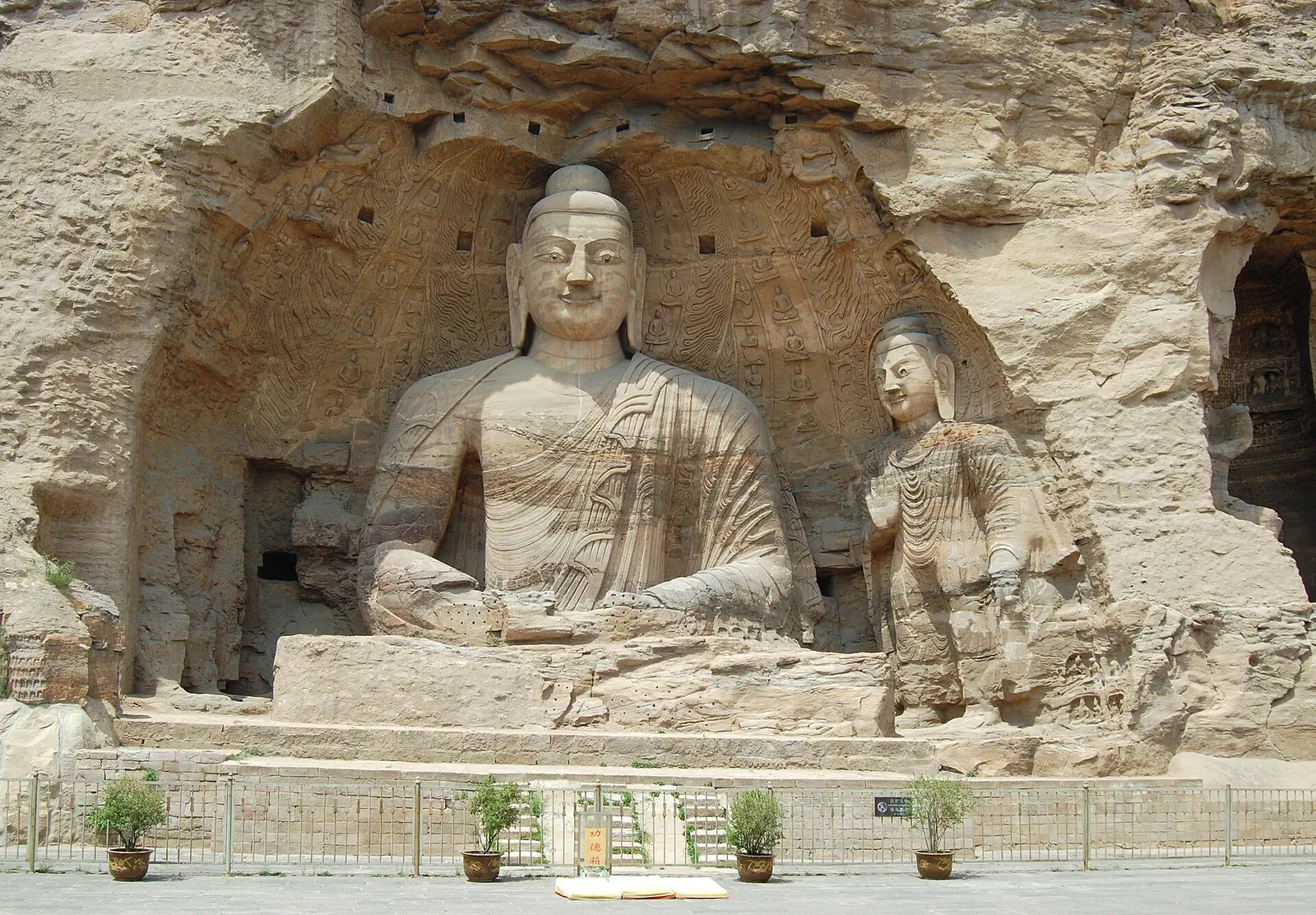
The Yungang Grottoes, 16 kilometres west of the city, are one of the three great Buddhist cave-temple complexes in China alongside Longmen and Dunhuang. The main construction period was 460–525 CE, when the Northern Wei emperors sponsored the carving of 252 caves and niches containing 51,000 Buddhist figures in a two-kilometre sandstone cliff. The five early caves (Caves 16–20), commissioned by the Emperor Wencheng and designed by the monk Tan Yao, each contain a single colossal Buddha — the largest is 13.7 metres — whose calm, archaic features represent some of the earliest Chinese Buddhist sculpture. The later caves show the gradual Sinicisation of Buddhist iconography as the Northern Wei court adopted Han Chinese dress and culture. The site was UNESCO World Heritage listed in 2001.
The Hanging Temple (Xuankong Si), 65 kilometres southeast in the Hengshan Mountains, is a wooden temple complex of eighteen halls and pavilions built into the side of a vertical cliff face at a height of around 50 metres. The construction, dating to the Northern Wei period and repeatedly rebuilt, achieves its impossible appearance through wooden brackets drilled horizontally into the cliff and a set of carved rock shelves — the downward load is taken by the rock, not by the seemingly insufficient wooden pillars. The temple houses Buddhist, Taoist, and Confucian shrines within the same structure.
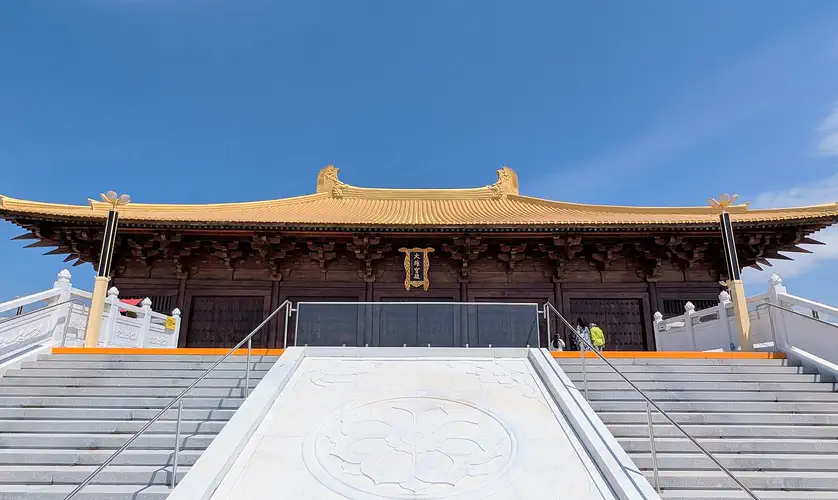
The city itself was heavily demolished and reconstructed through the 2000s and 2010s under the so-called Datong model of urban renewal: the old city walls were rebuilt around their original footprint, historic temples and streets were reconstructed, and the coal-industry heritage that had made Datong a functioning if grimy industrial city was partly cleared. Opinions on the result differ. The Huayan Monastery, with its large Tang-dynasty main hall and an extraordinary late Liao-dynasty wooden scripture library, is original and significant. The wooden pagoda at Yingxian, 75 kilometres south, is the oldest and tallest surviving wooden pagoda in China (67 metres, built 1056 CE), reachable as a day extension.
What to see
- Yungang Grottoes (UNESCO)
- Hanging Temple at Mt Heng
- Huayan Monastery
- Datong's reconstructed city wall
- Wooden Pagoda of Yingxian (the world's tallest existing wooden pagoda, 80 km south)
What to eat
- Knife-sliced noodles
- Datong-style beef and donkey meat
Getting there
Datong Yungang (DAT) airport. Datong South HSR: Beijing 1h 40m, Taiyuan 1h 50m.
Getting around
Bus to Yungang (15 km). Tour bus or hire car for the Hanging Temple and Wooden Pagoda.
Where to stay
Central old town near the Drum Tower.
We list neighbourhoods, not specific hotels — we don't endorse hotels.
When to go
May–June, September–October.
Budget guide (CNY per day)
| Backpacker | ¥220 |
| Mid-range | ¥480 |
| Comfortable | ¥1100 |
Nearby attractions
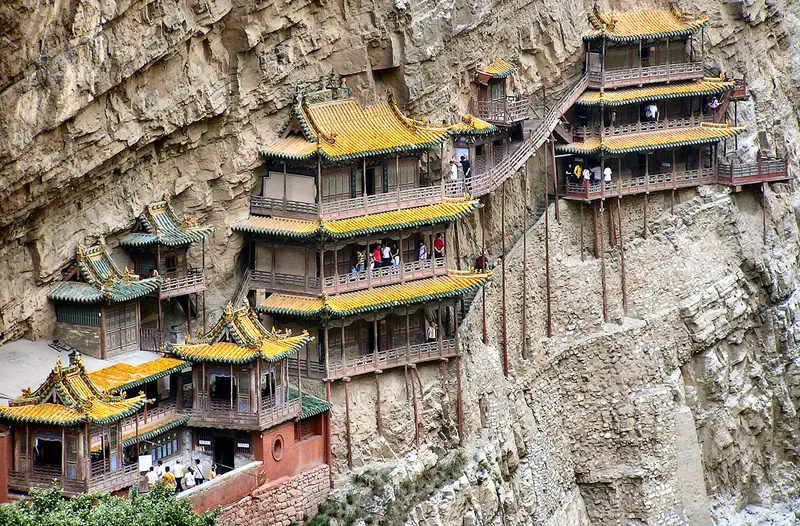
Hanging Temple 悬空寺
1,500-year-old wooden temple complex pinned to the side of a 75m cliff at Mt Heng. Engineered with horizontal posts driven into the rock face.
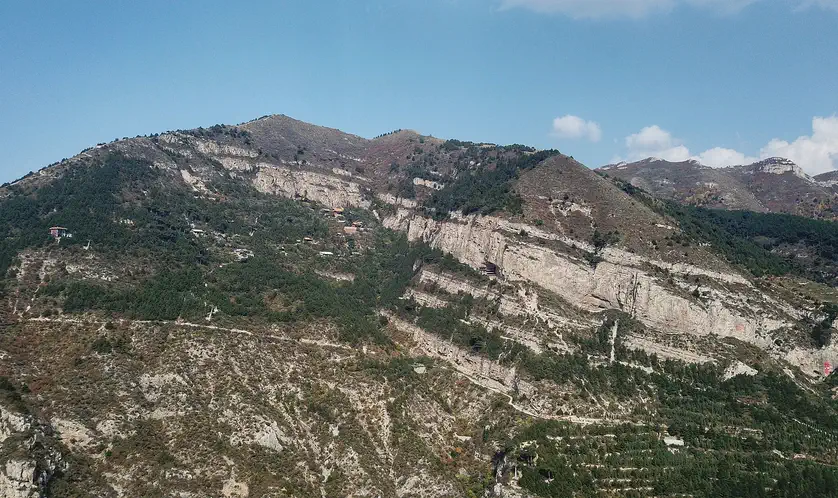
Mt Heng Bei (Northern Sacred Mountain) 北岳恒山
Sacred Daoist mountain in northern Shanxi. The Hanging Temple (Xuankong Si) is on its slope.
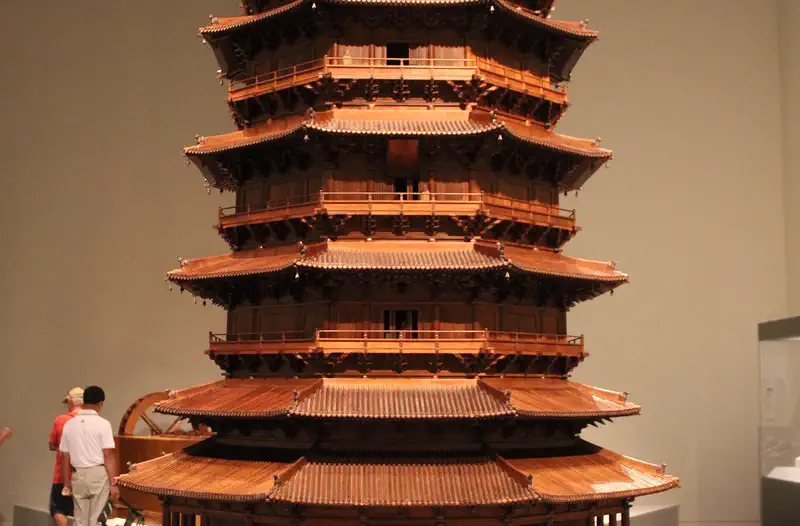
Wooden Pagoda of Yingxian 应县木塔
67m wooden pagoda built 1056 — the world's tallest existing wooden pagoda and the oldest fully timber-framed pagoda anywhere.
China Visit Guide
Yungang Grottoes
Yungang Grottoes 云冈石窟
UNESCO-listed Buddhist cliff carvings 16 km west of Datong, carved 460–525 CE under the Northern Wei. 252 caves, 51,000 statues.
Day trips within 150 km
Other cities in Shanxi
- Linfen临汾
Shanxi city in the Fen River valley, regarded in Chinese historiography as the legendary seat of Emperors Yao and Shun. Home to Hukou Waterfall — the largest yellow-water waterfall in the world — and a centre of coal-mining heritage now undergoing environmental transition.
- Pingyao平遥
UNESCO-listed Ming and Qing walled town in central Shanxi — the most completely preserved old walled city in China. Banking heritage and 6 km of intact city wall.
- Taiyuan太原
Capital of Shanxi, gateway to the Pingyao ancient walled town and the Yungang and Datong-area Buddhist cliff carvings. The home of vinegar.
- Wutai Mountain五台山
The highest of China's Four Sacred Buddhist Mountains, a UNESCO World Heritage site in Shanxi with over 50 active monasteries set among alpine meadows at up to 3,058 metres.
Itineraries visiting Datong
Food of Northern China
- Beijing Lamb Hot Pot涮羊肉
Beijing-Mongolian style hot pot — clear broth, thinly-sliced lamb, sesame-paste dipping sauce.
- Boiled Dumplings (Shuijiao)水饺
Wheat-wrapper dumplings filled with pork-and-cabbage, lamb-and-leek, or vegetable, boiled and served with vinegar.
- Cat's Ear Noodles猫耳朵
Small thumbnail-pinched Shanxi pasta, shaped like cat's ears. Stir-fried with vegetables or in soup.
- Goubuli Baozi狗不理包子
Tianjin's signature steamed pork buns. The original house, founded 1858, is still operating.
Datong weather by month
| Month | Jan | Feb | Mar | Apr | May | Jun | Jul | Aug | Sep | Oct | Nov | Dec |
|---|---|---|---|---|---|---|---|---|---|---|---|---|
| High °C | -1 | 3 | 11 | 16 | 23 | 28 | 28 | 26 | 23 | 15 | 6 | -2 |
| Low °C | -13 | -9 | -3 | 2 | 9 | 15 | 17 | 16 | 11 | 3 | -4 | -12 |
| Rain mm | 2 | 6 | 22 | 28 | 24 | 62 | 91 | 105 | 43 | 22 | 17 | 3 |
| Rain days | 1 | 1 | 4 | 5 | 6 | 7 | 11 | 11 | 6 | 5 | 2 | 1 |
2019–2023 average via Open-Meteo ERA5 (ERA5 reanalysis). "Rain days" = days per month with ≥1 mm precipitation.
Frequently asked questions
- When is the best time to visit Datong?
- The best months to visit Datong are May, June, September, and October. May–June, September–October.
- How many days do you need in Datong?
- Plan 3 days for Datong if you want to see the headline sights without rushing — Yungang Grottoes (UNESCO), Hanging Temple at Mt Heng, Huayan Monastery. Add an extra day for day trips from the city or for repeat visits to your favourite neighbourhood.
- How do you get around Datong?
- Bus to Yungang (15 km). Tour bus or hire car for the Hanging Temple and Wooden Pagoda.
- What's the daily budget for Datong?
- Budget guide for Datong: backpackers from around ¥220/day, mid-range travellers ¥480/day, comfortable trips from ¥1100/day. These ranges cover accommodation, food, local transport and one paid sight per day, and exclude flights to and from the city.
- Where should you stay in Datong?
- Central old town near the Drum Tower.
Spotted something out of date? Submit a correction.
Research
Cross-checked against primary sources
Verified
Address, hours, fees confirmed at the date shown
Updated
Re-verified periodically; corrections welcome