3 days
Day 1: Urumqi — Xinjiang Regional Museum (Tarim Basin mummies) + Erdaoqiao bazaar. Day 2: Heavenly Lake (Tianchi) day trip. Day 3: Turpan day trip — Jiaohe ruins, Karez wells, grape valley.
Autonomous region · Northwest China
新疆维吾尔自治区 · Xīnjiāng Wéiwú'ěr Zìzhìqū — capital Ürümqi, uyghur (lamb pilaf, hand-pulled laghman noodles, dapanji big-plate chicken, naan-style bread, kebab skewers).
History & character
Xinjiang ("new frontier") is China's largest provincial-level division — one-sixth of the country's total area. The region splits into three geographies: the Junggar Basin in the north, the Tianshan range across the middle, and the Tarim Basin (with the Taklamakan desert at its core) in the south. The Silk Road's northern, central, and southern routes all crossed Xinjiang on their way to Central Asia and Europe.
Ethnically, Xinjiang is one of the most diverse parts of China. Uyghurs — Turkic-language-speaking Sunni Muslims — are the largest single group, concentrated in the southern oasis cities of Kashgar, Hotan, Yarkand, and Aksu. Han Chinese have become a majority in the northern Junggar region and in Urumqi. Kazakhs concentrate in Ili, Kyrgyz around the Pamirs, Tajiks around Tashkurgan, Hui across the cities. The political situation in the region has been internationally contested in recent years; visitors should expect security checks and ID inspection at frequent intervals along the south Silk Road, and should research current conditions before booking.
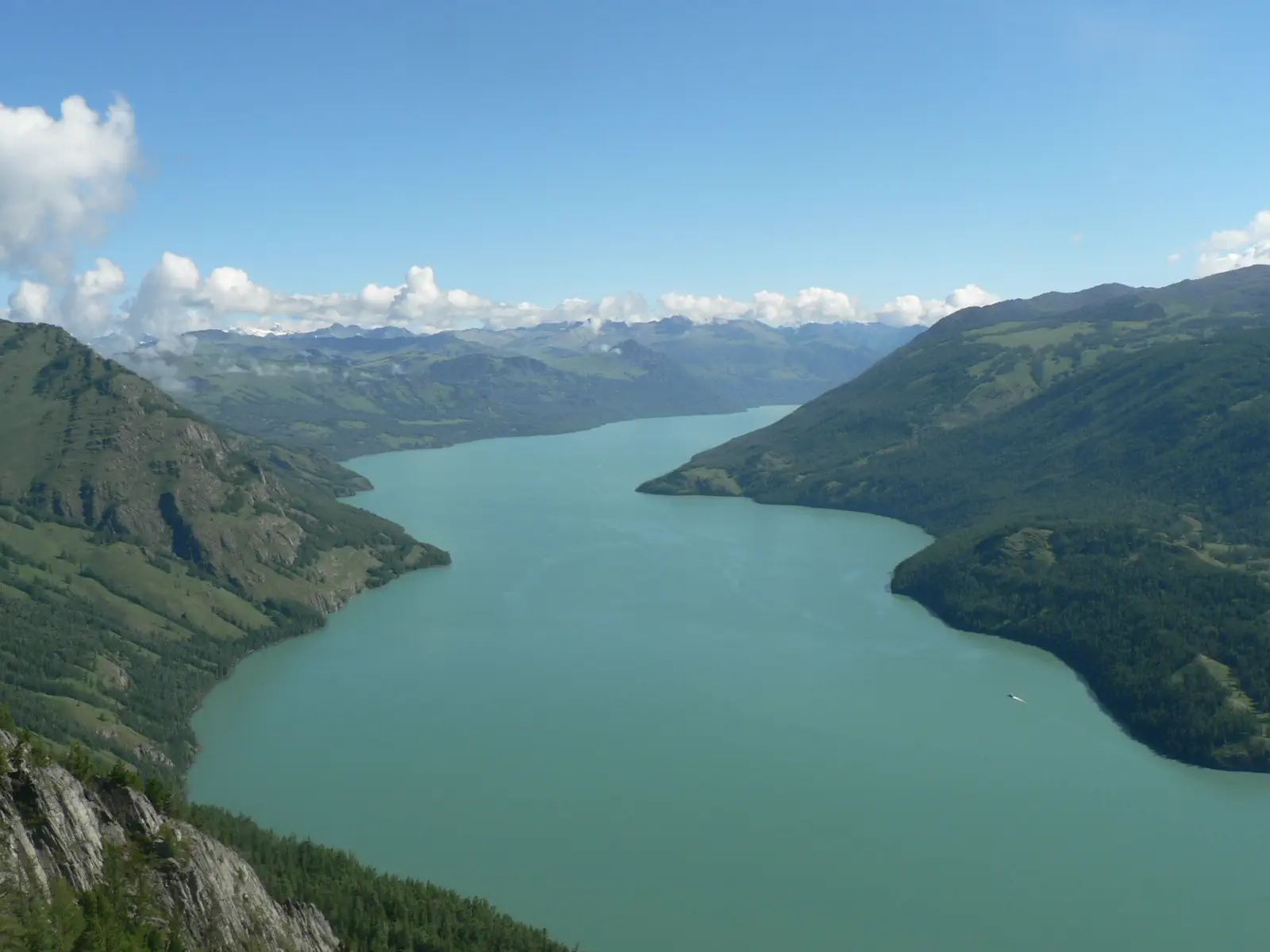
The landscapes are extraordinary: Heavenly Lake (Tianchi) below the snowcapped Bogda Peak, Kanas Lake in the far Altai north, the Taklamakan's dunes, the Karakoram Highway from Kashgar to Tashkurgan and the Pakistani border, the grape valleys of Turpan.
When to visit
Late May to early June, and September–October. Summer is too hot in the southern oases. Heavenly Lake and Kanas open June–October. Winter is bitterly cold across the north.
How to get there
Urumqi Diwopu (URC), Kashgar (KHG), Turpan (TLQ) are the major airports. The Lanxin HSR from Lanzhou to Urumqi takes ~12h via Hami and Turpan. Land border crossings to Kazakhstan (Khorgas, Alashankou), Kyrgyzstan (Torugart, Irkeshtam), Pakistan (Khunjerab, summer only).
Key cities
All cities →More cities in Xinjiang
More attractions in Xinjiang
Sample itineraries
Day 1: Urumqi — Xinjiang Regional Museum (Tarim Basin mummies) + Erdaoqiao bazaar. Day 2: Heavenly Lake (Tianchi) day trip. Day 3: Turpan day trip — Jiaohe ruins, Karez wells, grape valley.
Add Kashgar (3 days — Sunday bazaar, Id Kah Mosque, Old Town, Karakoram Highway day trip to Karakul Lake), or Kanas Lake (3 days from Urumqi). Allow 2 weeks for both north and south.
Dishes of Xinjiang
Wide, hand-pulled, belt-shaped Shaanxi noodles. The 'biang' character is the most complex in the Chinese language.
A large-portioned Xinjiang braised chicken dish with potatoes, peppers and thick hand-pulled belt noodles.
Large bone-in lamb pieces boiled in spiced water and eaten by hand — a communal dish of Inner Mongolia and the northwest.
Uyghur hand-pulled wheat noodles with a lamb-and-vegetable sauce of tomato, pepper and onion.
Uyghur lamb pilaf with carrot, onion and raisins. The festive centrepiece of any Xinjiang banquet.
Cubed lamb skewered and grilled over charcoal, dusted with cumin and chilli. Universal northern street food.
Itineraries touching Xinjiang
7d · Seven days in Xinjiang's Silk Road cities: Urumqi, the alpine Heavenly Lake, the desert ruins around Turpan, and the Uighur old city of Kashgar near the Kyrgyzstan border.
7d · Urumqi and the Kazakh grasslands north of the Tian Shan: Heavenly Lake Tianchi, Nalati meadows, Kanas Lake in the Altai, and the night-market culture of Urumqi.
14d · The full Hexi Corridor route from Xi'an west through Lanzhou, Dunhuang and the Taklamakan edge to Turpan and Kashgar — the historical Silk Road across northwest China.
Other Northwest China regions
Spotted something out of date? Submit a correction.
Research
Cross-checked against primary sources
Verified
Address, hours, fees confirmed at the date shown
Updated
Re-verified periodically; corrections welcome