Shaanxi · noodle
Biangbiang Noodles
biáng biáng 面 · Biángbiáng Miàn
Wide, hand-pulled, belt-shaped Shaanxi noodles. The 'biang' character is the most complex in the Chinese language.
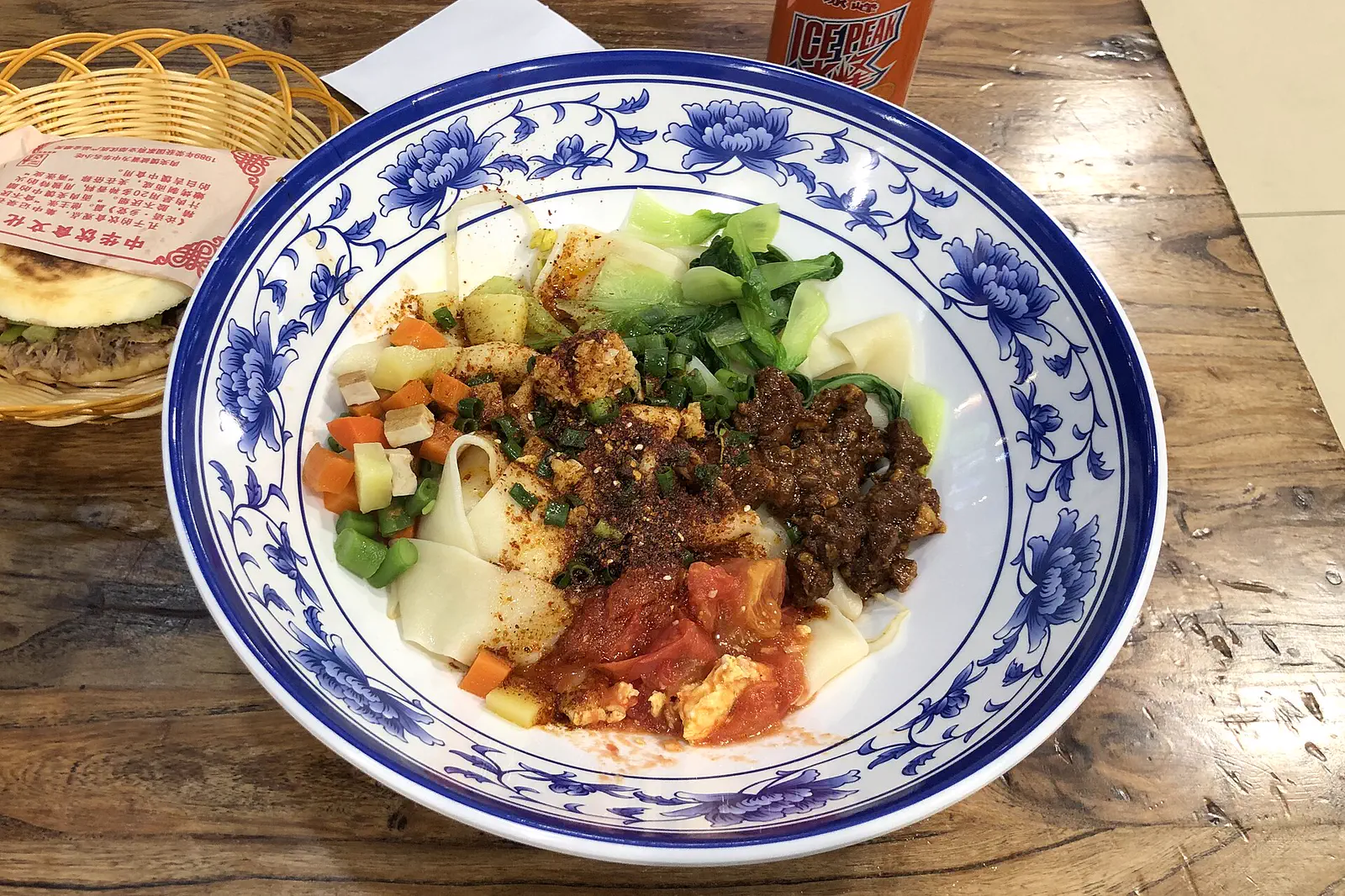
Biangbiang noodles are wide, flat, hand-pulled wheat noodles from Shaanxi, the quintessential form of the northern Chinese belt noodle. Each piece is typically 3–5 cm wide and around a metre long, pulled from a single strand of wheat dough. The cook repeatedly slaps and stretches the dough strand against the worktop — the 'biang biang' sound that names the dish — before pulling it to width and dropping it into boiling water.
The character written for 'biang' is famously the most complex in standard written Chinese at approximately 58 strokes, combining characters for horse, moon, heart, knife, and a phonetic element — it has no standard Unicode encoding and is often written by hand on restaurant signs. The character is a regional invention: it exists in no dictionary and refers specifically to this noodle.
The finished noodles are served in a bowl dry, with a dressing of black rice vinegar, soy sauce, minced raw garlic, dried chilli, and a ladleful of smoking-hot oil poured over the whole thing at the table — the oil activates the chilli and garlic with an audible sizzle. Scallion and sometimes minced beef or stir-fried tomato and egg are added on top. Mixing vigorously is the only method.
The noodles are a daily staple across rural and urban Shaanxi. Halal preparations are common in the Muslim Quarter of Xi'an, where minced beef or lamb replace pork toppings.
Where to try
Xi'an: Yong Xing Fang street has multiple noodle houses.
Dietary notes
Wheat. Vegetable or meat versions.
Regional variants
The Xi'an original is the reference — wide chewy noodles dressed with chilli oil, minced garlic and black vinegar. Modern chain versions (Xi'an Famous Foods in New York; the Biang Biang chain across Chinese cities) have adapted the format to a range of toppings and serving styles. Some rural Shaanxi versions swap the oil-and-vinegar dressing for a tomato-and-egg sauce. The 'you po mian' oil-splashed noodle is a related but distinct dish.
Where the name comes from
𰻞𰻞面 biang biang miàn — the character itself is famously complex at 57 strokes and was never officially encoded in Unicode until 2020. The name 'biang biang' is onomatopoeic — it mimics the rhythmic sound of the dough strand being slapped against the worktop during preparation. The character has no accepted phonetic derivation and appears in no classical dictionary; it is a regional invention specific to the dish.
Pairings
Often taken with a small bowl of yangrou (mutton) broth on the side to cut the richness of the dressing. Shaanxi black rice vinegar and chilli oil sit on the table for diners to adjust to taste. A preserved-cabbage side dish is common. To drink — Shaanxi baijiu such as Xifeng — or a fresh Sichuan pepper tea for a non-alcoholic pairing.
Where to learn to cook it
Xi'an cooking schools teach the hand-slapping technique — the stroke order of the biang character is often taught alongside as folklore. The technical crux is dough hydration — too little water and the strand tears when slapped; too much and it will not hold the belt shape. Resting time and gluten development matter as much as the pulling itself.
Common misconceptions
The 57-stroke character is famous but Xi'an locals do write it — though rarely on menus, where most vendors just print 'Biang biang' in pinyin or a simpler shorthand. The noodles are not the same as fettuccine — they are wider (3–4 cm) and considerably chewier. The character was not officially added to Unicode until 2020, which is often mistaken as evidence that it is not 'real' — it is.
Cities to try Biangbiang Noodles
Other northwest dishes
- Big Plate Chicken大盘鸡
A large-portioned Xinjiang braised chicken dish with potatoes, peppers and thick hand-pulled belt noodles.
- Hand-Grasped Lamb手抓羊肉
Large bone-in lamb pieces boiled in spiced water and eaten by hand — a communal dish of Inner Mongolia and the northwest.
- Laghman (Hand-Pulled Noodles with Lamb)拉条子
Uyghur hand-pulled wheat noodles with a lamb-and-vegetable sauce of tomato, pepper and onion.
- Lamb Pilaf (Polo)抓饭
Uyghur lamb pilaf with carrot, onion and raisins. The festive centrepiece of any Xinjiang banquet.
More Shaanxi dishes