Museum · SICHUAN
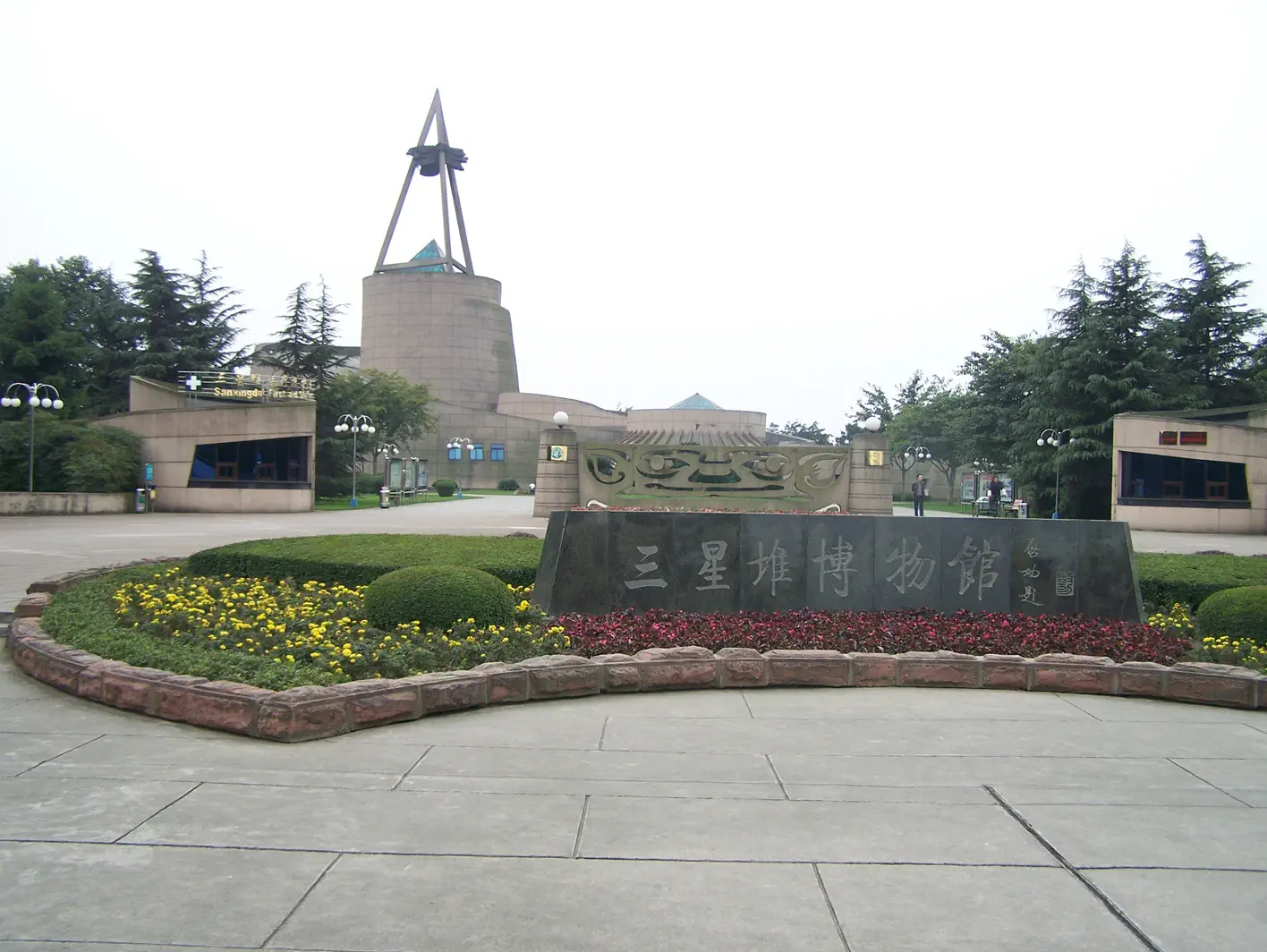
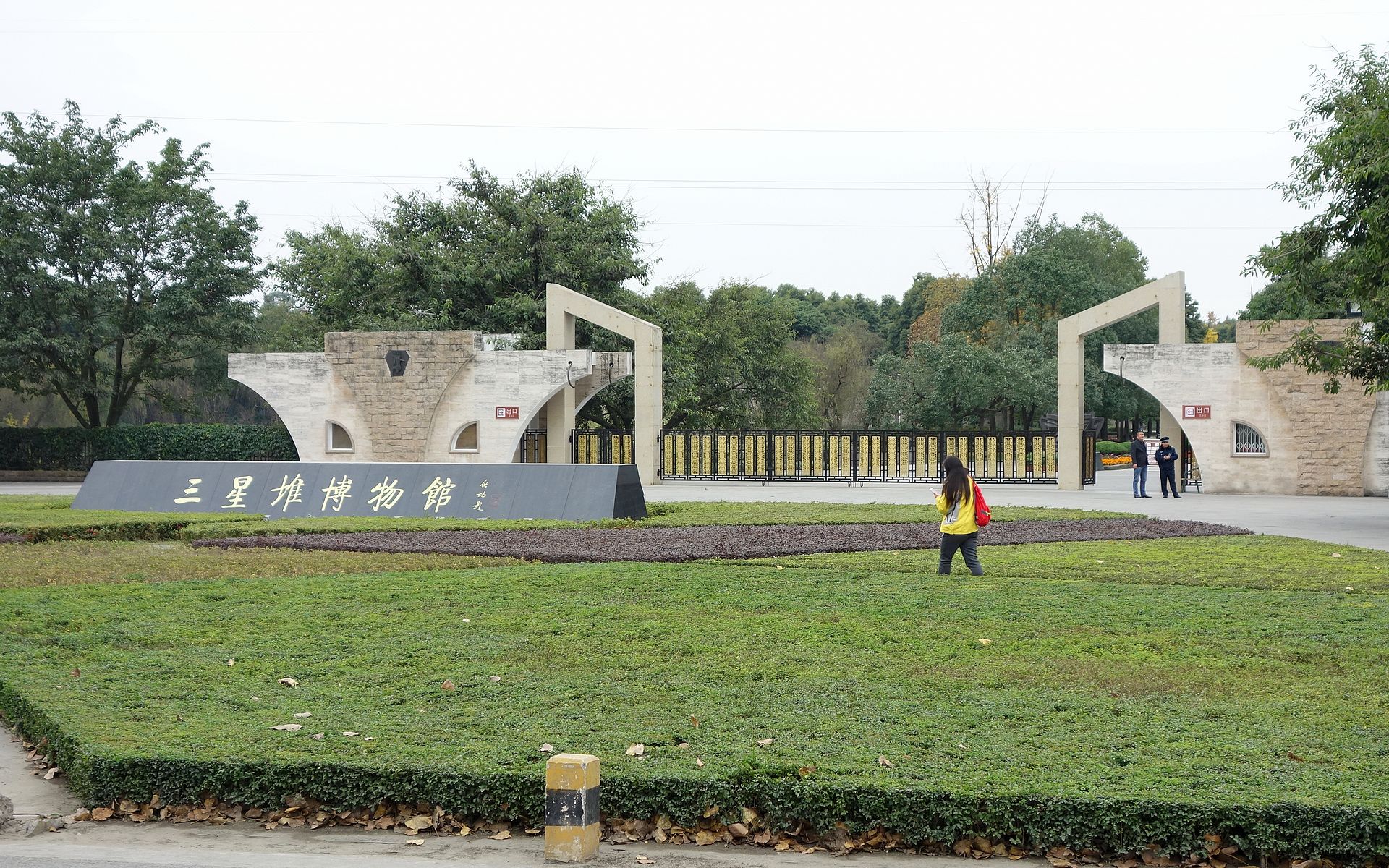
Sanxingdui Museum
三星堆博物馆 · Sānxīngduī Bówùguǎn
About
Bronze Age site museum 60 km north of Chengdu. The bronze masks of the Sanxingdui culture (1700–1100 BCE) are among the most distinctive Chinese archaeological finds.
Sanxingdui Museum sits 60 kilometres north of Chengdu at the site where two treasure pits were discovered in 1986, yielding bronze objects that rewrote the history of Bronze Age China. The Sanxingdui culture — now dated to approximately 1700–1100 BCE and contemporary with the Shang dynasty — produced ritual objects utterly unlike anything from the Yellow River heartland. The bronze masks are the defining images: human faces with eyes rendered as protruding cylinders up to 16 centimetres long, enormous flared ears, and an expression that registers as somewhere between formal and unsettling. Alongside the masks stand a 2.6-metre bronze standing figure (the largest known bronze human figure from the ancient world at its time of excavation) and a 3.95-metre-tall bronze tree adorned with birds — an object with no parallel in Chinese archaeology.
The interpretation of these objects remains actively contested. The Sanxingdui culture left no written records. Whether the protruding eyes represent divine vision, ancestor worship, bronze-casting convention, or something else entirely is unknown. The culture appears to have ended abruptly, with its ritual objects intentionally buried and burned — the reason for this mass deposition is also unknown. The 2020s excavations of six additional pits at the site, conducted under glass-enclosed cleanroom conditions broadcast in real time by Chinese state media, produced further thousands of objects and pushed the academic debate into mainstream attention.
The new museum building, which opened in 2023, is specifically designed around the new pit excavations, with a central exhibition hall allowing visitors to view active archaeological work through glass. The older museum building remains open and houses the 1986 pit objects, including the bronze masks, standing figure, and tree. Online reservation is required. Allow three to four hours for both buildings. Combine with the nearby city of Guanghan for a full-day excursion from Chengdu.
How to get there
Bus from Chengdu Zhaojuesi station to Guanghan, then taxi (~1.5 hours total).
When to visit
Weekday morning. Reservations required.
Gallery
Other attractions in Chengdu
Itineraries featuring this site
- Chengdu and Chongqing in 5 days
5d · Two and a half days each: pandas and Leshan from Chengdu, Dazu rock carvings and hotpot from Chongqing.
- Family China classic — 10 days Beijing, Xi'an, Chengdu, Shanghai
10d · Ten days at a child-friendly pace: Beijing history, Xi'an warriors, Chengdu pandas and Shanghai's waterfront — the four cities that deliver the widest variety for families with school-age children.
- Slow travel China — 14 days, fewer cities, deeper neighbourhoods
14d · Fourteen days in just three cities — Xi'an, Chengdu and Lijiang — spending four to five nights in each to move beyond the headline sights into daily rhythms, local markets and neighbourhood life.
- Train-only China — 14 days using HSR exclusively, no flights
14d · Fourteen days across eastern and central China using only high-speed rail — no domestic flights. A lower-carbon alternative that also provides a closer view of the country at ground level.
Other museums in China
- Capital Museum首都博物馆
Beijing's history museum — bronze, ceramics, paintings, and a strong narrative of the city's evolution from Yan kingdom through the present.
- China National Tea Museum中国茶叶博物馆
Comprehensive museum of Chinese tea history, varieties, and culture. Free entry; in the Longjing tea-growing hills.
- Han Yangling Mausoleum Museum汉阳陵博物馆
A world-class Han Dynasty imperial mausoleum museum near Xi'an presenting thousands of miniature terracotta tomb figures, including nude figurines originally dressed in silk, excavated from pits surrounding the burial mound of Emperor Jing (reigned 157–141 BCE).
- Hong Kong Museum of Art香港艺术馆
Hong Kong's premier art museum on the Tsim Sha Tsui waterfront. Strong Chinese painting and contemporary HK art collections.
- Hong Kong Museum of History香港历史博物馆
Comprehensive museum of Hong Kong's history from prehistoric to the 1997 handover. Free entry.
- Hubei Provincial Museum湖北省博物馆
Major provincial museum east of central Wuhan. Famous for the Bianzhong bell-set of the Marquis Yi of Zeng.
- Imperial Kiln Museum御窑博物馆
A museum of imperial Chinese porcelain built directly over the excavated site of the Ming and Qing imperial kilns, designed by architect Zhu Pei with brick-vaulted galleries that echo the form of the kilns themselves.
- Jinsha Site Museum金沙遗址博物馆
Bronze Age site museum on a 3,000-year-old ritual centre discovered in Chengdu in 2001. The Sun Bird gold disc is the symbol of Chengdu.
Frequently asked questions
- How much does Sanxingdui Museum cost to visit?
- Adult entry to Sanxingdui Museum is ¥72, ¥36 for children.
- When is Sanxingdui Museum open?
- Sanxingdui Museum opening hours: 8:30am–5:30pm.
- How long do you need at Sanxingdui Museum?
- Allow 3–4 hours for Sanxingdui Museum. Add buffer time if you plan to visit at peak season or include nearby sights in the same trip.
- When is the best time to visit Sanxingdui Museum?
- Weekday morning. Reservations required.
- How do you get to Sanxingdui Museum?
- Bus from Chengdu Zhaojuesi station to Guanghan, then taxi (~1.5 hours total).
Spotted something out of date? Submit a correction.
Research
Cross-checked against primary sources
Verified
Address, hours, fees confirmed at the date shown
Updated
Re-verified periodically; corrections welcome