Museum · SICHUAN
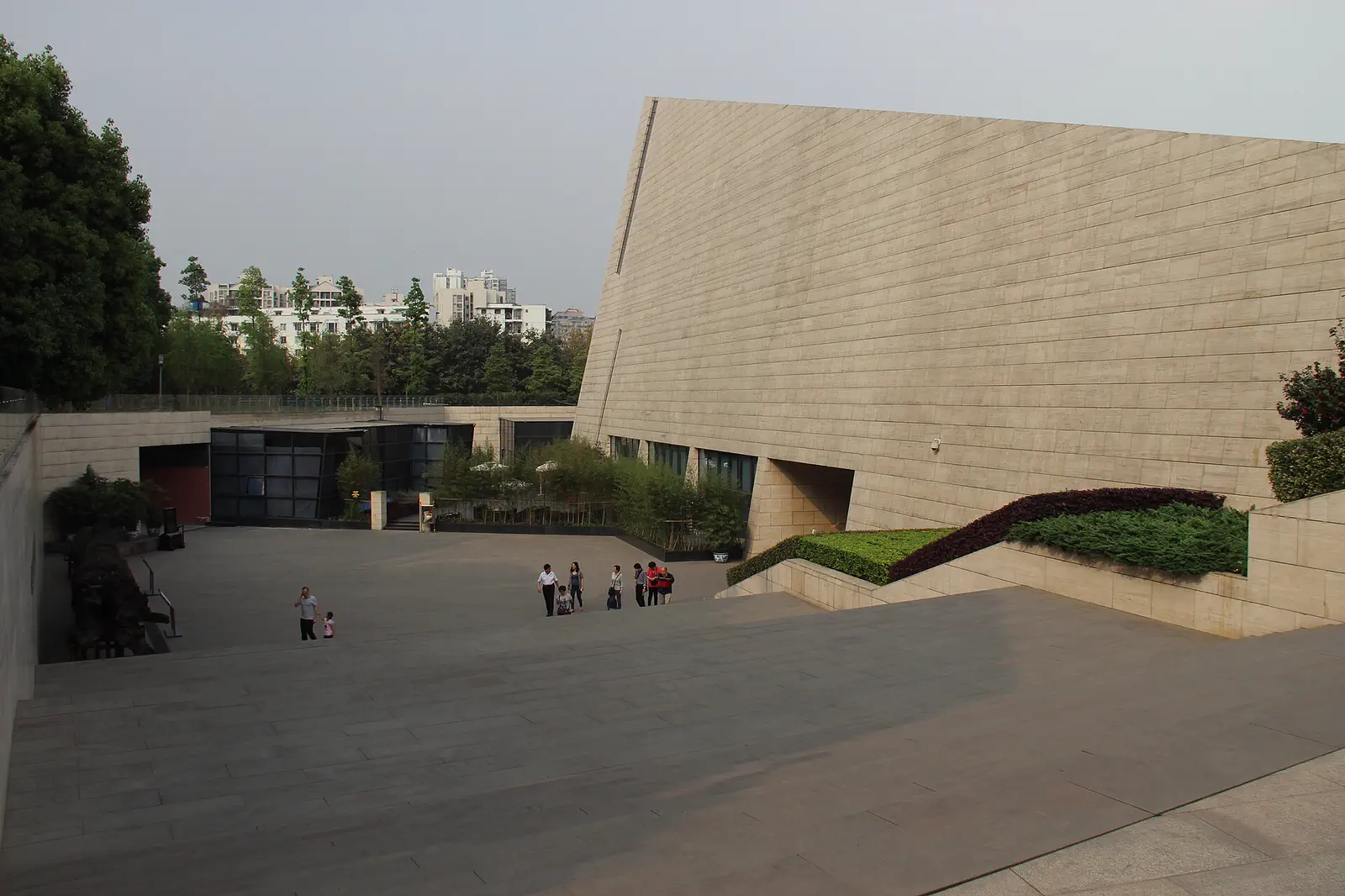
Jinsha Site Museum
金沙遗址博物馆 · Jīnshā Yízhǐ Bówùguǎn
About
Bronze Age site museum on a 3,000-year-old ritual centre discovered in Chengdu in 2001. The Sun Bird gold disc is the symbol of Chengdu.
Jinsha Site Museum sits on the location where construction workers in February 2001 accidentally exposed one of the most significant Bronze Age deposits found in China — a ceremonial and political centre of the ancient Shu civilisation that occupied the Chengdu Plain for over a millennium before the Qin conquest in 316 BCE. The Jinsha site dates from approximately 1200 to 650 BCE and was the successor capital to the earlier Sanxingdui culture, 60 kilometres north. Both sites reveal a Sichuan Bronze Age culture that was contemporary with but strikingly different from Shang-dynasty China.
The most famous object from Jinsha is the Sun Bird — a circular gold disc, 19.6 centimetres in diameter, cut from a single sheet of gold into a design showing four birds in flight around a stylised sun. The craftsmanship is extraordinary for the period, and the object became the official emblem of Chengdu in 2005 (the design is now on the city government logo, manhole covers, and metro station decorations). The original is displayed in the museum's artefact gallery alongside hundreds of other objects: bronze figurines, stone kneeling figures, elephant tusks in their original deposition context, jade objects, and ceramic vessels. The elephant tusks — deposited in layers, possibly as ritual offerings — are among the most visually arresting displays.
The museum is built around and over the original excavation site; a large hall covers the main pit where active excavation has continued. Visitors look down into the layers from elevated walkways, with excavated material visible in situ. The museum requires an advance online reservation. Allow two to three hours for the full circuit. For visitors interested in pre-Qin Sichuan, combining Jinsha with the Sanxingdui Museum on a Chengdu extension day is the logical itinerary.
How to get there
Metro Line 7 to Jinsha Museum.
When to visit
Weekday morning. Free reservation required.
Other attractions in Chengdu
Itineraries featuring this site
- Solo female — 10 days in Beijing, Shanghai and Chengdu
10d · Ten days across three cities chosen for safety, English-language accessibility and a good solo-travel atmosphere — with practical notes on accommodation, transport and navigating China as a solo woman.
- Overnight train romance — soft-sleeper journeys across China, 10 days
10d · Ten days structured around China's overnight soft-sleeper trains — Beijing to Xi'an, Xi'an to Chengdu, Chengdu to Lhasa — experiencing the transition from one landscape to the next at a human pace, through the night.
- First-timer China — 14 days with Yunnan loop
14d · Two weeks covering the Beijing–Xi'an–Shanghai circuit plus a Yunnan extension through Kunming, Dali and Lijiang — the combination that most first-time visitors leave wishing they had done.
- Hiking China's national parks — Zhangjiajie, Huangshan and Jiuzhaigou, 14 days
14d · Fourteen days across three of China's most dramatic mountain and forest parks — the sandstone columns of Zhangjiajie, the granite peaks and sea of cloud at Huangshan, and the turquoise lakes of Jiuzhaigou.
Other museums in China
- Capital Museum首都博物馆
Beijing's history museum — bronze, ceramics, paintings, and a strong narrative of the city's evolution from Yan kingdom through the present.
- China National Tea Museum中国茶叶博物馆
Comprehensive museum of Chinese tea history, varieties, and culture. Free entry; in the Longjing tea-growing hills.
- Han Yangling Mausoleum Museum汉阳陵博物馆
A world-class Han Dynasty imperial mausoleum museum near Xi'an presenting thousands of miniature terracotta tomb figures, including nude figurines originally dressed in silk, excavated from pits surrounding the burial mound of Emperor Jing (reigned 157–141 BCE).
- Hong Kong Museum of Art香港艺术馆
Hong Kong's premier art museum on the Tsim Sha Tsui waterfront. Strong Chinese painting and contemporary HK art collections.
- Hong Kong Museum of History香港历史博物馆
Comprehensive museum of Hong Kong's history from prehistoric to the 1997 handover. Free entry.
- Hubei Provincial Museum湖北省博物馆
Major provincial museum east of central Wuhan. Famous for the Bianzhong bell-set of the Marquis Yi of Zeng.
- Imperial Kiln Museum御窑博物馆
A museum of imperial Chinese porcelain built directly over the excavated site of the Ming and Qing imperial kilns, designed by architect Zhu Pei with brick-vaulted galleries that echo the form of the kilns themselves.
- Mawangdui Han Tombs Museum (Hunan Provincial Museum)马王堆汉墓博物馆
Home to the most remarkable Han Dynasty archaeological finds ever made, including the 2,100-year-old preserved body of Lady Xin Zhui and thousands of silk manuscripts, lacquerware, and organic burial goods from the Mawangdui tombs.
Frequently asked questions
- How much does Jinsha Site Museum cost to visit?
- Adult entry to Jinsha Site Museum is ¥70, ¥35 for children.
- When is Jinsha Site Museum open?
- Jinsha Site Museum opening hours: 8am–6pm Apr–Oct; 8am–5:30pm Nov–Mar. Closed Mondays.
- How long do you need at Jinsha Site Museum?
- Allow 2–3 hours for Jinsha Site Museum. Add buffer time if you plan to visit at peak season or include nearby sights in the same trip.
- When is the best time to visit Jinsha Site Museum?
- Weekday morning. Free reservation required.
- How do you get to Jinsha Site Museum?
- Metro Line 7 to Jinsha Museum.
Spotted something out of date? Submit a correction.
Research
Cross-checked against primary sources
Verified
Address, hours, fees confirmed at the date shown
Updated
Re-verified periodically; corrections welcome