CITY · SICHUAN
Chengdu
成都 · Chéngdū
Overview
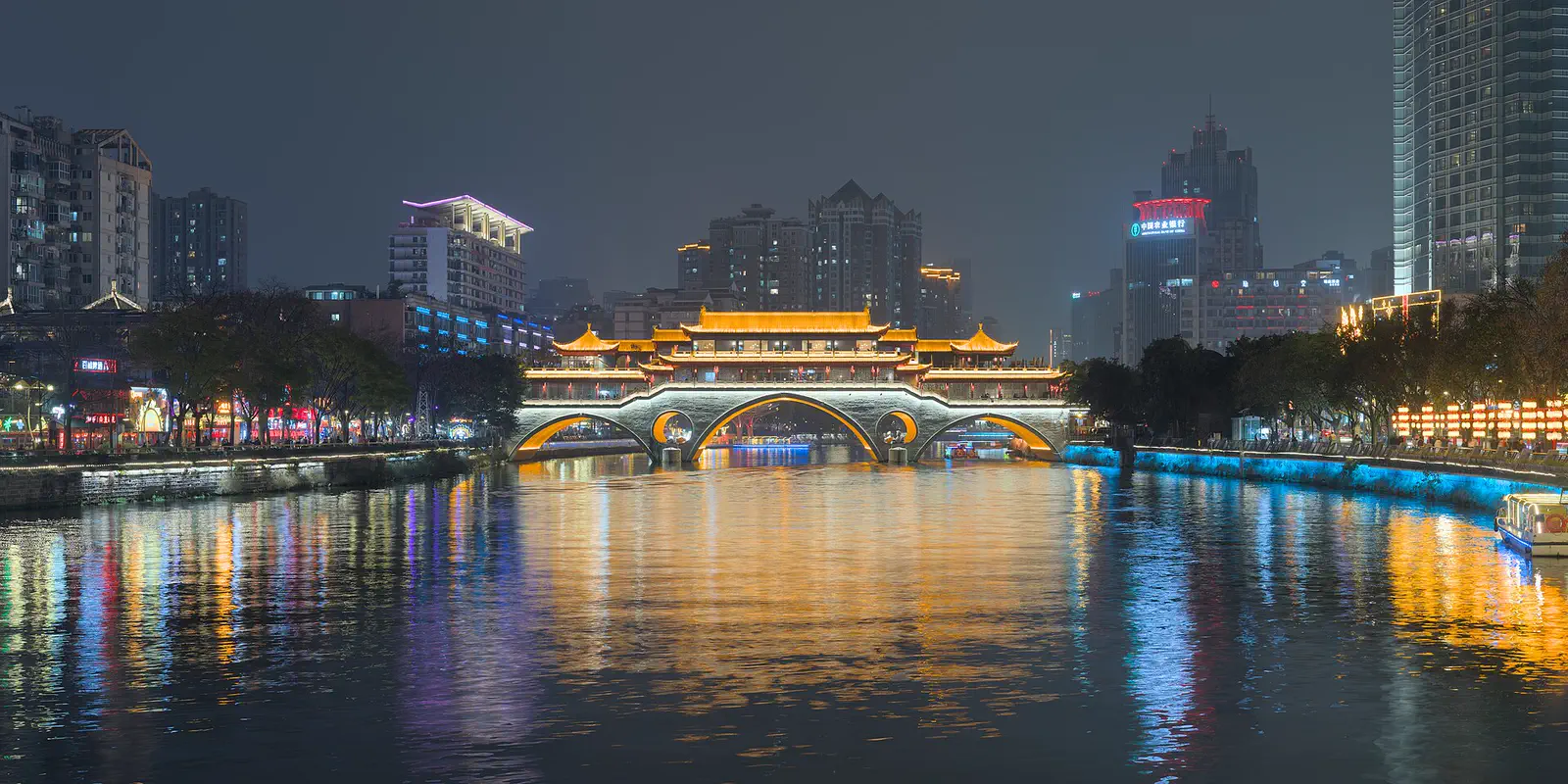
Capital of Sichuan, the heart of Sichuan cooking and the panda capital of China. A relaxed teahouse-and-mahjong city with imperial sights, the Wuhou Shrine and the Giant Panda Breeding Base.
Chengdu has been the capital of Sichuan for two thousand years and the centre of one of China's most distinct regional cultures. The city sits in the fertile Chengdu Plain, ringed by mountains that are frequently obscured by basin mist; the climate is mild, often overcast, with the famously low annual sunshine count that locals joke makes the residents treasure a sunny day like an event. Tea drinking in parks, mahjong at street-side tables, and a slower daily rhythm define the texture of life here — a genuine contrast to the pace of coastal megacities.
For visitors, Chengdu is among the most approachable first stops in western China: English signage at the major sights, a dense metro network, and a concentrated circuit of things to do. The Giant Panda Breeding Base (early morning is essential — the pandas are active before 10am), the Wuhou Shrine's Three Kingdoms memorial, Jinli Street's evening food stalls, and the People's Park teahouse constitute a full first day. Sanxingdui Museum, 60 km north, holds the bronze masks and gold objects of the Shu Bronze Age culture (c.1600–1000 BCE), culturally and artistically unrelated to contemporaneous Yellow River civilisations — it is one of the major archaeological sites in China.
Chengdu is the launchpad for Sichuan's mountain destinations: Mt Emei (UNESCO) is 1.5 hours by HSR; Leshan's 71-metre Giant Buddha is 2 hours; Jiuzhaigou is a one-hour flight north; Mt Siguniang for trekking is three hours west; Tibet flights depart from Tianfu International Airport.
Sichuan cooking achieved its canonical form in Chengdu's teahouses and street markets. The mala (numbing-hot) profile of Sichuan peppercorn and dried chilli is one of seven named Sichuan flavour profiles, and the daily life around it — morning noodles, afternoon cold dishes, evening hot pot — is the culinary argument for visiting.
Cultural & access notes
Sichuan dialect is widely spoken; standard Mandarin is universal in commercial contexts. Spice tolerance is treated as a virtue — don't push past your limit.
What to see
- Giant Panda Breeding Base — open 7:30am, go early; the morning feeding is the best chance to see active pandas
- Wuhou Shrine and Jinli Street — Three Kingdoms history followed by snack-stall street
- Wenshu Monastery — active Buddhist temple with vegetarian restaurant
- Du Fu Thatched Cottage — the Tang poet's restored residence
- People's Park (Renmin Gongyuan) — teahouse, ear-cleaning street barbers, paddle boats
- Kuanzhai Alley (Wide and Narrow Alleys) — restored Qing-era lanes (touristy but representative)
- Sanxingdui Museum — 60 km north; Bronze Age site with the bronze masks (UNESCO Tentative)
- Mt Qingcheng and Dujiangyan irrigation system (UNESCO) — day trip
What to eat
- Mapo tofu — try Chen Mapo Tofu, the original house
- Dan dan noodles
- Mala hot pot (the Sichuan, less heavy than Chongqing's)
- Tianfu cold dishes — bang bang chicken, mouth-watering chicken, fish-fragrant aubergine
- Sweet water noodles (甜水面)
- Sichuan baozi — particularly Long Chao Shou for chao shou wontons
Getting there
Chengdu Tianfu (TFU) opened 2021 as the new international airport, 51 km southeast — Line 19 metro to the city in ~50 minutes. Chengdu Shuangliu (CTU) is the older domestic airport, much closer to the centre. Chengdu East and Chengdu South are the HSR stations: Chongqing 1h 40m, Xi'an 3h 15m, Beijing 7h 30m, Shanghai 11h.
Getting around
Metro is comprehensive, ¥2–¥7 per ride, English-signed. Lines 1, 3, 4 cover the central tourist zone. Didi works. Walking the central old-town areas is pleasant. Bike-share works.
Where to stay
Wuhou / Jinli Old Street area for atmosphere and historic sights. Chunxi Road / Tianfu Square for central shopping and easy metro access. Kuanzhai Alley area for boutique courtyard hotels. Avoid the airports unless flying very early.
We list neighbourhoods, not specific hotels — we don't endorse hotels.
When to go
March–May and September–October are ideal. Avoid the week of National Day. Summer is humid and overcast; winter is grey but mild.
Budget guide (CNY per day)
| Backpacker | ¥280 |
| Mid-range | ¥600 |
| Comfortable | ¥1400 |
Safety notes
Chengdu is one of the safer Chinese megacities. Standard scam-awareness applies in the Wuhou and Chunxi Road tourist zones.
Nearby attractions
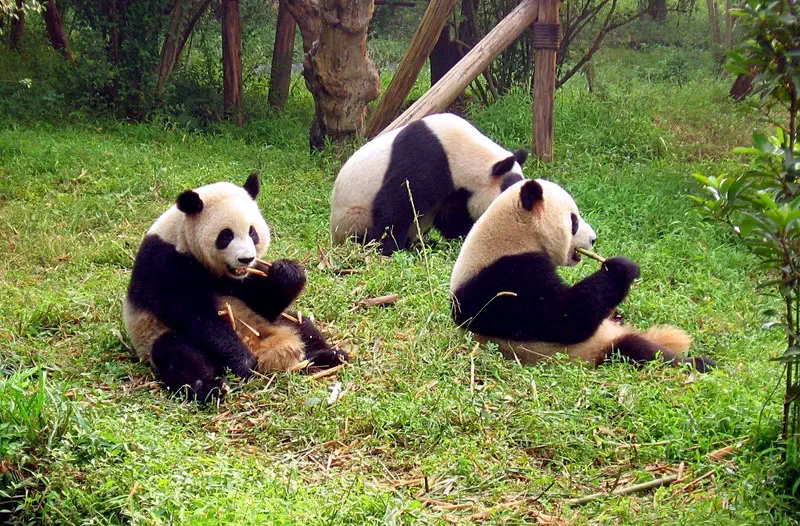
Chengdu Research Base of Giant Panda Breeding 成都大熊猫繁育研究基地
100+ giant pandas across multiple enclosures, 30 minutes north of central Chengdu. Visit before 10am for the active feeding period.
China Visit Guide
Dujiangyan Irrigation System
Dujiangyan Irrigation System 都江堰
2,300-year-old irrigation system on the Min River. Still in use. UNESCO-listed jointly with Mt Qingcheng. Engineering rather than architecture, but one of the great works.
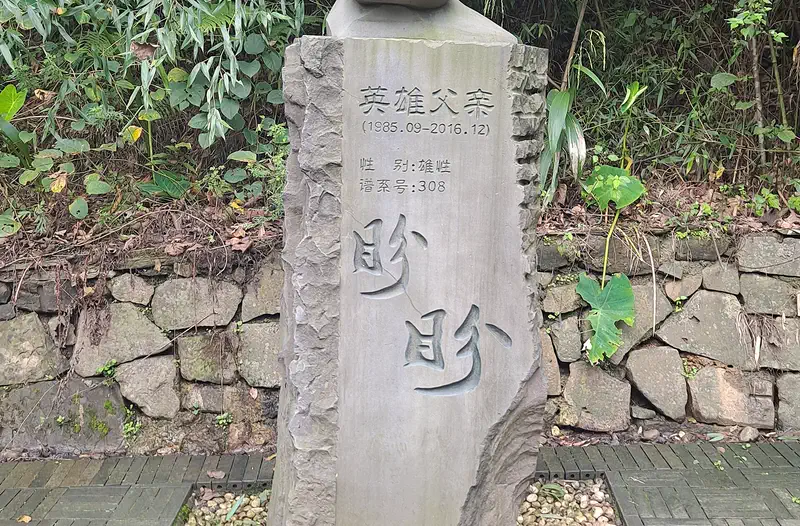
Dujiangyan Panda Base 都江堰熊猫基地
Quieter alternative to the Chengdu panda base, 60 km west. Smaller scale; volunteer programmes for international visitors.
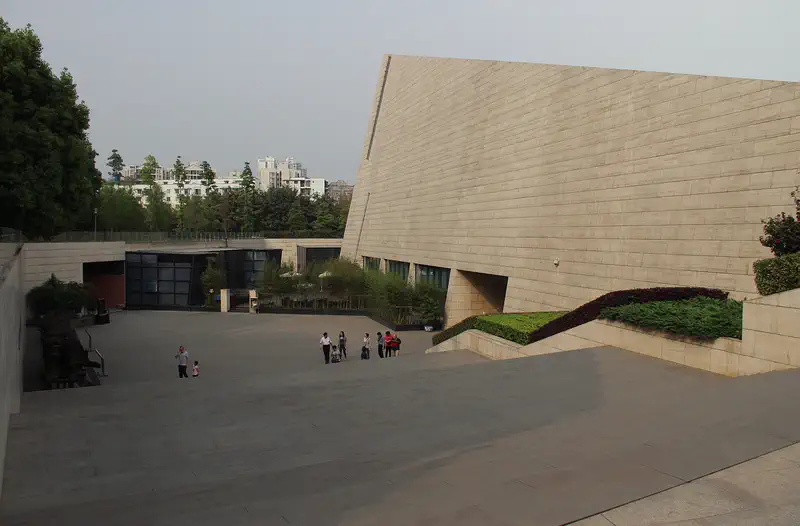
Jinsha Site Museum 金沙遗址博物馆
Bronze Age site museum on a 3,000-year-old ritual centre discovered in Chengdu in 2001. The Sun Bird gold disc is the symbol of Chengdu.
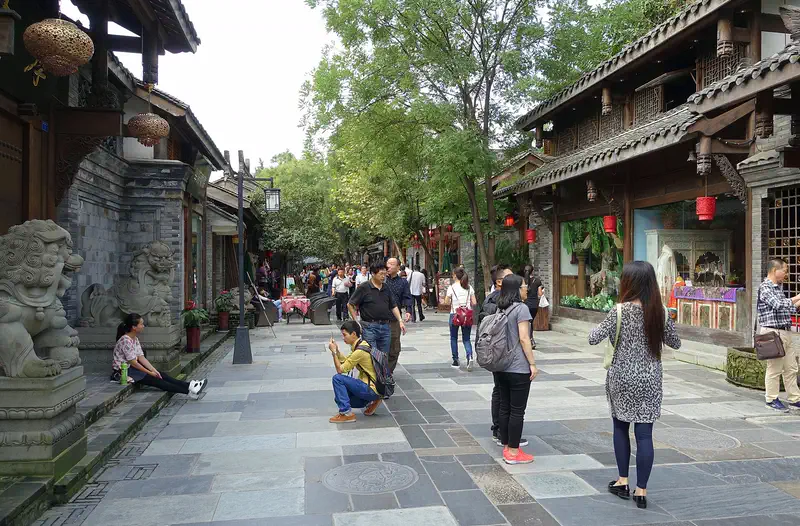
Kuanzhai Alley (Wide and Narrow Alleys) 宽窄巷子
Restored Qing-era Manchu-Han neighbourhood with three parallel alleys (Wide, Narrow, Well). Snack stalls, tea houses, restaurants.
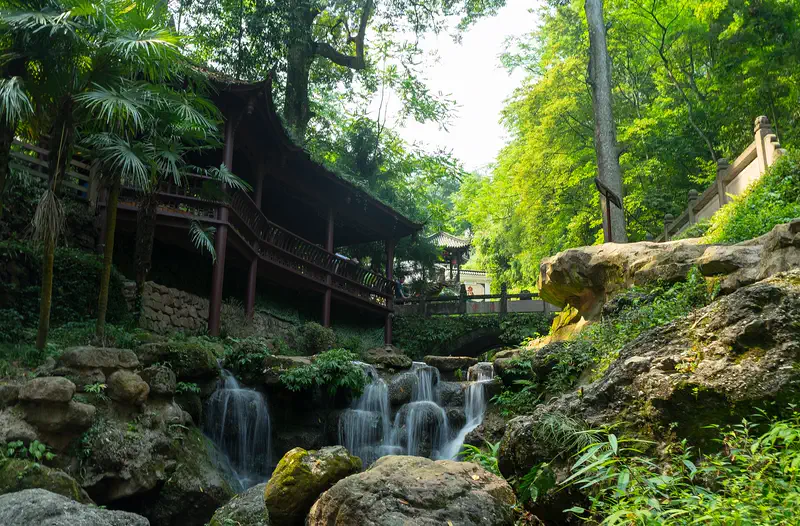
Mount Qingcheng 青城山
Sacred Daoist mountain west of Chengdu, said to be the cradle of Daoism. UNESCO-listed jointly with Dujiangyan.
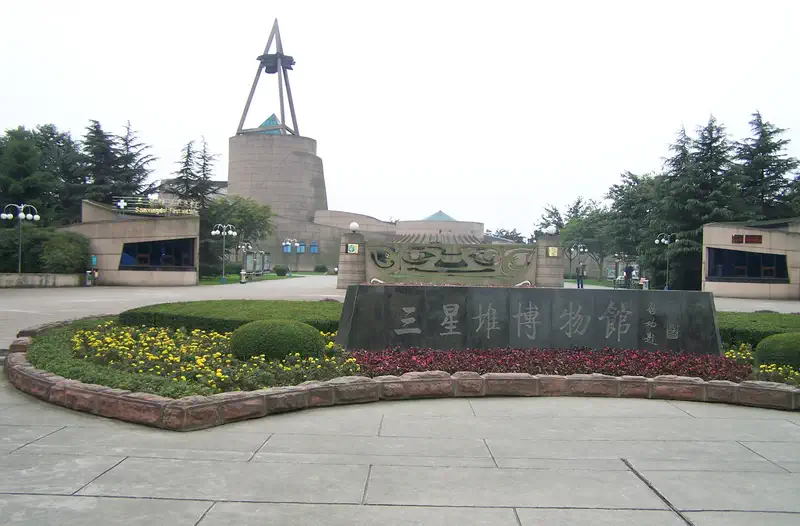
Sanxingdui Museum 三星堆博物馆
Bronze Age site museum 60 km north of Chengdu. The bronze masks of the Sanxingdui culture (1700–1100 BCE) are among the most distinctive Chinese archaeological finds.
China Visit Guide
Sichuan Giant Panda Sanctuaries
Sichuan Giant Panda Sanctuaries 四川大熊猫栖息地
UNESCO Natural World Heritage site in central Sichuan — a mosaic of seven nature reserves and nine scenic areas covering the principal wild habitat of the giant panda and dozens of other globally threatened species.
See all 10 Chengdu attractions →
Day trips within 150 km
More on Chengdu
Travelling with children?
Chengdu has family-friendly attractions, accessible transport, and good medical facilities. Our guide covers what works and what to prepare for.
China with kids: family travel guide →Living here?
We have a dedicated expat guide covering cost of living, neighbourhoods, international schools, hospitals, and community life in Chengdu.
Chengdu expat living guide →Other cities in Sichuan
- Danba丹巴
A Tibetan Gyarong county in western Sichuan's Garzê Prefecture, famous for its ancient stone watchtowers, tiered village settlements on valley walls, and apple orchards in bloom.
- Daocheng稻城
A remote county town in southern Garzê Prefecture, Sichuan, serving as the gateway to Yading Nature Reserve — a high-altitude alpine sanctuary with three snow peaks sacred to Tibetan Buddhism.
- Emei Mountain峨眉山
One of China's Four Sacred Buddhist Mountains, a UNESCO World Heritage site in Sichuan with dense cloud forest, monasteries and the famous sea of clouds from its 3,099-metre summit.
- Jiuzhaigou region九寨沟
UNESCO-listed alpine valley in northern Sichuan with multi-coloured travertine pools and waterfalls. Reopened progressively after the 2017 earthquake. Combine with Huanglong.
- Kangding康定
Gateway town on the Sichuan-Tibet Highway, set in a narrow valley at 2,560 m between Han China and the Tibetan plateau. Known for the folk song 'Kangding Love Song' and a mix of Tibetan, Han and Khampa cultures.
- Leshan乐山
A Sichuan city at the confluence of three rivers, home to the Leshan Giant Buddha — the world's tallest premodern stone statue at 71 metres — jointly inscribed as a UNESCO World Heritage Site with Emei Mountain.
- Litang理塘
A remote Khampa Tibetan town at 4,014 metres on the Sichuan-Tibet Highway in Garzê Prefecture, famous for its high-altitude grasslands, annual horse-racing festival and the birthplace of two Dalai Lamas.
- Songpan松潘
Historic walled town in northern Sichuan at 2,850 m, gateway to Huanglong Scenic Area and the Yellow Dragon Valley. Ming-dynasty town walls, a Tibetan and Hui mix, and the nearest substantial settlement to Jiuzhaigou.
Itineraries visiting Chengdu
- Chengdu and Chongqing in 5 days
5d · Two and a half days each: pandas and Leshan from Chengdu, Dazu rock carvings and hotpot from Chongqing.
- Sichuan Tea-Horse Road — Chengdu to Kangding, 5 days
5d · The ancient Sichuan-Tibet Tea-Horse Road from Chengdu through Ya'an, the Erlang Mountain pass, and the Tibetan gateway town of Kangding — a classic highland road journey.
- Eastern Tibet — Chengdu to Kangding, Litang and Daocheng, 7 days
7d · Seven days driving west from Chengdu into the Kham Tibetan highlands of Sichuan — Kangding, Litang and the sacred Yading Nature Reserve near Daocheng. No Tibet Autonomous Region permit required.
- Chinese opera circuit in 10 days
10d · Beijing Peking opera, Suzhou Kunqu, Shanghai Yueju, Chengdu Sichuan opera — four traditions in ten days.
Food of Southwestern China
- Baba Flatbread粑粑
Yunnan's daily flatbread — a thick wheat or rice-flour round cooked on a griddle and eaten plain or stuffed.
- Bang Bang Chicken棒棒鸡
Cold poached chicken shredded by hand, dressed in chilli oil, sesame paste and Sichuan peppercorn.
- Boiled Fish in Chilli Oil水煮鱼
Fish slices submerged in a deep pool of chilli oil and Sichuan peppercorns. Served bubbling.
- Chongqing Hotpot重庆火锅
The original mala hotpot — a simmering cauldron of beef tallow, Pixian doubanjiang and Sichuan peppercorn for communal dipping.
Chengdu weather by month
| Month | Jan | Feb | Mar | Apr | May | Jun | Jul | Aug | Sep | Oct | Nov | Dec |
|---|---|---|---|---|---|---|---|---|---|---|---|---|
| High °C | 10 | 13 | 19 | 23 | 26 | 30 | 31 | 31 | 26 | 21 | 17 | 11 |
| Low °C | 3 | 6 | 10 | 14 | 17 | 21 | 23 | 23 | 19 | 15 | 10 | 4 |
| Rain mm | 14 | 26 | 38 | 83 | 108 | 93 | 255 | 327 | 111 | 67 | 21 | 15 |
| Rain days | 5 | 8 | 12 | 13 | 16 | 12 | 17 | 17 | 15 | 14 | 5 | 6 |
2019–2023 average via Open-Meteo ERA5 (ERA5 reanalysis). "Rain days" = days per month with ≥1 mm precipitation.
Frequently asked questions
- When is the best time to visit Chengdu?
- The best months to visit Chengdu are March, April, May, September, and October. March–May and September–October are ideal. Avoid the week of National Day.
- How many days do you need in Chengdu?
- Plan 4 to 5 days for Chengdu if you want to see the headline sights without rushing — Giant Panda Breeding Base, Wuhou Shrine and Jinli Street, Wenshu Monastery. Add an extra day for day trips from the city or for repeat visits to your favourite neighbourhood.
- Is Chengdu safe for tourists?
- Chengdu is one of the safer Chinese megacities. Standard scam-awareness applies in the Wuhou and Chunxi Road tourist zones.
- How do you get around Chengdu?
- Metro is comprehensive, ¥2–¥7 per ride, English-signed. Lines 1, 3, 4 cover the central tourist zone. Didi works.
- What's the daily budget for Chengdu?
- Budget guide for Chengdu: backpackers from around ¥280/day, mid-range travellers ¥600/day, comfortable trips from ¥1400/day. These ranges cover accommodation, food, local transport and one paid sight per day, and exclude flights to and from the city.
- Where should you stay in Chengdu?
- Wuhou / Jinli Old Street area for atmosphere and historic sights. Chunxi Road / Tianfu Square for central shopping and easy metro access. Kuanzhai Alley area for boutique courtyard hotels.
Spotted something out of date? Submit a correction.
Research
Cross-checked against primary sources
Verified
Address, hours, fees confirmed at the date shown
Updated
Re-verified periodically; corrections welcome