Museum · JIANGXI
Imperial Kiln Museum
御窑博物馆 · Yù Yáo Bówùguǎn
About
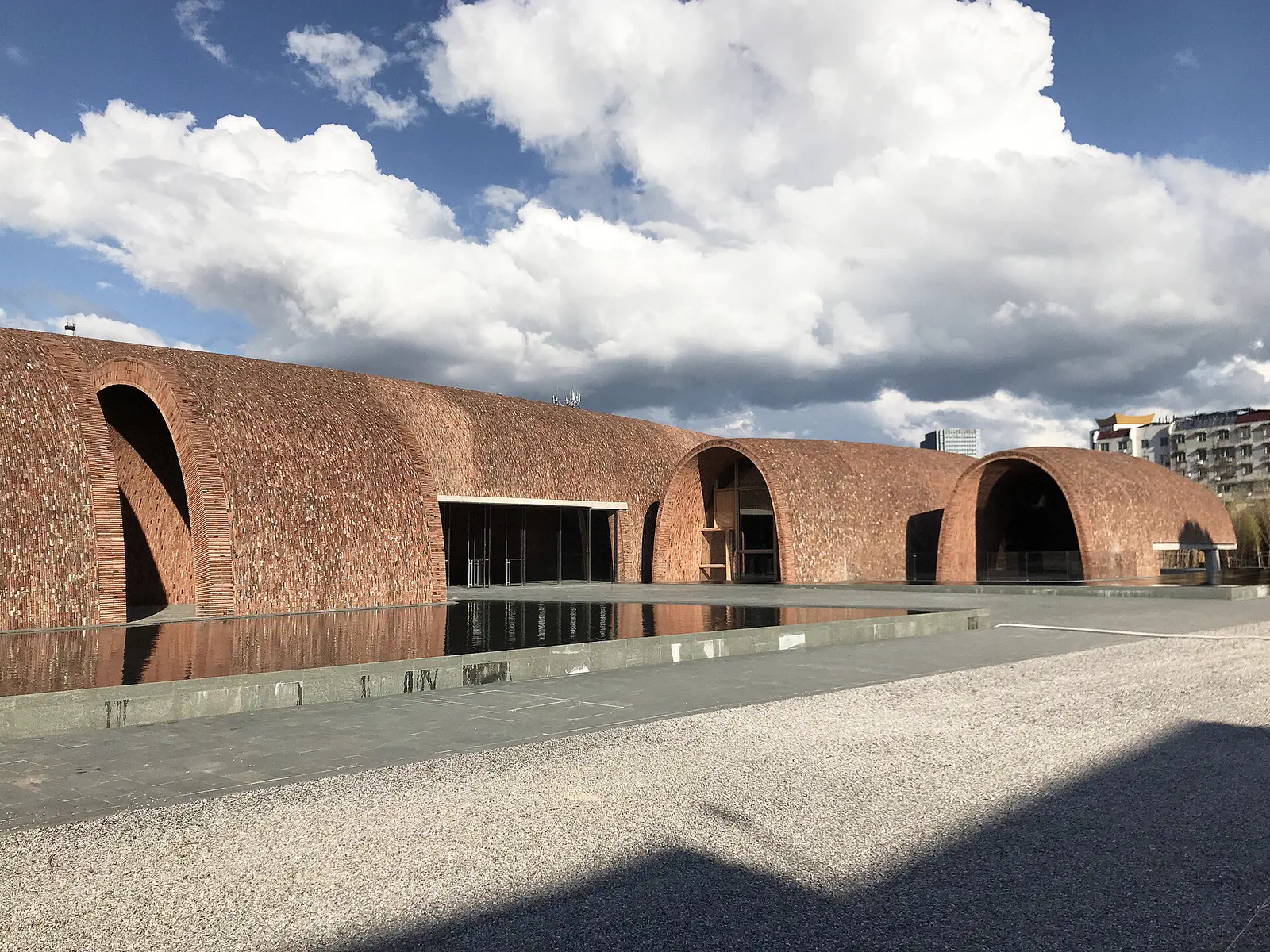
A museum of imperial Chinese porcelain built directly over the excavated site of the Ming and Qing imperial kilns, designed by architect Zhu Pei with brick-vaulted galleries that echo the form of the kilns themselves.
The Imperial Kiln Museum (御窑博物馆) opened in 2020 on a site in the centre of Jingdezhen that has been producing porcelain for the imperial court since the early Ming dynasty (14th century). The museum is simultaneously an architectural landmark, an active archaeological site, and a collection of ceramics covering six centuries of imperial production.
The building was designed by Chinese architect Zhu Pei of Studio Zhu-Pei. Rather than building over or obscuring the kiln excavations, Zhu Pei sited the museum's galleries to incorporate the ruins, with a series of vaulted brick structures whose curved forms deliberately reference the elliptical kiln chambers used to fire porcelain. The brickwork — using locally sourced materials in a traditional bonding pattern — gives the interior a warm, earthy quality that contrasts with the porcelain objects displayed within. The relationship between container and contained, between kiln and vessel, between industrial process and aesthetic object, is the organising idea of both the architecture and the collection.
The collection covers the full span of imperial kiln production at Jingdezhen, from the Yuan blue-and-white porcelain that established the city's pre-eminence through the Ming polychrome wares (doucai, wucai, famille-rose precursors) to the technically demanding Qing imperial output under the Kangxi, Yongzheng, and Qianlong emperors. Many of the objects on display are fragments reassembled from the excavated kiln waste pits — pieces that were deliberately smashed on site to prevent sub-standard goods from leaving the imperial works, and which have now been painstakingly reconstructed by the museum's conservation team. These reconstructed sherds sit alongside intact vessels, making visible the gap between intention and survival.
The archaeological site beneath and around the museum remains active — excavations have been ongoing since the 1980s and continue to reveal new material. The museum provides interpretive displays on the excavation methodology and findings, and the visible incorporation of excavated ground into the viewing experience is distinctive among Chinese museum presentations.
The surrounding area of central Jingdezhen is itself a working ceramics quarter, with active studios, the Taoxi River market, and the older Ancient Kiln Folk Scenic Area nearby — the museum is best visited as part of a full-day ceramics circuit rather than as a standalone stop.
How to get there
The Imperial Kiln Museum is in the centre of Jingdezhen, within walking distance of the main commercial streets and approximately 10 minutes by taxi from Jingdezhen railway station. Follow signs for 御窑博物馆 (Yù Yáo Bówùguǎn) in the historic city centre.
When to visit
Weekday mornings are quietest. The brick-vaulted interior is well lit but benefits from natural light in the morning hours. A combined visit with the nearby Ancient Kiln Folk Scenic Area makes for a full-day ceramics programme.
Crowds: Domestic tour groups peak midday and on weekends. The museum's layout channels visitors through the galleries sequentially, so early-morning entry before groups arrive allows a more reflective pace. The archaeological pit sections are most interesting to view when not crowded.
Accessibility
The museum has level access to the main galleries via ramps. The outdoor archaeological areas have some uneven surfaces; a companion or additional care is advisable for visitors with mobility limitations. Wheelchair access is available for the main exhibition spaces.
Itineraries featuring this site
Other museums in China
- Capital Museum首都博物馆
Beijing's history museum — bronze, ceramics, paintings, and a strong narrative of the city's evolution from Yan kingdom through the present.
- China National Tea Museum中国茶叶博物馆
Comprehensive museum of Chinese tea history, varieties, and culture. Free entry; in the Longjing tea-growing hills.
- Han Yangling Mausoleum Museum汉阳陵博物馆
A world-class Han Dynasty imperial mausoleum museum near Xi'an presenting thousands of miniature terracotta tomb figures, including nude figurines originally dressed in silk, excavated from pits surrounding the burial mound of Emperor Jing (reigned 157–141 BCE).
- Hong Kong Museum of Art香港艺术馆
Hong Kong's premier art museum on the Tsim Sha Tsui waterfront. Strong Chinese painting and contemporary HK art collections.
- Hong Kong Museum of History香港历史博物馆
Comprehensive museum of Hong Kong's history from prehistoric to the 1997 handover. Free entry.
- Hubei Provincial Museum湖北省博物馆
Major provincial museum east of central Wuhan. Famous for the Bianzhong bell-set of the Marquis Yi of Zeng.
- Jinsha Site Museum金沙遗址博物馆
Bronze Age site museum on a 3,000-year-old ritual centre discovered in Chengdu in 2001. The Sun Bird gold disc is the symbol of Chengdu.
- Mawangdui Han Tombs Museum (Hunan Provincial Museum)马王堆汉墓博物馆
Home to the most remarkable Han Dynasty archaeological finds ever made, including the 2,100-year-old preserved body of Lady Xin Zhui and thousands of silk manuscripts, lacquerware, and organic burial goods from the Mawangdui tombs.
Frequently asked questions
- How much does Imperial Kiln Museum cost to visit?
- Entry to Imperial Kiln Museum is free.
- When is Imperial Kiln Museum open?
- Imperial Kiln Museum opening hours:
- How long do you need at Imperial Kiln Museum?
- Allow 1.5–2.5 hours for Imperial Kiln Museum. Add buffer time if you plan to visit at peak season or include nearby sights in the same trip.
- When is the best time to visit Imperial Kiln Museum?
- Weekday mornings are quietest. The brick-vaulted interior is well lit but benefits from natural light in the morning hours. A combined visit with the nearby Ancient Kiln Folk Scenic Area makes for a full-day ceramics programme.
- How do you get to Imperial Kiln Museum?
- The Imperial Kiln Museum is in the centre of Jingdezhen, within walking distance of the main commercial streets and approximately 10 minutes by taxi from Jingdezhen railway station. Follow signs for 御窑博物馆 (Yù Yáo Bówùguǎn) in the historic city centre.
- How do you avoid the crowds at Imperial Kiln Museum?
- Domestic tour groups peak midday and on weekends. The museum's layout channels visitors through the galleries sequentially, so early-morning entry before groups arrive allows a more reflective pace. The archaeological pit sections are most interesting to view when not crowded.
Spotted something out of date? Submit a correction.
Research
Cross-checked against primary sources
Verified
Address, hours, fees confirmed at the date shown
Updated
Re-verified periodically; corrections welcome