Historic site · SICHUAN
Kuanzhai Alley (Wide and Narrow Alleys)
宽窄巷子 · Kuān Zhǎi Xiàngzi
About
Restored Qing-era Manchu-Han neighbourhood with three parallel alleys (Wide, Narrow, Well). Snack stalls, tea houses, restaurants.
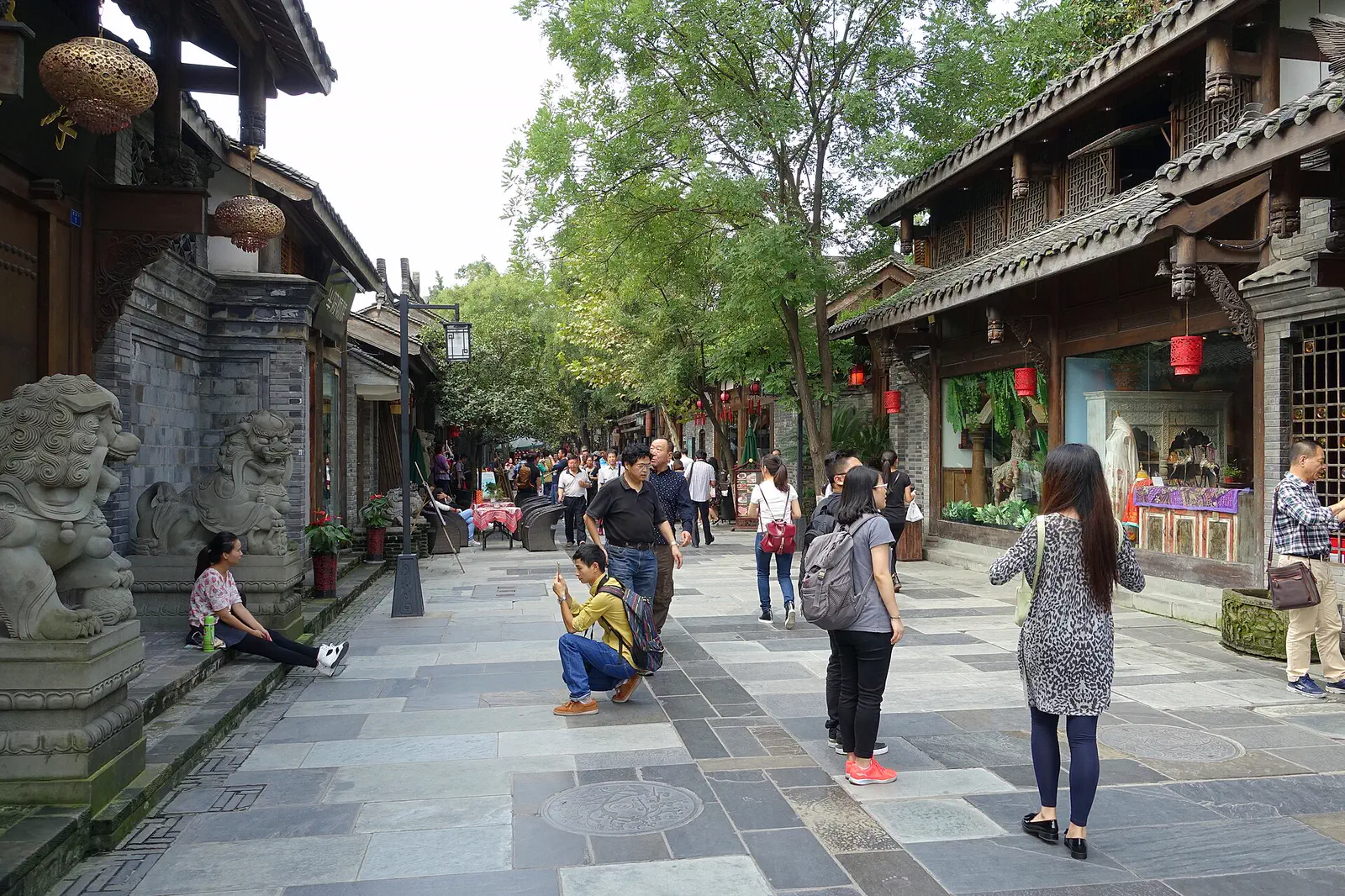
Kuanzhai Alley — the Wide and Narrow Alleys — is a restored historic neighbourhood in central Chengdu occupying a grid of three parallel pedestrianised lanes: Kuan Xiangzi (Wide Alley), Zhai Xiangzi (Narrow Alley), and Jing Xiangzi (Well Alley). The site's history dates to the early Qing dynasty, when it was allocated as residential quarters for Manchu bannermen stationed in Chengdu following the Qing conquest of Sichuan. The grey-brick courtyard residences that give the alleys their character reflect the Manchu-Han architectural fusion of that period — Beijing-influenced courtyard plans with Sichuan construction techniques.
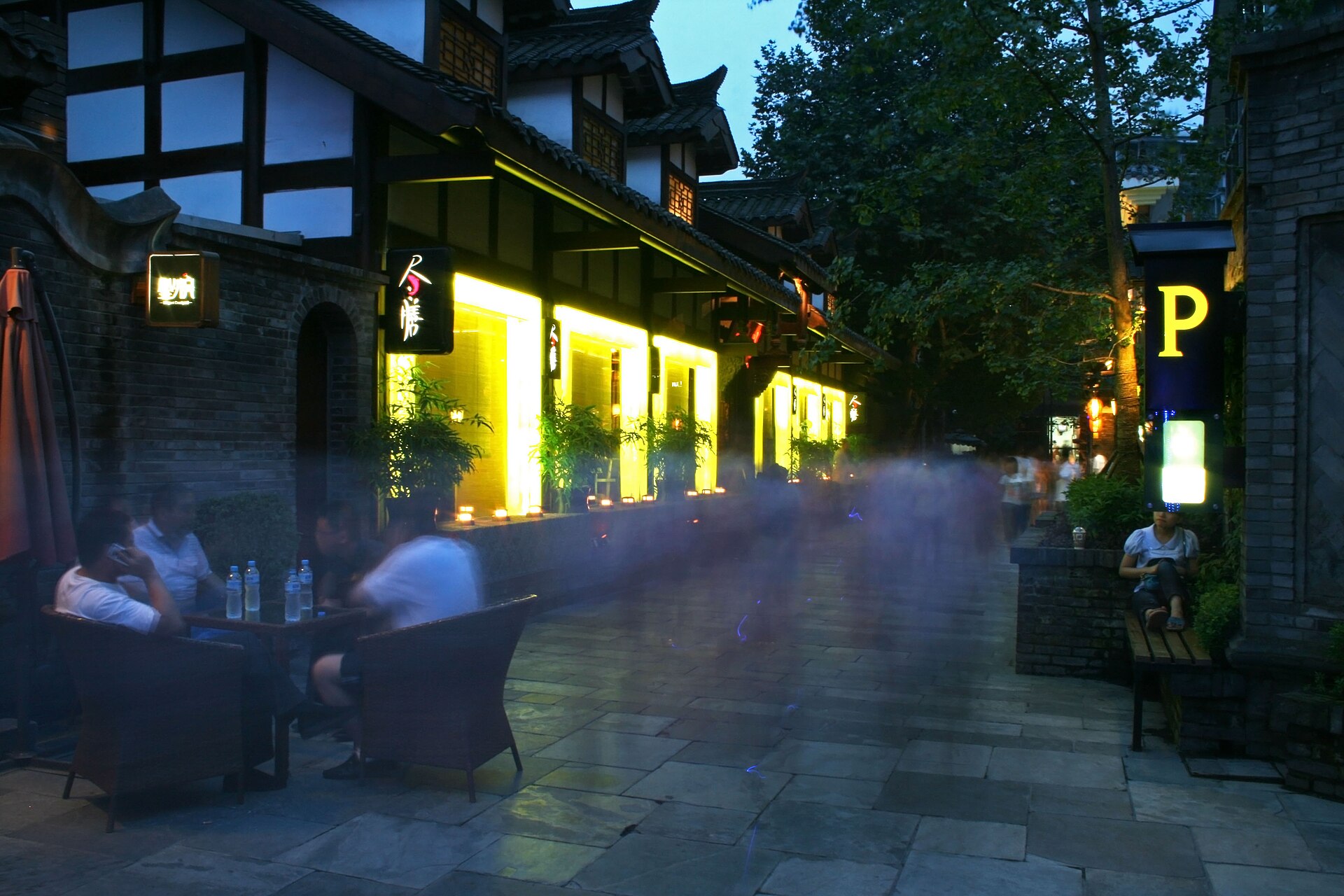
The neighbourhood fell into decline through the 20th century and was substantially renovated in the early 2000s in a restoration that kept the courtyard-house facades while converting interiors to commercial use. The result is what might charitably be called a heritage-themed commercial district or what might honestly be called a tourist street. Tea houses, hot pot restaurants, Sichuan snack stalls, artisan shops, and boutique hotels now occupy the courtyard spaces. The commercialisation is pervasive but the physical architecture is genuinely old — or at least faithfully reconstructed — and more coherent than many comparable sites in other cities.
Each alley has a different character. Wide Alley is the busiest, with outdoor seating and the largest restaurants. Narrow Alley is more concentrated and has some of the better cafes and craft shops. Well Alley is the most contemporary, with street food stalls and performance spaces. The surrounding lanes, away from the main three alleys, have some older courtyard buildings in varying states of preservation that reward brief exploration. The area is liveliest in the late afternoon and evening; combine with Wenshu Monastery a short walk away for a more complete picture of Chengdu's old city.
How to get there
Metro Line 4 to Kuanzhai Alley.
When to visit
Late afternoon to evening.
Gallery
Other attractions in Chengdu
Itineraries featuring this site
- Chengdu and Chongqing in 5 days
5d · Two and a half days each: pandas and Leshan from Chengdu, Dazu rock carvings and hotpot from Chongqing.
- Sichuan Tea-Horse Road — Chengdu to Kangding, 5 days
5d · The ancient Sichuan-Tibet Tea-Horse Road from Chengdu through Ya'an, the Erlang Mountain pass, and the Tibetan gateway town of Kangding — a classic highland road journey.
- Chinese opera circuit in 10 days
10d · Beijing Peking opera, Suzhou Kunqu, Shanghai Yueju, Chengdu Sichuan opera — four traditions in ten days.
Other historic sites in China
- Ancient Villages of Southern Anhui — Xidi and Hongcun皖南古村落—西递、宏村
UNESCO · UNESCO-listed pair of Ming-Qing Huizhou merchant villages in southern Anhui, renowned for whitewashed walls, inky horsehead gables and moon-shaped ponds.
- Anqing Zhenfeng Pagoda安庆振风塔
A seven-storey Ming Dynasty pagoda standing on the bank of the Yangtze River in Anqing, considered one of the finest riverside pagodas in southern China and long used as a navigation landmark by Yangtze river pilots.
- Archaeological Ruins of Liangzhu City良渚古城遗址
UNESCO · UNESCO-listed archaeological site in Hangzhou preserving the remains of a 5,000-year-old city with a sophisticated water-management system, jade ritual culture and social hierarchy — regarded as one of the earliest state-level societies in East Asia.
- Capital Cities and Tombs of the Ancient Koguryo Kingdom高句丽王城、王陵及贵族墓葬
UNESCO · UNESCO-listed capital cities and royal tombs of the Koguryo Kingdom in Jian, Jilin — the Chinese portion of a transnational heritage property shared with North Korea, representing one of the most powerful states of ancient East Asia.
- Classical Gardens of Suzhou (UNESCO)苏州古典园林
UNESCO · UNESCO-listed collection of private gardens in Suzhou — four inscribed in 1997 and five more added in 2000 — representing the pinnacle of Chinese garden design through the refined integration of architecture, water, rock and plant.
- Danba Tibetan Watchtowers丹巴碉楼
Clusters of ancient stone watchtowers rising above Tibetan village complexes in the Dadu River valley, said to be among the oldest surviving examples of Tibetan defensive architecture.
- Drum Tower and Bell Tower鼓楼钟楼
Yuan-dynasty drum and bell towers that kept official time for imperial Beijing. Climbable; daily drum performances.
- Dujiangyan Irrigation System都江堰
UNESCO · 2,300-year-old irrigation system on the Min River. Still in use. UNESCO-listed jointly with Mt Qingcheng. Engineering rather than architecture, but one of the great works.
Frequently asked questions
- How much does Kuanzhai Alley (Wide and Narrow Alleys) cost to visit?
- Entry to Kuanzhai Alley (Wide and Narrow Alleys) is free.
- When is Kuanzhai Alley (Wide and Narrow Alleys) open?
- Kuanzhai Alley (Wide and Narrow Alleys) opening hours: Streets 24/7. Most shops 10am–10pm.
- How long do you need at Kuanzhai Alley (Wide and Narrow Alleys)?
- Allow 2–3 hours for Kuanzhai Alley (Wide and Narrow Alleys). Add buffer time if you plan to visit at peak season or include nearby sights in the same trip.
- When is the best time to visit Kuanzhai Alley (Wide and Narrow Alleys)?
- Late afternoon to evening.
- How do you get to Kuanzhai Alley (Wide and Narrow Alleys)?
- Metro Line 4 to Kuanzhai Alley.
Spotted something out of date? Submit a correction.
Research
Cross-checked against primary sources
Verified
Address, hours, fees confirmed at the date shown
Updated
Re-verified periodically; corrections welcome