Itinerary · 14 days · balanced
Off the beaten path — two weeks (Pingyao, Datong, Hongcun)
Walled towns, cliff temples, southern villages — China away from the tour-bus routes.
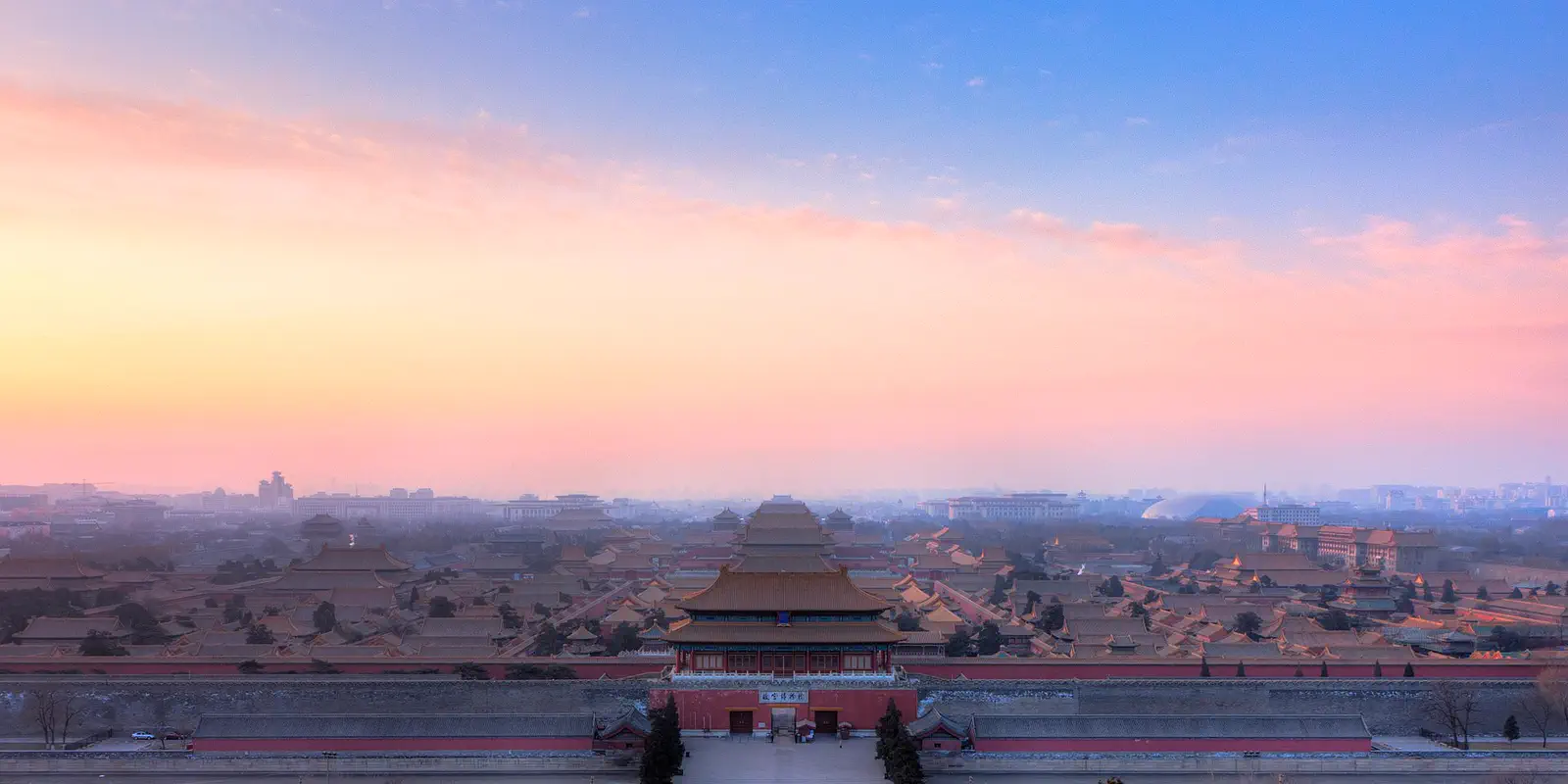
This itinerary is built for visitors who have done Beijing, Shanghai, and Xi'an before and want the less-visited layer. The common thread is intact historical townscapes: Pingyao (the most complete Ming-Qing walled town in China, smaller and more human-scale than Xi'an), Datong (a northern city with some of the finest Buddhist cave sculpture in the world, typically visited in passing rather than in depth), and the Anhui cluster of Huangshan mountain and the UNESCO-listed village pair of Hongcun and Xidi, where Ming and Qing merchant architecture has survived in working village condition. The route closes with Suzhou (the canonical classical garden city) and a Shanghai arrival for departure. The HSR connections are solid throughout; no domestic flights are required. Best time: spring (April–May) or autumn (September–October) for Huangshan and Anhui — summer is wet and overrun, winter is cold but scenic in snow.
Day by day
Day 1 · beijing
Arrival
Arrive at PEK or PKX. Check in to hotel near Beijing North or Beijing Station — both are convenient departure points for Datong. The Beijing-Zhangjiakou high-speed line (opened for the 2022 Winter Olympics) passes through the Juyongguan section of the Great Wall; the train window view from this section is a free Great Wall sighting.
Stay in: Haidian or Xicheng districts — convenient for Beijing North HSR.
Day 2 · datong
HSR to Datong, Yungang Grottoes
High-speed rail from Beijing North to Datong (2 hours, ¥150). Datong sits in northern Shanxi, a coal-mining city with an undervalued cultural core. The Yungang Grottoes (雲岡石窟), 16 km west of the city, are a UNESCO World Heritage Site — 252 caves carved from the 460s CE under the Northern Wei dynasty, containing over 51,000 Buddhist sculptures. The scale ranges from 2-metre niches to the 17m-tall Colossal Buddha of Cave 20, whose face peers out into open air after the cave's wooden superstructure collapsed. Unlike the more famous Mogao Caves (Dunhuang), Yungang is accessible without advance booking.
Attractions: yungang-grottoes
Day 3 · datong
Hanging Temple, Wooden Pagoda
The Hanging Temple (懸空寺, Xuankong Si) is a Buddhist-Daoist-Confucian temple built into a cliff face in the Hengshan gorge, 65 km southeast of Datong. The structure literally hangs on wooden cantilevered supports above a narrow gorge — the most visually arresting temple in northern China. The Yingxian Wooden Pagoda (應縣木塔), 70 km south, is the world's oldest and tallest surviving timber pagoda (1056 CE, Song dynasty). The two sites are usually combined in a single day trip by private vehicle or public bus.
Attractions: hanging-temple
Day 4 · pingyao
HSR to Pingyao, walking the wall
Train from Datong to Pingyao (2–3 hours on slower rail; Pingyao is not yet on HSR as of May 2026). Pingyao Ancient City (平遥古城) is the most complete surviving Ming-Qing walled town in China — a 6.4 km city wall enclosing 22 km² of traditional architecture, with fewer than 40,000 residents living inside. The Rishengchang Exchange Shop (日升昌, 1823 CE) was the first commercial bank in Chinese history and is now the main museum. Walk the wall circuit before dusk.
Attractions: pingyao-ancient-city
Day 5 · pingyao
Wang Family Compound
The Wang Family Compound (王家大院, Wáng Jiā Dàyuàn) is 35 km from Pingyao — a complex of six large courtyard-house compounds built by the Wang merchant family between the 17th and 19th centuries. Over 500 buildings and 2,000 carved architectural elements make it one of the most impressive surviving examples of Shanxi merchant-class architecture. The carvings (brick, wood, stone) deserve close attention. Day trip by taxi or tour bus from Pingyao.
Day 6 · huangshan
HSR to Huangshan, Tunxi Old Street
Train from Pingyao south, with connection at Taiyuan for HSR to Huangshan (Tunxi). Allow 6–8 hours for this travel day. Arrive at Huangshan Tunxi station in the afternoon. The Tunxi Old Street (屯溪老街) is a 1 km Ming-Qing commercial street in Tunxi district — the best-preserved of the Huizhou merchant streets in Anhui, with traditional wood-fronted shops selling Huizhou inksticks, black sesame pastries, and local preserved meats. A good evening food street.
Multiple connections; allow full day travel.
Day 7 · huangshan
Mt Huangshan ascent and overnight
Bus from Tunxi to the Huangshan cable car base (1.5 hours). The eastern cable car ascends to Beihai (North Sea) in 8 minutes — the mountain's main plateau of peaks and cloud-sea pine forest. Walk south along the ridge to the Western Sea Grand Canyon for the afternoon. The summit hotel options are basic (¥600–¥1,500 per person) but the only way to catch the sunrise. Book summit accommodation several weeks ahead in peak season.
Attractions: huangshan-mountain
Stay in: Summit — Beihai Hotel or Shilin Hotel.
Day 8 · huangshan
Mt Huangshan sunrise, descent, Hongcun
Pre-dawn at the Refreshing Terrace (清凉台) for the sunrise over the cloud sea — when cloud inversions fill the valleys, the granite peaks appear as islands in a white ocean. Descend via the western cable car or stone steps (2.5 hours on foot). Bus to Hongcun village (40 km north of Tunxi). Hongcun (宏村, UNESCO World Heritage Site) is the more visited of the twin Huizhou villages — a working village of 400 households with a central reflecting pond, Moon Pond and South Lake, and white-walled Huizhou-style courtyard houses. The village is authentic — people live here.
Attractions: hongcun-village
Day 9 · huangshan
Hongcun and Xidi villages
Full exploration of Hongcun and the 25 km distant Xidi village (西递, UNESCO). Xidi is slightly smaller and feels marginally less touristified; the carved lintels and gate towers reflect the Huizhou merchant families who built them from Ming-dynasty tea-and-salt profits. The two villages are best seen across a day: morning in one, afternoon in the other. Tickets for each are sold separately.
Attractions: xidi-village
Day 10 · suzhou
HSR to Suzhou, Pingjiang Road
HSR from Huangshan North to Suzhou (approximately 2.5 hours with one connection). Suzhou has nine classical gardens on the UNESCO World Heritage list — the densest concentration of classical Chinese garden design in the world. Check in near the historic district. Afternoon walk along Pingjiang Road (平江路) — a canal-side street with traditional houses, smaller craft shops, and a less touristified atmosphere than the Humble Administrator's Garden area. The Kunqu Opera Museum on Pingjiang Road is free and worth 30 minutes.
Attractions: humble-administrators-garden
Day 11 · suzhou
Suzhou gardens
The Humble Administrator's Garden (拙政园, UNESCO) is the largest and most visited — allow 2 hours. The Master of Nets Garden (网师园) is smaller and more intimate; the evening candlelit programme (if operating) is one of the better tourist experiences in China. The Lion Grove Garden (狮子林) has the most elaborate rockery — a cave-and-tunnel maze of limestone rocks that the Yuan-dynasty garden designer (a monk) considered symbolic of the mountains of Buddhist paradise.
Attractions: master-of-nets-garden, lion-grove-garden
Day 12 · suzhou
Tongli Water Town
Tongli (同里), 15 km south of Suzhou, is the most liveable of the water towns — a network of canals, stone bridges, and residential Ming-Qing architecture where local people still walk to work and school. The Tuisi Garden (退思园, UNESCO-listed) is Tongli's main sight — a compact scholar's garden designed for a retired official in 1887. The town itself requires 3–4 hours to explore on foot. Day trip from Suzhou by bus or organised transport.
Attractions: tongli-water-town
Day 13 · shanghai
HSR to Shanghai
High-speed rail from Suzhou to Shanghai Hongqiao (25 minutes, ¥30). Arrive in Shanghai for a final afternoon — the Bund, the French Concession, or the museums depending on interest. The Shanghai Museum (free, on People's Square) is one of China's best. The M50 art district on Moganshan Road is a 20-minute taxi from the station.
Attractions: the-bund
Day 14 · shanghai
Departure
Transfer to Pudong International Airport (PVG) for international departure. The Pudong Airport Maglev departs from Longyang Road (Line 2); the journey takes 7 minutes at 431 km/h. Alternatively, taxi from central Shanghai to PVG is approximately 45 minutes outside of rush hour.
Budget guide (CNY per day)
| Backpacker | ¥700 |
| Mid-range | ¥1500 |
| Comfortable | ¥3500 |
Pingyao combo ticket ¥130. Yungang ¥120. Huangshan ¥190 plus cable car ¥100. Hongcun ¥104, Xidi ¥104. Suzhou gardens ¥90 each.
Attractions covered
Other itineraries visiting Beijing
- Beijing–Tianjin long weekend in 3 days
3d · One day on Beijing's sites, a day-trip to Tianjin's Italian quarter and food street, return same evening.
- Beijing 3-day blitz — first-timer fast pass
3d · Three full days in Beijing covering the Forbidden City, Great Wall at Mutianyu, the Temple of Heaven and the hutong lanes — the absolute core of the capital for visitors with limited time.
- Beijing weekend — 3 days in the capital
3d · Three days in Beijing covering the Forbidden City, Great Wall at Mutianyu and the Temple of Heaven — the irreducible core of the capital, managed at a pace that avoids pure exhaustion.
- Beijing in 4 days
4d · Forbidden City, Wall, Temple of Heaven, hutongs, museums.
- China in 5 days: fastest first-timer route
5d · Beijing's big three sights, a flight south, and two days navigating Shanghai's contrasts.
- Beijing + Shanghai — 5-day first-timer classic
5d · Two of China's three great cities in five days: imperial Beijing followed by the modern skyline of Shanghai, linked by a quick domestic flight or overnight train.