CITY · JIANGSU
Suzhou
苏州 · Sūzhōu
Overview
City of canals and classical gardens, half an hour from Shanghai. UNESCO-listed gardens, the cradle of Kunqu opera, and the historic centre of Chinese silk production.
Suzhou has been the cultural capital of southern Jiangsu for more than two millennia: a silk-producing, canal-crossed, scholar-garden city whose aesthetic sensibility shaped what the Chinese literary tradition considered a cultivated life. The historic centre is a grid of canals and stone bridges, with the most famous classical gardens — Humble Administrator's Garden (the largest at 5.2 hectares), Lingering Garden, Master of Nets Garden, Lion Grove Garden — all UNESCO-listed and clustered within 15 minutes' walk of each other.
The water-town aesthetic that features in Chinese film and painting originated here: the whitewashed walls, dark tile roofs, stone bridges over slow canals, and narrow lanes that most people associate with 'old China' were canonical in Suzhou's Pingjiang Road district before spreading as a design template across the eastern provinces. Pingjiang Road is itself restored as a pedestrian waterway street and gives a reasonable approximation of what the surrounding old city looked like before redevelopment.
Suzhou is 25 minutes from Shanghai by HSR and is one of China's most visited secondary destinations. It pairs naturally with Hangzhou, Wuzhen and Zhouzhuang as an eastern China cultural circuit. The new SIP (Suzhou Industrial Park) district to the east — with Jinji Lake, the Gate to the East tower and a different scale of urbanity — illustrates the 21st-century economic reality that coexists with the garden city identity. Kunqu opera (the oldest surviving form of Chinese opera, ancestral to Peking opera) is performed at the Master of Nets Garden on summer evenings.
Cultural & access notes
Kunqu opera, the oldest surviving form of Chinese opera, is performed at the Master of Nets Garden in summer evenings.
What to see
- Humble Administrator's Garden (Zhuozheng Yuan) — the largest classical garden
- Lingering Garden (Liu Yuan)
- Master of Nets Garden (Wangshi Yuan) — the most concentrated, opens evenings in summer
- Lion Grove Garden (Shizilin) — the rockwork garden
- Pingjiang Road — restored canal-side pedestrian street
- Tiger Hill (Huqiu) — leaning pagoda and the founding tomb of Suzhou
- Suzhou Museum (designed by I.M. Pei)
- Hanshan Temple — featured in the Tang poem 'A Night-Mooring near Maple Bridge'
- Tongli Water Town and Zhouzhuang Water Town — day trips
What to eat
- Songhe rouyuan — pine-nut and pork meatballs
- Suzhou-style fried noodles (xiehuangmian) — yellow-crab-roe noodles in autumn
- Xiaolongbao (Suzhou claims a separate tradition from Shanghai's)
- Yangcheng Lake hairy crab in October–November
- Sweet osmanthus desserts
Getting there
No commercial airport — most travellers fly into Shanghai (PVG or SHA). Suzhou Railway Station and Suzhou North handle HSR: Shanghai Hongqiao 25 min, Nanjing 1h 10m.
Getting around
Metro covers the central old town. Walking the canal area around Pingjiang Road is the way to see the city. Boat trips on the canals are touristy but pretty in the evening. Didi works.
Where to stay
Pingjiang Road historic district for canal-side atmosphere. Guanqian Street for central shopping and access to the Lion Grove and Humble Administrator's gardens. SIP / Jinji Lake area for modern hotels with lake views.
We list neighbourhoods, not specific hotels — we don't endorse hotels.
When to go
March–May for cherry blossom and garden colour; October–November for autumn light. Avoid Golden Week.
Budget guide (CNY per day)
| Backpacker | ¥320 |
| Mid-range | ¥700 |
| Comfortable | ¥1700 |
Nearby attractions
China Visit Guide
Classical Gardens of Suzhou (UNESCO)
Classical Gardens of Suzhou (UNESCO) 苏州古典园林
UNESCO-listed collection of private gardens in Suzhou — four inscribed in 1997 and five more added in 2000 — representing the pinnacle of Chinese garden design through the refined integration of architecture, water, rock and plant.
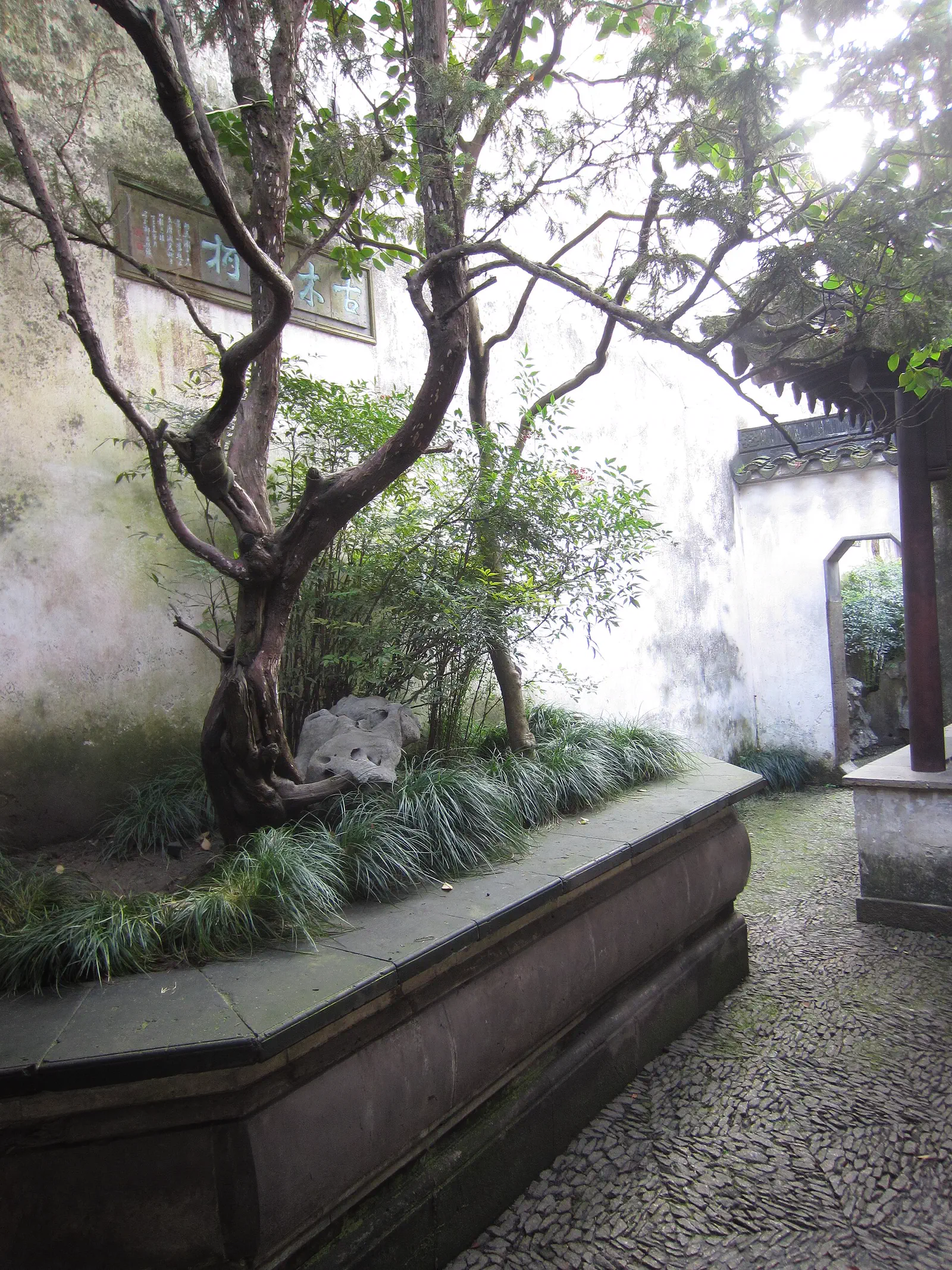
Couple's Retreat Garden 耦园
UNESCO-listed Suzhou garden organised symmetrically around a central residence. Less crowded than the four most-visited gardens.
China Visit Guide
Garden of Cultivation
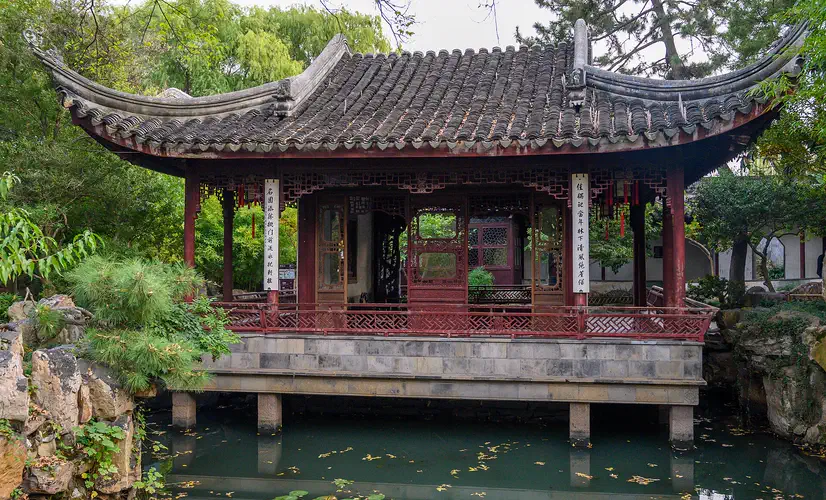
Garden of Cultivation 艺圃
UNESCO-listed Ming-era scholar's garden. Among the smallest and most atmospheric of Suzhou's classical gardens.
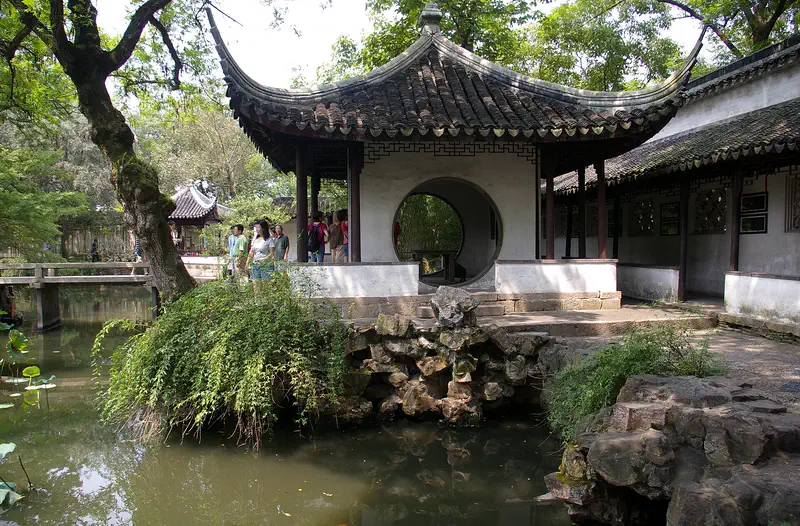
Humble Administrator's Garden 拙政园
The largest of Suzhou's UNESCO-listed classical gardens (5.2 hectares). 16th-century landscape with ponds, pavilions, rockeries, and an emphasis on water.
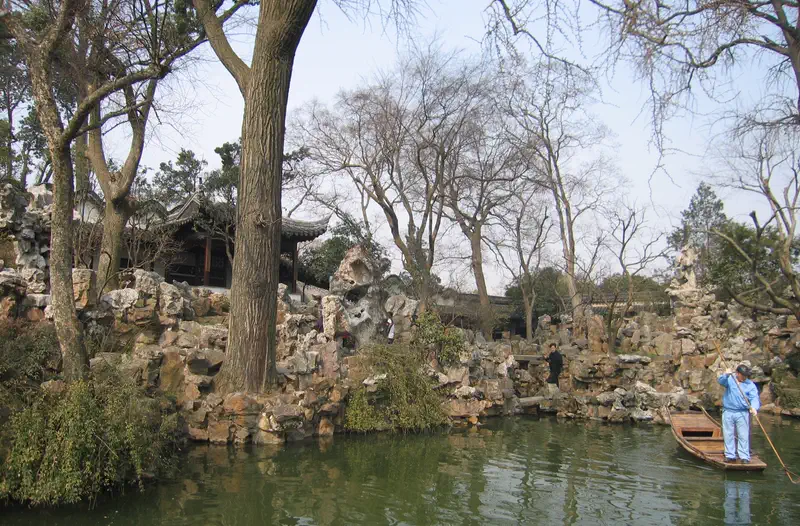
Lingering Garden 留园
UNESCO-listed Ming-Qing garden, famed for its rockeries and the 6.5m central limestone scholar's-rock 'Crown of Clouds'.
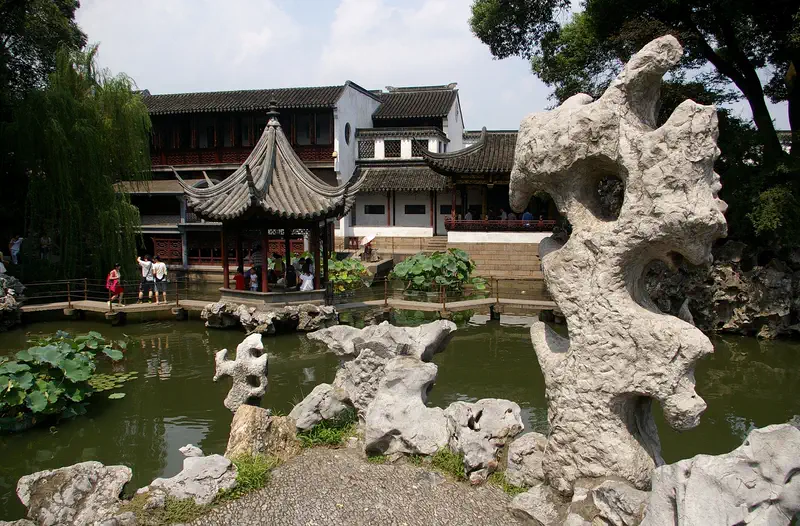
Lion Grove Garden 狮子林
Yuan-dynasty garden famous for its lion-shaped rockeries — a maze of Taihu limestone you can walk through.
China Visit Guide
Master of Nets Garden
Master of Nets Garden 网师园
The most concentrated of Suzhou's UNESCO-listed gardens (0.6 hectares). Summer evening 'night garden' performances are the local draw.
China Visit Guide
Tiger Hill (Huqiu)
Tiger Hill (Huqiu) 虎丘
Founding burial site of the city of Suzhou (514 BCE). The 47m Yunyan Pagoda (961 CE) leans like Pisa.
See all 11 Suzhou attractions →
Day trips within 150 km
More on Suzhou
Living here?
We have a dedicated expat guide covering cost of living, neighbourhoods, international schools, hospitals, and community life in Suzhou.
Suzhou expat living guide →Other cities in Jiangsu
- Nanjing南京
Former capital of the Ming dynasty and the Republic of China, on the Yangtze. Imperial walls, presidential palace, the Nanjing Massacre Memorial, and Purple Mountain.
- Wuxi无锡
Prosperous Jiangnan city on the shore of Taihu, one of China's largest freshwater lakes. Known for lake crab, the canal quarter of Nanchan Temple, Lingshan Grand Buddha, and the traditional gardens of Jichang Yuan.
- Yancheng盐城
Coastal city in east Jiangsu, centre of China's salt-pan heritage, and home to the Yancheng National Nature Reserve — a UNESCO World Heritage Site and critical staging post for millions of migratory birds on the East Asian-Australasian Flyway, including endangered red-crowned cranes and Black-faced Spoonbills.
- Yangzhou扬州
Grand Canal city in central Jiangsu. The Slender West Lake, classical gardens, and Yangzhou's signature breakfast tea-and-dumplings tradition.
Itineraries visiting Suzhou
- Shanghai–Suzhou–Hangzhou triangle in 5 days
5d · Two days in Shanghai, a day and a half in Suzhou's classical gardens, then West Lake and Hangzhou.
- Water towns circuit in 5 days
5d · Shanghai to Tongli to Wuzhen to Zhujiajiao — four of the Yangtze Delta's most visited canal towns in a compact loop, using a Shanghai base with day excursions and one overnight in Wuzhen.
- Vegetarian and vegan China in 7 days
7d · Hangzhou (Buddhist vegetarian temples) to Putuoshan (sacred Buddhist island) to Suzhou to Shanghai. A seven-day itinerary following the tradition of Chinese Buddhist vegetarian cuisine, with reliable meat-free and vegan options at each stop.
- Classical gardens circuit in 7 days
7d · Suzhou (Humble Administrator's Garden, Lingering Garden, Master of Nets) to Yangzhou (Geyuan, Heyuan) to Hangzhou. A focused circuit around China's most significant private garden tradition, pairing the UNESCO-listed Suzhou gardens with the less-visited Yangzhou examples and Hangzhou's West Lake landscape.
Food of Eastern China
- Beggar's Chicken叫花鸡
A whole chicken stuffed with aromatics, wrapped in lotus leaves and clay, then slow-baked until the meat steams in its own juices.
- Drunken Chicken醉鸡
Chicken steamed and marinated in Shaoxing rice wine, served chilled. A Shanghai banquet starter.
- Eight-Treasure Rice八宝饭
A steamed dome of glutinous rice layered with red bean paste and decorated with eight types of preserved fruits and nuts.
- Hairy Crab大闸蟹
Yangcheng Lake mitten crab — the autumn delicacy of the Yangtze Delta. Eaten steamed with vinegar dip.
Suzhou weather by month
| Month | Jan | Feb | Mar | Apr | May | Jun | Jul | Aug | Sep | Oct | Nov | Dec |
|---|---|---|---|---|---|---|---|---|---|---|---|---|
| High °C | 9 | 11 | 17 | 21 | 26 | 29 | 32 | 32 | 28 | 23 | 18 | 11 |
| Low °C | 1 | 3 | 7 | 11 | 17 | 21 | 25 | 26 | 21 | 15 | 10 | 2 |
| Rain mm | 72 | 73 | 93 | 67 | 112 | 208 | 286 | 193 | 162 | 52 | 52 | 33 |
| Rain days | 9 | 10 | 11 | 9 | 11 | 15 | 18 | 15 | 12 | 6 | 9 | 6 |
2019–2023 average via Open-Meteo ERA5 (ERA5 reanalysis). "Rain days" = days per month with ≥1 mm precipitation.
Frequently asked questions
- When is the best time to visit Suzhou?
- The best months to visit Suzhou are March, April, May, October, and November. March–May for cherry blossom and garden colour; October–November for autumn light. Avoid Golden Week.
- How many days do you need in Suzhou?
- Plan 4 to 5 days for Suzhou if you want to see the headline sights without rushing — Humble Administrator's Garden (Zhuozheng Yuan), Lingering Garden (Liu Yuan), Master of Nets Garden (Wangshi Yuan). Add an extra day for day trips from the city or for repeat visits to your favourite neighbourhood.
- How do you get around Suzhou?
- Metro covers the central old town. Walking the canal area around Pingjiang Road is the way to see the city. Boat trips on the canals are touristy but pretty in the evening.
- What's the daily budget for Suzhou?
- Budget guide for Suzhou: backpackers from around ¥320/day, mid-range travellers ¥700/day, comfortable trips from ¥1700/day. These ranges cover accommodation, food, local transport and one paid sight per day, and exclude flights to and from the city.
- Where should you stay in Suzhou?
- Pingjiang Road historic district for canal-side atmosphere. Guanqian Street for central shopping and access to the Lion Grove and Humble Administrator's gardens. SIP / Jinji Lake area for modern hotels with lake views.
Spotted something out of date? Submit a correction.
Research
Cross-checked against primary sources
Verified
Address, hours, fees confirmed at the date shown
Updated
Re-verified periodically; corrections welcome