CITY · ANHUI
Huangshan / Yellow Mountain region
黄山 · Huángshān
Overview
UNESCO-listed mountain in Anhui, the most-painted mountain in Chinese landscape art. Granite peaks, sea-of-clouds, ancient pines. Combine with Hongcun and Xidi villages.
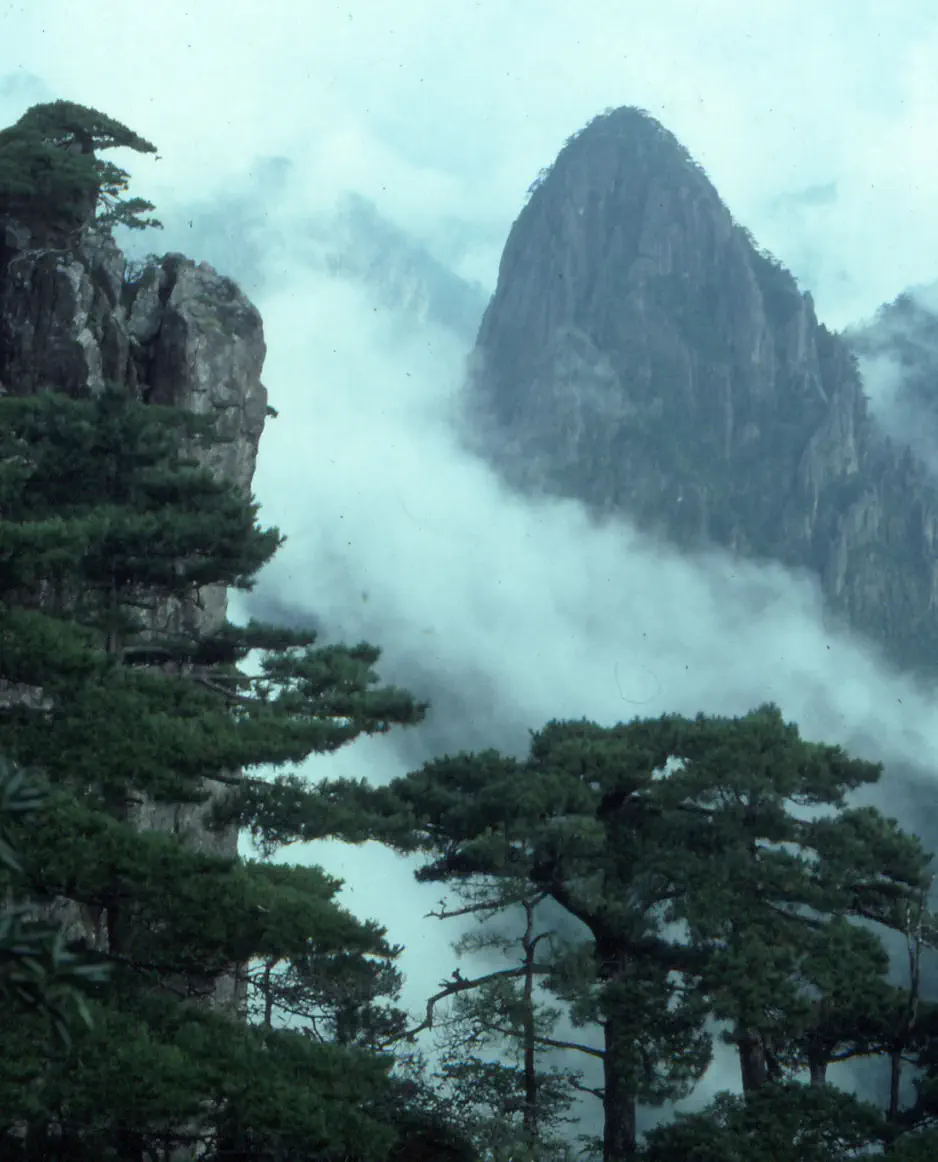
Huangshan — Yellow Mountain — is the most-painted mountain in China, a subject of landscape painters and poets for over a thousand years and a UNESCO World Heritage site since 1990. The mountain's visual language is distinctive: seventy-two named granite peaks emerging from white cloud inversions, ancient Huangshan pines growing from cliff crevices at impossible angles, and the particular quality of the light that comes through dispersed moisture at elevation. These elements appear repeatedly in classical Chinese painting to the point where the style name Huangshan School refers to a whole tradition of landscape art.
The mountain experience is organised around two cable cars and a network of ridge and valley trails. Most visitors take the eastern cable car up, walk the upper plateau trail connecting the main viewpoints — Bright Summit (Guangming Ding, 1,860m), the cable car stations, the West Sea Canyon — and either descend by western cable car or walk down. The circuit of main viewpoints takes four to six hours at a moderate pace. Overnight accommodation exists on the mountain (the Beihai Hotel, Shilin Hotel, and several others): staying up allows you to experience sunset and sunrise from the summit area, when the cloud inversions are most dramatic. This is strongly recommended over a day trip if the weather is cooperating.
Cloud inversion days — when thick cloud fills the valleys below the summit while the peak stands clear above — are the most sought-after condition. They occur most frequently in winter and early spring, but cannot be predicted accurately more than a day in advance. Weather changes quickly; rain and mist are common year-round. The mountain is beautiful in all conditions, but wet granite is slippery and the mood is different.
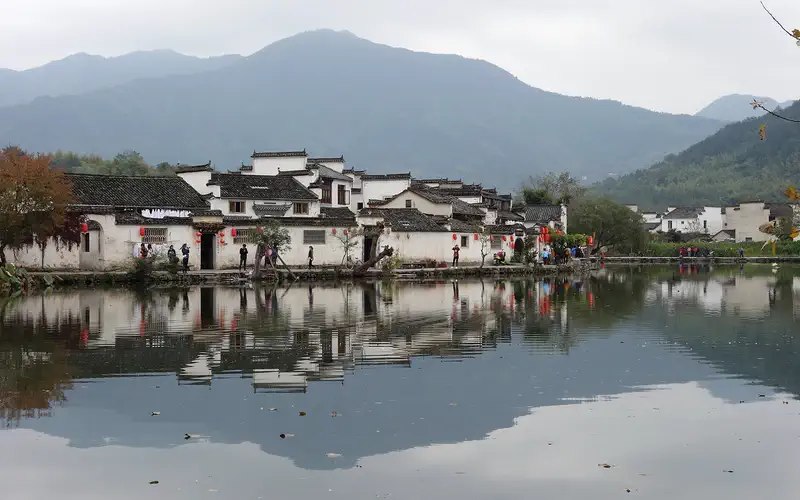
The base city is Huangshan City (formerly Tunxi), where the old merchant street of Tunxi Ancient Street has Huizhou-style architecture and a range of local tea and crafts shops. Two villages in the surrounding countryside complete what most visitors treat as a three-to-four-day Anhui circuit: Hongcun and Xidi, both UNESCO-listed for their extraordinary concentration of intact Ming and Qing dynasty Huizhou merchant architecture. Hongcun is the more pictorial — laid out around a central moon-shaped pond that reflects the surrounding whitewashed and black-tiled buildings. Xidi is more intact as a village, less photographically composed. Both can be visited on the same day trip from Huangshan City.
What to see
- Huangshan Mountain (UNESCO) — overnight on the mountain
- Hongcun Ancient Village (UNESCO)
- Xidi Ancient Village (UNESCO)
- Tunxi Old Street
- Mukeng Bamboo Forest (Crouching Tiger Hidden Dragon filming location)
What to eat
- Hairy tofu (毛豆腐) — fermented and pan-fried
- Stinky mandarin fish
- Anhui ham
Getting there
Huangshan Tunxi (TXN) airport. Huangshan North HSR: Hangzhou 1h 30m, Shanghai 3h.
Getting around
Cable car up the mountain; trails on top. Bus to Hongcun and Xidi from Tangkou or Tunxi.
Where to stay
On the mountain (book early) for sunrise; Tunxi or Hongcun for valley-base stays.
We list neighbourhoods, not specific hotels — we don't endorse hotels.
When to go
April–May, September–November. Snow on the mountain is photogenic but the cable cars may close in heavy weather.
Budget guide (CNY per day)
| Backpacker | ¥350 |
| Mid-range | ¥750 |
| Comfortable | ¥1800 |
Nearby attractions
Anqing Zhenfeng Pagoda 安庆振风塔
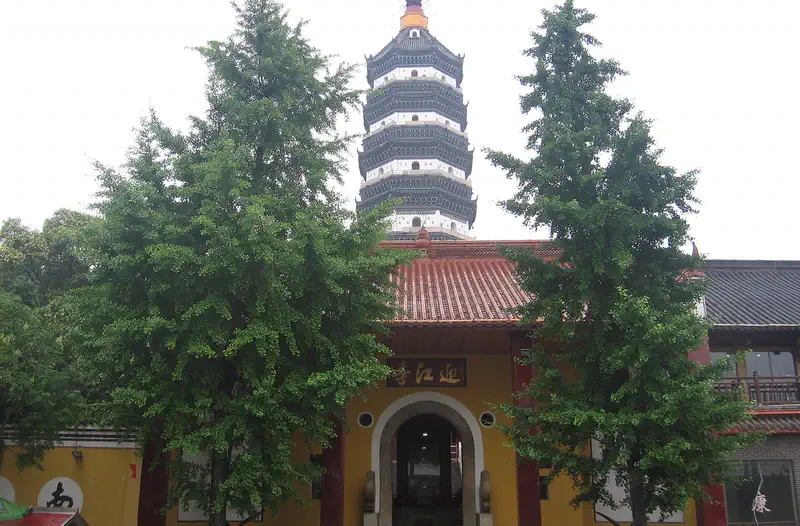
A seven-storey Ming Dynasty pagoda standing on the bank of the Yangtze River in Anqing, considered one of the finest riverside pagodas in southern China and long used as a navigation landmark by Yangtze river pilots.
Hongcun Ancient Village 宏村
UNESCO-listed Ming-Qing village 60 km southeast of Mt Huangshan. The half-moon pond (Yuezhao) at the centre framed Crouching Tiger, Hidden Dragon's bridge scene.
China Visit Guide
Mount Huangshan (Yellow Mountain)
Mount Huangshan (Yellow Mountain) 黄山
UNESCO-listed mountain in southern Anhui, the most-painted mountain in Chinese landscape art. Ancient pines, granite peaks, sea-of-cloud inversions.
China Visit Guide
Wuhu Fantawild Adventure Park
Wuhu Fantawild Adventure Park 芜湖方特欢乐世界
A large Chinese-developed theme park in Wuhu, Anhui, operated by Fantawild Holdings and considered one of the most visited theme parks in China, blending Chinese mythology and culture with immersive ride technology.
Xidi Ancient Village 西递
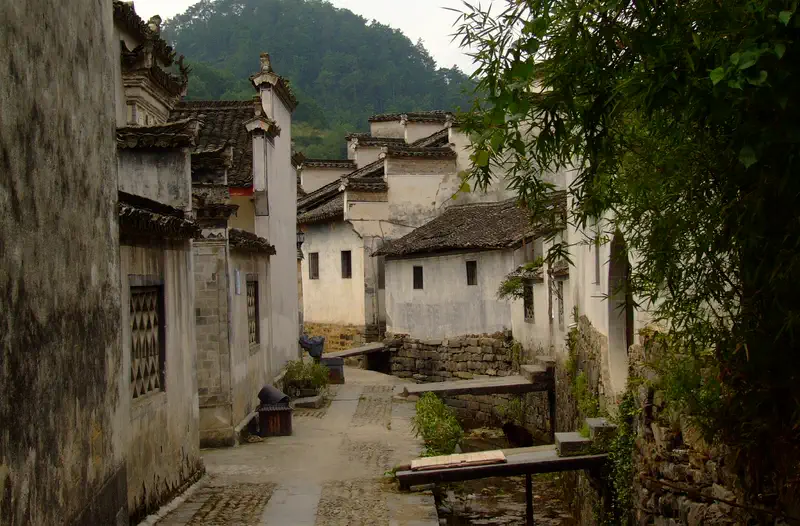
UNESCO-listed Hu-clan village (founded 1047), the canonical 'Anhui-style' merchant village with archway lanes, white-walled grey-tile houses and carved-stone doors.
Day trips within 150 km
China Visit Guide
Wuyuan ancient villages
Wuyuan ancient villages 婺源
Cluster of restored Hui-style villages in northeastern Jiangxi. Famous for the late-March rapeseed-flower bloom.
≈ 100 km from Huangshan / Yellow Mountain region
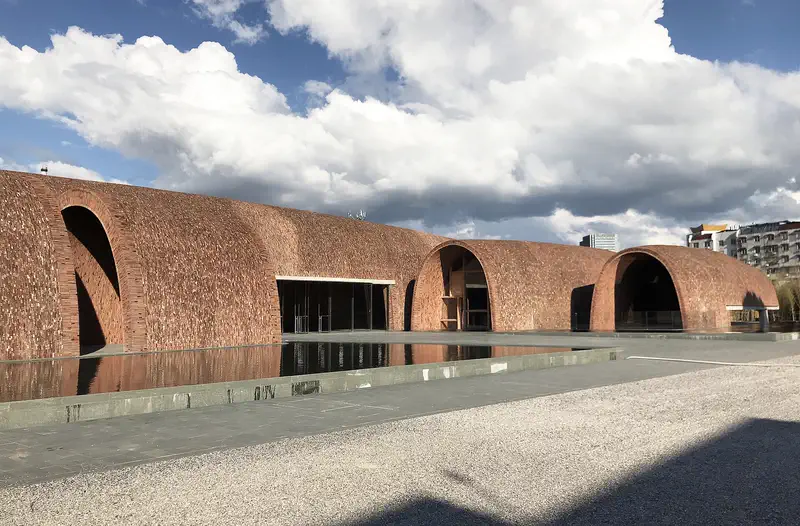
Imperial Kiln Museum 御窑博物馆
A museum of imperial Chinese porcelain built directly over the excavated site of the Ming and Qing imperial kilns, designed by architect Zhu Pei with brick-vaulted galleries that echo the form of the kilns themselves.
≈ 130 km from Huangshan / Yellow Mountain region
Other cities in Anhui
- Hefei合肥
Capital of Anhui, transport gateway to Mt Huangshan and the Hongcun-Xidi villages. Less of a destination, more of a transit hub.
- Jiuhua Mountain九华山
One of China's Four Sacred Buddhist Mountains in Anhui province, associated with the Bodhisattva Ksitigarbha and home to over 90 active monasteries and temples.
- Tunxi屯溪
The urban base for the Huizhou cultural region in southern Anhui — gateway to Huangshan mountain and the ancient villages of Hongcun and Xidi. The Old Street (Laoijie) along the Xin'an River preserves Song, Ming and Qing commercial architecture.
- Yixian黟县
Rural county in southern Anhui containing the UNESCO-listed Huizhou villages of Hongcun and Xidi, the best-preserved examples of vernacular merchant-class architecture in China. The county town itself is minor; the surrounding villages are the draw.
Itineraries visiting Huangshan / Yellow Mountain region
- Hiking China's national parks — Zhangjiajie, Huangshan and Jiuzhaigou, 14 days
14d · Fourteen days across three of China's most dramatic mountain and forest parks — the sandstone columns of Zhangjiajie, the granite peaks and sea of cloud at Huangshan, and the turquoise lakes of Jiuzhaigou.
- Off the beaten path — two weeks (Pingyao, Datong, Hongcun)
14d · Walled towns, cliff temples, southern villages — China away from the tour-bus routes.
Food of Eastern China
- Beggar's Chicken叫花鸡
A whole chicken stuffed with aromatics, wrapped in lotus leaves and clay, then slow-baked until the meat steams in its own juices.
- Drunken Chicken醉鸡
Chicken steamed and marinated in Shaoxing rice wine, served chilled. A Shanghai banquet starter.
- Eight-Treasure Rice八宝饭
A steamed dome of glutinous rice layered with red bean paste and decorated with eight types of preserved fruits and nuts.
- Hairy Crab大闸蟹
Yangcheng Lake mitten crab — the autumn delicacy of the Yangtze Delta. Eaten steamed with vinegar dip.
Huangshan / Yellow Mountain region weather by month
| Month | Jan | Feb | Mar | Apr | May | Jun | Jul | Aug | Sep | Oct | Nov | Dec |
|---|---|---|---|---|---|---|---|---|---|---|---|---|
| High °C | 0 | 2 | 8 | 12 | 16 | 19 | 22 | 23 | 18 | 13 | 9 | 1 |
| Low °C | -7 | -5 | 0 | 4 | 9 | 13 | 16 | 16 | 12 | 6 | 1 | -6 |
| Rain mm | 97 | 111 | 178 | 140 | 194 | 320 | 316 | 151 | 120 | 49 | 72 | 46 |
| Rain days | 12 | 14 | 17 | 14 | 17 | 22 | 24 | 17 | 15 | 9 | 11 | 8 |
2019–2023 average via Open-Meteo ERA5 (ERA5 reanalysis). "Rain days" = days per month with ≥1 mm precipitation.
Frequently asked questions
- When is the best time to visit Huangshan / Yellow Mountain region?
- The best months to visit Huangshan / Yellow Mountain region are April, May, September, October, and November. April–May, September–November. Snow on the mountain is photogenic but the cable cars may close in heavy weather.
- How many days do you need in Huangshan / Yellow Mountain region?
- Plan 3 days for Huangshan / Yellow Mountain region if you want to see the headline sights without rushing — Huangshan Mountain (UNESCO), Hongcun Ancient Village (UNESCO), Xidi Ancient Village (UNESCO). Add an extra day for day trips from the city or for repeat visits to your favourite neighbourhood.
- How do you get around Huangshan / Yellow Mountain region?
- Cable car up the mountain; trails on top. Bus to Hongcun and Xidi from Tangkou or Tunxi.
- What's the daily budget for Huangshan / Yellow Mountain region?
- Budget guide for Huangshan / Yellow Mountain region: backpackers from around ¥350/day, mid-range travellers ¥750/day, comfortable trips from ¥1800/day. These ranges cover accommodation, food, local transport and one paid sight per day, and exclude flights to and from the city.
- Where should you stay in Huangshan / Yellow Mountain region?
- On the mountain (book early) for sunrise; Tunxi or Hongcun for valley-base stays.
Spotted something out of date? Submit a correction.
Research
Cross-checked against primary sources
Verified
Address, hours, fees confirmed at the date shown
Updated
Re-verified periodically; corrections welcome