Cultural site · JIANGSU · UNESCO
Lion Grove Garden
狮子林 · Shīzilín
About
Yuan-dynasty garden famous for its lion-shaped rockeries — a maze of Taihu limestone you can walk through.
Lion Grove Garden was established in 1342 by the Buddhist monk Tianru, a disciple of the Chan master Zhongfeng Mingben, who is associated with a monastery in the Tianmu Mountains whose rocky terrain included lion-shaped formations. Tianru named the new Suzhou garden 'Lion Grove' in memory of that landscape and his teacher. The garden passed through several owners across the Ming and Qing periods and was purchased in 1917 by the Bei family — giving the American architect I.M. Pei, who visited as a child, his first encounter with classical Chinese garden design.
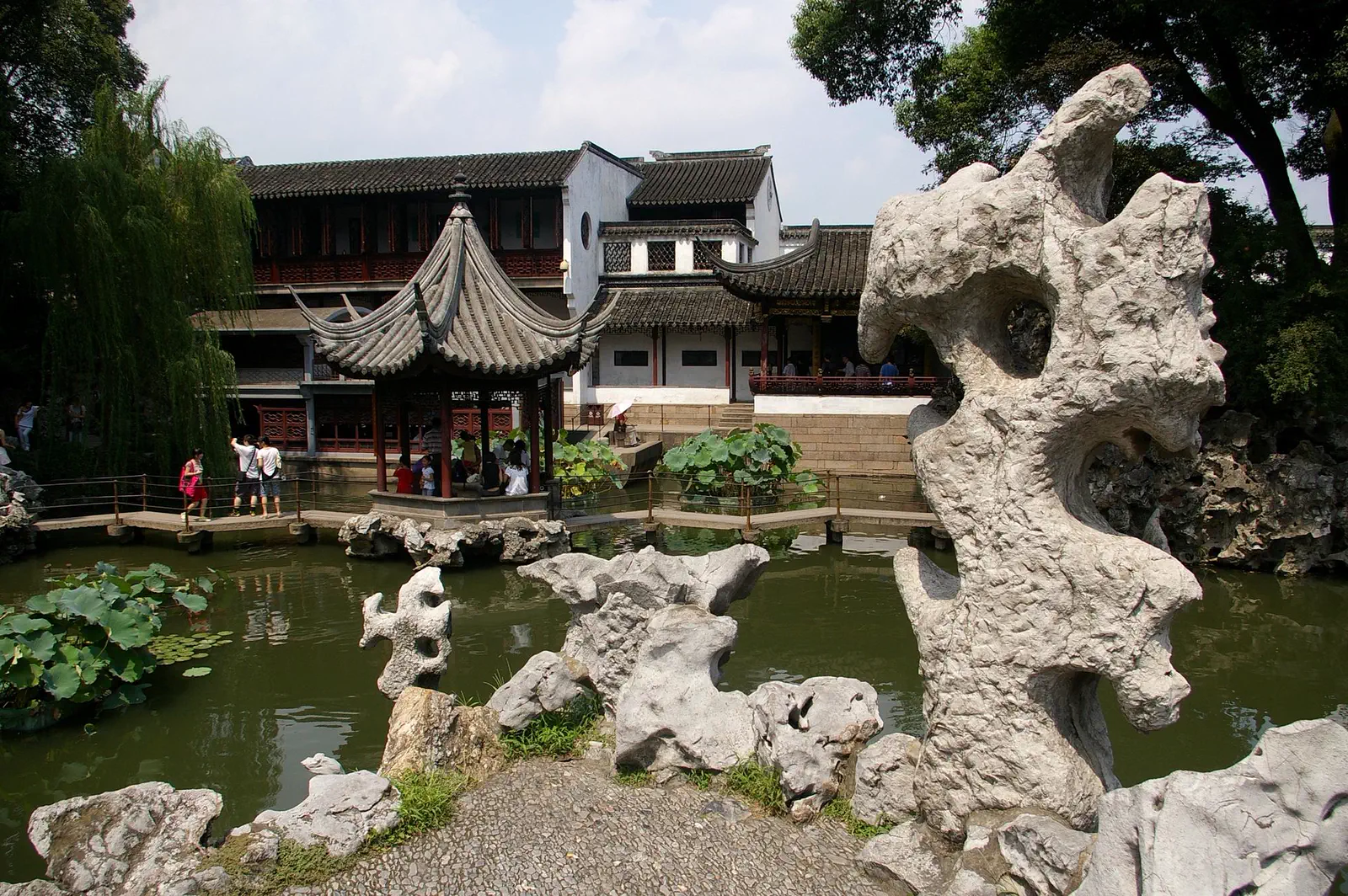
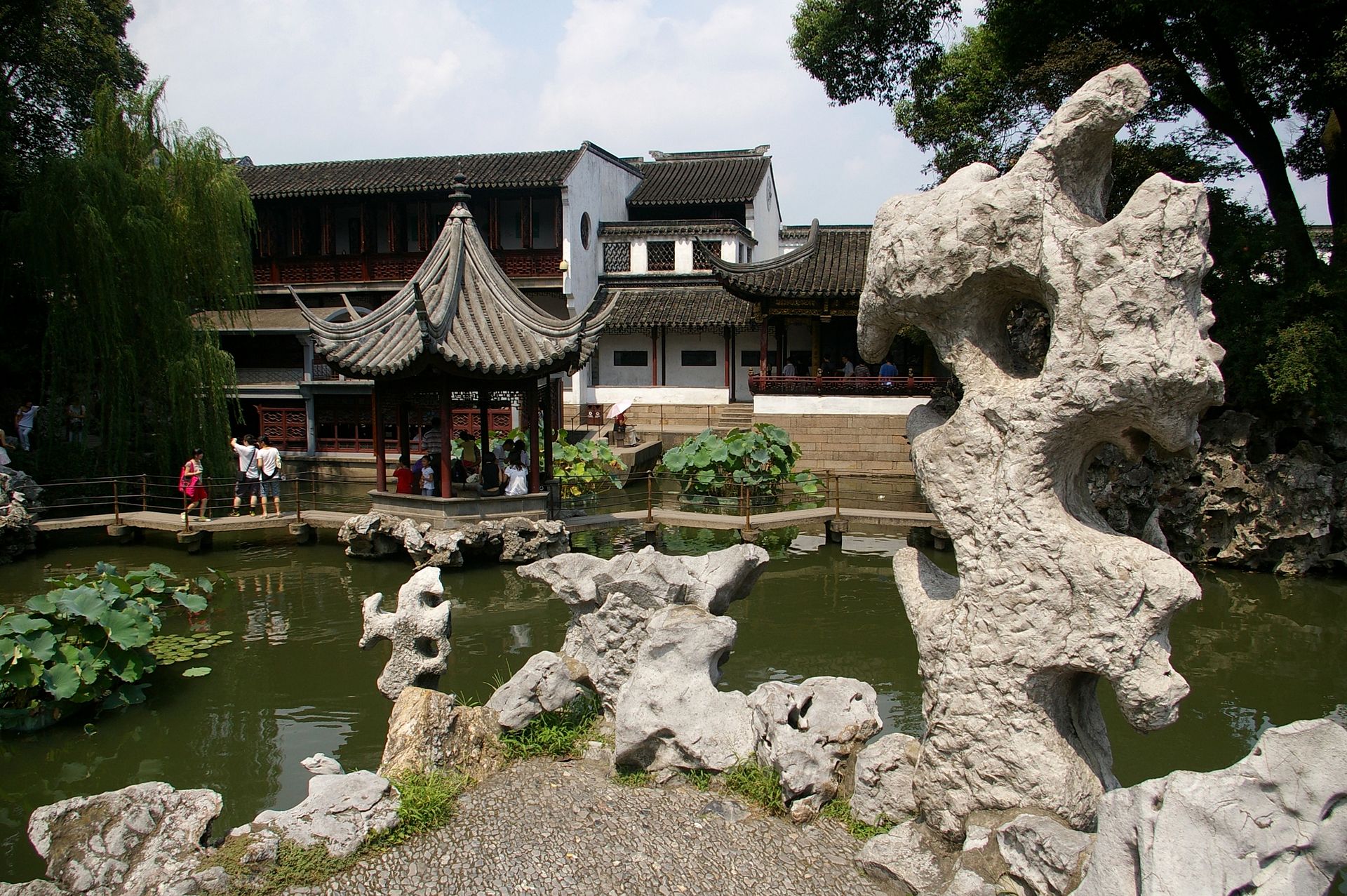
The garden is listed as one of the nine UNESCO-listed Classical Gardens of Suzhou and is the most distinctive of the group for one reason: its central rockery. The Taihu limestone formations, accumulated from the garden's founding through the centuries, are arranged in a maze of caves, tunnels, passages, and named peaks — 12 formations named for different views of lions in various postures. The rock maze covers the central portion of the garden and is multiple levels deep, with passages at ground level and higher routes across the top of the formations. Children find it excellent; adults find it either playful or maddening depending on temperament.
Around the rockery, the garden has the standard elements — pavilions, ponds, corridors — but the rockery is the experience that distinguishes Lion Grove from every other classical garden. The garden covers 1.1 hectares; the rockery and its immediate surrounds take up a substantial proportion. Arrive before 9am on a weekday to navigate the cave passages without queuing behind tour groups. The garden is a short walk from the Suzhou Museum and Humble Administrator's Garden.
How to get there
Metro Line 4 to Beisita.
When to visit
Weekday morning.
UNESCO inscription
“Classical Chinese garden design, which seeks to recreate natural landscapes in miniature, is nowhere better illustrated than in the nine gardens in the historic city of Suzhou. They are generally acknowledged to be masterpieces of the genre. Dating from the 11th-19th century, the gardens reflect the profound metaphysical importance of natural beauty in Chinese culture in their meticulous design.”
Gallery
Other attractions in Suzhou
Itineraries featuring this site
- Classical Gardens Circuit — Suzhou, Hangzhou, and Beyond, 12 days
12d · China's finest classical gardens in sequence: Suzhou's UNESCO garden quartet, Hangzhou's West Lake landscape, Yangzhou's slender garden tradition, and Shaoxing's canal-town context.
- Off the beaten path — two weeks (Pingyao, Datong, Hongcun)
14d · Walled towns, cliff temples, southern villages — China away from the tour-bus routes.
Other cultural sites in China
- Barkhor Pilgrim Circuit八廓街
1 km clockwise pilgrim circuit around the Jokhang Temple. Pilgrims prostrate themselves around the route; Tibetan-traditional shopping plus daily life.
- Chen Clan Ancestral Hall陈家祠
The most ornate Lingnan-style courtyard complex in China, built 1894 as the academy and ancestral hall for the Chen clan of Guangdong.
- Couple's Retreat Garden耦园
UNESCO · UNESCO-listed Suzhou garden organised symmetrically around a central residence. Less crowded than the four most-visited gardens.
- Garden of Cultivation艺圃
UNESCO · UNESCO-listed Ming-era scholar's garden. Among the smallest and most atmospheric of Suzhou's classical gardens.
- Humble Administrator's Garden拙政园
UNESCO · The largest of Suzhou's UNESCO-listed classical gardens (5.2 hectares). 16th-century landscape with ponds, pavilions, rockeries, and an emphasis on water.
- Jingmai Mountain Ancient Tea Forest普洱景迈山古茶林文化景观
UNESCO · UNESCO Cultural Landscape in Yunnan's Pu'er region — ancient cultivated tea forests maintained by Blang and Dai ethnic communities for over 1,000 years, representing a living tradition of forest tea cultivation.
- Lingering Garden留园
UNESCO · UNESCO-listed Ming-Qing garden, famed for its rockeries and the 6.5m central limestone scholar's-rock 'Crown of Clouds'.
- Master of Nets Garden网师园
UNESCO · The most concentrated of Suzhou's UNESCO-listed gardens (0.6 hectares). Summer evening 'night garden' performances are the local draw.
Other UNESCO World Heritage sites in China
- Ancient Villages of Southern Anhui — Xidi and Hongcun皖南古村落—西递、宏村
UNESCO-listed pair of Ming-Qing Huizhou merchant villages in southern Anhui, renowned for whitewashed walls, inky horsehead gables and moon-shaped ponds.
- Archaeological Ruins of Liangzhu City良渚古城遗址
UNESCO-listed archaeological site in Hangzhou preserving the remains of a 5,000-year-old city with a sophisticated water-management system, jade ritual culture and social hierarchy — regarded as one of the earliest state-level societies in East Asia.
- Badain Jaran Desert — Lakes and Dunes巴丹吉林沙漠—沙山湖泊群
UNESCO Natural World Heritage site in Inner Mongolia — the third largest desert in China, featuring some of the world's tallest stationary dunes and a unique network of freshwater and saline lakes sustained by a still-unexplained subterranean water system.
- Capital Cities and Tombs of the Ancient Koguryo Kingdom高句丽王城、王陵及贵族墓葬
UNESCO-listed capital cities and royal tombs of the Koguryo Kingdom in Jian, Jilin — the Chinese portion of a transnational heritage property shared with North Korea, representing one of the most powerful states of ancient East Asia.
- China Danxia中国丹霞
UNESCO Natural World Heritage site — a serial property of six Danxia landscapes across six provinces, representing China's defining red-cliff-and-pillar sandstone landform type, including Danxia Mountain, Zhangye, Taining and Langshan.
- Classical Gardens of Suzhou (UNESCO)苏州古典园林
UNESCO-listed collection of private gardens in Suzhou — four inscribed in 1997 and five more added in 2000 — representing the pinnacle of Chinese garden design through the refined integration of architecture, water, rock and plant.
- Couple's Retreat Garden耦园
UNESCO-listed Suzhou garden organised symmetrically around a central residence. Less crowded than the four most-visited gardens.
- Drepung Monastery哲蚌寺
Once the largest monastery in the world (10,000+ monks). 8 km west of Lhasa. Active Gelugpa monastery; debating courtyard sessions in the afternoon.
Frequently asked questions
- How much does Lion Grove Garden cost to visit?
- Adult entry to Lion Grove Garden is ¥40, ¥20 for children.
- When is Lion Grove Garden open?
- Lion Grove Garden opening hours: 7:30am–5pm.
- How long do you need at Lion Grove Garden?
- Allow 1–2 hours for Lion Grove Garden. Add buffer time if you plan to visit at peak season or include nearby sights in the same trip.
- When is the best time to visit Lion Grove Garden?
- Weekday morning.
- How do you get to Lion Grove Garden?
- Metro Line 4 to Beisita.
Spotted something out of date? Submit a correction.
Research
Cross-checked against primary sources
Verified
Address, hours, fees confirmed at the date shown
Updated
Re-verified periodically; corrections welcome