CITY · SHANGHAI MUNICIPALITY
Shanghai
上海 · Shànghǎi
Overview
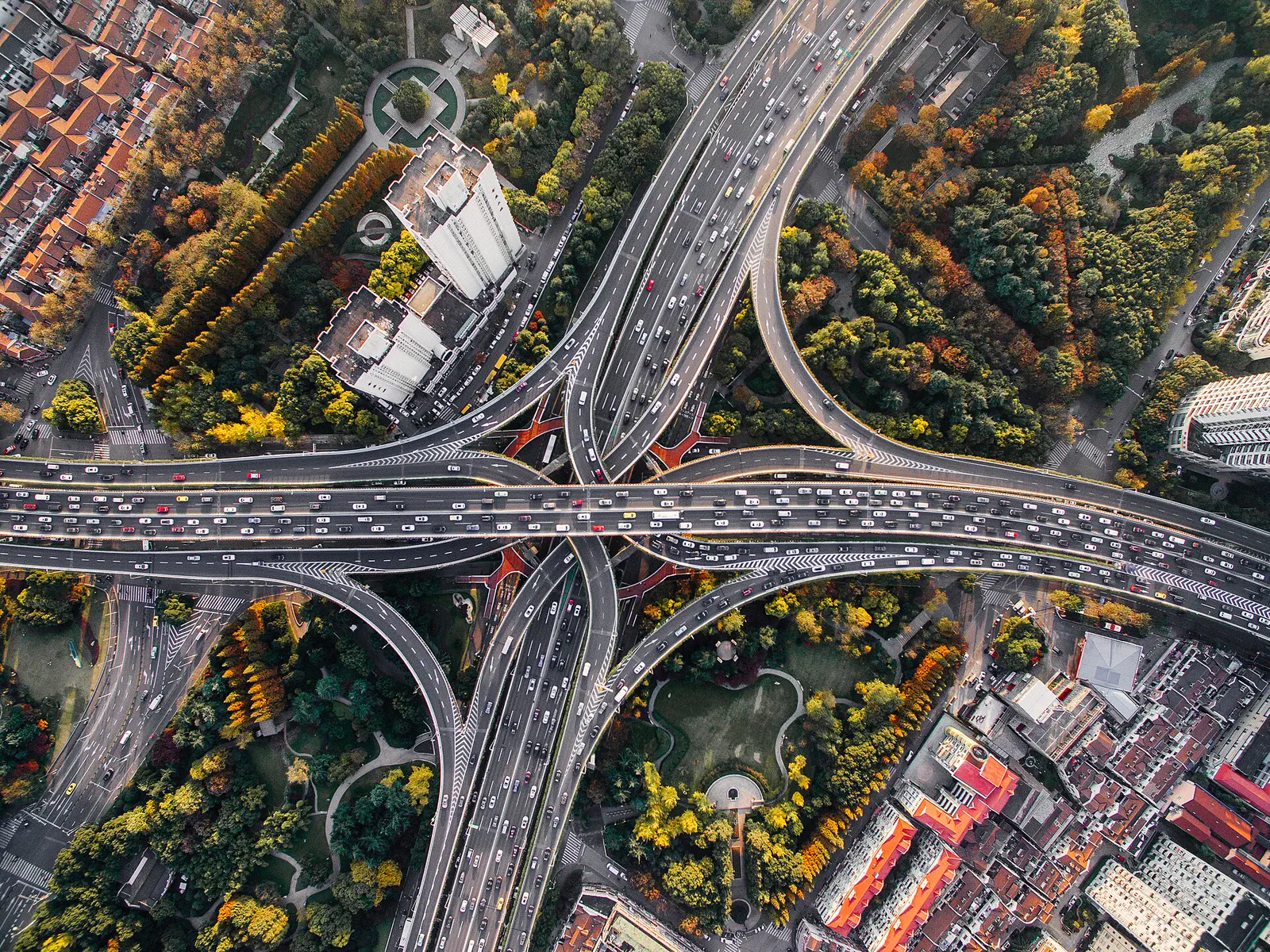
China's commercial and financial centre — a riverside megacity that ran on European concession-era trade, then exploded into the skyline that defines modern China. Walkable, cosmopolitan and the easiest first stop for foreigners.
Shanghai sits at the mouth of the Yangtze, where the Huangpu River runs through the city. The historic core — the Bund (外滩, the riverfront strip of 1920s-30s European banking houses) and the former French Concession — was built between 1843 and 1949 when Shanghai was a treaty port and the only Chinese city of any size with a substantial foreign-administered area. Across the river in Pudong, almost everything you see was built after 1990: the Oriental Pearl, the Jin Mao, the Shanghai World Financial Center, the Shanghai Tower (the second-tallest building in the world).
It is the most cosmopolitan city in mainland China and the easiest to navigate for foreigners. English is more widely spoken than in any other Chinese city. The metro is excellent. The architecture is photogenic. The food culture spans local Shanghai cuisine (sweeter, oilier than other regional kitchens) plus the most concentrated set of regional Chinese restaurants in the country and a global spread that includes everything from Cantonese dim sum to Italian fine dining.
Shanghai is also the first stop for many travellers because of the 240-hour visa-free transit at Pudong airport. Pudong is the international hub; Hongqiao (SHA) is mostly domestic and is connected by the metro and the high-speed rail station. The Shanghai Maglev between Pudong airport and Longyang Road station is a 7-minute, 431 km/h novelty worth taking once.
The climate gets the worst of both extremes: mid-summer is hot and very humid (peak in July–August), and the rainy season in June soaks the city. Winter is grey, damp and surprisingly cold (rarely freezing but the indoor heating is patchy in older buildings). Spring and autumn are excellent. The locals call October the 'golden autumn'.
Cultural & access notes
Shanghai is the easiest first stop for visitors who don't speak Mandarin. The Bund has airport-style barriers in October during National Day — expect to walk a long way around. Many older buildings in the French Concession are private residences — be considerate when photographing. Tipping is not customary in mainland China, including Shanghai.
What to see
- The Bund (外滩) — 1.5 km riverfront walk; visit at dusk when the Pudong skyline lights up
- Pudong skyline observation decks — Shanghai Tower (118F), Shanghai World Financial Center, or Oriental Pearl
- Yu Garden and the surrounding Old Town bazaar (Mid-Lake Pavilion teahouse)
- Shanghai Museum at People's Square — bronzes, ceramics, painting, free entry
- The Former French Concession — Wukang Road, Anfu Road, Yongkang Road for plane-tree-lined streets, cafes and old villas
- Tianzifang and Xintiandi — restored shikumen lane neighbourhoods (touristy but photogenic)
- Jing'an Temple — gilded Buddhist temple in the financial district
- M50 Art District (50 Moganshan Road) — galleries in old textile factories
- Zhujiajiao Water Town — half-day trip from the city, less crowded than Suzhou's Tongli or Wuzhen
- Shanghai Disneyland — half-day or full-day, in Pudong
What to eat
- Xiaolongbao (soup dumplings) — Jia Jia Tang Bao or Din Tai Fung; the Yu Garden Nanxiang stall is famous but queues are long
- Sheng jian bao — pan-fried pork buns with crispy bottom, best at Yang's Fry Dumplings
- Hairy crab (大闸蟹) in October–November, paired with rice wine
- Red-cooked pork belly (红烧肉) — the canonical Shanghainese home dish
- Cong you ban mian — scallion oil noodles, a 5-ingredient cult dish
- Drunken chicken (醉鸡) and other cold appetisers
- Beef noodle soup (Lanzhou-style) — Shanghai has excellent versions of every regional Chinese kitchen
Getting there
Pudong (PVG) is the international airport, 30 km east of the city — Maglev to Longyang Road in 7 minutes (¥50, then connect to metro), or Line 2 metro all the way for ¥7 in ~70 minutes. Hongqiao (SHA) is the western airport, mostly domestic, integrated with Hongqiao high-speed rail station and metro Lines 2 and 10. Hongqiao Railway Station is the largest in China and the start of the Shanghai-Beijing line (4h 28m), Shanghai-Guangzhou (8h), Shanghai-Hangzhou (45m), Shanghai-Suzhou (25m).
Getting around
Metro is fast, clean, English-signed, ¥3–¥9 per trip paid by Alipay/WeChat scan-and-pay or transit card. Lines 1, 2 and 10 cover most tourist needs. Didi works in English. Taxis are plentiful and metered. The Bund-to-Pudong river ferry is a working ferry (¥2) that gives you the city skyline both ways. Walking the French Concession is the way to see it. Bike-share (Meituan, Hello) is widely used.
Where to stay
The Bund / People's Square is the classic first-time base — central, atmospheric, walkable to most major sights. The former French Concession (around Huaihai Road, Wukang Road) is leafier, less crowded, full of cafes and restaurants — better for a longer stay. Xintiandi and Jing'an are upscale shopping/eating areas. Pudong's Lujiazui is convenient for the Shanghai Tower and Disneyland but quiet at night. Avoid the very far western suburbs unless near Hongqiao for transport.
We list neighbourhoods, not specific hotels — we don't endorse hotels.
When to go
March–May and October–November are the best windows: mild, dry, low rainfall, good light. Avoid Chinese New Year, the May Day holiday and the October Golden Week — domestic tourism turns the Bund into a crush. Mid-summer (July–August) is hot and humid; the city does not stop, but you'll spend hours in air-conditioned malls. December–February is grey and damp but rarely freezing; the indoor sights and food scene work well in winter.
Budget guide (CNY per day)
| Backpacker | ¥400 |
| Mid-range | ¥850 |
| Comfortable | ¥2200 |
Safety notes
Shanghai is one of the safer megacities globally. The standard scams to know: the Bund tea-house scam (a 'student' invites you to practise English over tea — ends with a ¥1,500 bill), the art-gallery scam in Tianzifang/Xintiandi, and unmetered taxis at Pudong arrivals (use the official rank). Pickpockets work the Nanjing Road East tourist crowds. Otherwise the city is calm and safe even late at night.
Nearby attractions
China Visit Guide
Fengjing Ancient Town
Fengjing Ancient Town 枫泾古镇
A well-preserved water town on the border of Shanghai and Zhejiang, known as the birthplace of the folk painting genre Jinshan Peasant Art and far quieter than Zhujiajiao or Tongli.
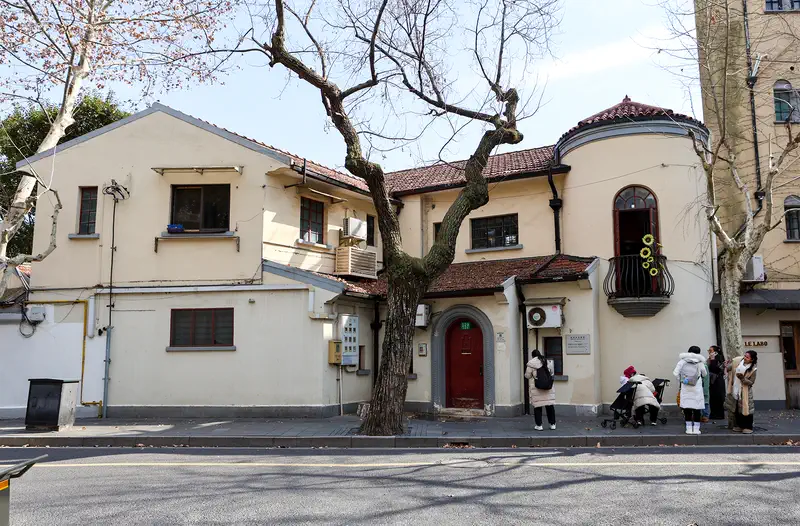
Former French Concession 法租界
Plane-tree-shaded streets of 1920s villas in central Shanghai. Wukang Road, Anfu Road, Yongkang Road — the city's most photographed cafe-and-villa district.
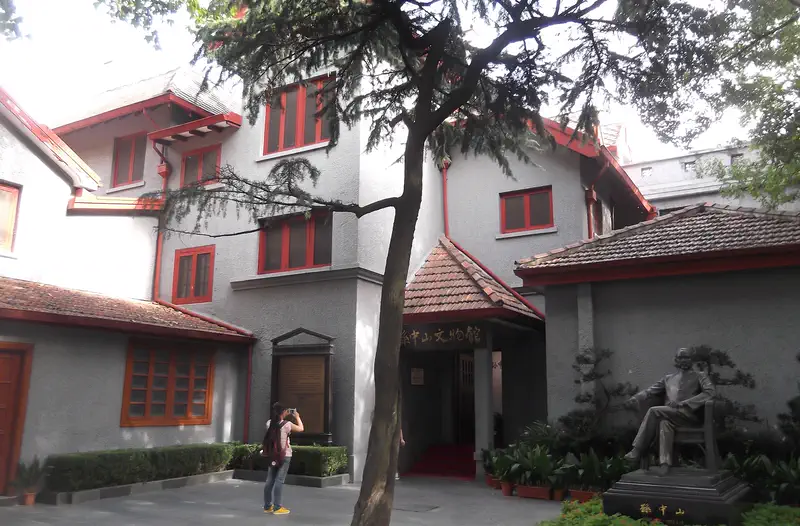
Former Residence of Sun Yat-sen 孙中山故居
1918 villa in the French Concession where Sun Yat-sen lived briefly with Soong Ching-ling. Original furnishings preserved.
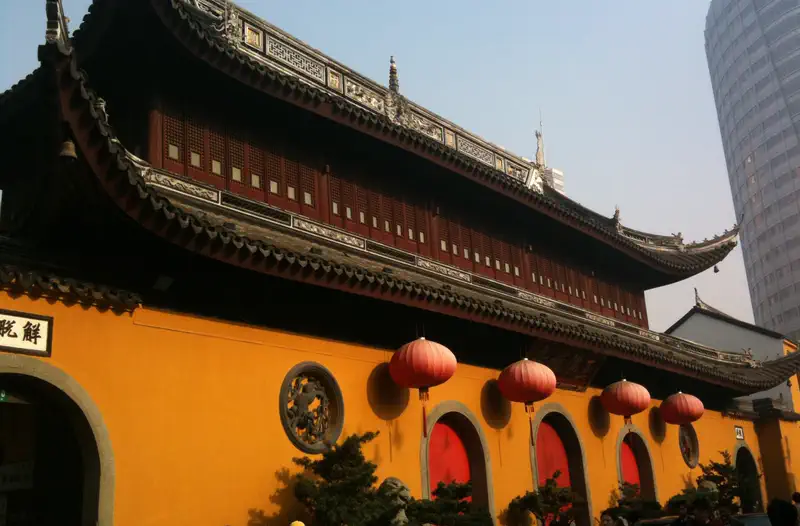
Jade Buddha Temple 玉佛寺
Active urban Buddhist temple in central Shanghai. Famous for two life-size jade Buddhas brought from Burma in 1882.
China Visit Guide
Jing'an Temple
Jing'an Temple 静安寺
Active Buddhist temple in Shanghai's central financial district, with golden-tiled roofs incongruously beside steel-and-glass towers.
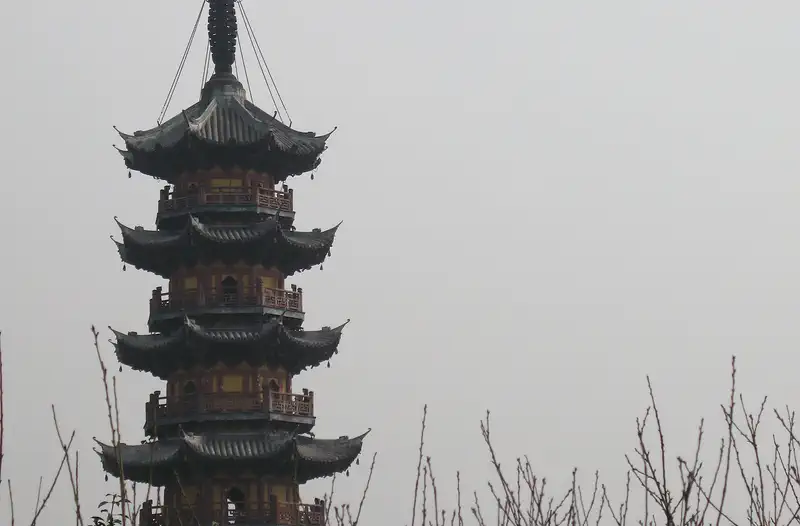
Longhua Temple and Pagoda 龙华寺
Shanghai's oldest Buddhist temple complex, with the city's only surviving classical pagoda. Active monastery; Lunar New Year bell-striking ceremony.
China Visit Guide
M50 Art District
M50 Art District M50创意园
Contemporary art galleries in former textile mill warehouses on Moganshan Road. Shanghai's longest-running independent gallery cluster.
China Visit Guide
Qibao Ancient Town
Qibao Ancient Town 七宝古镇
A compact Song Dynasty water town within Shanghai's Minhang district, reachable by metro in 25 minutes from People's Square, offering canal streets, Ming-Qing architecture, and traditional Shanghainese snack culture.
See all 22 Shanghai attractions →
Day trips within 150 km
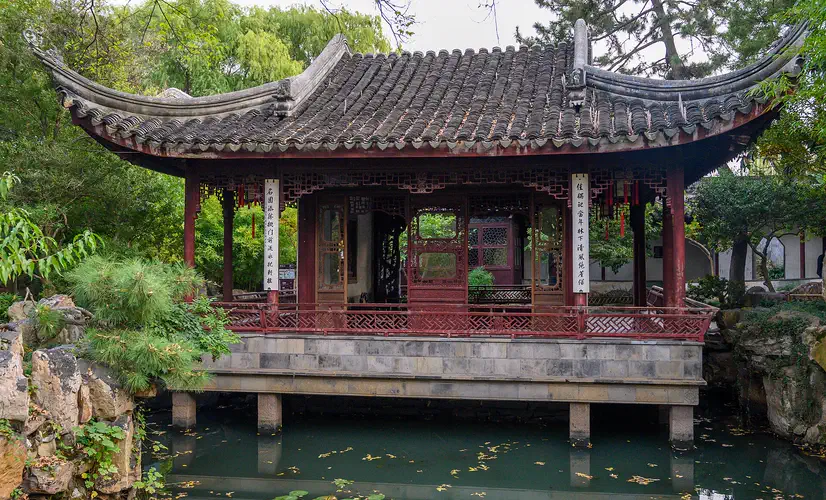
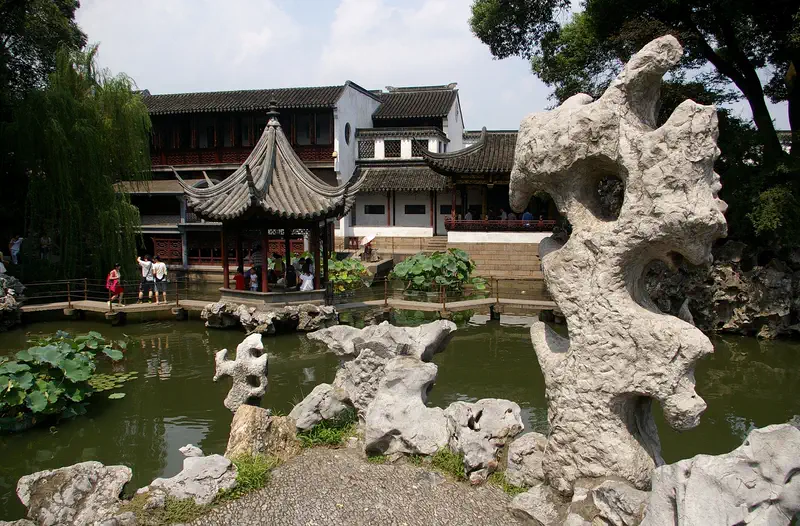
Couple's Retreat Garden 耦园
UNESCO-listed Suzhou garden organised symmetrically around a central residence. Less crowded than the four most-visited gardens.
≈ 80 km from Shanghai
More on Shanghai
Travelling with children?
Shanghai has family-friendly attractions, accessible transport, and good medical facilities. Our guide covers what works and what to prepare for.
China with kids: family travel guide →Living here?
We have a dedicated expat guide covering cost of living, neighbourhoods, international schools, hospitals, and community life in Shanghai.
Shanghai expat living guide →Itineraries visiting Shanghai
- Shanghai in 3 days
3d · Bund, French Concession, Pudong, Yu Garden, museums.
- Shanghai weekend — 3 days in the city
3d · Three full days in Shanghai covering the Bund, French Concession, Yu Garden, Tianzifang and Pudong — the city's distinct neighbourhoods at a pace that leaves time for coffee and wandering.
- China in 5 days: fastest first-timer route
5d · Beijing's big three sights, a flight south, and two days navigating Shanghai's contrasts.
- Beijing + Shanghai — 5-day first-timer classic
5d · Two of China's three great cities in five days: imperial Beijing followed by the modern skyline of Shanghai, linked by a quick domestic flight or overnight train.
Food of Eastern China
- Beggar's Chicken叫花鸡
A whole chicken stuffed with aromatics, wrapped in lotus leaves and clay, then slow-baked until the meat steams in its own juices.
- Drunken Chicken醉鸡
Chicken steamed and marinated in Shaoxing rice wine, served chilled. A Shanghai banquet starter.
- Eight-Treasure Rice八宝饭
A steamed dome of glutinous rice layered with red bean paste and decorated with eight types of preserved fruits and nuts.
- Hairy Crab大闸蟹
Yangcheng Lake mitten crab — the autumn delicacy of the Yangtze Delta. Eaten steamed with vinegar dip.
Shanghai weather by month
| Month | Jan | Feb | Mar | Apr | May | Jun | Jul | Aug | Sep | Oct | Nov | Dec |
|---|---|---|---|---|---|---|---|---|---|---|---|---|
| High °C | 10 | 11 | 16 | 20 | 25 | 29 | 31 | 32 | 28 | 23 | 18 | 11 |
| Low °C | 2 | 3 | 7 | 11 | 16 | 21 | 25 | 26 | 21 | 16 | 10 | 3 |
| Rain mm | 71 | 71 | 102 | 88 | 107 | 222 | 284 | 158 | 202 | 55 | 57 | 35 |
| Rain days | 8 | 10 | 12 | 9 | 11 | 17 | 20 | 16 | 13 | 6 | 8 | 6 |
2019–2023 average via Open-Meteo ERA5 (ERA5 reanalysis). "Rain days" = days per month with ≥1 mm precipitation.
Frequently asked questions
- When is the best time to visit Shanghai?
- The best months to visit Shanghai are March, April, May, October, and November. March–May and October–November are the best windows: mild, dry, low rainfall, good light. Avoid Chinese New Year, the May Day holiday and the October Golden Week — domestic tourism turns the Bund into a crush.
- How many days do you need in Shanghai?
- Plan 4 to 5 days for Shanghai if you want to see the headline sights without rushing — The Bund (外滩), Pudong skyline observation decks, Yu Garden and the surrounding Old Town bazaar (Mid. Add an extra day for day trips from the city or for repeat visits to your favourite neighbourhood.
- Is Shanghai safe for tourists?
- Shanghai is one of the safer megacities globally. The standard scams to know: the Bund tea-house scam (a 'student' invites you to practise English over tea — ends with a ¥1,500 bill), the art-gallery scam in Tianzifang/Xintiandi, and unmetered taxis at Pudong arrivals (use the official rank). Pickpockets work the Nanjing Road East tourist crowds.
- How do you get around Shanghai?
- Metro is fast, clean, English-signed, ¥3–¥9 per trip paid by Alipay/WeChat scan-and-pay or transit card. Lines 1, 2 and 10 cover most tourist needs. Didi works in English.
- What's the daily budget for Shanghai?
- Budget guide for Shanghai: backpackers from around ¥400/day, mid-range travellers ¥850/day, comfortable trips from ¥2200/day. These ranges cover accommodation, food, local transport and one paid sight per day, and exclude flights to and from the city.
- Where should you stay in Shanghai?
- The Bund / People's Square is the classic first-time base — central, atmospheric, walkable to most major sights. The former French Concession (around Huaihai Road, Wukang Road) is leafier, less crowded, full of cafes and restaurants — better for a longer stay. Xintiandi and Jing'an are upscale shopping/eating areas.
Spotted something out of date? Submit a correction.
Research
Cross-checked against primary sources
Verified
Address, hours, fees confirmed at the date shown
Updated
Re-verified periodically; corrections welcome