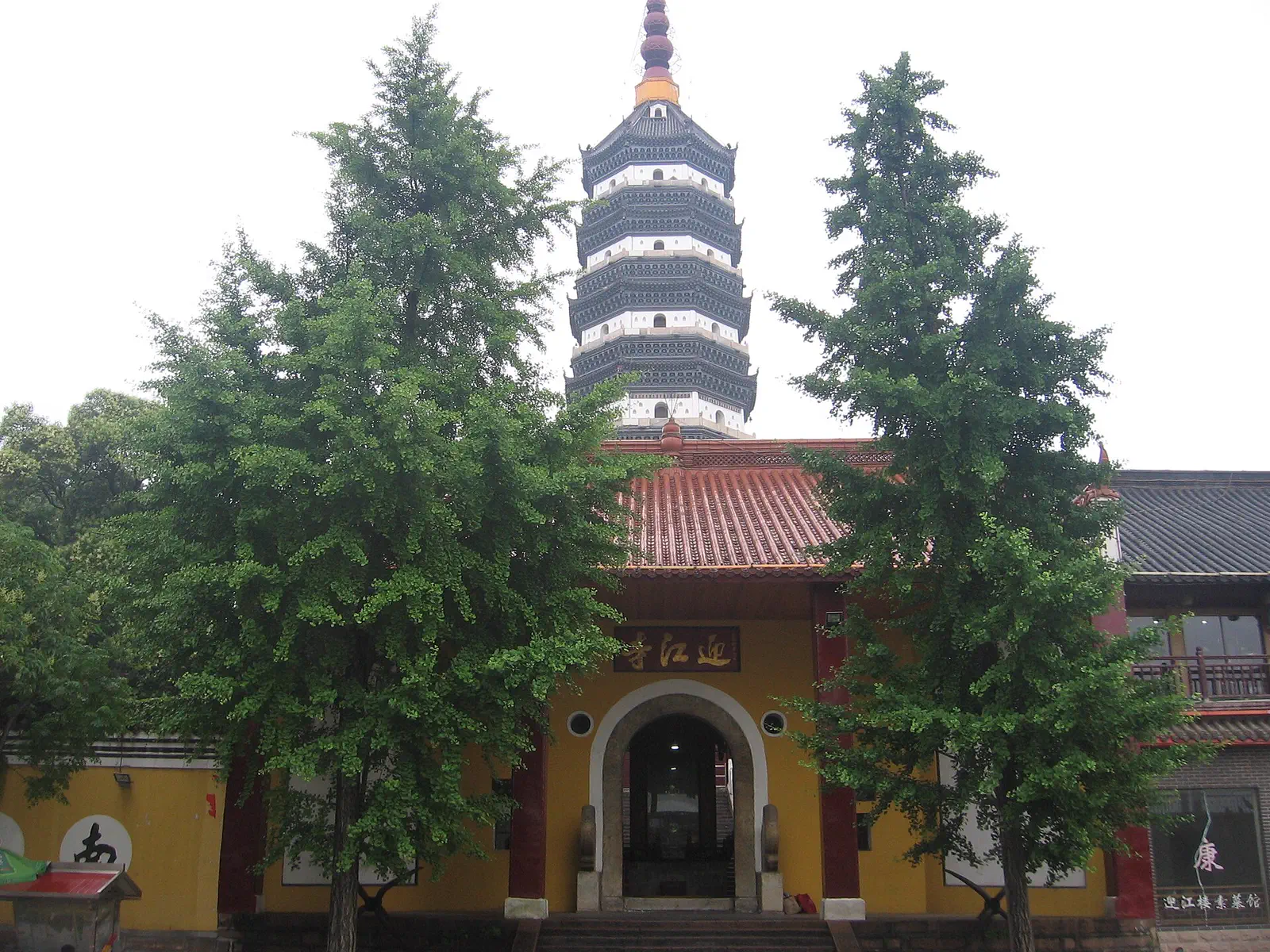
Historic site · ANHUI
Anqing Zhenfeng Pagoda
安庆振风塔 · Ānqìng Zhènfēng Tǎ
About
A seven-storey Ming Dynasty pagoda standing on the bank of the Yangtze River in Anqing, considered one of the finest riverside pagodas in southern China and long used as a navigation landmark by Yangtze river pilots.
Zhenfeng Pagoda — literally Suppressing Wind Pagoda — rises seven storeys from a rocky outcrop on the Yangtze River bank in Anqing, the former provincial capital of Anhui. Built in 1570 during the Wanli reign of the Ming Dynasty, the pagoda was constructed to improve the city's geomantic fortune (fengshui), with the riverside position intended to stabilise the qi flowing into the city from the river.
For Yangtze River traffic, the pagoda served a more practical purpose: its distinctive silhouette was a navigation marker visible from several kilometres upstream and downstream, useful at night when river pilots needed to fix their position in a stretch of the Yangtze with several tricky bends. The pagoda is mentioned in historical shipping records going back to the Qing Dynasty.
The pagoda's exterior is clad in grey brick with decorated belt courses at each storey level. Internal staircases allow access to all seven storeys, and the views from the upper balconies encompass the Yangtze's broad reach, the older riverside neighbourhood of Anqing, and in clear weather the opposite Jiangxi shore. The base of the pagoda is surrounded by a small park with stone carvings and memorial inscriptions.
Anqing was historically one of the most important Yangtze port cities, capital of Anhui Province until 1945, and a significant centre of the Qing Dynasty reform movement. The Taiping Heavenly Kingdom besieged and occupied the city for several years in the 1850s–60s. Walking the old city quarter around the pagoda reveals layers of this history.
How to get there
High-speed rail to Anqing Station, then bus or taxi to the riverside (approximately 20 minutes). Anqing is accessible from Hefei (1.5 hours) and Wuhan (2 hours) by high-speed rail.
When to visit
Spring and autumn for mild weather and river views. The pagoda is illuminated at night.
Other attractions in Huangshan / Yellow Mountain region
Other historic sites in China
- Ancient Villages of Southern Anhui — Xidi and Hongcun皖南古村落—西递、宏村
UNESCO · UNESCO-listed pair of Ming-Qing Huizhou merchant villages in southern Anhui, renowned for whitewashed walls, inky horsehead gables and moon-shaped ponds.
- Archaeological Ruins of Liangzhu City良渚古城遗址
UNESCO · UNESCO-listed archaeological site in Hangzhou preserving the remains of a 5,000-year-old city with a sophisticated water-management system, jade ritual culture and social hierarchy — regarded as one of the earliest state-level societies in East Asia.
- Capital Cities and Tombs of the Ancient Koguryo Kingdom高句丽王城、王陵及贵族墓葬
UNESCO · UNESCO-listed capital cities and royal tombs of the Koguryo Kingdom in Jian, Jilin — the Chinese portion of a transnational heritage property shared with North Korea, representing one of the most powerful states of ancient East Asia.
- Classical Gardens of Suzhou (UNESCO)苏州古典园林
UNESCO · UNESCO-listed collection of private gardens in Suzhou — four inscribed in 1997 and five more added in 2000 — representing the pinnacle of Chinese garden design through the refined integration of architecture, water, rock and plant.
- Danba Tibetan Watchtowers丹巴碉楼
Clusters of ancient stone watchtowers rising above Tibetan village complexes in the Dadu River valley, said to be among the oldest surviving examples of Tibetan defensive architecture.
- Drum Tower and Bell Tower鼓楼钟楼
Yuan-dynasty drum and bell towers that kept official time for imperial Beijing. Climbable; daily drum performances.
- Dujiangyan Irrigation System都江堰
UNESCO · 2,300-year-old irrigation system on the Min River. Still in use. UNESCO-listed jointly with Mt Qingcheng. Engineering rather than architecture, but one of the great works.
- Eastern Qing Tombs (Qing Dongling)清东陵
UNESCO · The largest imperial mausoleum complex in China, housing five Qing Dynasty emperors including Kangxi, Qianlong, and Empress Dowager Cixi, set in a forested valley 125 km east of Beijing.
Frequently asked questions
- How much does Anqing Zhenfeng Pagoda cost to visit?
- Adult entry to Anqing Zhenfeng Pagoda is ¥30, ¥15 for children. Combined ticket with riverside park.
- When is Anqing Zhenfeng Pagoda open?
- Anqing Zhenfeng Pagoda opening hours: 8am–5:30pm daily.
- How long do you need at Anqing Zhenfeng Pagoda?
- Allow 1–2 hours for Anqing Zhenfeng Pagoda. Add buffer time if you plan to visit at peak season or include nearby sights in the same trip.
- When is the best time to visit Anqing Zhenfeng Pagoda?
- Spring and autumn for mild weather and river views. The pagoda is illuminated at night.
- How do you get to Anqing Zhenfeng Pagoda?
- High-speed rail to Anqing Station, then bus or taxi to the riverside (approximately 20 minutes). Anqing is accessible from Hefei (1.5 hours) and Wuhan (2 hours) by high-speed rail.
Spotted something out of date? Submit a correction.
Research
Cross-checked against primary sources
Verified
Address, hours, fees confirmed at the date shown
Updated
Re-verified periodically; corrections welcome