3 days
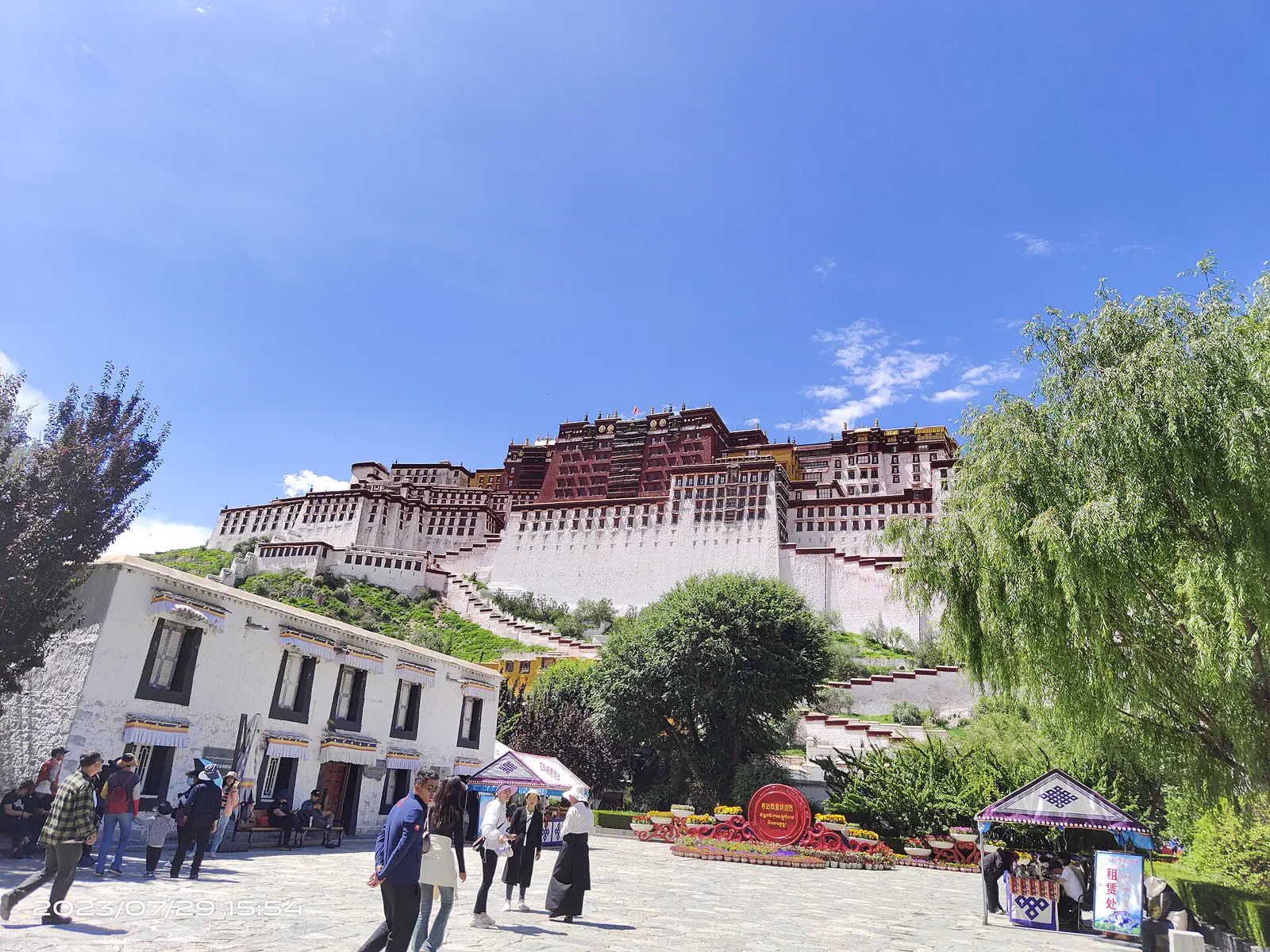
Day 1: Acclimatise in Lhasa — Jokhang Temple + Barkhor pilgrimage circuit (very gentle activity only). Day 2: Potala Palace + Norbulingka. Day 3: Drepung Monastery + Sera Monastery debate session.
Autonomous region · Tibetan Plateau
西藏自治区 · Xīzàng Zìzhìqū — capital Lhasa, tibetan (tsampa roasted barley flour, butter tea, momo dumplings, yak meat and cheese, thukpa noodle soup).
History & character
Tibet is a vast high-altitude plateau, the source of most of Asia's major rivers. Tibetan civilisation — distinct in language, script, religion, and art — emerged in the 7th century under the Yarlung dynasty. Songtsen Gampo unified the plateau, established Lhasa, and adopted Buddhism. Over the following thirteen centuries, Tibet developed one of the most distinctive religious cultures in the world: the four schools of Tibetan Buddhism (Nyingma, Kagyu, Sakya, Gelug), the institution of the Dalai Lama, monastic complexes housing tens of thousands of monks.
Politically, Tibet has been variously independent, tributary, and incorporated into Chinese empires across its history; its current administrative status as a Chinese autonomous region dates from 1951 with the Seventeen Point Agreement, and the 1959 uprising and the Dalai Lama's flight to India. Foreign visitors must obtain a Tibet Travel Permit (in addition to their Chinese visa) and travel with a registered guide and pre-booked itinerary; the regulations change periodically and require checking current rules before booking.
Lhasa's Potala Palace and Jokhang Temple are UNESCO listed. The trekking routes around Mount Kailash, the Everest north-face base camp at Rongbuk, and the lakes (Yamdrok, Namtso, Manasarovar) draw visitors who can manage the altitude.
When to visit
Late April to early June and September–early November are the strongest windows. The road to Everest Base Camp is best August–October. Winter (December–February) is cold but lhasa itself is sunny; many sites operate at reduced capacity.
How to get there
Lhasa Gonggar (LXA) — direct flights from Chengdu, Xi'an, Beijing, Shanghai. The Qinghai–Tibet Railway from Xining to Lhasa is the world's highest, 21h, with oxygen-supplemented carriages. The Sichuan–Tibet Railway is under construction. Tibet Travel Permit is mandatory.
Key cities
All cities →Sample itineraries
Day 1: Acclimatise in Lhasa — Jokhang Temple + Barkhor pilgrimage circuit (very gentle activity only). Day 2: Potala Palace + Norbulingka. Day 3: Drepung Monastery + Sera Monastery debate session.
Add Yamdrok Lake, Gyantse Kumbum, Shigatse Tashilhunpo, Sakya Monastery, Mount Everest base camp at Rongbuk. Allow 2 weeks if including Mount Kailash kora pilgrimage.
Dishes of Tibet
Yunnan's daily flatbread — a thick wheat or rice-flour round cooked on a griddle and eaten plain or stuffed.
Cold poached chicken shredded by hand, dressed in chilli oil, sesame paste and Sichuan peppercorn.
Fish slices submerged in a deep pool of chilli oil and Sichuan peppercorns. Served bubbling.
The original mala hotpot — a simmering cauldron of beef tallow, Pixian doubanjiang and Sichuan peppercorn for communal dipping.
Chongqing's signature breakfast noodle — wheat noodles in a fierce chilli-oil-and-pepper soup.
Yunnan rice noodles in a hot oil-sealed broth, with raw and cooked toppings added at the table.
Itineraries touching Tibet
8d · Lhasa, Yamdrok, Shigatse and Gyantse — the standard agency-tour Tibet circuit.
10d · Ten days on the Tibetan Plateau visiting Lhasa's monasteries and palaces, the Tashilhunpo at Shigatse, and the Rongbuk Monastery approach to Everest Base Camp — with practical permit guidance.
10d · Ten days structured around China's overnight soft-sleeper trains — Beijing to Xi'an, Xi'an to Chengdu, Chengdu to Lhasa — experiencing the transition from one landscape to the next at a human pace, through the night.
21d · Two weeks comprehensive plus Yunnan loop (Kunming, Dali, Lijiang) and a Tibet permit-tour to Lhasa.
Other Tibetan Plateau regions
Spotted something out of date? Submit a correction.
Research
Cross-checked against primary sources
Verified
Address, hours, fees confirmed at the date shown
Updated
Re-verified periodically; corrections welcome