CITY · TIBET AUTONOMOUS REGION
Lhasa
拉萨 · Lāsà
Overview
Capital of Tibet Autonomous Region, on the Yarlung Tsangpo plateau at 3,656m. Potala Palace, Jokhang Temple, the Barkhor pilgrimage circuit. Independent travel is restricted; Tibet Travel Permit required.
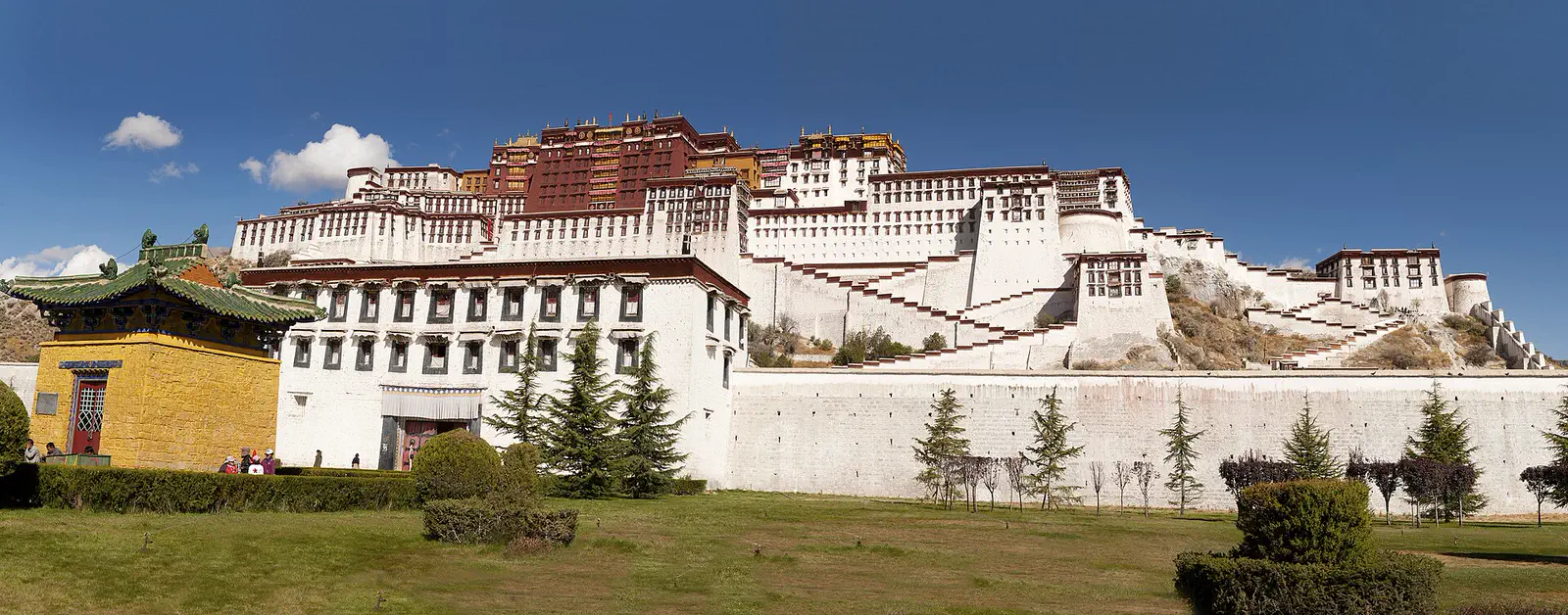
Lhasa, at 3,656 metres above sea level, is the political capital and spiritual centre of Tibet. The Potala Palace, former winter residence of the Dalai Lamas, rises thirteen storeys above the valley on Marpori (Red Hill) and is visible from most of the city. The Jokhang Temple — built in the 7th century CE under King Songtsen Gampo — is the spiritual centre of Tibetan Buddhism; pilgrims come from across the Tibetan plateau to prostrate themselves along the Barkhor, the circular pilgrimage street surrounding the temple.
The old Tibetan quarter (Barkhor area) is a navigable cluster of lanes with tea houses, incense sellers, thangka painters and hardware stalls for monastery supplies. It functions as a working neighbourhood as well as a pilgrimage circuit. Beyond it, the modern Lhasa built since the 1980s is a standard Chinese provincial city.
Drepung Monastery (1416 CE), 8 km west of the city, was one of the largest monasteries in the world before 1959 and still supports a significant monk population. Sera Monastery (1419 CE) holds afternoon philosophical debate sessions in the courtyard — a genuine practice rather than a performance, but visitors are welcome to observe. Norbulingka, the former summer palace of the Dalai Lamas, has extensive gardens.
All visits to Lhasa require the Tibet Travel Permit, issued only through licensed travel agencies. Independent travel is not permitted. Altitude sickness is common at 3,656 metres; the standard advice is to spend the first day resting, stay hydrated, and avoid strenuous activity until acclimatised. The Qinghai-Tibet Railway from Xining, the world's highest railway, arrives at Lhasa after a 22-hour journey through plateau landscapes at over 5,000 metres.
Cultural & access notes
Tibetan Buddhism dominates daily life. Walk clockwise around stupas and monastery prayer halls. Photography inside worship halls is often restricted. Don't touch monks' robes or religious objects.
What to see
- Potala Palace (UNESCO)
- Jokhang Temple and the Barkhor
- Drepung Monastery
- Sera Monastery (afternoon debate sessions)
- Norbulingka — the summer palace
- Yamdroktso Lake — day trip
What to eat
- Tibetan momos (dumplings)
- Yak butter tea
- Tsampa (roasted barley flour)
- Yak meat dishes
Getting there
Lhasa Gonggar (LXA) airport, 60 km southwest. The Qinghai-Tibet Railway from Xining/Beijing/Shanghai is a 22-30 hour journey, scenic but altitude-intense. Most international visitors fly in.
Getting around
Walking the Barkhor area. Tour vehicles for monasteries.
Where to stay
Around the Barkhor for atmosphere. Hotels licensed to host foreign guests are mandatory.
We list neighbourhoods, not specific hotels — we don't endorse hotels.
When to go
April–June, September–October. July–August is the rainy season but greener. Winter is cold but the Potala is reliably clear.
Budget guide (CNY per day)
| Backpacker | ¥500 |
| Mid-range | ¥900 |
| Comfortable | ¥2000 |
Safety notes
ALL foreign travellers require the Tibet Travel Permit, arranged through a licensed agency. Independent travel is not permitted. Altitude sickness is common; acetazolamide and gradual ascent are recommended. Photography of religious figures and political installations may be restricted. Permit verified May 2026 — confirm current rules with your agency before booking flights.
Nearby attractions
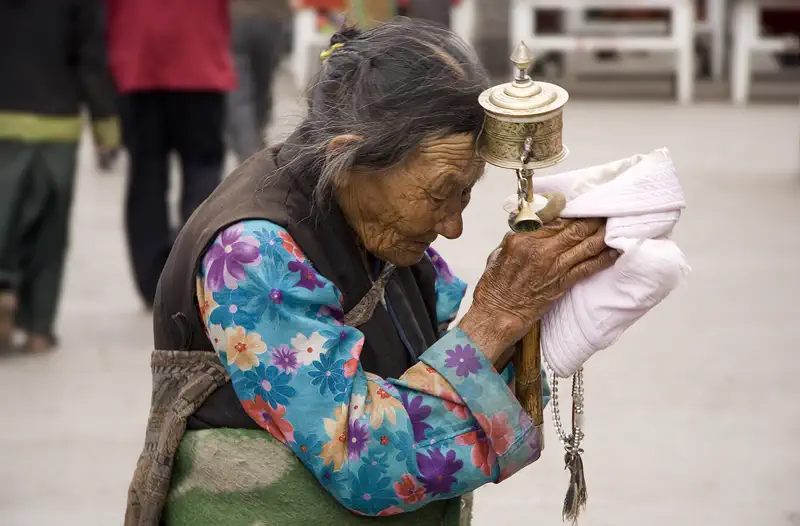
Barkhor Pilgrim Circuit 八廓街
1 km clockwise pilgrim circuit around the Jokhang Temple. Pilgrims prostrate themselves around the route; Tibetan-traditional shopping plus daily life.
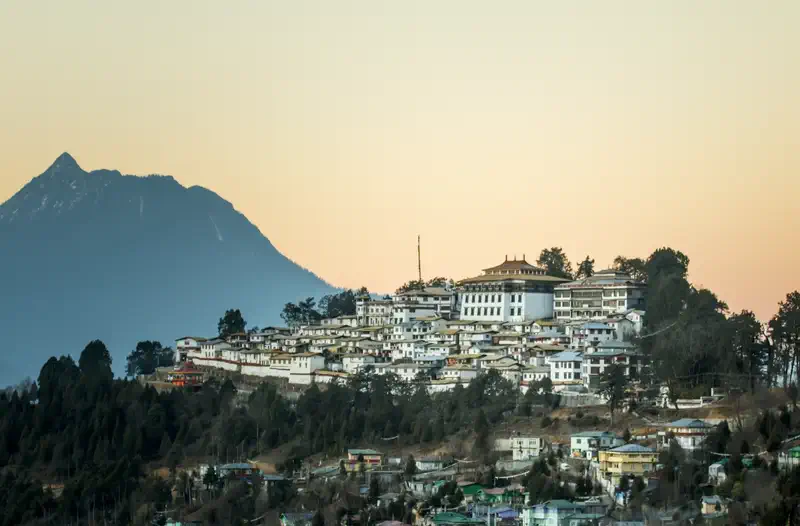
Drepung Monastery 哲蚌寺
Once the largest monastery in the world (10,000+ monks). 8 km west of Lhasa. Active Gelugpa monastery; debating courtyard sessions in the afternoon.
China Visit Guide
Ganden Monastery
Ganden Monastery 甘丹寺
The mother monastery of the Gelug school of Tibetan Buddhism, founded in 1409 by Tsongkhapa atop Wangbur Mountain 47 km east of Lhasa, offering sweeping plateau views and an important kora trail.
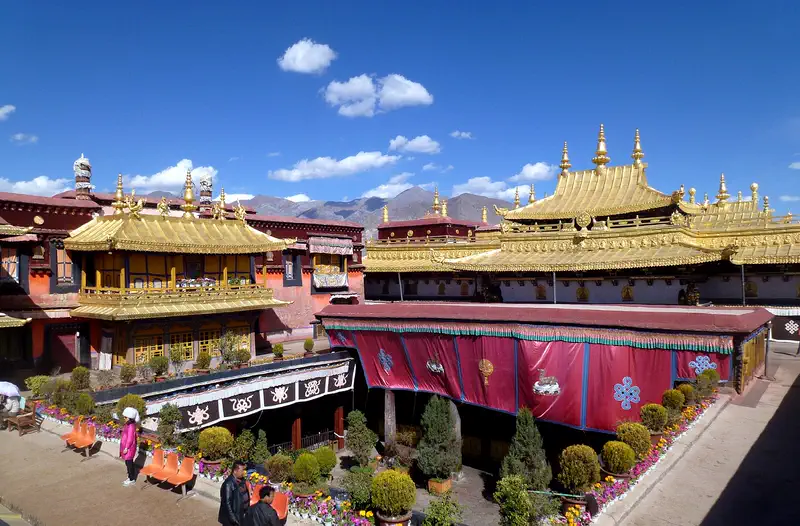
Jokhang Temple 大昭寺
The most sacred Tibetan Buddhist temple, founded 7th century. The spiritual centre of Lhasa and Tibet, surrounded by the Barkhor pilgrim circuit.
China Visit Guide
Nam Tso Lake (Namtso)
Nam Tso Lake (Namtso) 纳木错
The highest saltwater lake in the world at 4,718 m, stretching 1,920 km² across the Tibetan plateau north of Lhasa, with sacred Tashi Peninsula where pilgrims circumambulate ancient cave hermitages.
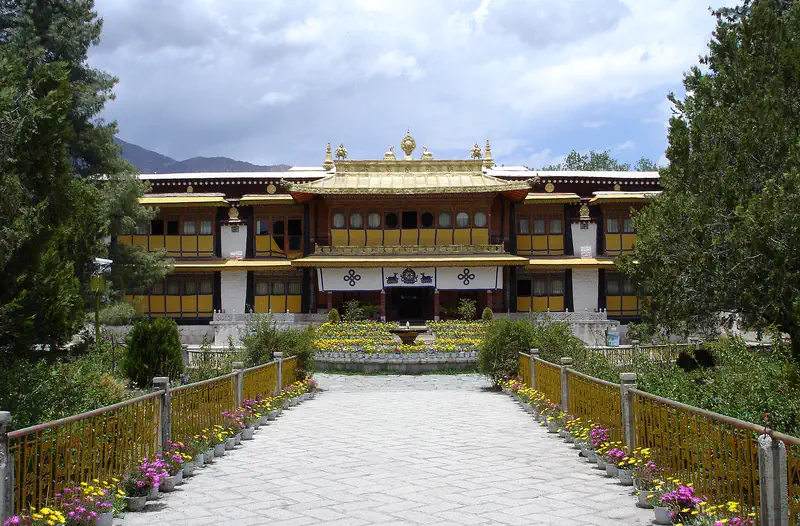
Norbulingka 罗布林卡
Summer palace of the Dalai Lamas in western Lhasa. UNESCO-listed; gardens, pavilions, the rooms where the 14th Dalai Lama lived before his exile.
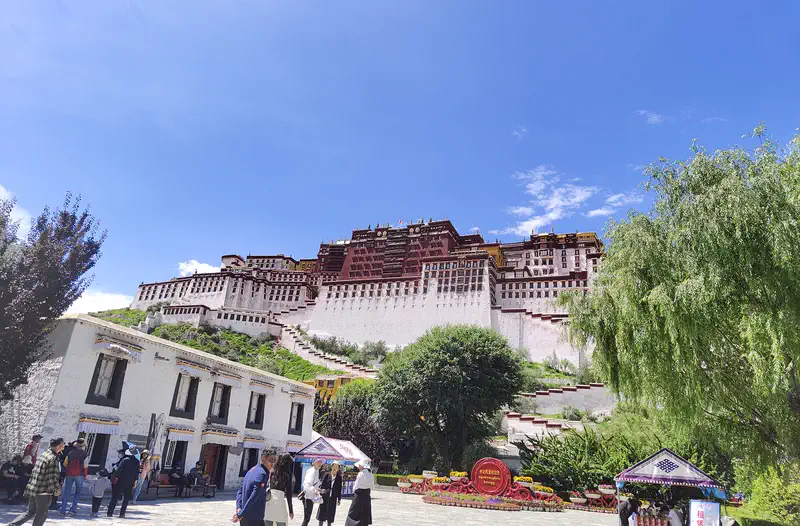
Potala Palace 布达拉宫
Former winter palace of the Dalai Lamas (founded 7th century, current structure 17th century). 1,000+ rooms, 13-storey palace on a 130m hill in central Lhasa. UNESCO-listed.
China Visit Guide
Yamdrok Lake (Yamdrok Tso)
Yamdrok Lake (Yamdrok Tso) 羊卓雍错
A sacred turquoise lake visible from the Lhasa-Gyantse highway at 4,441 m, considered one of the four holy lakes of Tibet and one of the most visually striking landscapes on the Tibetan plateau.
More on Lhasa
Other cities in Tibet Autonomous Region
- Gyantse江孜
Historic Tibetan town at 4,040m on the Lhasa-Shigatse road. Pelkor Chode Monastery and the 9-tiered Kumbum Stupa are the Tibet route's photographic centrepiece.
- Nyingchi林芝
Eastern Tibet Autonomous Region at 2,900m — substantially lower elevation than Lhasa. Forested rather than alpine; the Yarlung Tsangpo Grand Canyon and substantial March peach-blossom tourism.
- Shigatse日喀则
Tibet's second city at 3,845m, the seat of the Panchen Lama and home to Tashilhunpo Monastery. Standard inclusion in Lhasa-area Tibet Travel Permit itineraries.
Itineraries visiting Lhasa
- Tibet — 8 days with permit guidance
8d · Lhasa, Yamdrok, Shigatse and Gyantse — the standard agency-tour Tibet circuit.
- Tibetan Plateau — Lhasa, Shigatse and Everest Base Camp, 10 days
10d · Ten days on the Tibetan Plateau visiting Lhasa's monasteries and palaces, the Tashilhunpo at Shigatse, and the Rongbuk Monastery approach to Everest Base Camp — with practical permit guidance.
- Overnight train romance — soft-sleeper journeys across China, 10 days
10d · Ten days structured around China's overnight soft-sleeper trains — Beijing to Xi'an, Xi'an to Chengdu, Chengdu to Lhasa — experiencing the transition from one landscape to the next at a human pace, through the night.
- Three weeks deep — adds Yunnan and Tibet
21d · Two weeks comprehensive plus Yunnan loop (Kunming, Dali, Lijiang) and a Tibet permit-tour to Lhasa.
Food of Southwestern China
- Baba Flatbread粑粑
Yunnan's daily flatbread — a thick wheat or rice-flour round cooked on a griddle and eaten plain or stuffed.
- Bang Bang Chicken棒棒鸡
Cold poached chicken shredded by hand, dressed in chilli oil, sesame paste and Sichuan peppercorn.
- Boiled Fish in Chilli Oil水煮鱼
Fish slices submerged in a deep pool of chilli oil and Sichuan peppercorns. Served bubbling.
- Chongqing Hotpot重庆火锅
The original mala hotpot — a simmering cauldron of beef tallow, Pixian doubanjiang and Sichuan peppercorn for communal dipping.
Lhasa weather by month
| Month | Jan | Feb | Mar | Apr | May | Jun | Jul | Aug | Sep | Oct | Nov | Dec |
|---|---|---|---|---|---|---|---|---|---|---|---|---|
| High °C | 6 | 7 | 12 | 14 | 18 | 23 | 22 | 21 | 20 | 17 | 12 | 8 |
| Low °C | -6 | -4 | -1 | 1 | 5 | 11 | 12 | 12 | 10 | 5 | 1 | -3 |
| Rain mm | 1 | 8 | 13 | 29 | 76 | 68 | 176 | 188 | 78 | 15 | 2 | 2 |
| Rain days | 0 | 2 | 4 | 8 | 13 | 13 | 22 | 23 | 15 | 4 | 0 | 0 |
2019–2023 average via Open-Meteo ERA5 (ERA5 reanalysis). "Rain days" = days per month with ≥1 mm precipitation.
Frequently asked questions
- When is the best time to visit Lhasa?
- The best months to visit Lhasa are April, May, June, September, and October. April–June, September–October. July–August is the rainy season but greener.
- How many days do you need in Lhasa?
- Plan 3 days for Lhasa if you want to see the headline sights without rushing — Potala Palace (UNESCO), Jokhang Temple and the Barkhor, Drepung Monastery. Add an extra day for day trips from the city or for repeat visits to your favourite neighbourhood.
- Is Lhasa safe for tourists?
- ALL foreign travellers require the Tibet Travel Permit, arranged through a licensed agency. Independent travel is not permitted. Altitude sickness is common; acetazolamide and gradual ascent are recommended.
- How do you get around Lhasa?
- Walking the Barkhor area. Tour vehicles for monasteries.
- What's the daily budget for Lhasa?
- Budget guide for Lhasa: backpackers from around ¥500/day, mid-range travellers ¥900/day, comfortable trips from ¥2000/day. These ranges cover accommodation, food, local transport and one paid sight per day, and exclude flights to and from the city.
- Where should you stay in Lhasa?
- Around the Barkhor for atmosphere. Hotels licensed to host foreign guests are mandatory.
Spotted something out of date? Submit a correction.
Research
Cross-checked against primary sources
Verified
Address, hours, fees confirmed at the date shown
Updated
Re-verified periodically; corrections welcome