Itinerary · 10 days · balanced
Silk Road — Xi'an, Lanzhou, Zhangye, Jiayuguan, Dunhuang
The Hexi Corridor: Xi'an east-to-west by HSR through the Buddhist cave-temples and Silk Road forts.
The Hexi Corridor (河西走廊) is the historical Silk Road through Gansu — a 1,200 km-long natural corridor between the Qilian Mountains to the south and the Gobi Desert to the north, the only land route connecting central China with Central Asia and, beyond it, the Middle East and Rome. The itinerary runs west from Xi'an (the Tang-dynasty capital and eastern terminus of the Silk Road) through Lanzhou (the Yellow River's narrowest crossing point, famous for hand-pulled beef noodles), Zhangye (the Danxia rainbow rock formation), Jiayuguan (the westernmost pass of the Great Wall, marking the edge of the civilised world in the Ming imagination), and Dunhuang (the Mogao Caves, one of the most significant Buddhist art sites in the world, and the Mingsha desert dunes). The Hexi Corridor has excellent high-speed rail on the Lanzhou–Xinjiang line; most connections take 2–4 hours between stations.
Day by day
Day 1 · xian
Arrival, City Wall, Muslim Quarter
Arrive at Xi'an Xianyang International Airport or Xi'an North HSR station. Check in near the City Wall (South Gate / Bell Tower area is the most central). The 14 km Tang-dynasty City Wall is one of the best-preserved in China — rent a bicycle and ride the top circuit (1.5 hours). Evening in the Muslim Quarter (Huimin Jie): the Beiyuanmen street of food stalls is best after dark — roujiamo (pork in flatbread), paomo (crumbled bread in lamb soup), sweet persimmon cakes, pomegranate juice.
Attractions: xian-city-wall, muslim-quarter-xian
Day 2 · xian
Terracotta Army
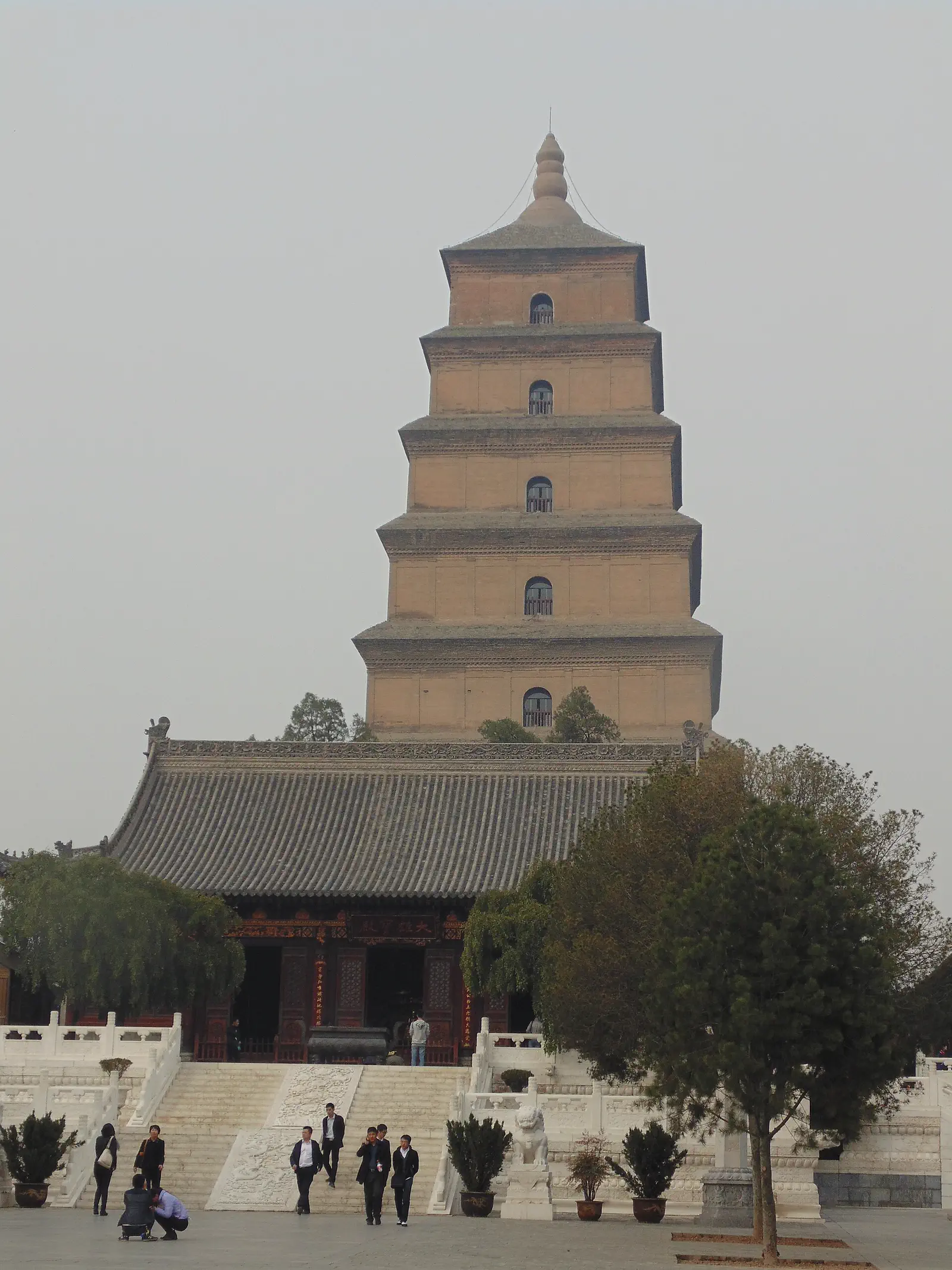
Hire a taxi or join a group tour to the Terracotta Army (Bingmayong), 40 km east of the city centre. The museum complex contains the three excavated pits (Pit 1 is the largest, with 6,000 life-size soldiers; Pit 2 has the cavalry; Pit 3 is the command post) and the Bronze Chariots Museum. Allow half a day at the site. Afternoon: Shaanxi History Museum (Shannxi Lishi Bowuguan) near the Big Wild Goose Pagoda — one of China's best provincial history collections, with Tang gold and silver, Han bronze horses, and Zhou dynasty bronzes.
Attractions: terracotta-army
Day 3 · lanzhou
HSR to Lanzhou, Yellow River front
High-speed rail from Xi'an North to Lanzhou (approximately 3 hours, ¥200–¥280 second class). Lanzhou sits at the narrowest crossing point of the Yellow River in its entire 5,400 km length — the city grew as a strategic crossing hub. Walk the riverside promenade and cross the Zhongshan Bridge (1909, the first permanent bridge across the upper Yellow River). Dinner: Lanzhou beef noodles (兰州拉面, Lanzhoulamian) — hand-pulled to order, in a clear beef bone broth. The noodle width is adjusted to taste; the narrowest (毛细, máo xì, 'hair-thin') is the most traditional.
HSR Xi'an North → Lanzhou West, ~3h, ¥200–¥280.
Day 4 · lanzhou
Bingling Temple Grottoes
The Bingling Temple (炳灵寺) grottoes are 90 km southwest of Lanzhou, accessible only by boat across the Liujiaxia Reservoir. The reservoir was created by the Liujiaxia Dam; the grottoes, carved from the 4th century CE onward, now sit at the end of a narrow canyon accessible only by water. The round trip takes a full day (bus to the reservoir, 1–2 hours by boat). The grottoes contain 183 niches and 700+ carved figures; the largest (Maitreya, the future Buddha) stands 27m tall. The remote access preserves an authentic atmosphere that more accessible Buddhist cave sites often lack.
Day 5 · zhangye
HSR to Zhangye, Danxia hills
High-speed rail west from Lanzhou to Zhangye (approximately 3 hours, ¥150). The Zhangye Danxia National Geological Park contains the Linze Danxia, a 300 km² formation of varicoloured sandstone hills in layered reds, yellows, greens, and purples — nicknamed the 'rainbow mountains'. Colours are most vivid in low-angle light (early morning and evening). The site is most photographed at sunset. The Danxia is a UNESCO World Heritage-listed landform type.
Attractions: zhangye-danxia
HSR ~3h, ¥150.
Day 6 · jiayuguan
HSR to Jiayuguan, the western Wall
High-speed rail from Zhangye to Jiayuguan (approximately 90 minutes, ¥80). Jiayuguan Pass (嘉峪关) is the westernmost pass of the Ming Great Wall — the 'First and Greatest Pass under Heaven', marking the western edge of the empire. The fort complex (1372 CE) is one of the best-preserved sections of the entire Wall: a complete fortified enclosure with inner and outer gates, watchtowers, and the wall running across the Gobi towards the Qilian Mountains and desert simultaneously. The Wall at Jiayuguan terminates at the Gobi rather than continuing indefinitely — the formal boundary of the Ming world.
Attractions: jiayuguan-pass
HSR 90 min, ¥80.
Day 7 · dunhuang
Train to Dunhuang, Crescent Lake
Train or bus from Jiayuguan to Dunhuang (3–4 hours on the desert road). The Mingsha Dunes (Echoing Sand Mountain, 鸣沙山) are a 40 km² field of sand dunes rising 250m directly at the edge of the town. The Crescent Lake (月牙泉, Yuèyá Quán) sits improbably at the foot of the dunes — a crescent-shaped oasis lake fed by underground springs, stable for at least 2,000 years. The sunset view of the Crescent Lake from the dune crest is the signature image of Dunhuang.
Attractions: crescent-lake-mingsha
Day 8 · dunhuang
Mogao Caves
The Mogao Caves (莫高窟) are the world's most important surviving repository of Buddhist art — 492 decorated caves carved into a cliff face 25 km south of Dunhuang, containing 45,000 m² of murals and 2,400 painted clay sculptures spanning the 4th to 14th centuries. The site requires advance booking through the Dunhuang Research Academy's official platform; same-day tickets are rarely available. The standard tour opens 8–10 of the 492 caves (rotating selection); a premium tour opens additional caves including the Library Cave (Cave 17), where a cache of 50,000 manuscripts was sealed for over 900 years.
Attractions: mogao-caves
Day 9 · dunhuang
Yumen Pass and Yangguan
Two Han-dynasty frontier passes west of Dunhuang mark the twin routes of the ancient Silk Road. Yumen Pass (玉门关, Jade Gate Pass) controlled the northern route; Yangguan controlled the southern route. Both are now desert ruins — earthen mounds and broken walls in the Gobi, with reconstruction work around them — but the desolate landscape context is part of the meaning. The poet Wang Wei's line 'Beyond Yangguan, no old friends remain' has been cited since the Tang dynasty; the pass is a byword for the edge of the known world.
Day 10 · dunhuang
Fly back, depart
Dunhuang Airport (DNH) serves flights to Xi'an (2 hours), Urumqi (2.5 hours), and Beijing (via Lanzhou or Xi'an). The airport is small; book flights ahead as capacity is limited during the summer peak season. An alternative departure route is train west to Turpan and Urumqi to continue deeper into Xinjiang.
Fly Dunhuang DNH → Xi'an XIY (~2h) or → Beijing (~3h via connection).
Budget guide (CNY per day)
| Backpacker | ¥700 |
| Mid-range | ¥1500 |
| Comfortable | ¥3300 |
Mogao Caves ¥238 standard, ¥580 premium. Jiayuguan ¥120. Danxia ¥75. HSR fares total across the route: ¥700–¥900. Dunhuang accommodation midrange ¥400–¥800 per night.
Cities covered
Attractions covered
Other itineraries visiting Xi'an
- Xi'an in 3 days
3d · Terracotta Army, City Wall, Muslim Quarter, the Wild Goose Pagodas.
- Xi'an and Pingyao heritage in 4 days
4d · Xi'an Terracotta Warriors, Muslim Quarter, and Tang dynasty sites followed by Pingyao — China's best-preserved Ming and Qing walled county town. A tight, focused circuit for heritage travellers who want depth over breadth.
- Family Beijing and Xi'an — 7 days, relaxed pace
7d · Seven days in Beijing and Xi'an at a pace that works for children: fewer sites per day, breaks built in, and activities with hands-on appeal — the Panda Base of the north and hands-on history at the Terracotta Army.
- Beijing + Xi'an + Shanghai — 7-day first-timer circuit
7d · The canonical first-time China loop: two days in imperial Beijing, one day in Xi'an for the Terracotta Army, and two days in Shanghai. Linked by HSR throughout.
- One week China classics — Beijing, Xi'an, Shanghai
7d · The first-time-traveller's loop: imperial Beijing, the Terracotta Army at Xi'an, Shanghai's skyline. Connected by overnight train or short HSR.
- Family China classic — 10 days Beijing, Xi'an, Chengdu, Shanghai
10d · Ten days at a child-friendly pace: Beijing history, Xi'an warriors, Chengdu pandas and Shanghai's waterfront — the four cities that deliver the widest variety for families with school-age children.