Historic site · GANSU · UNESCO
Jiayuguan Pass
嘉峪关 · Jiāyùguān
About
Western terminus of the Ming Great Wall, the Hexi Corridor's last fortress. UNESCO-listed as part of the Great Wall property.
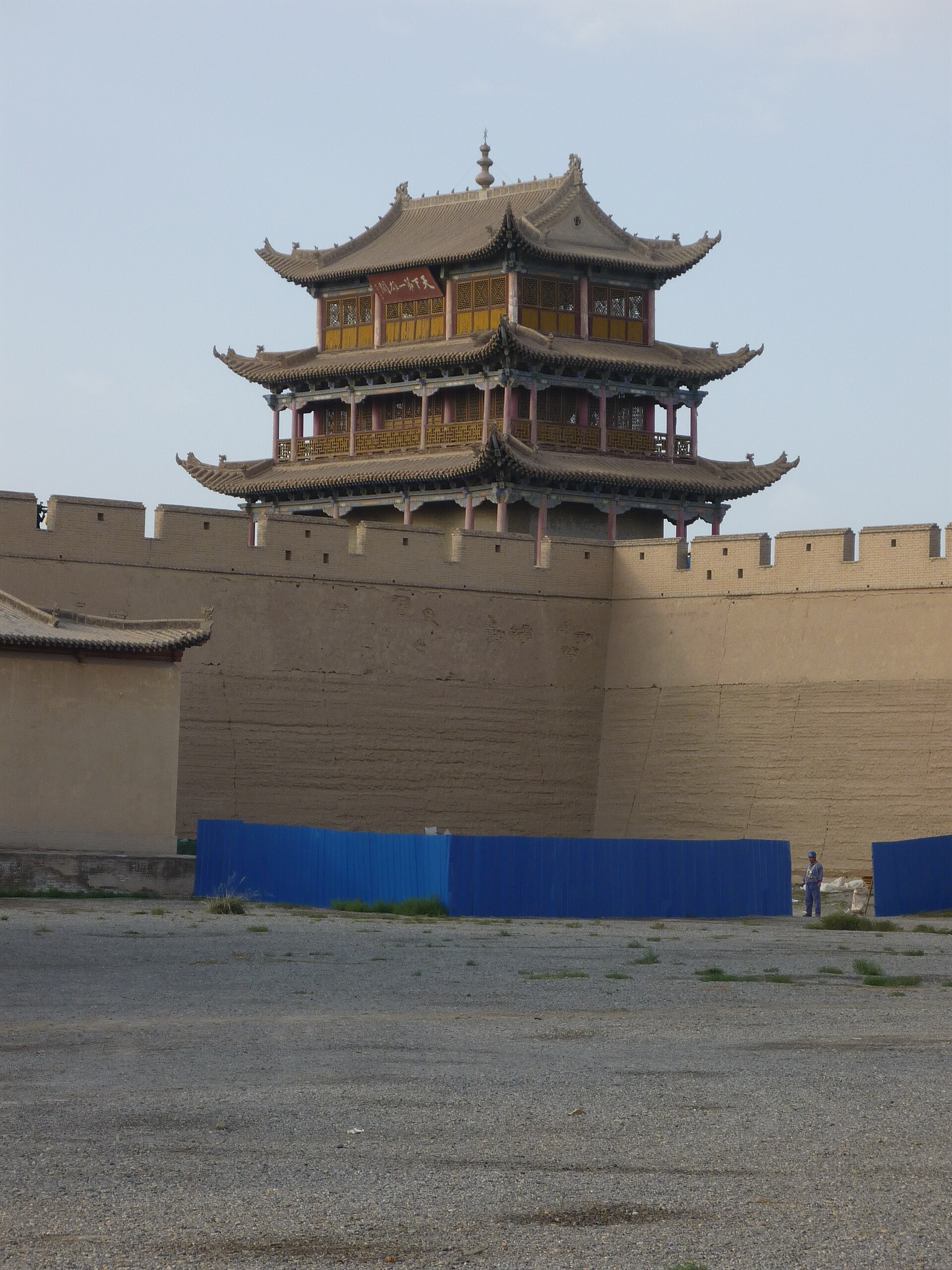
Jiayuguan Pass stands at the western end of the Hexi Corridor — the narrow passage of relatively hospitable terrain between the Qilian Mountains and the Gobi Desert through which the Silk Road ran between China proper and Central Asia. The fortress marks the point where the Ming Great Wall terminated and, beyond it, the territory that the Ming dynasty considered beyond the boundary of the Chinese world. Constructed in 1372 under the Hongwu Emperor, it became known in Chinese literature as the 'Jiayu Gate, First and Greatest Pass under Heaven' — the phrase 'under heaven' (tianxia) carrying its full ideological weight, since Jiayuguan was where tianxia ended.
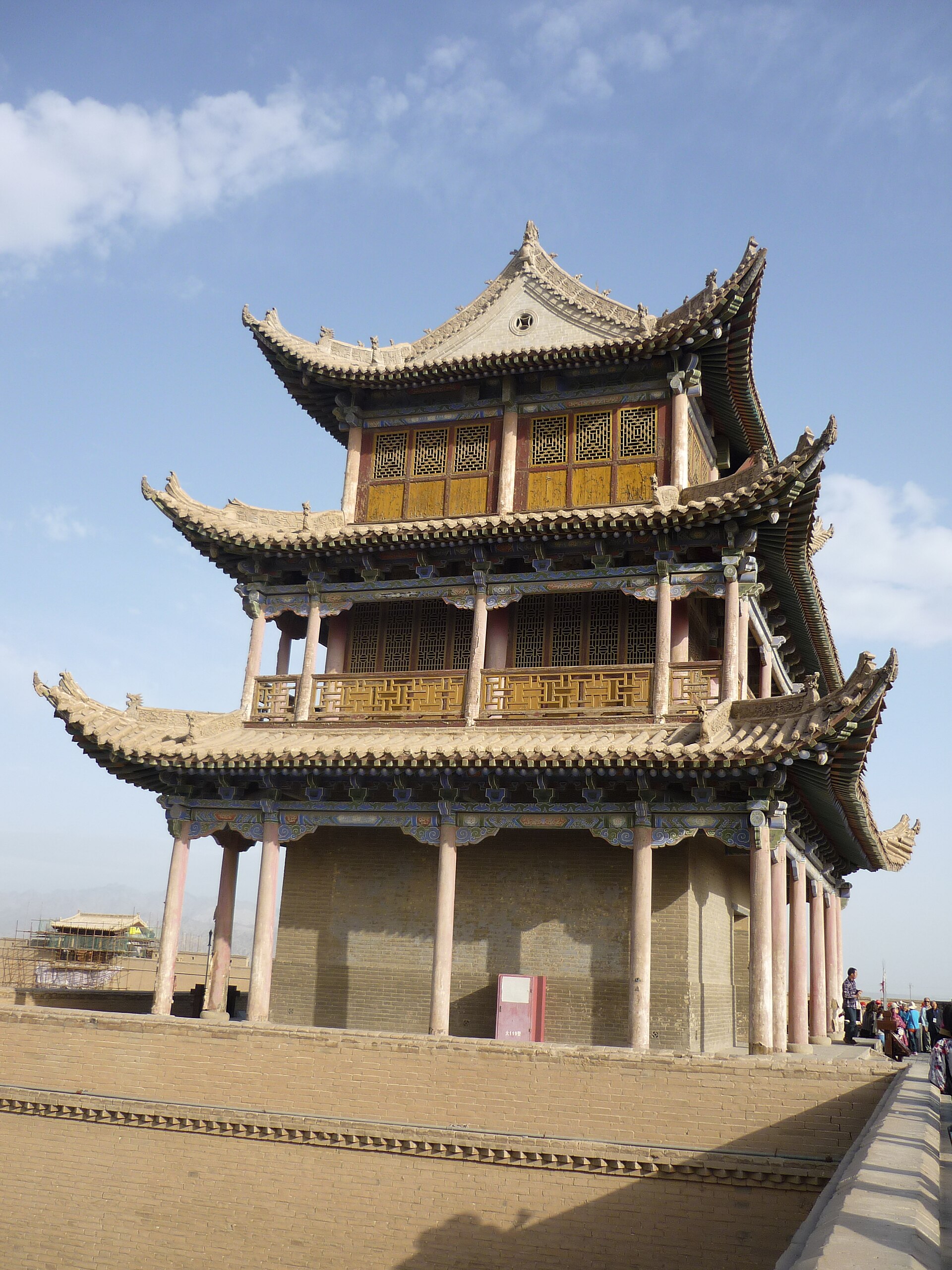
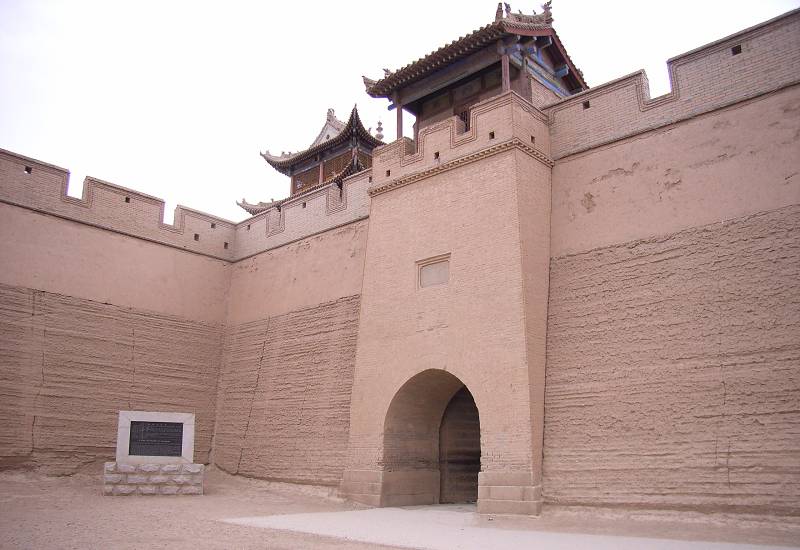
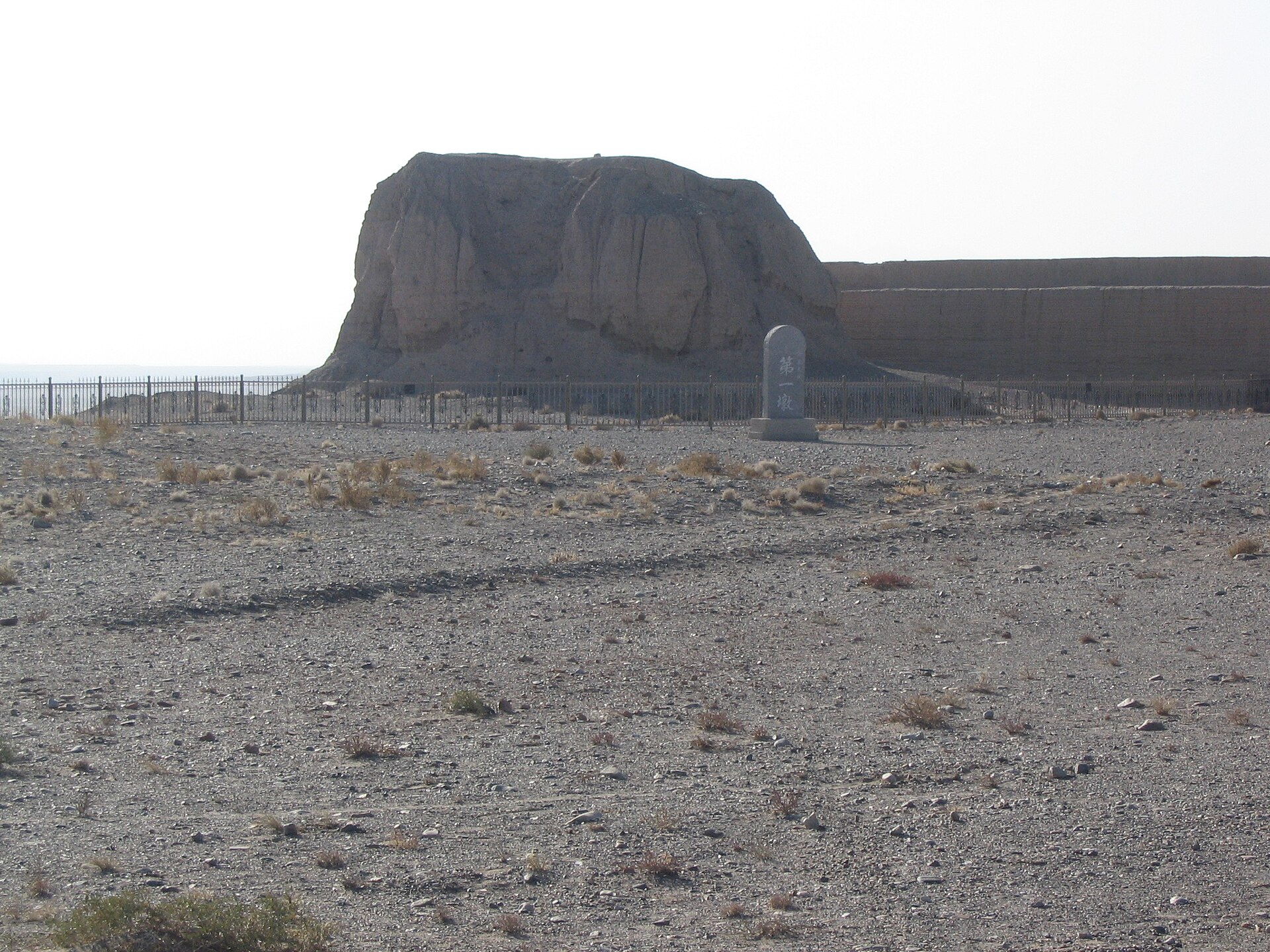
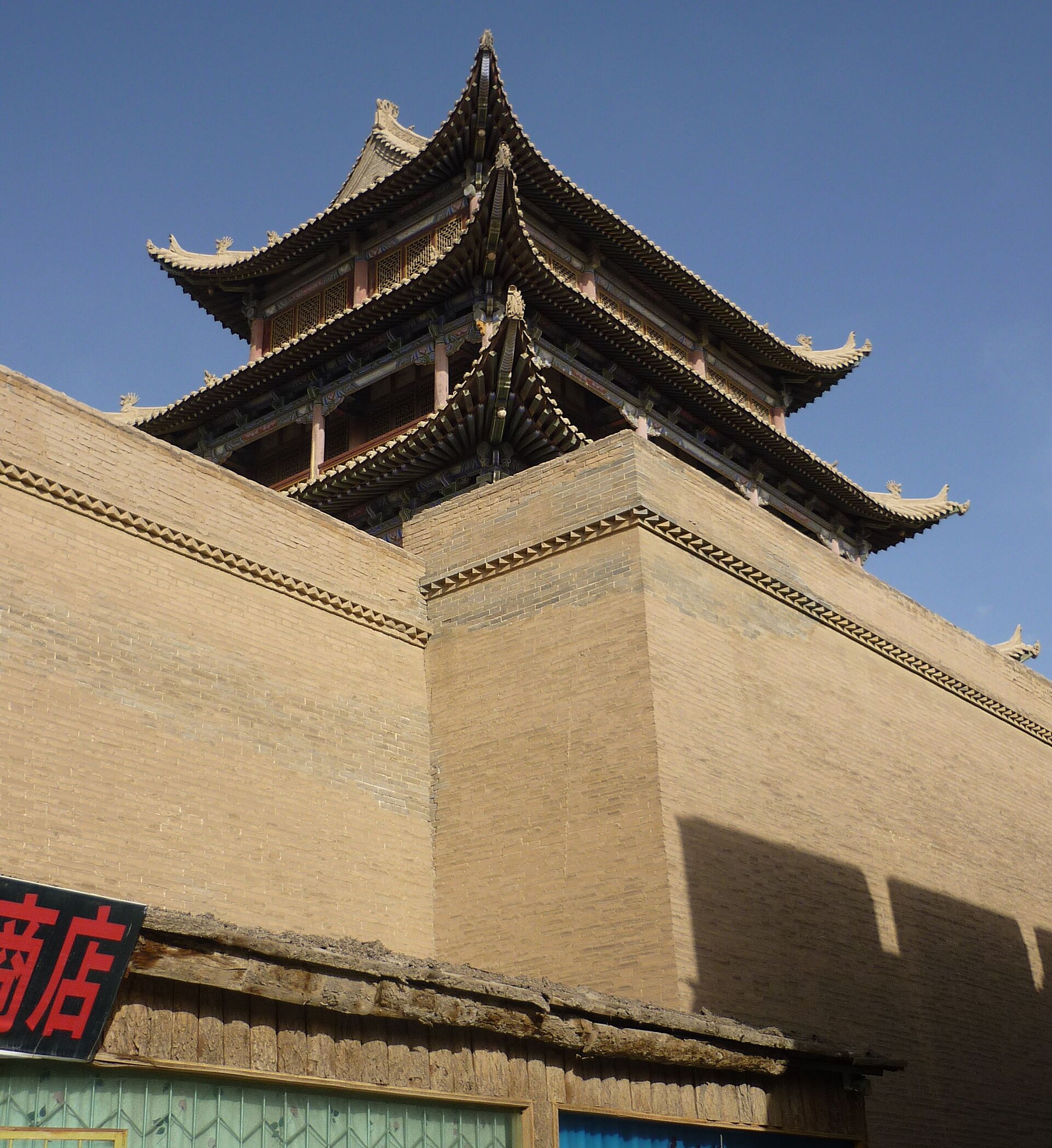
The fortress is a double-walled compound: an inner city (neicheng) containing the main gate towers and administrative buildings, surrounded by an outer wall (waicheng) with its own towers and ramparts. The main gate on the western side — the Rouyuan Gate, meaning 'gate for cherishing those from afar' — is the formal entry point toward Central Asia. The three-storey gate tower that surmounts it is the visual centrepiece of the site. From the rampart walks, the scale of the setting becomes clear: the Qilian Mountains rise to the south with snow on their upper flanks, and the Gobi stretches north and west, flat and brown and extending to the horizon. The Wall itself runs southeast from the fortress toward its junction with the main Ming Wall system.
The site is one of the better-preserved Ming frontier fortresses and avoids the reconstruction controversies of some Wall sections, though some restoration has been done. A museum on-site covers the Silk Road history of the Hexi Corridor. The city of Jiayuguan is directly served by high-speed rail from Lanzhou, making it a practical day trip from the main Gansu-Dunhuang route.
How to get there
HSR Lanzhou or Dunhuang to Jiayuguan South, then taxi.
When to visit
May–October.
UNESCO inscription
“In c. 220 B.C., under Qin Shi Huang, sections of earlier fortifications were joined together to form a united defence system against invasions from the north. Construction continued up to the Ming dynasty (1368–1644), when the Great Wall became the world's largest military structure. Its historic and strategic importance is matched only by its architectural significance.”
Gallery
Itineraries featuring this site
- Gansu and Ningxia — Yinchuan, Lanzhou, Zhangye, Jiayuguan and Dunhuang, 7 days
7d · Seven days across two northwest provinces — the Hui Muslim city of Yinchuan, Yellow River Lanzhou, the Danxia rainbow hills, Jiayuguan Fort and the Mogao Caves at Dunhuang.
- Silk Road — Xi'an, Lanzhou, Zhangye, Jiayuguan, Dunhuang
10d · The Hexi Corridor: Xi'an east-to-west by HSR through the Buddhist cave-temples and Silk Road forts.
- Silk Road — Xi'an to Kashgar, 14 days
14d · The full Hexi Corridor route from Xi'an west through Lanzhou, Dunhuang and the Taklamakan edge to Turpan and Kashgar — the historical Silk Road across northwest China.
- First-timer China — 21 days with northwest Silk Road extension
21d · Three weeks across China: the classic eastern cities, a Yunnan highland loop, and a Silk Road extension through Gansu into the northwest — covering the range of what China actually contains.
Other historic sites in China
- Ancient Villages of Southern Anhui — Xidi and Hongcun皖南古村落—西递、宏村
UNESCO · UNESCO-listed pair of Ming-Qing Huizhou merchant villages in southern Anhui, renowned for whitewashed walls, inky horsehead gables and moon-shaped ponds.
- Anqing Zhenfeng Pagoda安庆振风塔
A seven-storey Ming Dynasty pagoda standing on the bank of the Yangtze River in Anqing, considered one of the finest riverside pagodas in southern China and long used as a navigation landmark by Yangtze river pilots.
- Archaeological Ruins of Liangzhu City良渚古城遗址
UNESCO · UNESCO-listed archaeological site in Hangzhou preserving the remains of a 5,000-year-old city with a sophisticated water-management system, jade ritual culture and social hierarchy — regarded as one of the earliest state-level societies in East Asia.
- Capital Cities and Tombs of the Ancient Koguryo Kingdom高句丽王城、王陵及贵族墓葬
UNESCO · UNESCO-listed capital cities and royal tombs of the Koguryo Kingdom in Jian, Jilin — the Chinese portion of a transnational heritage property shared with North Korea, representing one of the most powerful states of ancient East Asia.
- Classical Gardens of Suzhou (UNESCO)苏州古典园林
UNESCO · UNESCO-listed collection of private gardens in Suzhou — four inscribed in 1997 and five more added in 2000 — representing the pinnacle of Chinese garden design through the refined integration of architecture, water, rock and plant.
- Danba Tibetan Watchtowers丹巴碉楼
Clusters of ancient stone watchtowers rising above Tibetan village complexes in the Dadu River valley, said to be among the oldest surviving examples of Tibetan defensive architecture.
- Drum Tower and Bell Tower鼓楼钟楼
Yuan-dynasty drum and bell towers that kept official time for imperial Beijing. Climbable; daily drum performances.
- Dujiangyan Irrigation System都江堰
UNESCO · 2,300-year-old irrigation system on the Min River. Still in use. UNESCO-listed jointly with Mt Qingcheng. Engineering rather than architecture, but one of the great works.
Other UNESCO World Heritage sites in China
- Ancient Villages of Southern Anhui — Xidi and Hongcun皖南古村落—西递、宏村
UNESCO-listed pair of Ming-Qing Huizhou merchant villages in southern Anhui, renowned for whitewashed walls, inky horsehead gables and moon-shaped ponds.
- Archaeological Ruins of Liangzhu City良渚古城遗址
UNESCO-listed archaeological site in Hangzhou preserving the remains of a 5,000-year-old city with a sophisticated water-management system, jade ritual culture and social hierarchy — regarded as one of the earliest state-level societies in East Asia.
- Badain Jaran Desert — Lakes and Dunes巴丹吉林沙漠—沙山湖泊群
UNESCO Natural World Heritage site in Inner Mongolia — the third largest desert in China, featuring some of the world's tallest stationary dunes and a unique network of freshwater and saline lakes sustained by a still-unexplained subterranean water system.
- Capital Cities and Tombs of the Ancient Koguryo Kingdom高句丽王城、王陵及贵族墓葬
UNESCO-listed capital cities and royal tombs of the Koguryo Kingdom in Jian, Jilin — the Chinese portion of a transnational heritage property shared with North Korea, representing one of the most powerful states of ancient East Asia.
- China Danxia中国丹霞
UNESCO Natural World Heritage site — a serial property of six Danxia landscapes across six provinces, representing China's defining red-cliff-and-pillar sandstone landform type, including Danxia Mountain, Zhangye, Taining and Langshan.
- Classical Gardens of Suzhou (UNESCO)苏州古典园林
UNESCO-listed collection of private gardens in Suzhou — four inscribed in 1997 and five more added in 2000 — representing the pinnacle of Chinese garden design through the refined integration of architecture, water, rock and plant.
- Couple's Retreat Garden耦园
UNESCO-listed Suzhou garden organised symmetrically around a central residence. Less crowded than the four most-visited gardens.
- Drepung Monastery哲蚌寺
Once the largest monastery in the world (10,000+ monks). 8 km west of Lhasa. Active Gelugpa monastery; debating courtyard sessions in the afternoon.
Frequently asked questions
- How much does Jiayuguan Pass cost to visit?
- Adult entry to Jiayuguan Pass is ¥110, ¥55 for children.
- When is Jiayuguan Pass open?
- Jiayuguan Pass opening hours: 8:30am–5:30pm.
- How long do you need at Jiayuguan Pass?
- Allow 3–4 hours for Jiayuguan Pass. Add buffer time if you plan to visit at peak season or include nearby sights in the same trip.
- When is the best time to visit Jiayuguan Pass?
- May–October.
- How do you get to Jiayuguan Pass?
- HSR Lanzhou or Dunhuang to Jiayuguan South, then taxi.
Spotted something out of date? Submit a correction.
Research
Cross-checked against primary sources
Verified
Address, hours, fees confirmed at the date shown
Updated
Re-verified periodically; corrections welcome