CITY · ANHUI
Yixian
黟县 · Yī Xiàn
Overview
Rural county in southern Anhui containing the UNESCO-listed Huizhou villages of Hongcun and Xidi, the best-preserved examples of vernacular merchant-class architecture in China. The county town itself is minor; the surrounding villages are the draw.
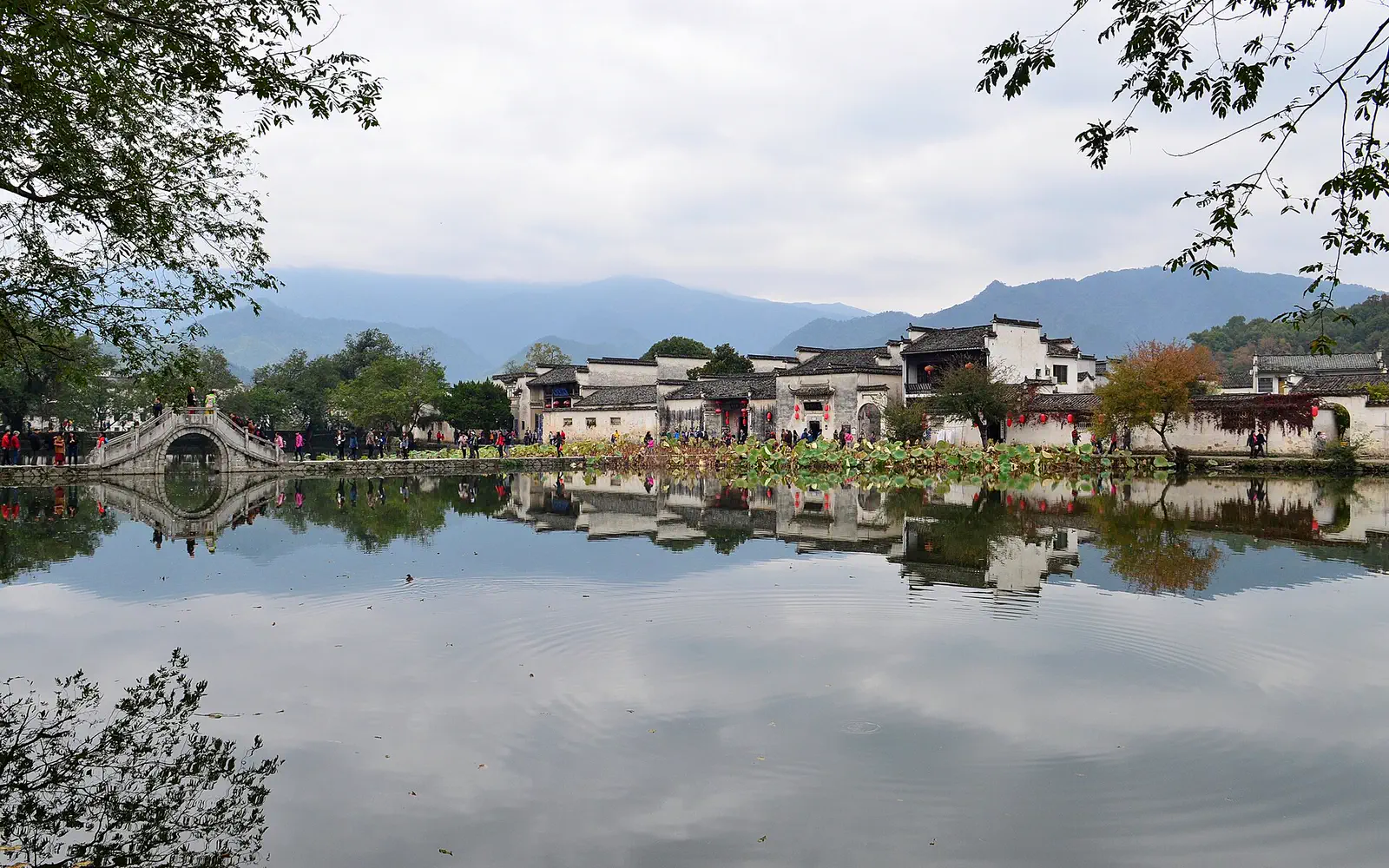
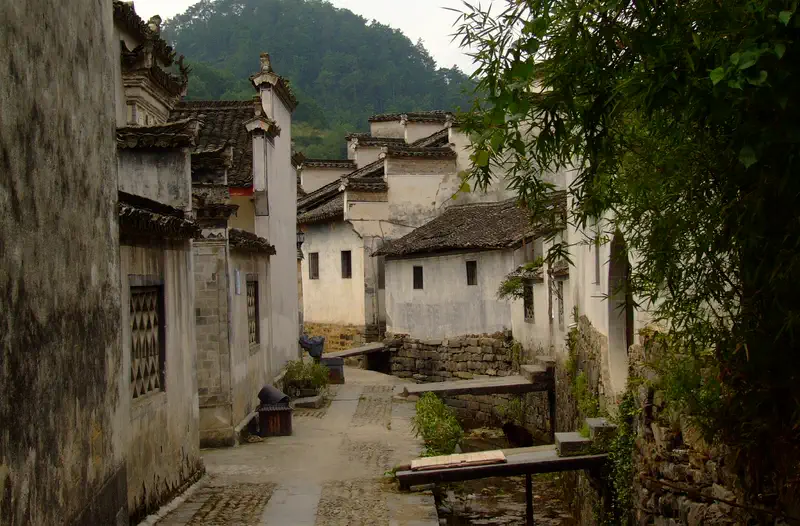
Yixian County is the administrative area in southern Anhui that contains the two UNESCO World Heritage Huizhou villages — Hongcun and Xidi — as well as a wider network of smaller villages that preserve the distinctive architecture, culture and landscape of the old Huizhou merchant culture. The county itself is minor: a small town by the Leishui River with ordinary rural infrastructure. The reason visitors come here is the villages, and the landscape of paddy fields, ink-wash mountains and traditional whitewashed buildings that surrounds them.
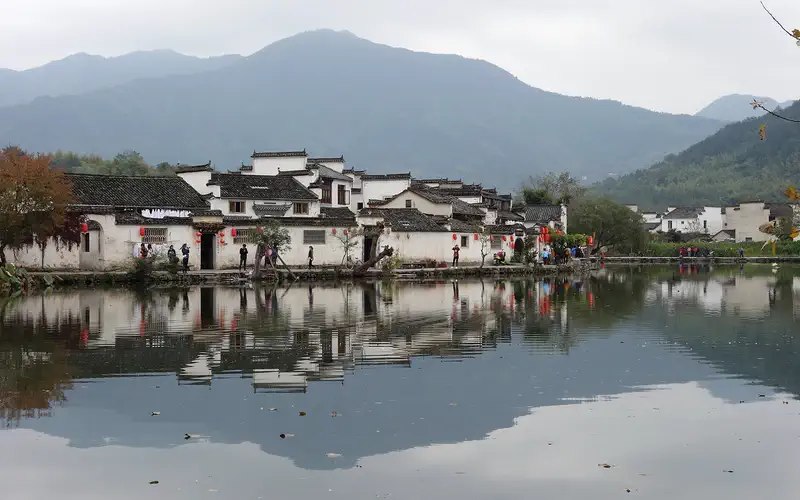
Hongcun village is the more famous of the two UNESCO sites, largely because of its role as a filming location for the 2000 film Crouching Tiger, Hidden Dragon. Its defining feature is the artificial water system — channels running from a natural spring through the village and into the semicircular Moon Pond at the centre — which was designed as a fire prevention and water supply system during the Ming dynasty. The surrounding hills and paddy fields, particularly the rapeseed fields in spring, produce compositions that have become a canonical image of rural China. Entry now requires a ticket and the village is heavily visited in peak seasons.
Xidi village has a more linear streetscape and is slightly less crowded than Hongcun. Its ancestral halls, memorial arches (paifang) and residential courtyards are among the best-preserved examples of Ming and Qing Huizhou domestic architecture. The Huizhou merchants who built these villages were absent for years at a time, trading in distant cities; the architecture's elaborate interiors and the prominence of the paifang arches reflect both wealth and the particular social codes of Huizhou society.
Beyond the two famous villages, Yixian county contains dozens of less-visited but still significant settlements — Nanping, Guanlu, Mukeng — that are worth seeking out for visitors who find Hongcun and Xidi too managed. Local buses and hired motorbikes connect the county town to these outlying villages.
What to see
- Hongcun village (UNESCO) — Moon Pond, Ming-dynasty water system, rapeseed fields in spring
- Xidi village (UNESCO) — memorial arches, ancestral halls, Ming-Qing residential compounds
- Nanping village — location for Judou (Zhang Yimou, 1990), less visited
- Guanlu village — well-preserved but rarely included on tour itineraries
- Rapeseed flower fields around Hongcun and Xidi — peak bloom late February to early April
- Village landscapes on foot or bicycle — paddy fields and Huizhou farmstead scenery
- Mukeng Bamboo Forest — bamboo grove area near Mukeng village
What to eat
- Stinky mandarin fish (chòu guìyú) — the defining Huizhou dish, served in village restaurants
- Mao Dofu (fuzzy tofu) — fermented tofu with white mould, a local speciality
- Bamboo shoot and preserved meat braise — a staple at village guesthouses
- Huizhou dry tofu with dried vegetables
- Wild mountain greens stir-fried with bacon
- Local rice wine from farmhouse producers
Getting there
No airport or train station in Yixian. Access is via Tunxi (Huangshan City) — approximately 40 minutes by bus or taxi. Buses from Tunxi bus station run to both Hongcun and Xidi. Most visitors base themselves in Tunxi and day-trip to the villages, or stay overnight in a village guesthouse.
Getting around
Local buses and minibuses between Tunxi, Hongcun and Xidi. Hired electric bikes or bicycles are an excellent way to move between villages along the valley roads. Walking paths connect some of the smaller villages.
Where to stay
Village guesthouses (mínsu) within Hongcun and Xidi offer the most atmospheric accommodation — converted Huizhou courtyard homes. Staying overnight means the morning and evening light (before and after day-tripper crowds) is accessible. Book well in advance for spring rapeseed season weekends.
We list neighbourhoods, not specific hotels — we don't endorse hotels.
When to go
Late February–early April for rapeseed flower season (extremely popular, accommodation books out weeks ahead). October–November for autumn, fewer crowds. Summer (July–August) is hot and very crowded with domestic school holiday tourism.
Budget guide (CNY per day)
| Backpacker | ¥220 |
| Mid-range | ¥480 |
| Comfortable | ¥1100 |
Nearby attractions
Day trips within 150 km
Other cities in Anhui
- Hefei合肥
Capital of Anhui, transport gateway to Mt Huangshan and the Hongcun-Xidi villages. Less of a destination, more of a transit hub.
- Huangshan / Yellow Mountain region黄山
UNESCO-listed mountain in Anhui, the most-painted mountain in Chinese landscape art. Granite peaks, sea-of-clouds, ancient pines. Combine with Hongcun and Xidi villages.
- Jiuhua Mountain九华山
One of China's Four Sacred Buddhist Mountains in Anhui province, associated with the Bodhisattva Ksitigarbha and home to over 90 active monasteries and temples.
- Tunxi屯溪
The urban base for the Huizhou cultural region in southern Anhui — gateway to Huangshan mountain and the ancient villages of Hongcun and Xidi. The Old Street (Laoijie) along the Xin'an River preserves Song, Ming and Qing commercial architecture.
Food of Eastern China
- Beggar's Chicken叫花鸡
A whole chicken stuffed with aromatics, wrapped in lotus leaves and clay, then slow-baked until the meat steams in its own juices.
- Drunken Chicken醉鸡
Chicken steamed and marinated in Shaoxing rice wine, served chilled. A Shanghai banquet starter.
- Eight-Treasure Rice八宝饭
A steamed dome of glutinous rice layered with red bean paste and decorated with eight types of preserved fruits and nuts.
- Hairy Crab大闸蟹
Yangcheng Lake mitten crab — the autumn delicacy of the Yangtze Delta. Eaten steamed with vinegar dip.
Yixian weather by month
| Month | Jan | Feb | Mar | Apr | May | Jun | Jul | Aug | Sep | Oct | Nov | Dec |
|---|---|---|---|---|---|---|---|---|---|---|---|---|
| High °C | 10 | 12 | 18 | 22 | 26 | 29 | 31 | 33 | 29 | 24 | 19 | 12 |
| Low °C | 2 | 4 | 9 | 12 | 17 | 22 | 24 | 25 | 20 | 15 | 9 | 3 |
| Rain mm | 89 | 100 | 155 | 122 | 195 | 311 | 279 | 105 | 78 | 34 | 50 | 29 |
| Rain days | 11 | 13 | 14 | 11 | 16 | 20 | 20 | 12 | 10 | 6 | 7 | 6 |
2019–2023 average via Open-Meteo ERA5 (ERA5 reanalysis). "Rain days" = days per month with ≥1 mm precipitation.
Frequently asked questions
- When is the best time to visit Yixian?
- The best months to visit Yixian are March, April, October, and November. Late February–early April for rapeseed flower season (extremely popular, accommodation books out weeks ahead). October–November for autumn, fewer crowds.
- How many days do you need in Yixian?
- Plan 3 days for Yixian if you want to see the headline sights without rushing — Hongcun village (UNESCO), Xidi village (UNESCO), Nanping village. Add an extra day for day trips from the city or for repeat visits to your favourite neighbourhood.
- How do you get around Yixian?
- Local buses and minibuses between Tunxi, Hongcun and Xidi. Hired electric bikes or bicycles are an excellent way to move between villages along the valley roads. Walking paths connect some of the smaller villages.
- What's the daily budget for Yixian?
- Budget guide for Yixian: backpackers from around ¥220/day, mid-range travellers ¥480/day, comfortable trips from ¥1100/day. These ranges cover accommodation, food, local transport and one paid sight per day, and exclude flights to and from the city.
- Where should you stay in Yixian?
- Village guesthouses (mínsu) within Hongcun and Xidi offer the most atmospheric accommodation — converted Huizhou courtyard homes. Staying overnight means the morning and evening light (before and after day-tripper crowds) is accessible. Book well in advance for spring rapeseed season weekends.
Spotted something out of date? Submit a correction.
Research
Cross-checked against primary sources
Verified
Address, hours, fees confirmed at the date shown
Updated
Re-verified periodically; corrections welcome