CITY · ANHUI
Tunxi
屯溪 · Túnxī
Overview
The urban base for the Huizhou cultural region in southern Anhui — gateway to Huangshan mountain and the ancient villages of Hongcun and Xidi. The Old Street (Laoijie) along the Xin'an River preserves Song, Ming and Qing commercial architecture.
Tunxi is the urban district of Huangshan City — a name that causes persistent confusion, since 'Huangshan' refers both to the city and to the famous mountain 75 km to the north. For practical purposes, Tunxi is the transport hub (it has the airport, the main rail station and the long-distance bus station) and the Old Street commercial district is the visitor centre, while the mountain and the Huizhou villages are the actual destinations served by this base.
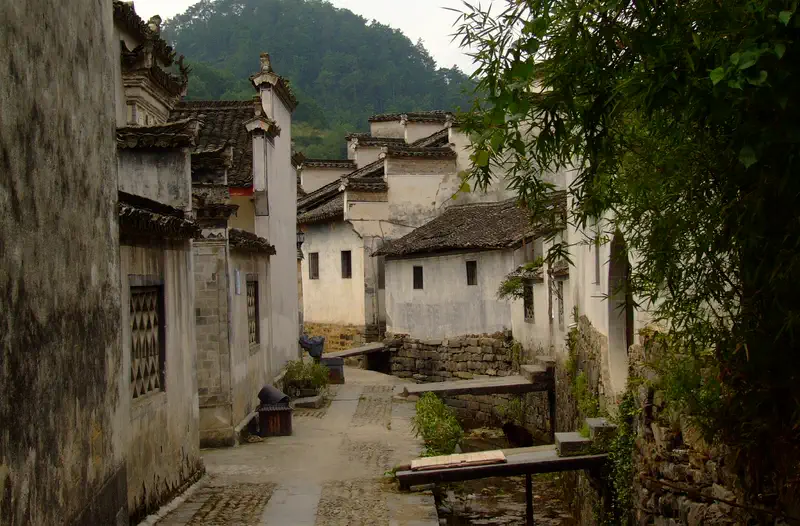
The Tunxi Old Street (Laoijie) stretches about 1.5 km along the south bank of the Xin'an River and is one of the better-preserved commercial streetscapes from the Song through Qing periods in Anhui — a sequence of grey-brick buildings with white-painted walls, carved wooden shopfronts and narrow stone-paved lanes. In the Song dynasty the street was a major trading point for tea, timber and Huizhou ink and inkstones, all of which remain available at the shops today. The ink and inkstone trade continues as Anhui (specifically Huizhou) was historically the main producer of both — they were among the Four Treasures of the Chinese Scholar's Studio alongside brush and paper.
Huangshan (Yellow Mountain) to the north is a UNESCO World Heritage granite mountain complex famous for its sea of clouds, twisted pines, hot springs and scenic peaks. The mountain and the Huizhou villages (Hongcun and Xidi, also UNESCO-listed) are almost universally the reason visitors come to this region — Tunxi is their logistical base. A 2-night stay in Tunxi gives time for the Old Street, a day in the Huizhou villages, and either a day hike on Huangshan or a visit to additional villages in the Xin'an River valley.
The Xin'an River itself is green and navigable, and a raft or boat trip downstream from the city gives a different perspective on the landscape and the old settlement patterns along its banks.
What to see
- Tunxi Old Street (Laoijie) — 1.5 km Song-to-Qing commercial streetscape along the Xin'an River
- Huangshan mountain (75 km north) — granite peaks, cloud sea, twisted pines, UNESCO site
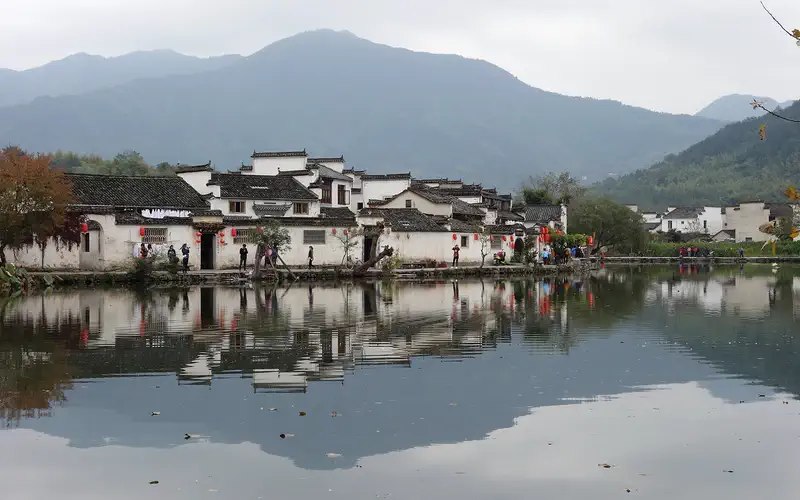
- Hongcun village (UNESCO) — Huizhou vernacular architecture, ink-wash landscape setting
- Xidi village (UNESCO) — well-preserved Huizhou merchant village with ancestral halls
- Huizhou District old settlements — Tangmo, Lucun and other villages off the main tourist circuit
- Xin'an River boat trips — downstream scenery through the Hui'an valley
- Huizhou Four Treasures shops — ink sticks, inkstones, Xuan paper and brushes
What to eat
- Stinky mandarin fish (chòu guìyú) — Huizhou's most distinctive dish, fermented preserved fish
- Mao Dofu — mould-ripened tofu cubes, fried or braised
- Braised Huizhou pork with bamboo shoots
- Huizhou sesame oil pancakes from street stalls
- Yellow mountain tribute tea (Huangshan Maofeng) — a premium green tea from the mountain area
- Bamboo shoot dishes — the mountains around Tunxi produce fresh and dried bamboo shoots
Getting there
Huangshan Tunxi Airport (TXN) has flights from Beijing, Shanghai and other major cities. By high-speed rail: from Shanghai Hongqiao approximately 2.5–3 hours; from Hangzhou approximately 1.5 hours; from Nanjing approximately 2 hours. The rail station is Huangshan North Station, a short taxi from the Old Street.
Getting around
Taxis and local buses from Tunxi to the Huizhou villages and toward Huangshan mountain. The Old Street is walkable. Organised day trips to the villages are bookable at most hotels. Local buses to Hongcun and Xidi depart from the Tunxi bus station.
Where to stay
Guesthouses and boutique hotels on and near the Old Street for the best atmosphere. Mid-range hotels near the rail station. On Huangshan mountain itself, hotels at both the top and bottom cable car stations serve overnight visitors who want sunrise on the peaks.
We list neighbourhoods, not specific hotels — we don't endorse hotels.
When to go
March–May and October–November are the standard recommendations. March–April sees the rapeseed flower fields around the villages. October has clear skies and comfortable temperatures. Summer is hot and humid and Huangshan can be very crowded. Winter brings occasional snow — the mountain is beautiful in snow but the paths are hazardous.
Budget guide (CNY per day)
| Backpacker | ¥240 |
| Mid-range | ¥520 |
| Comfortable | ¥1300 |
Nearby attractions
Day trips within 150 km
Other cities in Anhui
- Hefei合肥
Capital of Anhui, transport gateway to Mt Huangshan and the Hongcun-Xidi villages. Less of a destination, more of a transit hub.
- Huangshan / Yellow Mountain region黄山
UNESCO-listed mountain in Anhui, the most-painted mountain in Chinese landscape art. Granite peaks, sea-of-clouds, ancient pines. Combine with Hongcun and Xidi villages.
- Jiuhua Mountain九华山
One of China's Four Sacred Buddhist Mountains in Anhui province, associated with the Bodhisattva Ksitigarbha and home to over 90 active monasteries and temples.
- Yixian黟县
Rural county in southern Anhui containing the UNESCO-listed Huizhou villages of Hongcun and Xidi, the best-preserved examples of vernacular merchant-class architecture in China. The county town itself is minor; the surrounding villages are the draw.
Food of Eastern China
- Beggar's Chicken叫花鸡
A whole chicken stuffed with aromatics, wrapped in lotus leaves and clay, then slow-baked until the meat steams in its own juices.
- Drunken Chicken醉鸡
Chicken steamed and marinated in Shaoxing rice wine, served chilled. A Shanghai banquet starter.
- Eight-Treasure Rice八宝饭
A steamed dome of glutinous rice layered with red bean paste and decorated with eight types of preserved fruits and nuts.
- Hairy Crab大闸蟹
Yangcheng Lake mitten crab — the autumn delicacy of the Yangtze Delta. Eaten steamed with vinegar dip.
Tunxi weather by month
| Month | Jan | Feb | Mar | Apr | May | Jun | Jul | Aug | Sep | Oct | Nov | Dec |
|---|---|---|---|---|---|---|---|---|---|---|---|---|
| High °C | 11 | 13 | 18 | 22 | 26 | 29 | 32 | 33 | 30 | 24 | 19 | 12 |
| Low °C | 2 | 4 | 9 | 12 | 17 | 22 | 24 | 25 | 21 | 15 | 9 | 3 |
| Rain mm | 98 | 113 | 178 | 123 | 217 | 332 | 234 | 112 | 82 | 34 | 51 | 37 |
| Rain days | 12 | 14 | 15 | 13 | 16 | 19 | 16 | 11 | 9 | 6 | 9 | 8 |
2019–2023 average via Open-Meteo ERA5 (ERA5 reanalysis). "Rain days" = days per month with ≥1 mm precipitation.
Frequently asked questions
- When is the best time to visit Tunxi?
- The best months to visit Tunxi are March, April, May, October, and November. March–May and October–November are the standard recommendations. March–April sees the rapeseed flower fields around the villages.
- How many days do you need in Tunxi?
- Plan 3 days for Tunxi if you want to see the headline sights without rushing — Tunxi Old Street (Laoijie), Huangshan mountain (75 km north), Hongcun village (UNESCO). Add an extra day for day trips from the city or for repeat visits to your favourite neighbourhood.
- How do you get around Tunxi?
- Taxis and local buses from Tunxi to the Huizhou villages and toward Huangshan mountain. The Old Street is walkable. Organised day trips to the villages are bookable at most hotels.
- What's the daily budget for Tunxi?
- Budget guide for Tunxi: backpackers from around ¥240/day, mid-range travellers ¥520/day, comfortable trips from ¥1300/day. These ranges cover accommodation, food, local transport and one paid sight per day, and exclude flights to and from the city.
- Where should you stay in Tunxi?
- Guesthouses and boutique hotels on and near the Old Street for the best atmosphere. Mid-range hotels near the rail station. On Huangshan mountain itself, hotels at both the top and bottom cable car stations serve overnight visitors who want sunrise on the peaks.
Spotted something out of date? Submit a correction.
Research
Cross-checked against primary sources
Verified
Address, hours, fees confirmed at the date shown
Updated
Re-verified periodically; corrections welcome