Natural site · YUNNAN
Xishuangbanna Tropical Botanical Garden
西双版纳植物园 · Xīshuāngbǎnnà Zhíwùyuán
About
1,125-hectare botanical garden in tropical southern Yunnan, on a Mekong tributary. The Chinese Academy of Sciences' largest research botanical garden.
Xishuangbanna Tropical Botanical Garden (XTBG) is the Chinese Academy of Sciences' largest research botanical garden, established in 1959 in the Luosuo River peninsula near Menglun, in the tropical southern tip of Yunnan. The site was selected by the botanist Cai Xitao, who recognised the extraordinary biodiversity of the Xishuangbanna region — the last substantial lowland tropical rainforest in China, in a zone where south-Asian, southeast-Asian, and Chinese temperate-zone flora intersect. The garden now occupies 1,125 hectares and maintains over 13,000 plant species, making it one of the most species-rich botanical gardens in Asia.
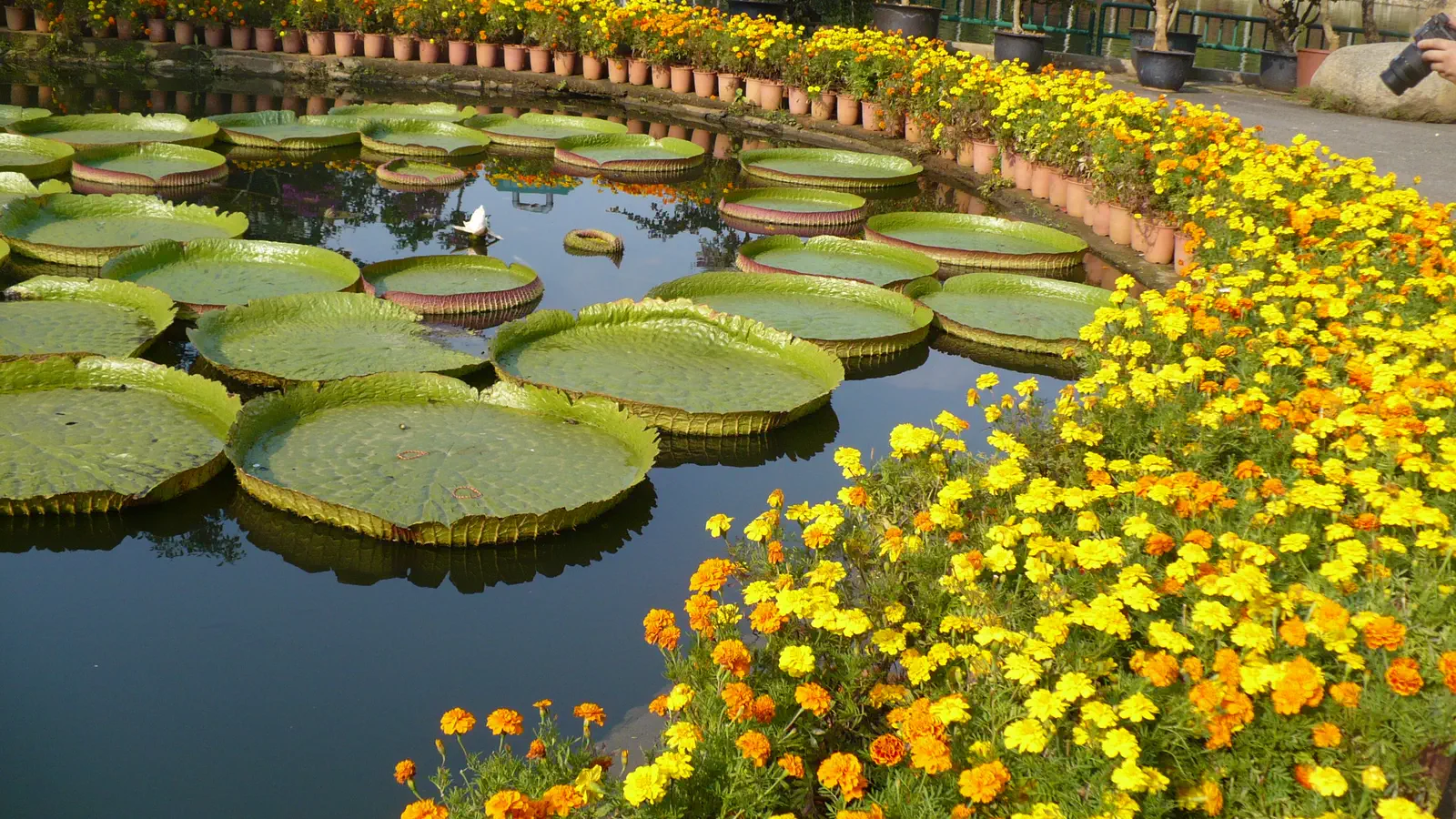
The garden is organised into over 40 themed sections: a tropical rain forest section with original old-growth trees, a palm garden, a bamboo garden (one of the largest in the world), a tropical fruit collection, a medicinal-plant garden, and an aquatic plant section among others. The Luosuo River wraps around three sides of the peninsula; boat crossings and boardwalks connect sections across the water. Research facilities — laboratories, seed banks, a herbarium — occupy parts of the site but are separated from the visitor zone. The garden is still an active scientific institution, and visiting researchers are sometimes visible in the field sections.
For the general visitor, the dense tropical plant diversity — trees with buttress roots, strangler figs, pitcher plants, 100-year-old banyan specimens — is the primary draw. The garden is dramatically different in atmosphere from any botanical garden in northern or central China. Combine with the Wild Elephant Valley (about an hour north of Menglun) and Dai-minority villages near Jinghong for a coherent three-day Xishuangbanna itinerary. The region is most comfortable October through April; the rainy season from May to September brings humidity and leeches on forest paths.
How to get there
Fly Kunming to Jinghong, then bus or driver to Menglun.
When to visit
October–April (drier).
Other attractions in Xishuangbanna
Other natural sites in China
- Badain Jaran Desert — Lakes and Dunes巴丹吉林沙漠—沙山湖泊群
UNESCO · UNESCO Natural World Heritage site in Inner Mongolia — the third largest desert in China, featuring some of the world's tallest stationary dunes and a unique network of freshwater and saline lakes sustained by a still-unexplained subterranean water system.
- China Danxia中国丹霞
UNESCO · UNESCO Natural World Heritage site — a serial property of six Danxia landscapes across six provinces, representing China's defining red-cliff-and-pillar sandstone landform type, including Danxia Mountain, Zhangye, Taining and Langshan.
- Crescent Lake & Mingsha Mountain月牙泉与鸣沙山
Spring-fed crescent-shaped lake at the foot of 250m sand dunes, 5 km south of Dunhuang. Camel rides, sand-sledding, sunset viewing.
- Daocheng Yading Nature Reserve稻城亚丁
A remote highland sanctuary in south-western Sichuan centred on three sacred snow peaks venerated by Tibetan Buddhism, often called the 'last Shangri-La'.
- Dianchi Lake Kunming滇池
The largest freshwater lake in Yunnan at 300 km², historically the scenic centrepiece of the Kunming basin and now being restored after decades of water-quality degradation.
- Erhai Lake洱海
250 km² freshwater lake east of Dali Old Town. 130 km cycling loop; Bai-minority lakeside villages on the eastern shore.
- Fanjingshan梵净山
UNESCO · UNESCO Natural World Heritage site in Guizhou — an isolated mountain island rising from subtropical forest, home to two critically endangered endemic species: the Guizhou snub-nosed monkey and the Fanjingshan fir.
- Hailuogou Glacier National Park海螺沟冰川
The lowest-altitude glacier accessible in Asia, flowing from the slopes of Mount Gongga down through a bamboo and subtropical forest valley to just 2,980 m above sea level.
Frequently asked questions
- How much does Xishuangbanna Tropical Botanical Garden cost to visit?
- Adult entry to Xishuangbanna Tropical Botanical Garden is ¥80, ¥40 for children.
- When is Xishuangbanna Tropical Botanical Garden open?
- Xishuangbanna Tropical Botanical Garden opening hours: 7:30am–6pm.
- How long do you need at Xishuangbanna Tropical Botanical Garden?
- Allow 4–8 hours for Xishuangbanna Tropical Botanical Garden. Add buffer time if you plan to visit at peak season or include nearby sights in the same trip.
- When is the best time to visit Xishuangbanna Tropical Botanical Garden?
- October–April (drier).
- How do you get to Xishuangbanna Tropical Botanical Garden?
- Fly Kunming to Jinghong, then bus or driver to Menglun.
Spotted something out of date? Submit a correction.
Research
Cross-checked against primary sources
Verified
Address, hours, fees confirmed at the date shown
Updated
Re-verified periodically; corrections welcome