Natural site · YUNNAN
Erhai Lake
洱海 · Ěrhǎi
About
250 km² freshwater lake east of Dali Old Town. 130 km cycling loop; Bai-minority lakeside villages on the eastern shore.
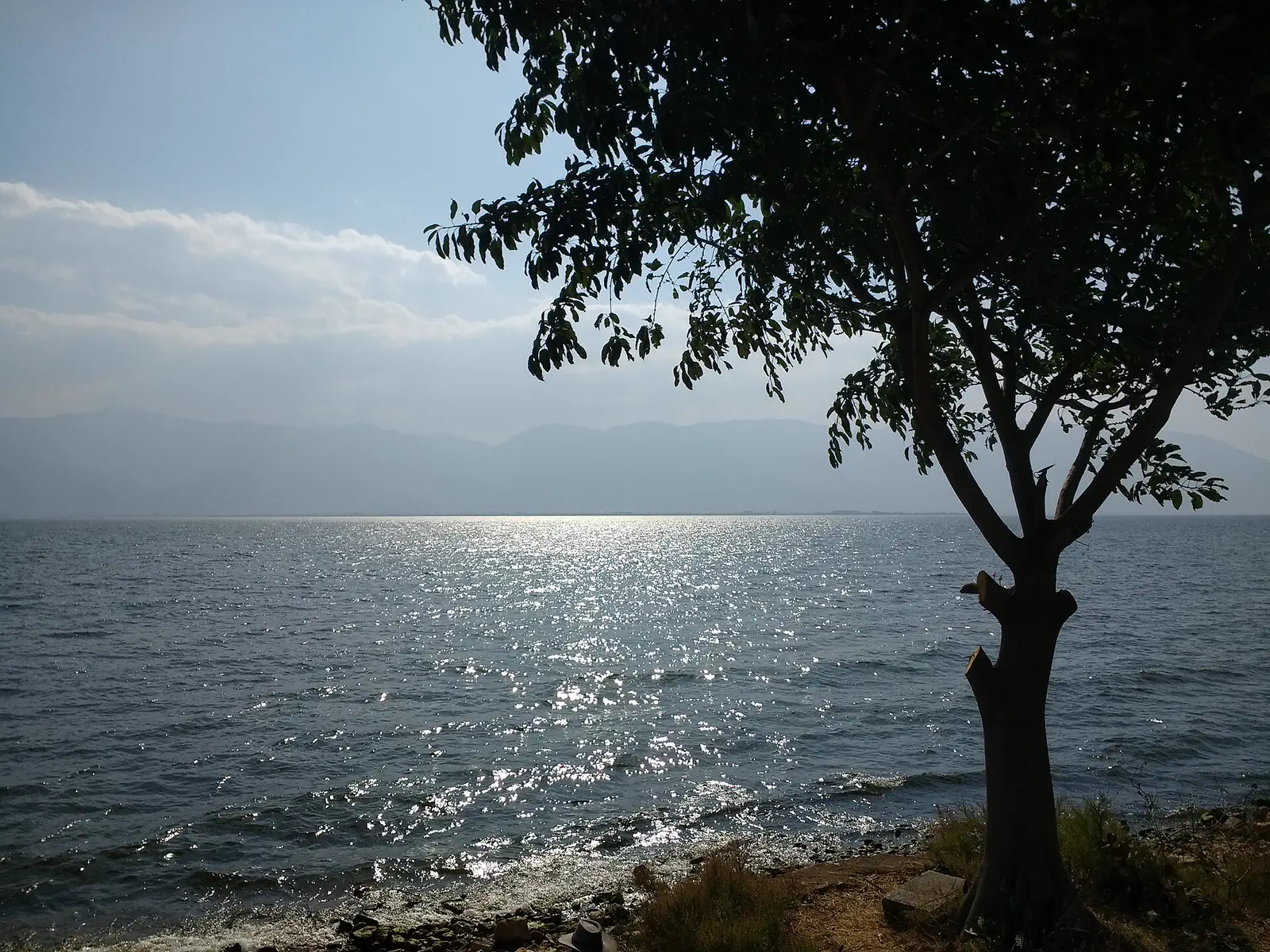
Erhai — which translates as 'Ear Sea', from the lake's shape when viewed from the Cangshan ridgeline above — is the second-largest lake in Yunnan, covering approximately 250 square kilometres in the Dali basin between the Cangshan Mountains to the west and lower hills to the east. It is the defining geographical feature of the Dali region; most of what makes Dali worth visiting is organised around or oriented toward the lake.
The Bai minority have lived around Erhai's shores for over a thousand years, and their villages — particularly on the eastern and northern shores — preserve the most intact traditional Bai architecture outside of Dali Old Town. Xizhou village, 18 kilometres north of Dali, has a well-preserved core of 'three rooms with a screen wall' Bai courtyard houses. Zhoucheng, further north, is the centre of Bai tie-dyeing craft. Shuanglang, on a peninsula on the eastern shore, has become a popular artist and café colony with lakeside guesthouses.
Cycling is the primary way to experience the lake. A 130-kilometre circuit follows the shoreline on a well-maintained dedicated path — the full circuit takes one to two days, with overnight accommodation in lakeside villages. Shorter partial loops from Dali Old Town — north to Xizhou and back, or east across the lake on a ferry and south to Wase market — fill a half-day. Boat trips from Dali's Cai Village pier cross to Heavenly Mirror Pavilion and the smaller islands. The lake surface is at its most photogenic in the mornings of March through May, when the Cangshan snow peaks reflect clearly in calm water. The lake is a freshwater source and has been subject to pollution restrictions on restaurant boats and lakeside development since the late 2010s; some previously accessible lakeshore sections have been fenced for ecological recovery.
How to get there
Bicycle, e-bike, or driver from Dali Old Town.
When to visit
March–May for clear skies.
Other attractions in Dali
Itineraries featuring this site
- China hot springs and wellness in 10 days
10d · Beijing, then Tengchong's volcanic hot springs in Yunnan, and Beidaihe's seaside recovery on the return.
- Yunnan loop — Kunming, Dali, Lijiang, Shangri-La
10d · The northwest Yunnan circuit through Bai, Naxi and Tibetan culture.
- First-timer China — 14 days with Yunnan loop
14d · Two weeks covering the Beijing–Xi'an–Shanghai circuit plus a Yunnan extension through Kunming, Dali and Lijiang — the combination that most first-time visitors leave wishing they had done.
- Yunnan deep loop — Kunming to Tengchong, 14 days
14d · Fourteen days through the full breadth of Yunnan: Kunming, Dali, Lijiang, Shangri-La, the Yuanyang terraces, Jianshui and the geothermal fields of Tengchong — the province's different climates, altitudes and minorities in one loop.
Other natural sites in China
- Badain Jaran Desert — Lakes and Dunes巴丹吉林沙漠—沙山湖泊群
UNESCO · UNESCO Natural World Heritage site in Inner Mongolia — the third largest desert in China, featuring some of the world's tallest stationary dunes and a unique network of freshwater and saline lakes sustained by a still-unexplained subterranean water system.
- China Danxia中国丹霞
UNESCO · UNESCO Natural World Heritage site — a serial property of six Danxia landscapes across six provinces, representing China's defining red-cliff-and-pillar sandstone landform type, including Danxia Mountain, Zhangye, Taining and Langshan.
- Crescent Lake & Mingsha Mountain月牙泉与鸣沙山
Spring-fed crescent-shaped lake at the foot of 250m sand dunes, 5 km south of Dunhuang. Camel rides, sand-sledding, sunset viewing.
- Daocheng Yading Nature Reserve稻城亚丁
A remote highland sanctuary in south-western Sichuan centred on three sacred snow peaks venerated by Tibetan Buddhism, often called the 'last Shangri-La'.
- Dianchi Lake Kunming滇池
The largest freshwater lake in Yunnan at 300 km², historically the scenic centrepiece of the Kunming basin and now being restored after decades of water-quality degradation.
- Fanjingshan梵净山
UNESCO · UNESCO Natural World Heritage site in Guizhou — an isolated mountain island rising from subtropical forest, home to two critically endangered endemic species: the Guizhou snub-nosed monkey and the Fanjingshan fir.
- Hailuogou Glacier National Park海螺沟冰川
The lowest-altitude glacier accessible in Asia, flowing from the slopes of Mount Gongga down through a bamboo and subtropical forest valley to just 2,980 m above sea level.
- Heavenly Lake (Tianchi)天池
Glacial lake at 1,910m beneath Mt Bogeda, 100 km east of Urumqi. The most-visited natural attraction in Xinjiang.
Frequently asked questions
- How much does Erhai Lake cost to visit?
- Entry to Erhai Lake is free. Lake free; boat tours ¥100–¥150.
- When is Erhai Lake open?
- Erhai Lake opening hours: Lake 24/7. Boat trips 8am–5pm.
- How long do you need at Erhai Lake?
- Allow 4–24 hours for Erhai Lake. Add buffer time if you plan to visit at peak season or include nearby sights in the same trip.
- When is the best time to visit Erhai Lake?
- March–May for clear skies.
- How do you get to Erhai Lake?
- Bicycle, e-bike, or driver from Dali Old Town.
Spotted something out of date? Submit a correction.
Research
Cross-checked against primary sources
Verified
Address, hours, fees confirmed at the date shown
Updated
Re-verified periodically; corrections welcome