Religious site · SHANGHAI
Longhua Temple and Pagoda
龙华寺 · Lónghuá Sì
About
Shanghai's oldest Buddhist temple complex, with the city's only surviving classical pagoda. Active monastery; Lunar New Year bell-striking ceremony.
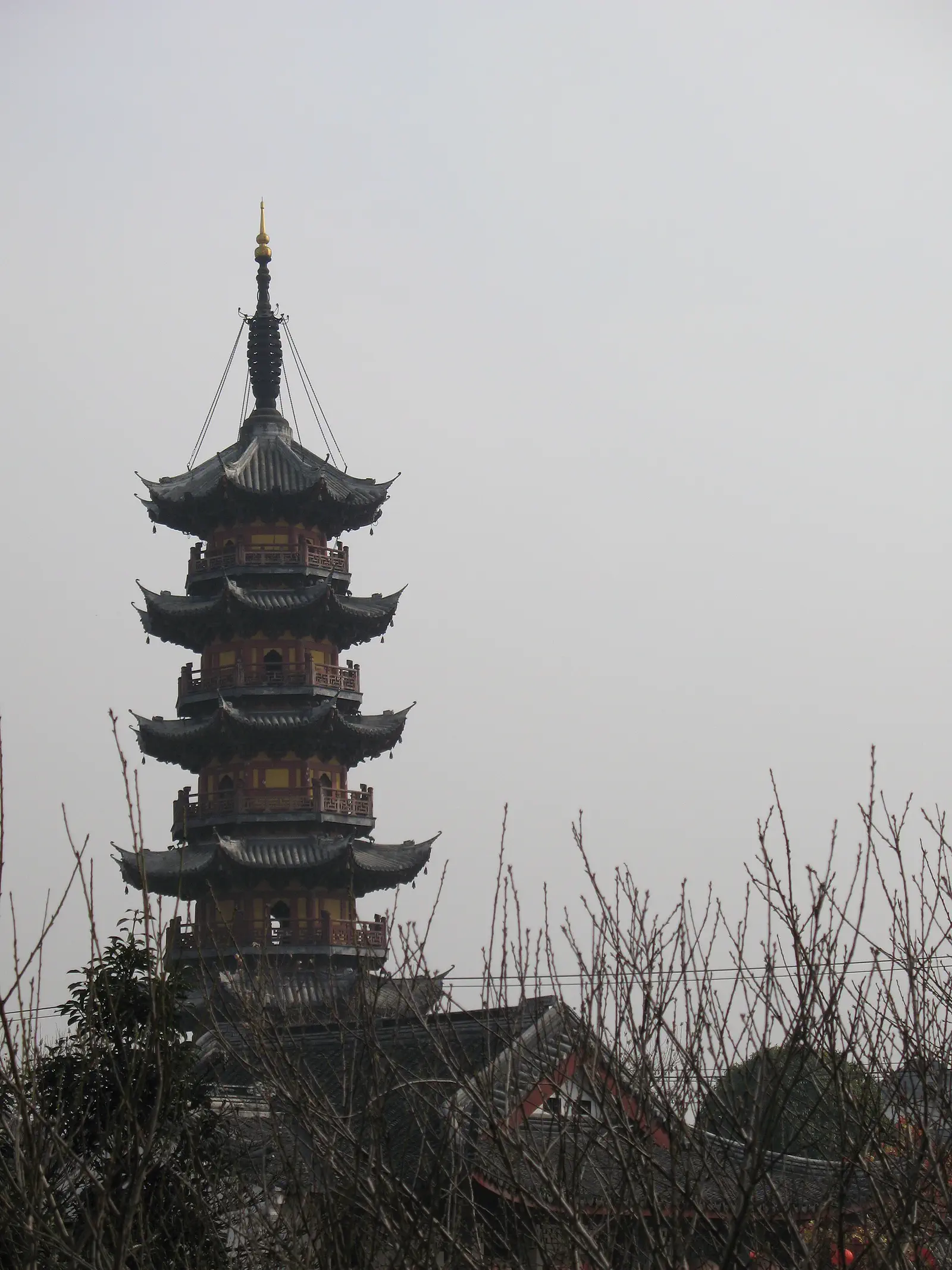
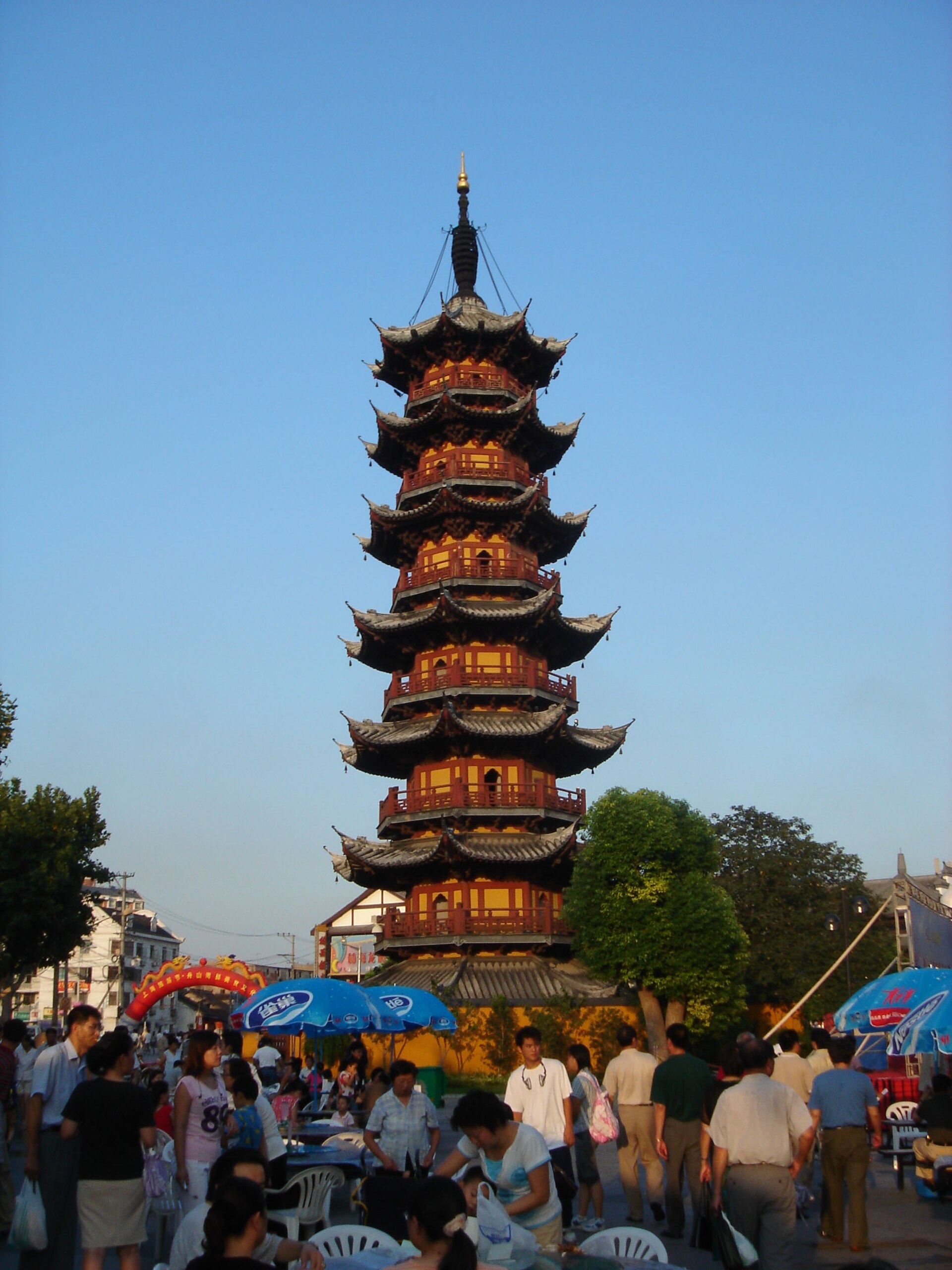
Longhua Temple sits in the city's southern Xuhui district and traces its founding to the Three Kingdoms period — tradition holds it was established in 247 CE, though no physical structure from that era survives. The complex was rebuilt repeatedly through the Tang, Song, and Ming dynasties; the current hall arrangement is primarily Qing-era reconstruction. The 7-storey octagonal brick pagoda dates in its present form to the Song dynasty (977 CE) and is the only major surviving classical pagoda in Shanghai — a rare piece of pre-modern religious architecture in a city that lost much of its historic fabric to 20th-century development.
The temple remains an active Chan Buddhist monastery and is not a museum set-piece. Morning ritual chanting can be heard from the entrance courtyard. The grounds are broad and organised around five successive gate-halls leading from the Maitreya Hall at the front through to the Tri-Precious Hall at the rear. The temple grounds include a plum-blossom garden, which is at its best in February. Adjacent to the complex is Longhua Martyrs' Cemetery, where Communists executed by the Kuomintang in the late 1920s are commemorated — a sombre counterpoint to the religious site.
The Lunar New Year bell-striking ceremony (the 108 bell tolls, one for each earthly affliction in Buddhist teaching) is a Shanghai institution, broadcast on city television and drawing large crowds. Outside this period, the temple is most peaceful on weekday mornings. Entry fees are low and photography of the grounds is generally permitted, though the main shrine halls restrict cameras.
How to get there
Metro Line 12 to Longhua.
When to visit
Early morning weekday.
History and context
Founded in 242 CE under the Kingdom of Wu during the Three Kingdoms period, Longhua is among the oldest religious sites in the Yangtze delta. The current complex is a Song-dynasty reconstruction with subsequent Ming and Qing rebuilds — little of the original fabric survives. The brick pagoda dates in its present form to the Northern Song (977 CE) and is one of the oldest surviving pagodas in Shanghai. The temple came through the Cultural Revolution partly intact, though ritual life was suspended for over a decade.
What the visit is like
Allow 1–2 hours. This is an active Chan monastery — worshippers use the halls for prayer and offerings, so keep voices low and avoid crossing between someone and an altar. Entry is a small fee (¥10). Five halls are arranged on a single north-south axis: Maitreya Hall, Heavenly Kings Hall, Grand Hall, Three Sages Hall and the Abbot's Hall. Come before 11am to avoid the burial-market crowd flowing in from the neighbouring Longhua Cemetery.
Photography
The exterior pagoda is the classic shot — the best angle is from the western approach along Longhua Road, where the pagoda frames against the temple roofs. Photography inside worship halls is limited and prohibited outright in some; look for posted notices. No flash near lacquered altars or gilded statues. Drone flight is strictly banned across the temple grounds and adjacent cemetery. Morning light (before 10am) gives the brick pagoda its warmest tone.
Overlooked details
The bell tower on the eastern side is still rung at dawn and dusk — worth timing a visit around. The Meditation Cliff calligraphy in the west courtyard is easily missed; look for the carved characters on the rock face. The Longhua Fair (龙华庙会) in March is one of the oldest surviving Buddhist temple fairs in the Yangtze region. Monks run a small medicinal-herb shop near the rear halls selling traditional Chinese medicine preparations.
Where to eat nearby
The temple's own vegetarian hall serves noodles and simple Buddhist cuisine at fixed hours (roughly 11am–1pm). The Longhua Cemetery restaurant nearby is surprisingly good — a serious Shanghainese kitchen catering to visitors after grave-tending. For wider options head 15 minutes north on Metro Line 11 or 12 to Xujiahui — a major shopping district with everything from Din Tai Fung to street-food courts. Avoid the immediate temple-gate stalls.
Common misconceptions
It is not the largest temple in China — that claim belongs to sites like Nanshan or Famen. Longhua is Shanghai's largest and oldest surviving temple. The pagoda is not accessible to climb — it is a solid brick structure without an interior staircase, unlike the timber-framed pagodas of Xi'an or Suzhou. The Longhua Fair is a Buddhist religious festival tied to the temple calendar — not a general market or trade fair, though food and craft stalls do appear alongside it.
Gallery
Other attractions in Shanghai
Other religious sites in China
- Big Wild Goose Pagoda大雁塔
Tang-dynasty Buddhist pagoda, built 652 CE to house the sutras brought back by Xuanzang. 64m, seven storeys, climbable.
- Donglin Temple (East Forest Monastery)东林寺
One of the most important Buddhist monasteries in Chinese history, founded in 386 CE at the foot of Mount Lu and considered the birthplace of Pure Land Buddhism in China.
- Drepung Monastery哲蚌寺
UNESCO · Once the largest monastery in the world (10,000+ monks). 8 km west of Lhasa. Active Gelugpa monastery; debating courtyard sessions in the afternoon.
- Famen Temple法门寺
1,700-year-old Buddhist temple 110 km west of Xi'an. The 1987 discovery of a finger relic of the Buddha in its underground crypt was a major archaeological event.
- Ganden Monastery甘丹寺
The mother monastery of the Gelug school of Tibetan Buddhism, founded in 1409 by Tsongkhapa atop Wangbur Mountain 47 km east of Lhasa, offering sweeping plateau views and an important kora trail.
- Gyantse Kumbum Stupa江孜白居寺
A nine-storey mandala stupa built in 1427 containing 108 chapels on multiple floors, considered one of the finest examples of Tibetan religious architecture and the most important landmark in Gyantse.
- Hanging Temple悬空寺
1,500-year-old wooden temple complex pinned to the side of a 75m cliff at Mt Heng. Engineered with horizontal posts driven into the rock face.
- Jade Buddha Temple玉佛寺
Active urban Buddhist temple in central Shanghai. Famous for two life-size jade Buddhas brought from Burma in 1882.
Frequently asked questions
- How much does Longhua Temple and Pagoda cost to visit?
- Adult entry to Longhua Temple and Pagoda is ¥10, ¥0 for children.
- When is Longhua Temple and Pagoda open?
- Longhua Temple and Pagoda opening hours: 7am–4:30pm.
- How long do you need at Longhua Temple and Pagoda?
- Allow 1–2 hours for Longhua Temple and Pagoda. Add buffer time if you plan to visit at peak season or include nearby sights in the same trip.
- When is the best time to visit Longhua Temple and Pagoda?
- Early morning weekday.
- How do you get to Longhua Temple and Pagoda?
- Metro Line 12 to Longhua.
Spotted something out of date? Submit a correction.
Research
Cross-checked against primary sources
Verified
Address, hours, fees confirmed at the date shown
Updated
Re-verified periodically; corrections welcome