Historic site · YUNNAN · UNESCO
Lijiang Old Town (Dayan)
丽江古城 · Lìjiāng Gǔchéng
About
1,000-year-old Naxi old town in northwest Yunnan. UNESCO-listed since 1997. Cobbled lanes, water canals, the Naxi minority's pictographic Dongba script.
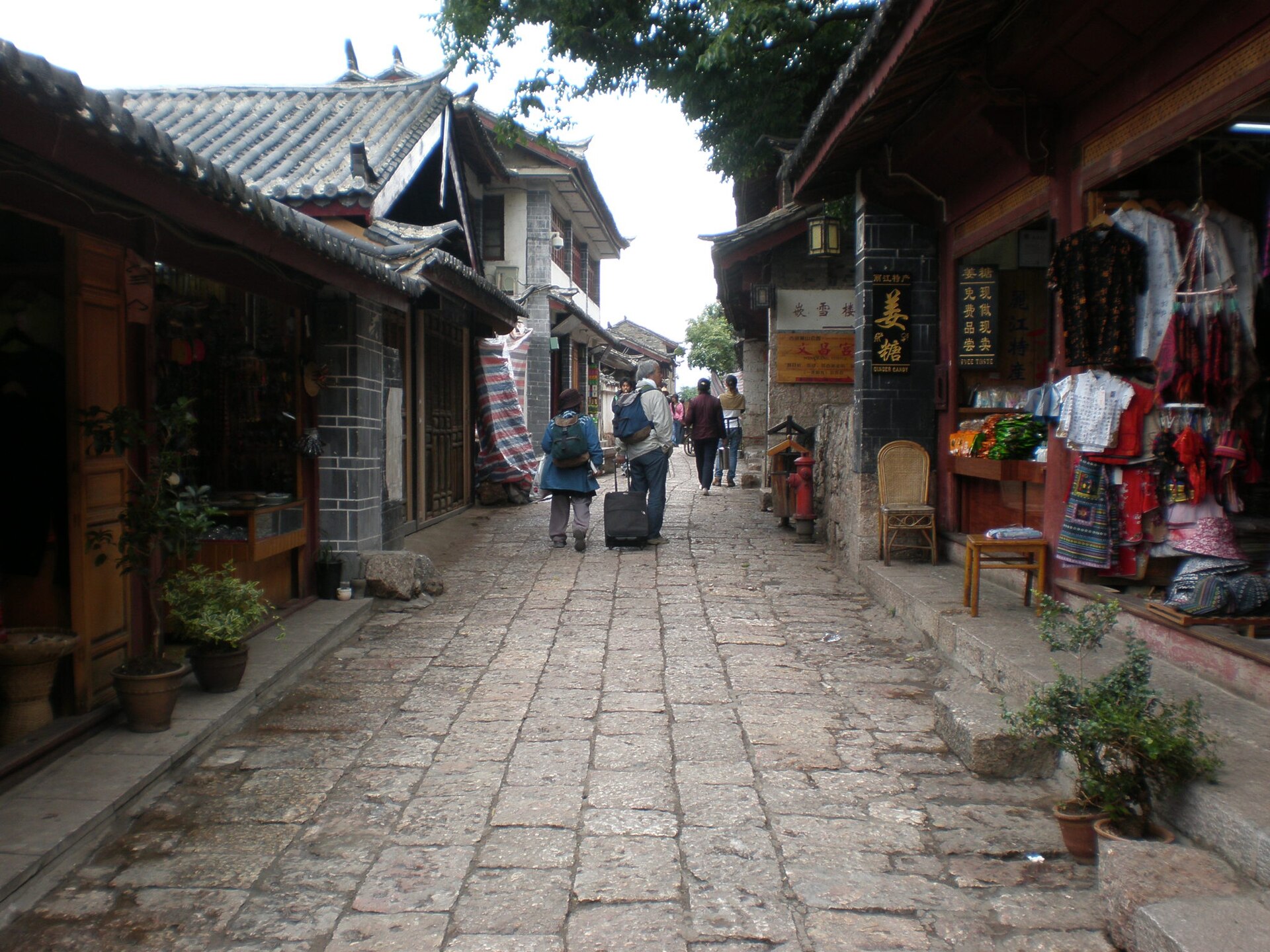
Lijiang Old Town (Dayan) is the centre of a UNESCO World Heritage Site that includes the Naxi-village complexes of Shuhe and Baisha. The town has been inhabited by the Naxi people, an ethnic minority with their own pictographic script (Dongba, the only living pictographic script in the world), for around a thousand years. The cobbled lanes follow the contours of the small river system that runs through the old town, with the Black Dragon Pool (Heilongtan) to the north framing the Jade Dragon Snow Mountain on clear mornings.
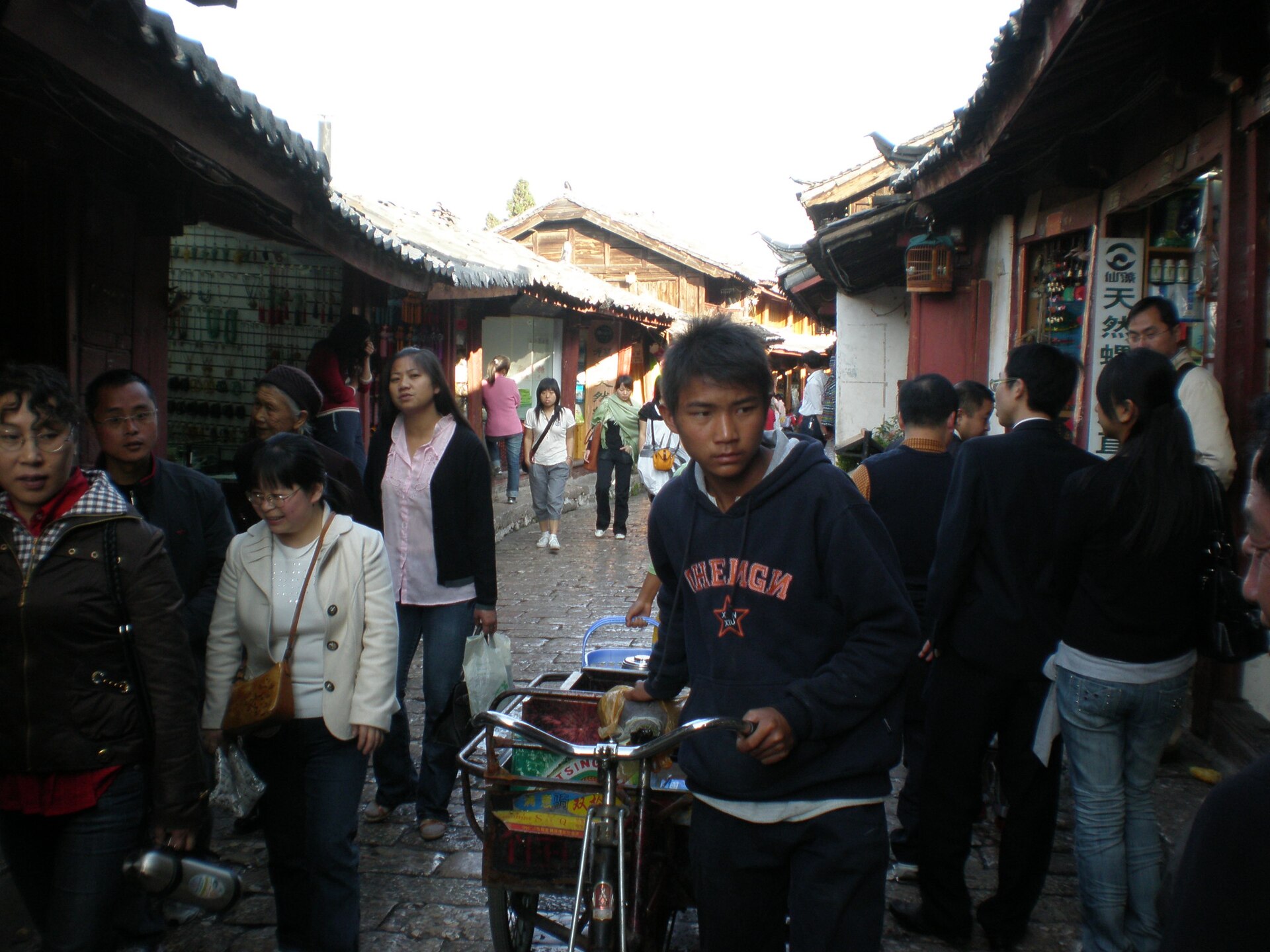
The Old Town has become heavily commercialised — high-tariff cafes and souvenir shops dominate the main streets — but the side lanes still retain quieter Naxi family courtyards, and the smaller Shuhe Old Town just north is much calmer.
How to get there
Walk from any city accommodation. Lijiang Sanyi airport bus to the Old Town North Gate.
When to visit
Early morning or evening to avoid daytime tour groups.
History and context
The Naxi people — descended from Qiang groups who migrated south from the Tibetan plateau — settled the Lijiang basin over a thousand years ago. Dayan grew under the hereditary Mu chieftains during the Ming and Qing periods as a staging post on the Tea Horse Road linking Yunnan to Tibet. A 7.0-magnitude earthquake in February 1996 flattened much of the town — the reconstruction that followed used traditional timber-and-tile methods and led to the 1997 UNESCO World Heritage listing.
What the visit is like
The old town is a maze — cobblestone lanes fork without warning and the main landmarks are easier to reach by following the water channels underfoot than by reading a map. Altitude sits at around 2400 metres — mild but noticeable if you've flown in from sea level. Sifang Street and the bar strip along Xinhua Street are busy from mid-morning to late evening; the northern and western lanes stay quiet. Day-trippers see the shell — staying inside the walls gives you the early-morning and post-dinner hours when the town empties.
Photography
Naxi courtyard homestays with grey tile roofs and carved wooden lintels photograph well in the soft light before 9am. Sifang Street after dark is lit by red lanterns strung across the lanes — long exposures handle the mixed light better than flash. The climb up Lion Hill to the Wangu Pagoda gives an elevated view over the tile roofs towards Jade Dragon Snow Mountain on clear mornings. Look for Dongba pictographic carvings on doorframes and shop signs. Drone flying is banned inside the old town.
Overlooked details
The Dongba pictographic script — the only living pictographic writing system — appears on shop signs, doorframes and menus throughout the town; a Naxi shopkeeper will usually explain a character if asked. The Mu Family Residence, the restored seat of the hereditary chieftains, sits tucked south of the main square and is often walked past. The Naxi Ancient Music Hall runs evening concerts of an orchestral tradition — mostly Taoist ritual music — that survived here after dying out elsewhere in China.
UNESCO inscription
“The Old Town of Lijiang, which is perfectly adapted to the uneven topography of this key commercial and strategic site, has retained a historic townscape of high quality and authenticity. Its architecture is noteworthy for the blending of elements from several cultures that have come together over many centuries. Lijiang also possesses an ancient water-supply system of great complexity and ingenuity that still functions effectively today.”
Where to eat nearby
Naxi baba — a dense flatbread cooked with rose petal jam or ham — is sold from small ovens along the lanes. Yak butter tea takes some getting used to. Chicken hot pot, usually with wild mushrooms in season, is the standard sit-down meal — the Beimen (North Gate) area has a cluster of Naxi-run places that locals use. The strip along Xinhua Street inside the walls is where tour-group restaurants concentrate — prices are higher and turnover is faster.
Common misconceptions
Lijiang Old Town is not one town — the UNESCO listing covers Dayan (the main old town), Shuhe (a quieter Naxi village about 4km north) and Baisha (a rural village at the foot of Jade Dragon Snow Mountain). Most of the timber-and-tile buildings you see are post-1996 reconstruction rather than genuinely ancient — the methods are traditional but the wood is not. The Naxi are a living community of around 300,000 people — matrilineal traditions, the Dongba religion and the pictographic script are still practised alongside the tourism economy.
Gallery
Other attractions in Lijiang
Itineraries featuring this site
- China honeymoon in 10 days
10d · Shanghai to Hangzhou to Yangshuo to Lijiang — four cities chosen for their scenery, pace, and relative ease.
- Yunnan loop — Kunming, Dali, Lijiang, Shangri-La
10d · The northwest Yunnan circuit through Bai, Naxi and Tibetan culture.
- First-timer China — 14 days with Yunnan loop
14d · Two weeks covering the Beijing–Xi'an–Shanghai circuit plus a Yunnan extension through Kunming, Dali and Lijiang — the combination that most first-time visitors leave wishing they had done.
- Slow travel China — 14 days, fewer cities, deeper neighbourhoods
14d · Fourteen days in just three cities — Xi'an, Chengdu and Lijiang — spending four to five nights in each to move beyond the headline sights into daily rhythms, local markets and neighbourhood life.
Other historic sites in China
- Ancient Villages of Southern Anhui — Xidi and Hongcun皖南古村落—西递、宏村
UNESCO · UNESCO-listed pair of Ming-Qing Huizhou merchant villages in southern Anhui, renowned for whitewashed walls, inky horsehead gables and moon-shaped ponds.
- Anqing Zhenfeng Pagoda安庆振风塔
A seven-storey Ming Dynasty pagoda standing on the bank of the Yangtze River in Anqing, considered one of the finest riverside pagodas in southern China and long used as a navigation landmark by Yangtze river pilots.
- Archaeological Ruins of Liangzhu City良渚古城遗址
UNESCO · UNESCO-listed archaeological site in Hangzhou preserving the remains of a 5,000-year-old city with a sophisticated water-management system, jade ritual culture and social hierarchy — regarded as one of the earliest state-level societies in East Asia.
- Capital Cities and Tombs of the Ancient Koguryo Kingdom高句丽王城、王陵及贵族墓葬
UNESCO · UNESCO-listed capital cities and royal tombs of the Koguryo Kingdom in Jian, Jilin — the Chinese portion of a transnational heritage property shared with North Korea, representing one of the most powerful states of ancient East Asia.
- Classical Gardens of Suzhou (UNESCO)苏州古典园林
UNESCO · UNESCO-listed collection of private gardens in Suzhou — four inscribed in 1997 and five more added in 2000 — representing the pinnacle of Chinese garden design through the refined integration of architecture, water, rock and plant.
- Danba Tibetan Watchtowers丹巴碉楼
Clusters of ancient stone watchtowers rising above Tibetan village complexes in the Dadu River valley, said to be among the oldest surviving examples of Tibetan defensive architecture.
- Drum Tower and Bell Tower鼓楼钟楼
Yuan-dynasty drum and bell towers that kept official time for imperial Beijing. Climbable; daily drum performances.
- Dujiangyan Irrigation System都江堰
UNESCO · 2,300-year-old irrigation system on the Min River. Still in use. UNESCO-listed jointly with Mt Qingcheng. Engineering rather than architecture, but one of the great works.
Other UNESCO World Heritage sites in China
- Ancient Villages of Southern Anhui — Xidi and Hongcun皖南古村落—西递、宏村
UNESCO-listed pair of Ming-Qing Huizhou merchant villages in southern Anhui, renowned for whitewashed walls, inky horsehead gables and moon-shaped ponds.
- Archaeological Ruins of Liangzhu City良渚古城遗址
UNESCO-listed archaeological site in Hangzhou preserving the remains of a 5,000-year-old city with a sophisticated water-management system, jade ritual culture and social hierarchy — regarded as one of the earliest state-level societies in East Asia.
- Badain Jaran Desert — Lakes and Dunes巴丹吉林沙漠—沙山湖泊群
UNESCO Natural World Heritage site in Inner Mongolia — the third largest desert in China, featuring some of the world's tallest stationary dunes and a unique network of freshwater and saline lakes sustained by a still-unexplained subterranean water system.
- Capital Cities and Tombs of the Ancient Koguryo Kingdom高句丽王城、王陵及贵族墓葬
UNESCO-listed capital cities and royal tombs of the Koguryo Kingdom in Jian, Jilin — the Chinese portion of a transnational heritage property shared with North Korea, representing one of the most powerful states of ancient East Asia.
- China Danxia中国丹霞
UNESCO Natural World Heritage site — a serial property of six Danxia landscapes across six provinces, representing China's defining red-cliff-and-pillar sandstone landform type, including Danxia Mountain, Zhangye, Taining and Langshan.
- Classical Gardens of Suzhou (UNESCO)苏州古典园林
UNESCO-listed collection of private gardens in Suzhou — four inscribed in 1997 and five more added in 2000 — representing the pinnacle of Chinese garden design through the refined integration of architecture, water, rock and plant.
- Couple's Retreat Garden耦园
UNESCO-listed Suzhou garden organised symmetrically around a central residence. Less crowded than the four most-visited gardens.
- Drepung Monastery哲蚌寺
Once the largest monastery in the world (10,000+ monks). 8 km west of Lhasa. Active Gelugpa monastery; debating courtyard sessions in the afternoon.
Frequently asked questions
- How much does Lijiang Old Town (Dayan) cost to visit?
- Entry to Lijiang Old Town (Dayan) is free. Old Town maintenance fee (¥80 valid for the duration of stay) is sometimes collected, sometimes not.
- When is Lijiang Old Town (Dayan) open?
- Lijiang Old Town (Dayan) opening hours: Streets 24/7. Maintenance fee booth daytime hours.
- How long do you need at Lijiang Old Town (Dayan)?
- Allow 4–8 hours for Lijiang Old Town (Dayan). Add buffer time if you plan to visit at peak season or include nearby sights in the same trip.
- When is the best time to visit Lijiang Old Town (Dayan)?
- Early morning or evening to avoid daytime tour groups.
- How do you get to Lijiang Old Town (Dayan)?
- Walk from any city accommodation. Lijiang Sanyi airport bus to the Old Town North Gate.
Spotted something out of date? Submit a correction.
Research
Cross-checked against primary sources
Verified
Address, hours, fees confirmed at the date shown
Updated
Re-verified periodically; corrections welcome