Itinerary · 10 days · balanced
Yunnan loop — Kunming, Dali, Lijiang, Shangri-La
The northwest Yunnan circuit through Bai, Naxi and Tibetan culture.
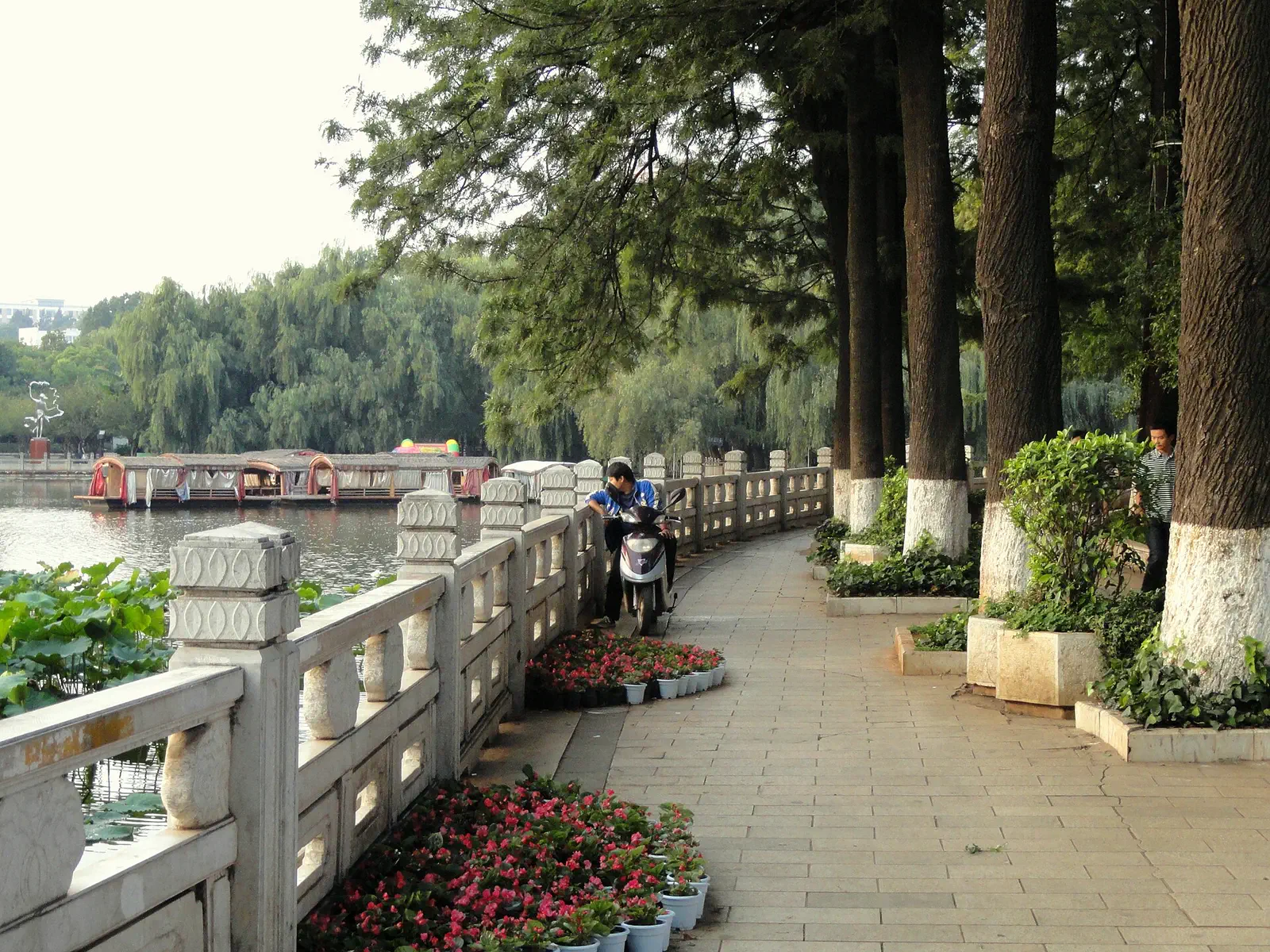
Ten days through northwest Yunnan's four major stops — Kunming, Dali, Lijiang, Shangri-La — following the ancient Tea Horse Road (茶马古道) corridor that once connected Yunnan's tea-producing lowlands with Tibet. Each city has a distinct ethnic character: Kunming is Han Chinese with a Yi and Bai hinterland; Dali is Bai culture and Erhai Lake; Lijiang is Naxi old town and the gateway to Tiger Leaping Gorge; Shangri-La (Deqin Prefecture) is Tibetan plateau country. The high-speed rail now connects Kunming to Lijiang (via Dali) in approximately 3 hours, removing the previously exhausting bus journeys. The Shangri-La connection remains by bus or local train — allow half a day. The Tiger Leaping Gorge hike (days 6–7) is one of the finest day-hike routes in Asia: the high road traverses 22 km along a cliff above the Jinsha River gorge with Jade Dragon Snow Mountain above. It requires reasonable fitness but no technical skills.
Day by day
Day 1 · kunming
Arrival, Stone Forest
Arrive at Kunming Changshui International Airport (KMG) and take the Shilin day trip. The Stone Forest (Shilin) is 90 km southeast of Kunming — a 270 million-year-old geological formation of limestone pinnacles, some 30m tall, scattered across 400 km² of Yunnan plateau. The site is a UNESCO Global Geopark. Return to Kunming for the evening, dinner near Green Lake.
Attractions: stone-forest
Day 2 · dali
HSR to Dali, Old Town walk
High-speed rail from Kunming South to Dali (approximately 2 hours, ¥90–¥150 second class). Dali Old Town (Dali Ancient City) is a Ming-dynasty walled town with marble-paved streets, Bai architecture, and the Three Pagodas 3 km to the north. Afternoon walk through the old town; tea in one of the cafés on Foreigners Street (Renmin Road). The Cangshan mountains rise immediately behind the town; the slope paths offer good views over Erhai Lake to the east.
Attractions: dali-three-pagodas
Day 3 · dali
Erhai Lake cycling
The Erhai Lake circuit — 150 km total but easily done in sections by bicycle — passes through Bai fishing villages, the architecturally distinctive Xizhou (with its intact courtyard houses), and the artists' colony at Shuanglang on the eastern shore. A morning half-circuit from Dali to Xizhou and back takes 4–5 hours by bicycle. Bicycle hire is available near the North Gate. The cormorant fishing boats still operate in the mornings on the lake's western shore.
Day 4 · lijiang
HSR to Lijiang, Old Town
Rail from Dali to Lijiang (approximately 1 hour, ¥60–¥80). Lijiang Old Town (Dayan) is a UNESCO World Heritage Site — a network of cobblestone lanes, wooden buildings, and running-water channels that forms one of the most complete surviving examples of Naxi architecture. The Black Dragon Pool (Heilongtan) Park gives the classic view of Jade Dragon Snow Mountain reflected in the pool. The Old Town is heavily touristified — shops and bars fill the ground floors — but the maze of side lanes above the main market area is quieter.
Attractions: lijiang-old-town
Day 5 · lijiang
Jade Dragon Snow Mountain
The Jade Dragon Snow Mountain (Yulong Xueshan) rises 5,596m above sea level, 30 km north of Lijiang. The cable car from Ganlanyuan reaches the Glacier Park at 4,506m — a high-altitude plateau with a permanent glacier and views of the main peak. Entry to the Glacier Park is limited; book tickets through the local management office or a hotel concierge. Altitude effects are real at 4,500m — walk slowly, don't overexert, and have a day of lower activity planned after this.
Attractions: jade-dragon-snow-mountain
Day 6 · lijiang
Tiger Leaping Gorge — start
Tiger Leaping Gorge (Hutiao Xia) is a 15 km gorge carved by the Jinsha River between Jade Dragon Snow Mountain and Haba Snow Mountain. The high road hike takes 2 days (22 km total). Day 1: taxi or bus from Lijiang to Qiaotou village (2 hours), then hike the high trail east. The path climbs from 1,800m to 2,600m in the first 5 km — this is the hardest section. The view from the 28 Bends switchbacks looking back across the gorge is the defining image of the hike. Overnight at the Halfway Guesthouse (¥100–¥150 per person).
Attractions: tiger-leaping-gorge
Day 7 · shangri-la
Tiger Leaping Gorge — finish, on to Shangri-La
Day 2 of the gorge hike: 12 km along the high road to Walnut Garden (Tina's Guest House area), then descend to the gorge floor and the ferry crossing point. The Gorge Hotel at Walnut Garden is the usual end point. After the hike, take a local bus or arranged vehicle north to Shangri-La (Zhongdian) — about 2 hours. The name 'Shangri-La' was officially assigned to Zhongdian in 2001 for tourism purposes; the Tibetan name Gyalthang is older.
Day 8 · shangri-la
Songzanlin Monastery and Pudacuo
Songzanlin Monastery (松赞林寺), 5 km north of Shangri-La, is one of the largest Tibetan Buddhist monasteries outside the Tibet Autonomous Region — the 'Little Potala' of Yunnan, dating from 1679. Active monastic community; approximately 700 monks. Pudacuo National Park (普达措), 22 km east of Shangri-La, is a protected plateau landscape of alpine lakes (Shudu Lake and Bita Lake), wetlands, and old-growth spruce forest. The boardwalk circuit takes about 3 hours.
Day 9 · shangri-la
Pudacuo / Napa Lake
Napa Lake (纳帕海) is a highland seasonal wetland 8 km west of Shangri-La, fed by snowmelt. In winter it is dry grassland grazed by yaks; in spring it floods to create a lake. The surrounding wetland area is important for migratory birds. For visitors without a specific bird list, the walk around the lake edge with the surrounding peaks is the main draw — at 3,260m, the plateau landscape and Tibetan pastoral scenery contrast sharply with the Yunnan valley country below.
Day 10 · kunming
Fly back, depart
Shangri-La has a small domestic airport (DIG) with flights to Kunming (45 minutes) and Chengdu. The Kunming connection allows onward international flights or connections to the rest of China. The flight from Shangri-La is the most scenic domestic route in Yunnan — the approach over the plateau and descent into the Kunming basin shows the dramatic altitude change.
Flight Shangri-La DIG → Kunming KMG, 45 min, ¥400–¥700.
Budget guide (CNY per day)
| Backpacker | ¥600 |
| Mid-range | ¥1300 |
| Comfortable | ¥3000 |
Per day per person. Tiger Leaping Gorge entrance ¥65; Jade Dragon Snow Mountain cable car ¥300; Songzanlin ¥115; Pudacuo ¥190. Domestic flight Shangri-La → Kunming ¥400–¥700.
Cities covered
Attractions covered
Other itineraries visiting Kunming
- Photography focus — Yunnan and Guilin, 10 days
10d · Ten days through two of China's most photogenic landscapes: Yunnan's terraced rice fields and highland villages, followed by the karst pinnacles and river mist of Guilin and Yangshuo.
- Tea trail — Hangzhou, Wuyishan and Yunnan, 10 days
10d · Ten days through three of China's most significant tea-growing regions: Longjing (Dragon Well) green tea in Hangzhou, Wuyi rock oolong in Fujian, and Pu'er aged tea in Yunnan — each with its own landscape and tea-house culture.
- First-timer China — 14 days with Yunnan loop
14d · Two weeks covering the Beijing–Xi'an–Shanghai circuit plus a Yunnan extension through Kunming, Dali and Lijiang — the combination that most first-time visitors leave wishing they had done.
- Yunnan deep loop — Kunming to Tengchong, 14 days
14d · Fourteen days through the full breadth of Yunnan: Kunming, Dali, Lijiang, Shangri-La, the Yuanyang terraces, Jianshui and the geothermal fields of Tengchong — the province's different climates, altitudes and minorities in one loop.
- First-timer China — 21 days with northwest Silk Road extension
21d · Three weeks across China: the classic eastern cities, a Yunnan highland loop, and a Silk Road extension through Gansu into the northwest — covering the range of what China actually contains.
- Three weeks deep — adds Yunnan and Tibet
21d · Two weeks comprehensive plus Yunnan loop (Kunming, Dali, Lijiang) and a Tibet permit-tour to Lhasa.