Natural site · GUANGXI
Li River cruise (Guilin to Yangshuo)
漓江 · Líjiāng
About
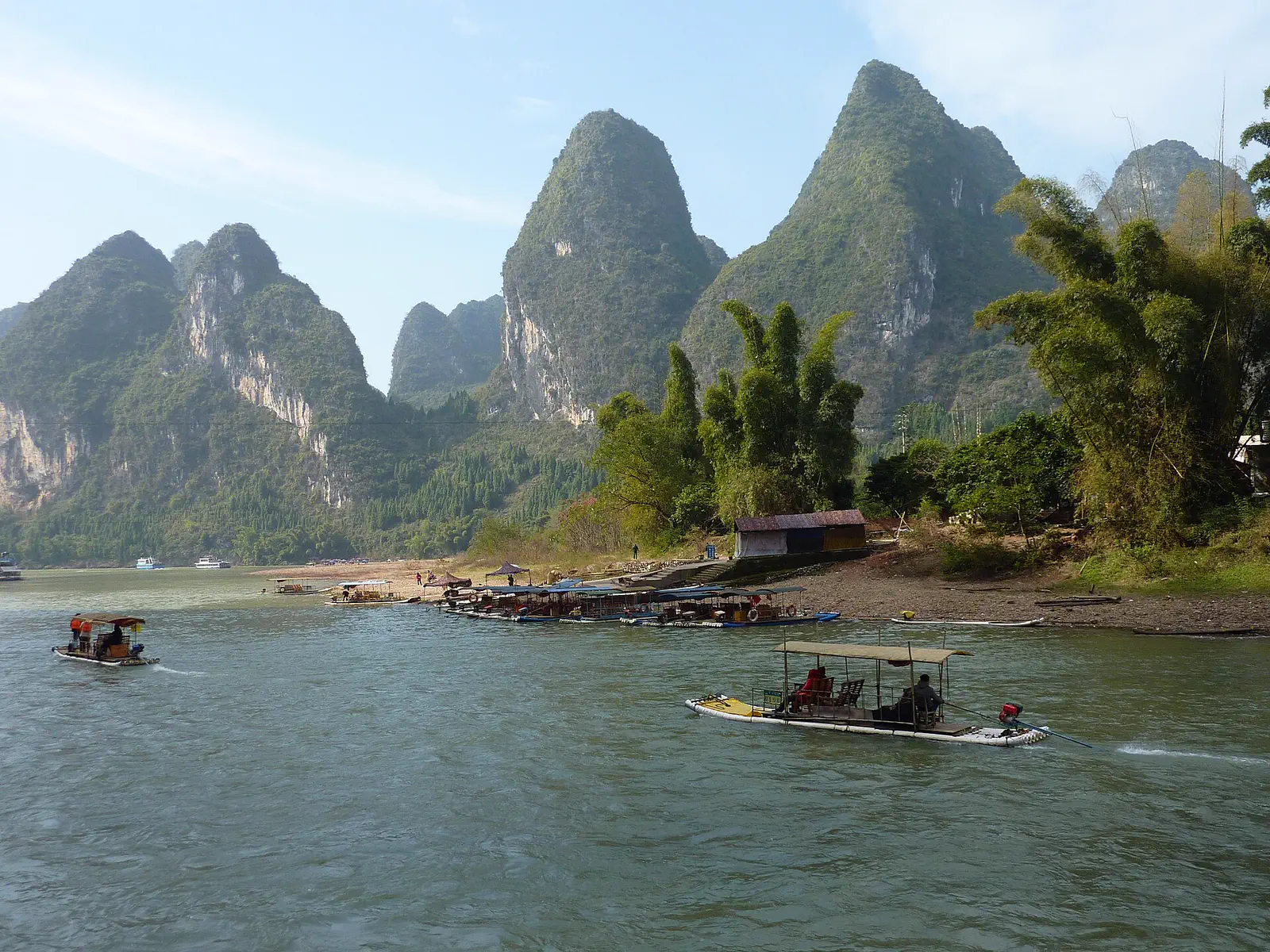
4-hour boat journey through the karst pinnacles between Guilin and Yangshuo — the most-photographed countryside in China, on the back of the ¥20 banknote.
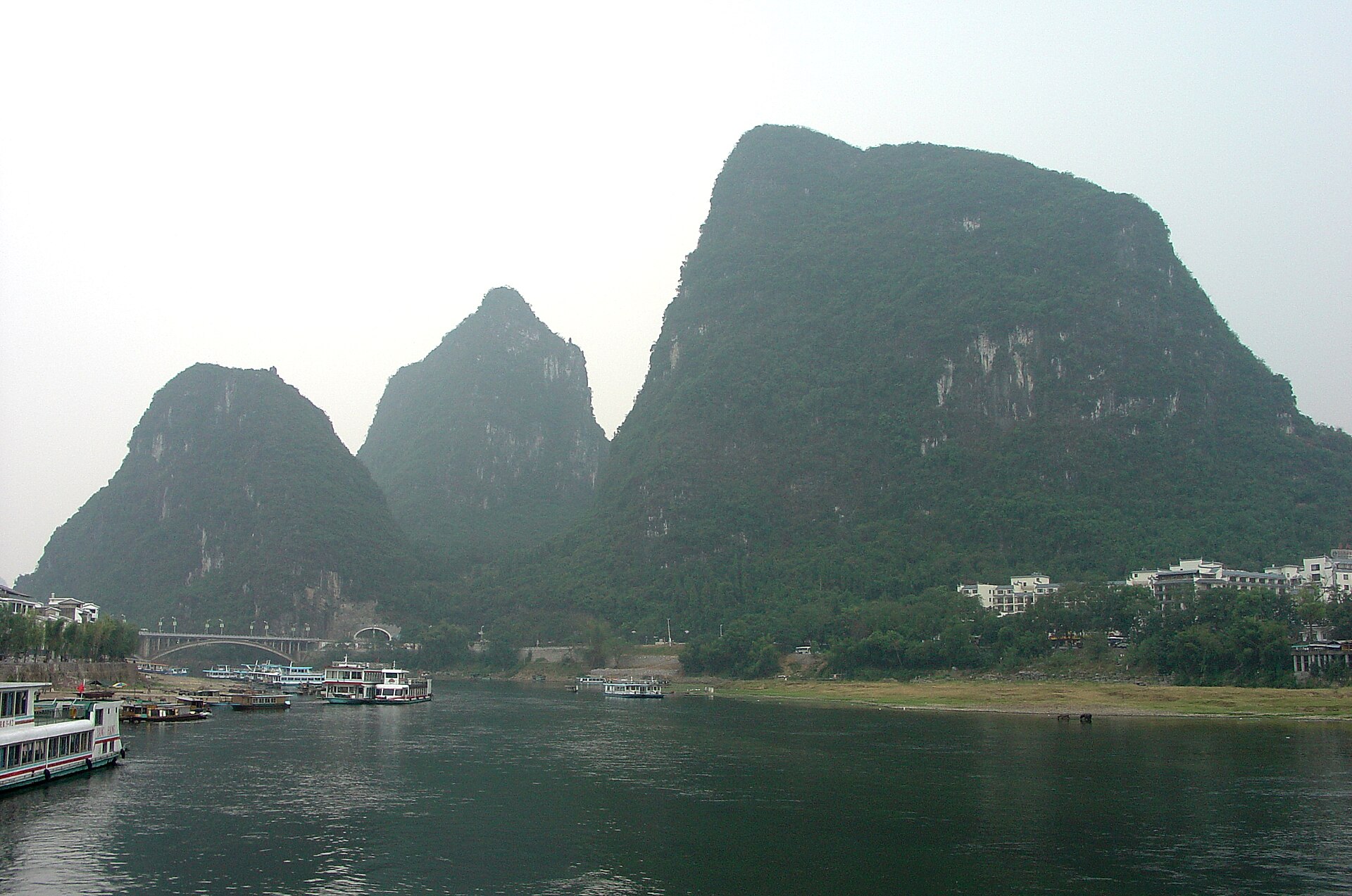
The Li River cruise from Guilin to Yangshuo covers 83 kilometres through a karst landscape of unusual density and scale — limestone pinnacles formed by millennia of water erosion that have dissolved the calcium carbonate rock into the characteristic steep-sided spires rising 100 to 200 metres from the valley floor and riverbanks. The specific stretch between Guilin and Yangshuo represents the most concentrated section of the Guilin karst landscape, which extends across a much larger area of Guangxi province and continues south to the Yangshuo basin. The Guilin-Yangshuo scenery is sufficiently canonical in Chinese cultural representation that it appears on the back of the ¥20 banknote — specifically the view at Yellow Cloth Shoal (Huangbu Tan), where a cluster of peaks reflects in the calm water.
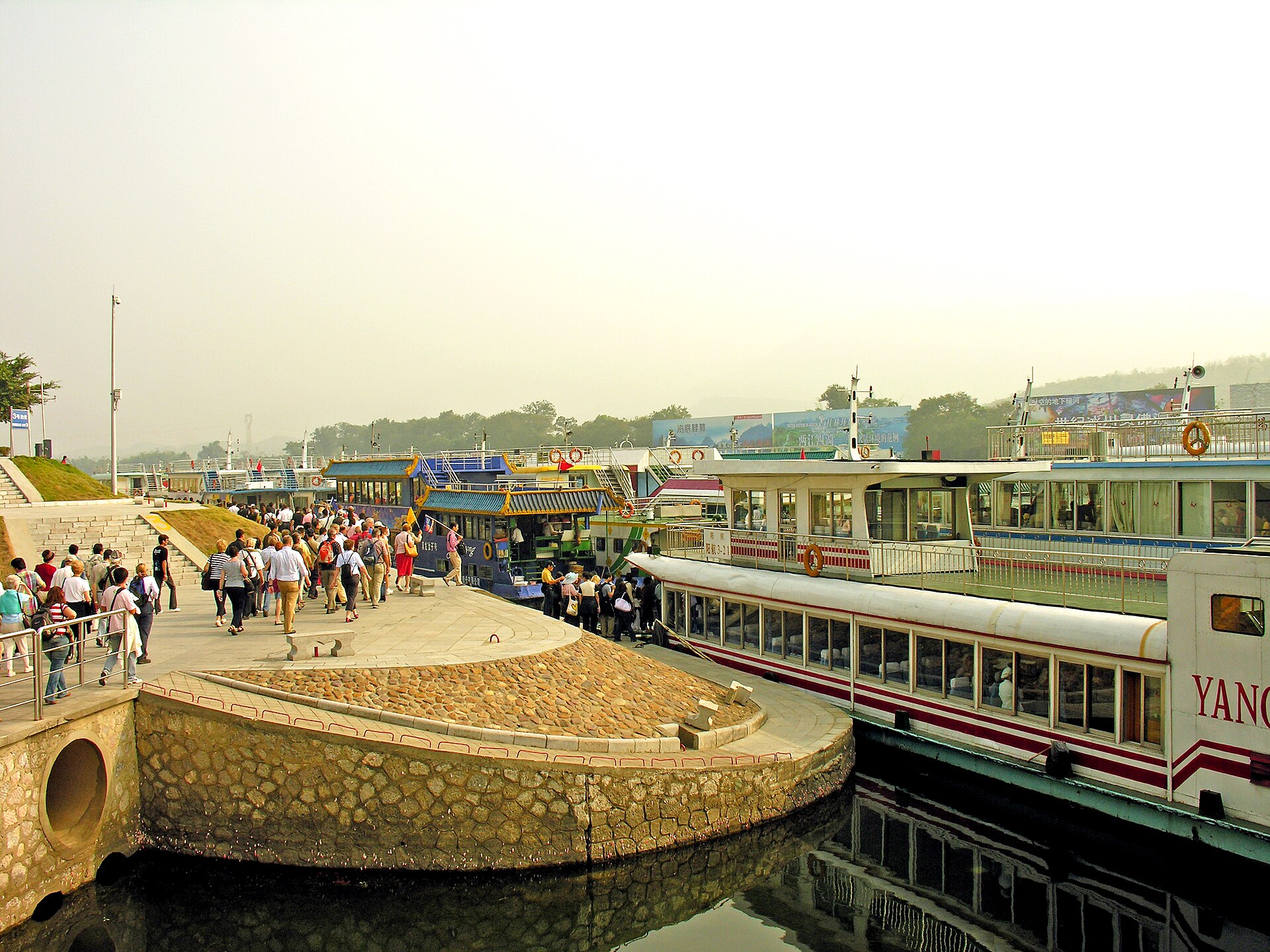
The river journey takes approximately four hours on the standard tourist boat, departing from Mopanshan dock south of Guilin in the morning. The boats are large, multi-deck vessels carrying several hundred passengers; the upper deck is the better position for views and photographs. The river runs south through the pinnacle landscape, with water buffalo visible on the banks and bamboo-raft fishermen occasionally on the water. In dry-season low water conditions (typically November to March), the cruise departs from the downstream point at Yangti rather than Guilin, shortening the journey — the most photogenic section of the river is in the central stretch around Xingping regardless of the starting point.
The standard cruise ends at Yangshuo, where the boat docks and passengers disperse into the town. Yangshuo is the more relaxed base for the Guilin karst area, with cycling routes, rock climbing, and the Yulong River bamboo-raft experience available as follow-on activities. Most travellers buy cruise tickets through Guilin or Yangshuo accommodation; official tickets are also available at the dock. Booking a day ahead is advisable in peak season.
How to get there
Tourist boat from Mopanshan dock at Guilin. Most travellers book through agents at Guilin or Yangshuo hostels.
When to visit
April–October. Mist on the karsts after dawn rains is the photogenic moment.
Gallery
Other attractions in Guilin
Itineraries featuring this site
- China honeymoon in 10 days
10d · Shanghai to Hangzhou to Yangshuo to Lijiang — four cities chosen for their scenery, pace, and relative ease.
- Two weeks comprehensive — Beijing, Xi'an, Chengdu, Guilin, Shanghai
14d · The expanded loop: adds the panda capital and the Li River karst landscape to the classic three.
Other natural sites in China
- Badain Jaran Desert — Lakes and Dunes巴丹吉林沙漠—沙山湖泊群
UNESCO · UNESCO Natural World Heritage site in Inner Mongolia — the third largest desert in China, featuring some of the world's tallest stationary dunes and a unique network of freshwater and saline lakes sustained by a still-unexplained subterranean water system.
- China Danxia中国丹霞
UNESCO · UNESCO Natural World Heritage site — a serial property of six Danxia landscapes across six provinces, representing China's defining red-cliff-and-pillar sandstone landform type, including Danxia Mountain, Zhangye, Taining and Langshan.
- Crescent Lake & Mingsha Mountain月牙泉与鸣沙山
Spring-fed crescent-shaped lake at the foot of 250m sand dunes, 5 km south of Dunhuang. Camel rides, sand-sledding, sunset viewing.
- Daocheng Yading Nature Reserve稻城亚丁
A remote highland sanctuary in south-western Sichuan centred on three sacred snow peaks venerated by Tibetan Buddhism, often called the 'last Shangri-La'.
- Dianchi Lake Kunming滇池
The largest freshwater lake in Yunnan at 300 km², historically the scenic centrepiece of the Kunming basin and now being restored after decades of water-quality degradation.
- Erhai Lake洱海
250 km² freshwater lake east of Dali Old Town. 130 km cycling loop; Bai-minority lakeside villages on the eastern shore.
- Fanjingshan梵净山
UNESCO · UNESCO Natural World Heritage site in Guizhou — an isolated mountain island rising from subtropical forest, home to two critically endangered endemic species: the Guizhou snub-nosed monkey and the Fanjingshan fir.
- Hailuogou Glacier National Park海螺沟冰川
The lowest-altitude glacier accessible in Asia, flowing from the slopes of Mount Gongga down through a bamboo and subtropical forest valley to just 2,980 m above sea level.
Frequently asked questions
- How much does Li River cruise (Guilin to Yangshuo) cost to visit?
- Adult entry to Li River cruise (Guilin to Yangshuo) is ¥270, ¥135 for children. Standard tourist boat; private bamboo raft sections separate.
- When is Li River cruise (Guilin to Yangshuo) open?
- Li River cruise (Guilin to Yangshuo) opening hours: Departures 8am–10:30am.
- How long do you need at Li River cruise (Guilin to Yangshuo)?
- Allow 4–5 hours for Li River cruise (Guilin to Yangshuo). Add buffer time if you plan to visit at peak season or include nearby sights in the same trip.
- When is the best time to visit Li River cruise (Guilin to Yangshuo)?
- April–October. Mist on the karsts after dawn rains is the photogenic moment.
- How do you get to Li River cruise (Guilin to Yangshuo)?
- Tourist boat from Mopanshan dock at Guilin. Most travellers book through agents at Guilin or Yangshuo hostels.
Spotted something out of date? Submit a correction.
Research
Cross-checked against primary sources
Verified
Address, hours, fees confirmed at the date shown
Updated
Re-verified periodically; corrections welcome