Natural site · GUANGXI
Reed Flute Cave
芦笛岩 · Lúdíyán
About
Multicoloured-illuminated limestone cave on Guilin's western edge. Tang-era inscriptions, 240m of stalactites and stalagmites lit in coloured light.
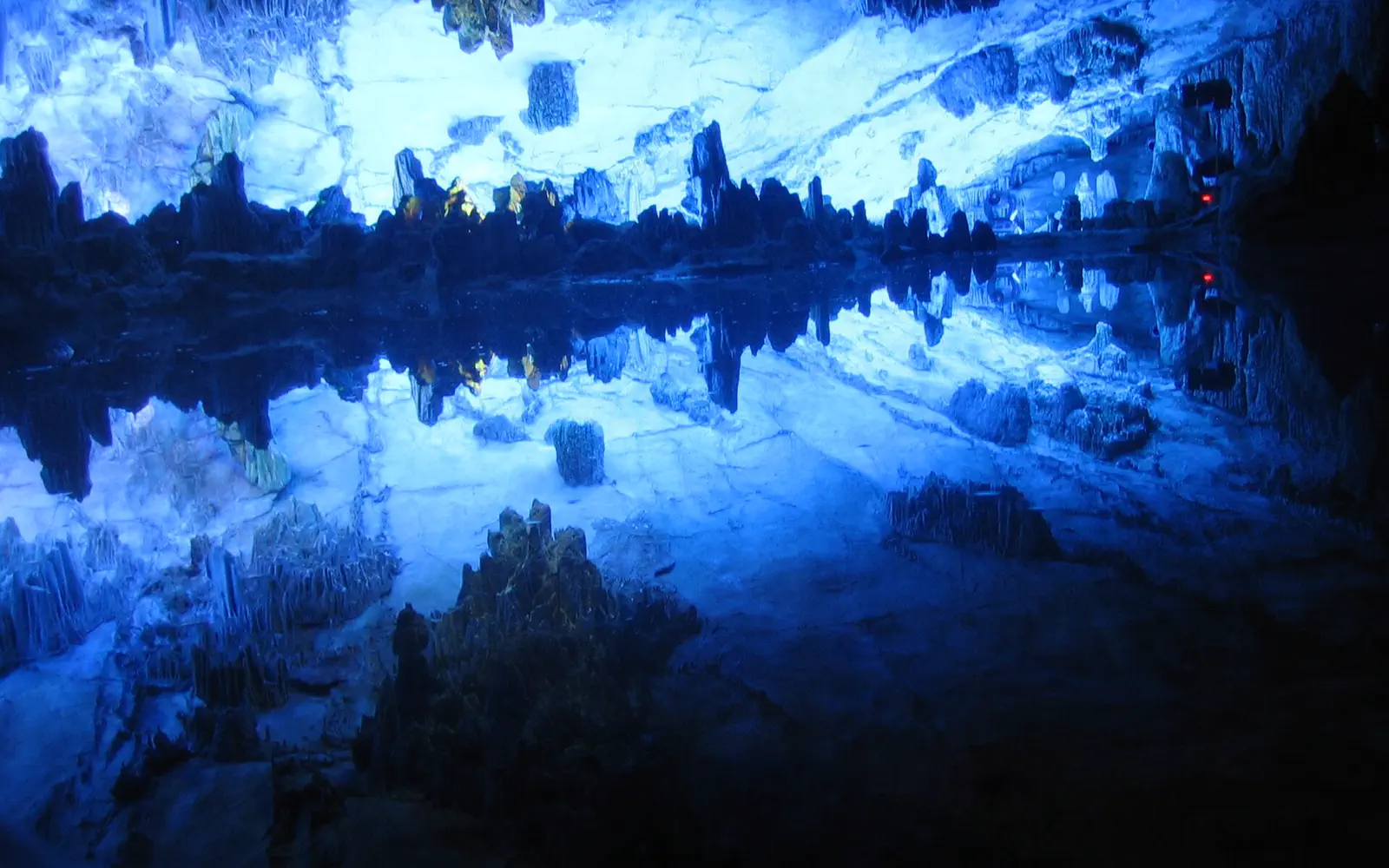
Reed Flute Cave takes its name from the arundo reed grass that grows at its entrance — a variety historically used to make flutes, which gives the site a more romantic origin story than most limestone caves manage. The cave itself is a 240-metre walking circuit through a series of chambers carved by groundwater dissolving the local Devonian limestone, a geological process that has been working on the Guilin karst landscape for hundreds of millions of years. The chambers contain stalactites, stalagmites, and stone curtain formations of considerable size and complexity.
The cave has been known at least since the Tang dynasty: there are approximately 70 ink inscriptions on the cave walls left by Tang-dynasty visitors, the oldest dated to 792 CE. The inscriptions are preserved behind protective barriers at several points along the circuit. They record the names and dates of visitors across several centuries, a form of documentation that manages to be both historically valuable and a reminder that leaving your mark on remarkable places is an impulse with a long pedigree.
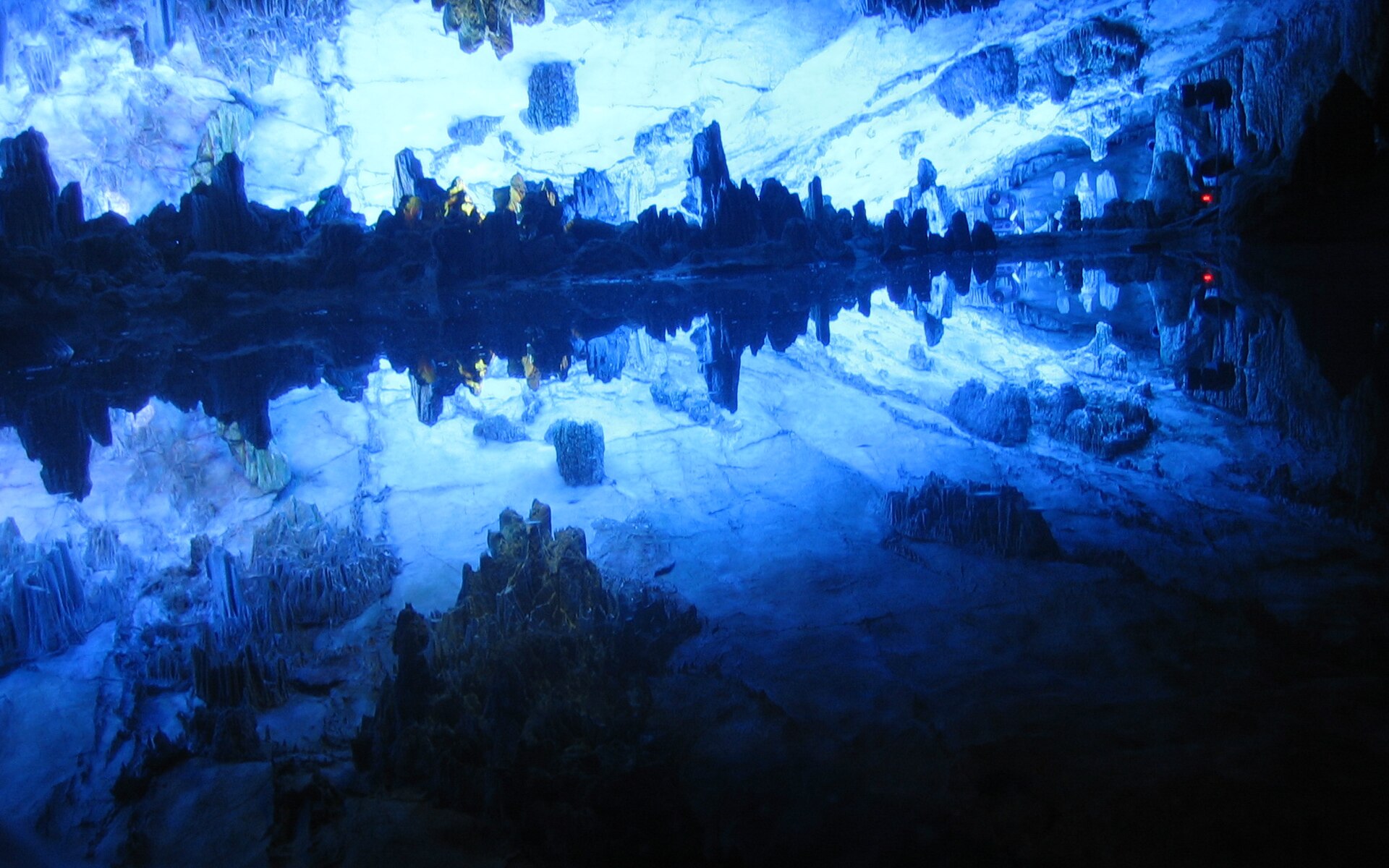
The contemporary illumination — colour LED lighting that cycles through sequences of red, green, blue, and combinations — is the element that polarises opinions. It is theatrical, it is deliberately dramatic, and it has nothing to do with the geology. Whether the light shows help or hinder the experience of the formations is a matter of personal preference; the same formations under white lighting would look very different and arguably more legible. The cave is large enough that the formations justify the visit independent of the lighting choices. Allow one to two hours. The cave is on Guilin's western edge and most directly reached by bus or taxi from the city centre.
How to get there
Bus 3 or taxi from central Guilin.
When to visit
Weekday afternoon.
Gallery
Other attractions in Guilin
Itineraries featuring this site
- First-timer China — 10 days adding Chengdu and Guilin
10d · The classic seven-day circuit extended with Chengdu's giant pandas and Guilin's karst river scenery — the two additions that most transform a first China trip.
- Photography focus — Yunnan and Guilin, 10 days
10d · Ten days through two of China's most photogenic landscapes: Yunnan's terraced rice fields and highland villages, followed by the karst pinnacles and river mist of Guilin and Yangshuo.
- South China — Hong Kong, Guangzhou, Yangshuo and Guilin, 10 days
10d · Ten days through the south: Hong Kong as the entry point, Guangzhou for Cantonese food culture, then the karst river landscape of Yangshuo and Guilin before flying home.
- Train-only China — 14 days using HSR exclusively, no flights
14d · Fourteen days across eastern and central China using only high-speed rail — no domestic flights. A lower-carbon alternative that also provides a closer view of the country at ground level.
Other natural sites in China
- Badain Jaran Desert — Lakes and Dunes巴丹吉林沙漠—沙山湖泊群
UNESCO · UNESCO Natural World Heritage site in Inner Mongolia — the third largest desert in China, featuring some of the world's tallest stationary dunes and a unique network of freshwater and saline lakes sustained by a still-unexplained subterranean water system.
- China Danxia中国丹霞
UNESCO · UNESCO Natural World Heritage site — a serial property of six Danxia landscapes across six provinces, representing China's defining red-cliff-and-pillar sandstone landform type, including Danxia Mountain, Zhangye, Taining and Langshan.
- Crescent Lake & Mingsha Mountain月牙泉与鸣沙山
Spring-fed crescent-shaped lake at the foot of 250m sand dunes, 5 km south of Dunhuang. Camel rides, sand-sledding, sunset viewing.
- Daocheng Yading Nature Reserve稻城亚丁
A remote highland sanctuary in south-western Sichuan centred on three sacred snow peaks venerated by Tibetan Buddhism, often called the 'last Shangri-La'.
- Dianchi Lake Kunming滇池
The largest freshwater lake in Yunnan at 300 km², historically the scenic centrepiece of the Kunming basin and now being restored after decades of water-quality degradation.
- Erhai Lake洱海
250 km² freshwater lake east of Dali Old Town. 130 km cycling loop; Bai-minority lakeside villages on the eastern shore.
- Fanjingshan梵净山
UNESCO · UNESCO Natural World Heritage site in Guizhou — an isolated mountain island rising from subtropical forest, home to two critically endangered endemic species: the Guizhou snub-nosed monkey and the Fanjingshan fir.
- Hailuogou Glacier National Park海螺沟冰川
The lowest-altitude glacier accessible in Asia, flowing from the slopes of Mount Gongga down through a bamboo and subtropical forest valley to just 2,980 m above sea level.
Frequently asked questions
- How much does Reed Flute Cave cost to visit?
- Adult entry to Reed Flute Cave is ¥120, ¥60 for children.
- When is Reed Flute Cave open?
- Reed Flute Cave opening hours: 8am–5pm.
- How long do you need at Reed Flute Cave?
- Allow 1–2 hours for Reed Flute Cave. Add buffer time if you plan to visit at peak season or include nearby sights in the same trip.
- When is the best time to visit Reed Flute Cave?
- Weekday afternoon.
- How do you get to Reed Flute Cave?
- Bus 3 or taxi from central Guilin.
Spotted something out of date? Submit a correction.
Research
Cross-checked against primary sources
Verified
Address, hours, fees confirmed at the date shown
Updated
Re-verified periodically; corrections welcome