Historic site · SHAANXI
Han Yang Ling Mausoleum
汉阳陵 · Hàn Yáng Líng
About
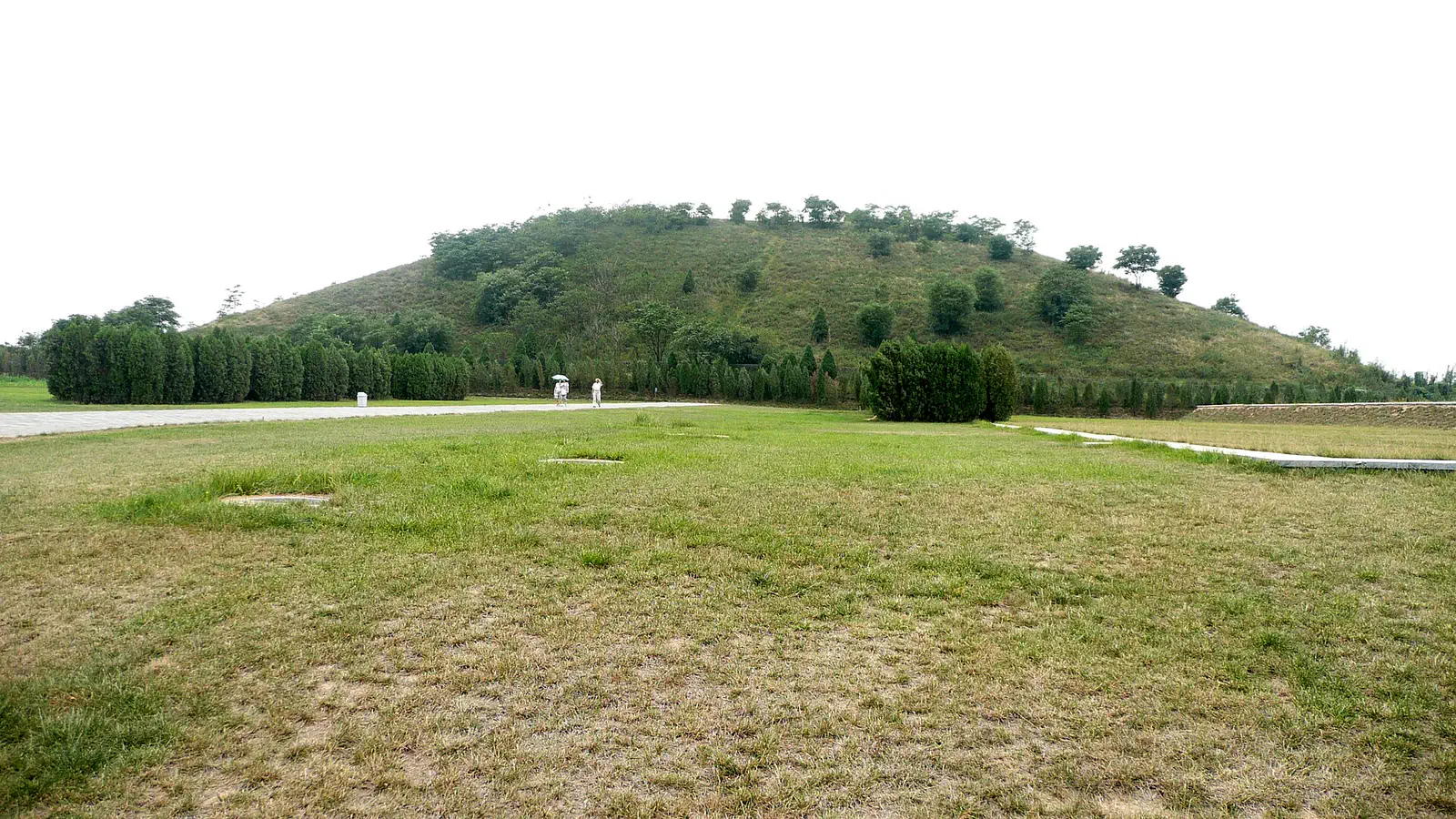
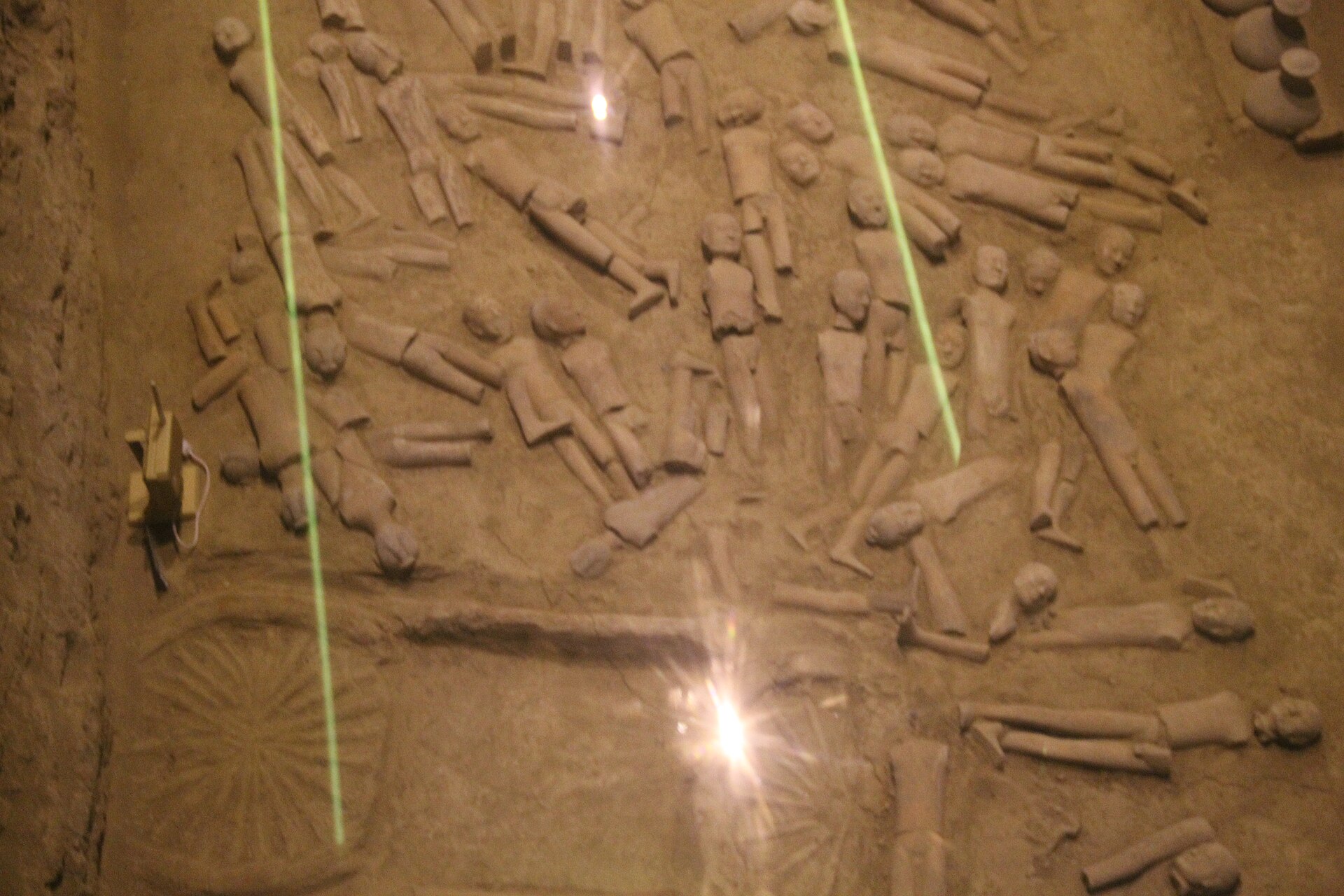
Tomb of Emperor Jing of Han (157–141 BCE). Pottery army figures (smaller than Qin's) excavated in situ; visitors walk on glass over the open pits.
Han Yang Ling is the mausoleum complex of Liu Qi, the Emperor Jing of Han, who ruled from 157 to 141 BCE. Located north of Xi'an near the Jing River, the site occupies roughly eleven square kilometres and includes the emperor's earthen tumulus pyramid, the tumulus of his empress Wang Zhi nearby, a funerary park, and an elaborate system of satellite burial pits radiating from the main tomb. Emperor Jing was the son of Emperor Wen and the father of Emperor Wu — a trio of rulers whose combined reigns constitute the consolidation of Han imperial power after the Qin collapse, and the period described by historians as one of the most stable and prosperous in early Chinese history.
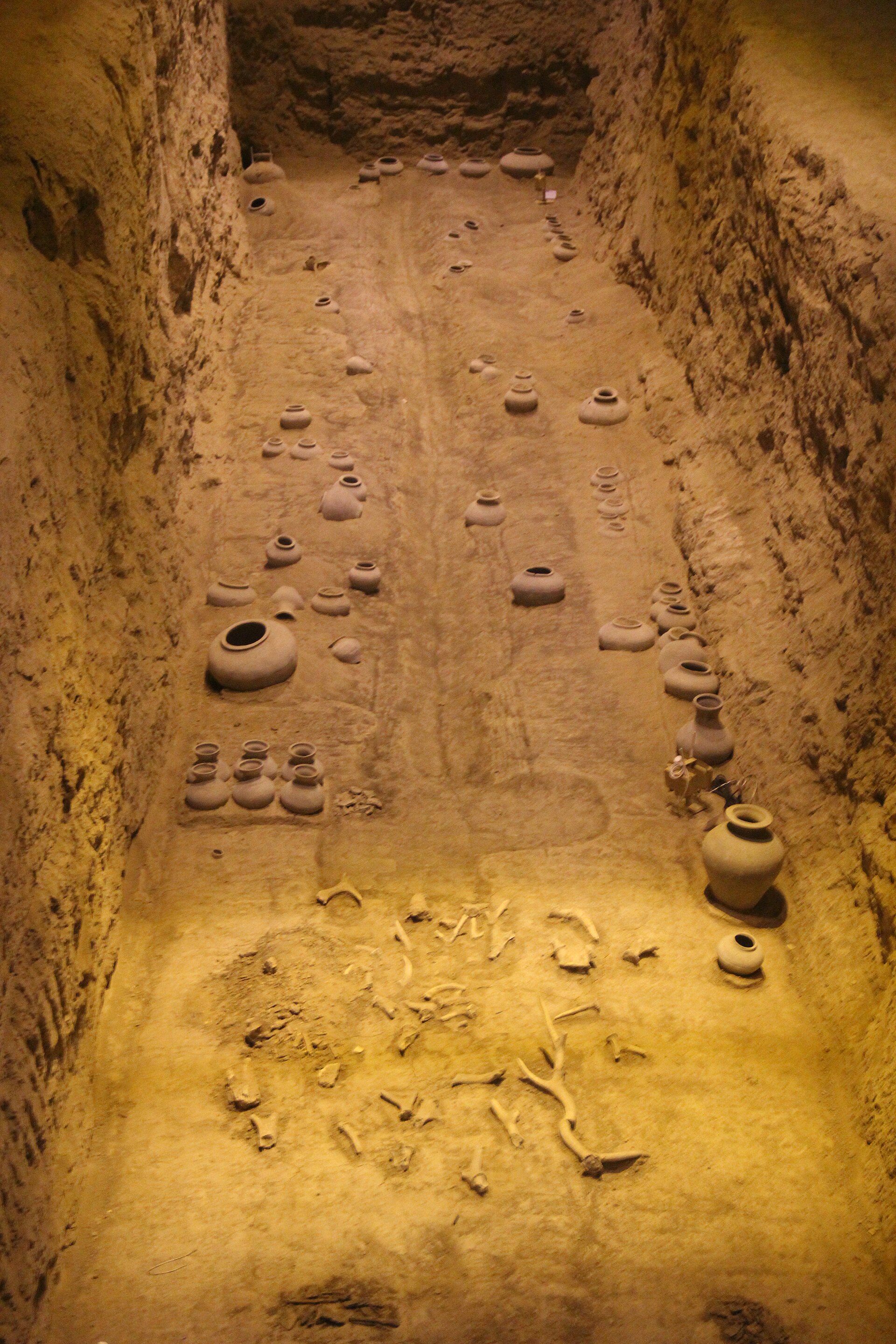
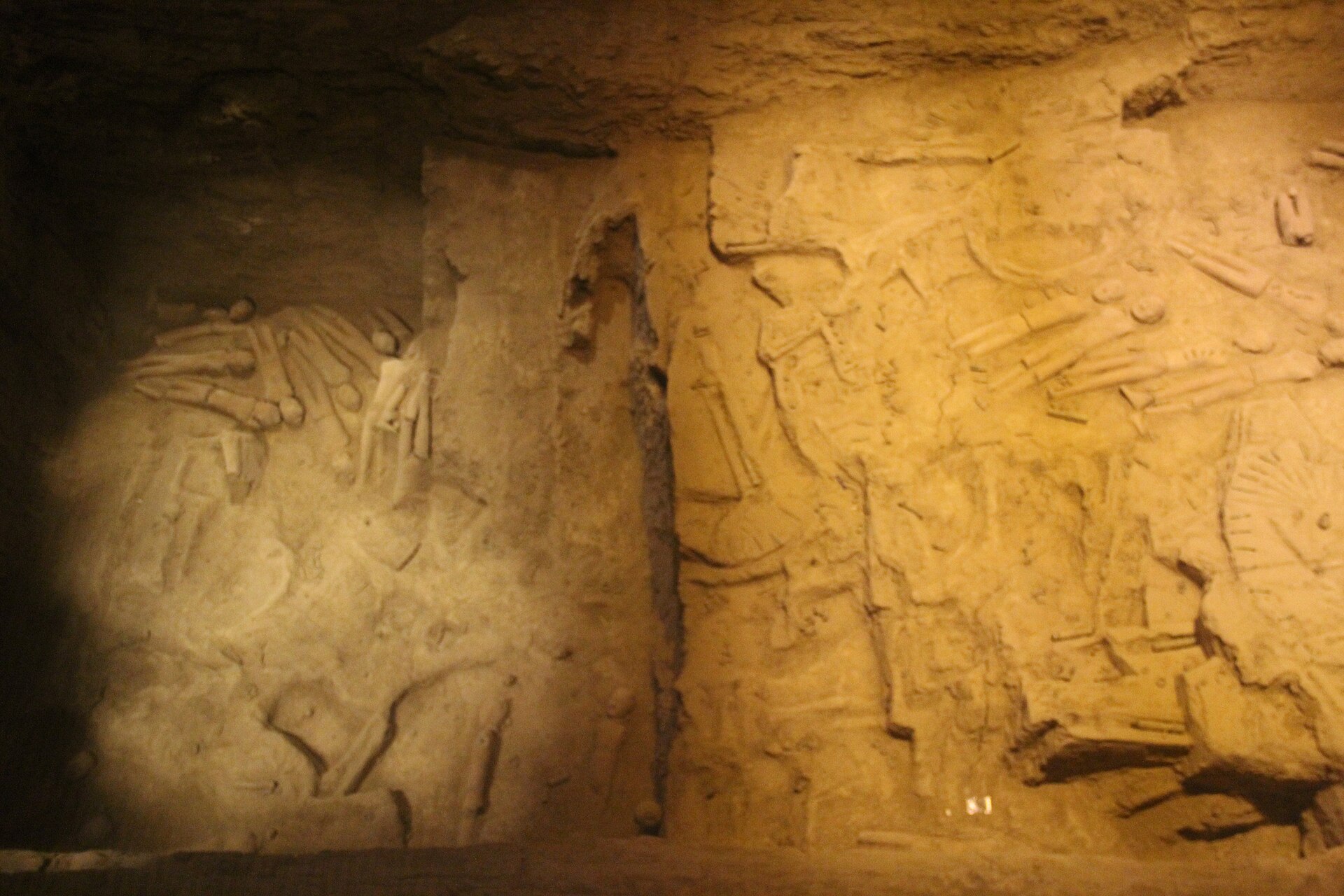
The burial pits are what makes Yang Ling remarkable for visitors. Unlike the Qin Terracotta Army — life-size warriors intended as a military force for the afterlife — the Han burial objects are one-third life size and cover a much wider range of subjects: cavalry soldiers, infantry, female court figures, animals (pigs, sheep, cattle, dogs), and domestics. The miniaturisation and variety suggest a conception of the afterlife as a populated domestic and administrative world rather than a military encampment. Approximately 50,000 individual figurines have been identified across the pit system, most still in situ.
The underground museum built over the main excavation area is the site's architectural distinction: visitors walk along elevated glass-floored walkways suspended directly above the open pits, with excavated figurines visible below in their original positions. The effect is unusual — you are standing above an open archaeological site with the soil layers and artifacts undisturbed beneath your feet. The museum is considerably quieter than the Terracotta Army site and benefits from the contrast; the two are complementary rather than redundant.
How to get there
Tourist bus 4 from Xi'an Railway Station, or driver.
When to visit
Spring or autumn. Often quieter than the Terracotta Army.
Gallery
Other attractions in Xi'an
Other historic sites in China
- Ancient Villages of Southern Anhui — Xidi and Hongcun皖南古村落—西递、宏村
UNESCO · UNESCO-listed pair of Ming-Qing Huizhou merchant villages in southern Anhui, renowned for whitewashed walls, inky horsehead gables and moon-shaped ponds.
- Anqing Zhenfeng Pagoda安庆振风塔
A seven-storey Ming Dynasty pagoda standing on the bank of the Yangtze River in Anqing, considered one of the finest riverside pagodas in southern China and long used as a navigation landmark by Yangtze river pilots.
- Archaeological Ruins of Liangzhu City良渚古城遗址
UNESCO · UNESCO-listed archaeological site in Hangzhou preserving the remains of a 5,000-year-old city with a sophisticated water-management system, jade ritual culture and social hierarchy — regarded as one of the earliest state-level societies in East Asia.
- Capital Cities and Tombs of the Ancient Koguryo Kingdom高句丽王城、王陵及贵族墓葬
UNESCO · UNESCO-listed capital cities and royal tombs of the Koguryo Kingdom in Jian, Jilin — the Chinese portion of a transnational heritage property shared with North Korea, representing one of the most powerful states of ancient East Asia.
- Classical Gardens of Suzhou (UNESCO)苏州古典园林
UNESCO · UNESCO-listed collection of private gardens in Suzhou — four inscribed in 1997 and five more added in 2000 — representing the pinnacle of Chinese garden design through the refined integration of architecture, water, rock and plant.
- Danba Tibetan Watchtowers丹巴碉楼
Clusters of ancient stone watchtowers rising above Tibetan village complexes in the Dadu River valley, said to be among the oldest surviving examples of Tibetan defensive architecture.
- Drum Tower and Bell Tower鼓楼钟楼
Yuan-dynasty drum and bell towers that kept official time for imperial Beijing. Climbable; daily drum performances.
- Dujiangyan Irrigation System都江堰
UNESCO · 2,300-year-old irrigation system on the Min River. Still in use. UNESCO-listed jointly with Mt Qingcheng. Engineering rather than architecture, but one of the great works.
Frequently asked questions
- How much does Han Yang Ling Mausoleum cost to visit?
- Adult entry to Han Yang Ling Mausoleum is ¥70, ¥35 for children.
- When is Han Yang Ling Mausoleum open?
- Han Yang Ling Mausoleum opening hours: 8:30am–5:30pm Apr–Oct; 8:30am–5pm Nov–Mar.
- How long do you need at Han Yang Ling Mausoleum?
- Allow 2–3 hours for Han Yang Ling Mausoleum. Add buffer time if you plan to visit at peak season or include nearby sights in the same trip.
- When is the best time to visit Han Yang Ling Mausoleum?
- Spring or autumn. Often quieter than the Terracotta Army.
- How do you get to Han Yang Ling Mausoleum?
- Tourist bus 4 from Xi'an Railway Station, or driver.
Spotted something out of date? Submit a correction.
Research
Cross-checked against primary sources
Verified
Address, hours, fees confirmed at the date shown
Updated
Re-verified periodically; corrections welcome