Cultural site · TIBET AUTONOMOUS REGION
Barkhor Pilgrim Circuit
八廓街 · Bākuò Jiē
About
1 km clockwise pilgrim circuit around the Jokhang Temple. Pilgrims prostrate themselves around the route; Tibetan-traditional shopping plus daily life.
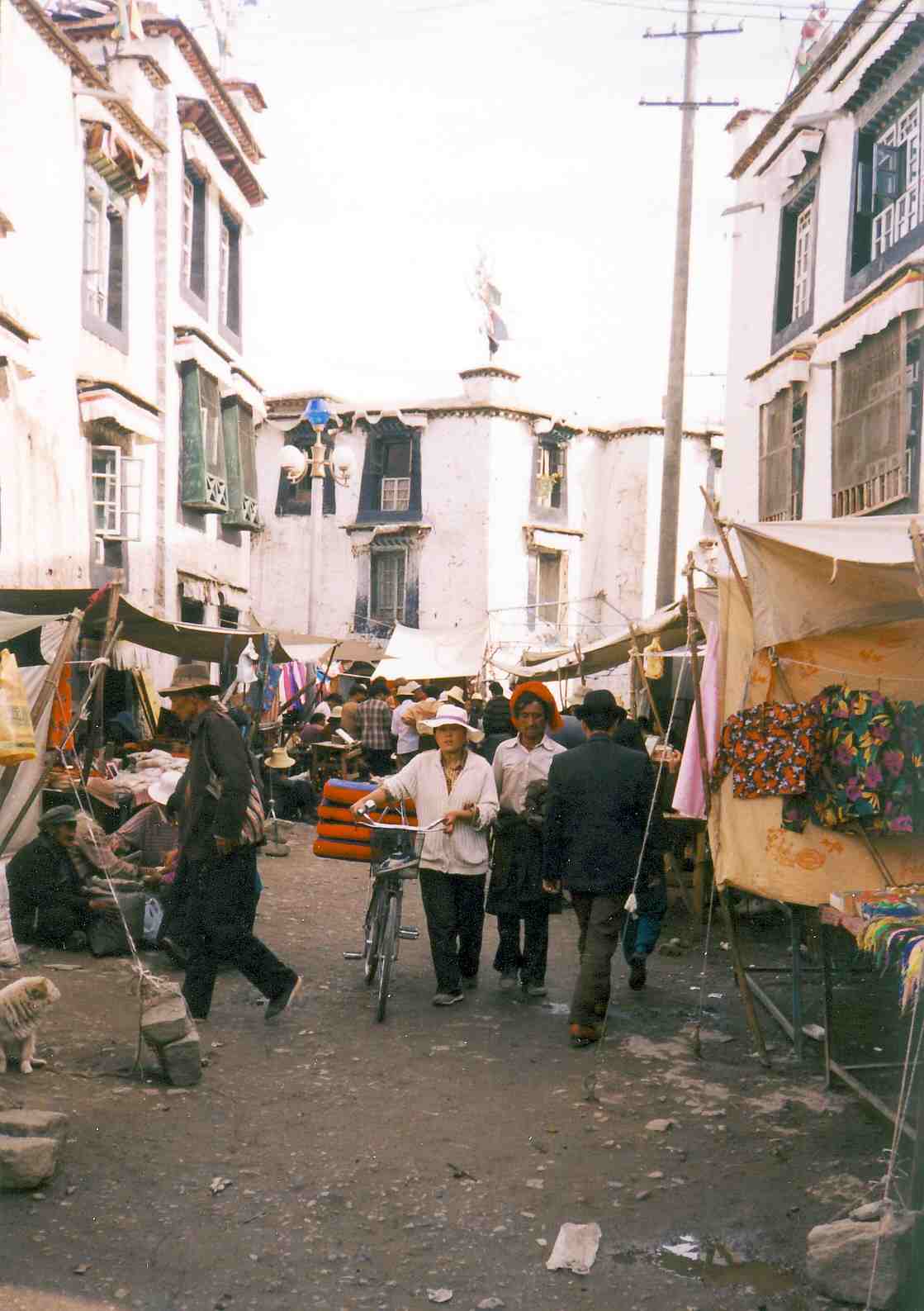
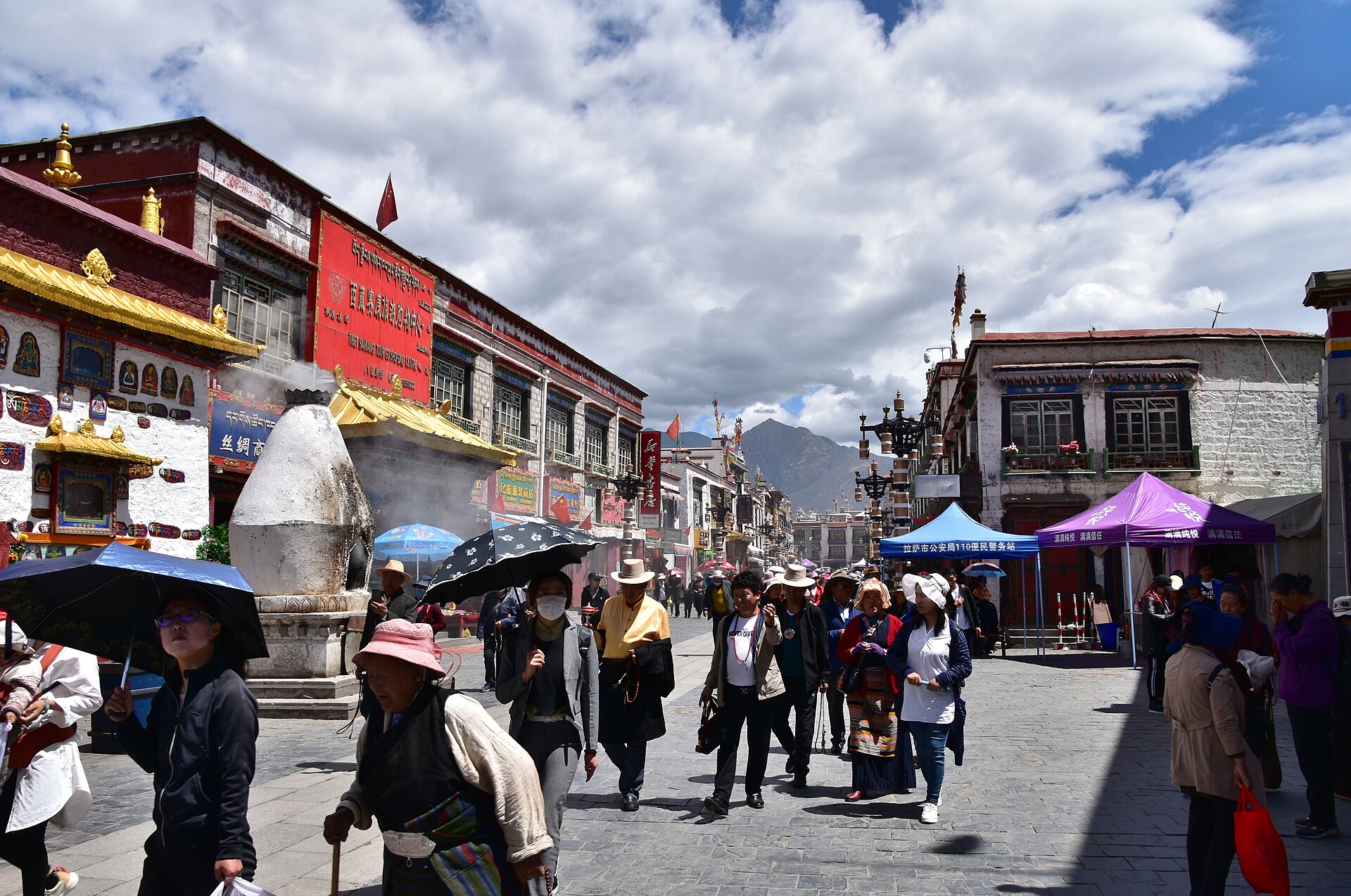
The Barkhor is the intermediate pilgrim circuit around the Jokhang Temple, one of three concentric kora routes in Lhasa — the innermost (Nangkor) runs through the temple itself, the Barkhor circles the building and its immediate neighbourhood, and the outer Lingkor traditionally encircled the entire old city. Of the three, the Barkhor is the one most integrated with daily Lhasa life and the most accessible to outside visitors. The circuit is approximately one kilometre, always followed clockwise in the Tibetan Buddhist tradition, and runs along a cobbled street lined with shops, stalls, tea houses, and residences.
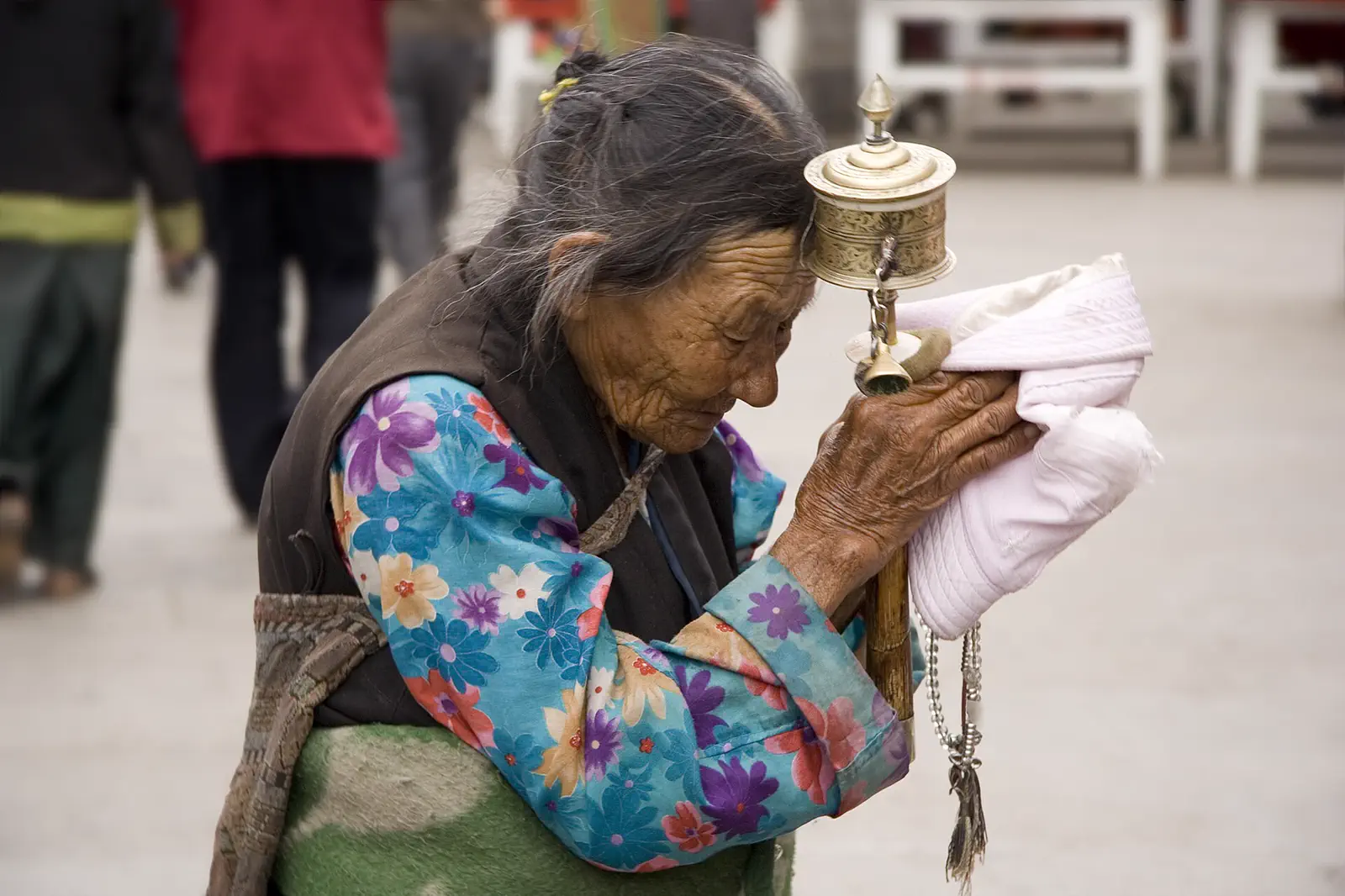
Pilgrims come from across the Tibetan plateau — many travelling significant distances — to circumambulate the Barkhor, some walking normally with prayer beads and prayer wheels, others undertaking full-body prostrations around the entire circuit. The prostration kora involves lying flat on the ground with arms extended, rising, stepping forward to where the hands reached, and repeating. The full circuit performed this way takes several hours. Some pilgrims undertake the prostration circuit over multiple days; the worn stone paving at the most-trafficked sections bears the marks of generations of repeated movement.
The surrounding market is the main commercial zone for Tibetan-traditional goods in Lhasa: religious objects (prayer flags, butter lamps, incense), jewellery, clothing, and the full range of Tibetan souvenir production. The density of genuine daily-life activity — elderly residents turning prayer wheels, women carrying provisions from the market, monks passing through — gives the Barkhor a different character from a conventional tourist street. The best times are dawn, when the earliest pilgrims begin their circuits before most shops open, and dusk, when the circuit fills again with people completing prayers at the end of the day.
How to get there
Walking from any Old Town Lhasa hotel.
When to visit
Dawn or dusk for the deepest pilgrim activity.
Gallery
Other attractions in Lhasa
Itineraries featuring this site
- Tibet — 8 days with permit guidance
8d · Lhasa, Yamdrok, Shigatse and Gyantse — the standard agency-tour Tibet circuit.
- Tibetan Plateau — Lhasa, Shigatse and Everest Base Camp, 10 days
10d · Ten days on the Tibetan Plateau visiting Lhasa's monasteries and palaces, the Tashilhunpo at Shigatse, and the Rongbuk Monastery approach to Everest Base Camp — with practical permit guidance.
- Overnight train romance — soft-sleeper journeys across China, 10 days
10d · Ten days structured around China's overnight soft-sleeper trains — Beijing to Xi'an, Xi'an to Chengdu, Chengdu to Lhasa — experiencing the transition from one landscape to the next at a human pace, through the night.
- Three weeks deep — adds Yunnan and Tibet
21d · Two weeks comprehensive plus Yunnan loop (Kunming, Dali, Lijiang) and a Tibet permit-tour to Lhasa.
Other cultural sites in China
- Chen Clan Ancestral Hall陈家祠
The most ornate Lingnan-style courtyard complex in China, built 1894 as the academy and ancestral hall for the Chen clan of Guangdong.
- Couple's Retreat Garden耦园
UNESCO · UNESCO-listed Suzhou garden organised symmetrically around a central residence. Less crowded than the four most-visited gardens.
- Garden of Cultivation艺圃
UNESCO · UNESCO-listed Ming-era scholar's garden. Among the smallest and most atmospheric of Suzhou's classical gardens.
- Humble Administrator's Garden拙政园
UNESCO · The largest of Suzhou's UNESCO-listed classical gardens (5.2 hectares). 16th-century landscape with ponds, pavilions, rockeries, and an emphasis on water.
- Jingmai Mountain Ancient Tea Forest普洱景迈山古茶林文化景观
UNESCO · UNESCO Cultural Landscape in Yunnan's Pu'er region — ancient cultivated tea forests maintained by Blang and Dai ethnic communities for over 1,000 years, representing a living tradition of forest tea cultivation.
- Lingering Garden留园
UNESCO · UNESCO-listed Ming-Qing garden, famed for its rockeries and the 6.5m central limestone scholar's-rock 'Crown of Clouds'.
- Lion Grove Garden狮子林
UNESCO · Yuan-dynasty garden famous for its lion-shaped rockeries — a maze of Taihu limestone you can walk through.
- Master of Nets Garden网师园
UNESCO · The most concentrated of Suzhou's UNESCO-listed gardens (0.6 hectares). Summer evening 'night garden' performances are the local draw.
Frequently asked questions
- How much does Barkhor Pilgrim Circuit cost to visit?
- Entry to Barkhor Pilgrim Circuit is free.
- When is Barkhor Pilgrim Circuit open?
- Barkhor Pilgrim Circuit opening hours: 24/7; pilgrims most active dawn and dusk.
- How long do you need at Barkhor Pilgrim Circuit?
- Allow 1–2 hours for Barkhor Pilgrim Circuit. Add buffer time if you plan to visit at peak season or include nearby sights in the same trip.
- When is the best time to visit Barkhor Pilgrim Circuit?
- Dawn or dusk for the deepest pilgrim activity.
- How do you get to Barkhor Pilgrim Circuit?
- Walking from any Old Town Lhasa hotel.
Spotted something out of date? Submit a correction.
Research
Cross-checked against primary sources
Verified
Address, hours, fees confirmed at the date shown
Updated
Re-verified periodically; corrections welcome