Historic site · TIBET AUTONOMOUS REGION · UNESCO
Norbulingka
罗布林卡 · Luóbùlínkǎ
About
Summer palace of the Dalai Lamas in western Lhasa. UNESCO-listed; gardens, pavilions, the rooms where the 14th Dalai Lama lived before his exile.
Norbulingka — the Jewel Park — served as the summer residence of the Dalai Lamas from the 18th century to 1959, when the 14th Dalai Lama fled into exile. The complex was begun in 1755 by the 7th Dalai Lama, Kelzang Gyatso, who used a natural spring on the site as the basis for a garden retreat from the Potala Palace. Successive Dalai Lamas expanded the grounds and added pavilions; the present 36-hectare site contains palace buildings from the 7th through 14th Dalai Lamas. UNESCO listed Norbulingka in 2001 as an extension of the Potala Palace World Heritage property.
The gardens — the largest man-made park in Tibet — are organised around tree groves, ornamental ponds, and pavilion complexes. The dominant tree species is the willow, brought specifically to soften the high-altitude landscape; in the Sho Dun (Yoghurt) Festival each summer, Lhasa families traditionally picnicked in the Norbulingka grounds while watching Tibetan opera performances, a tradition that continues in modified form. The park is one of the few large green spaces in Lhasa and functions as a municipal park for city residents in addition to a heritage site.
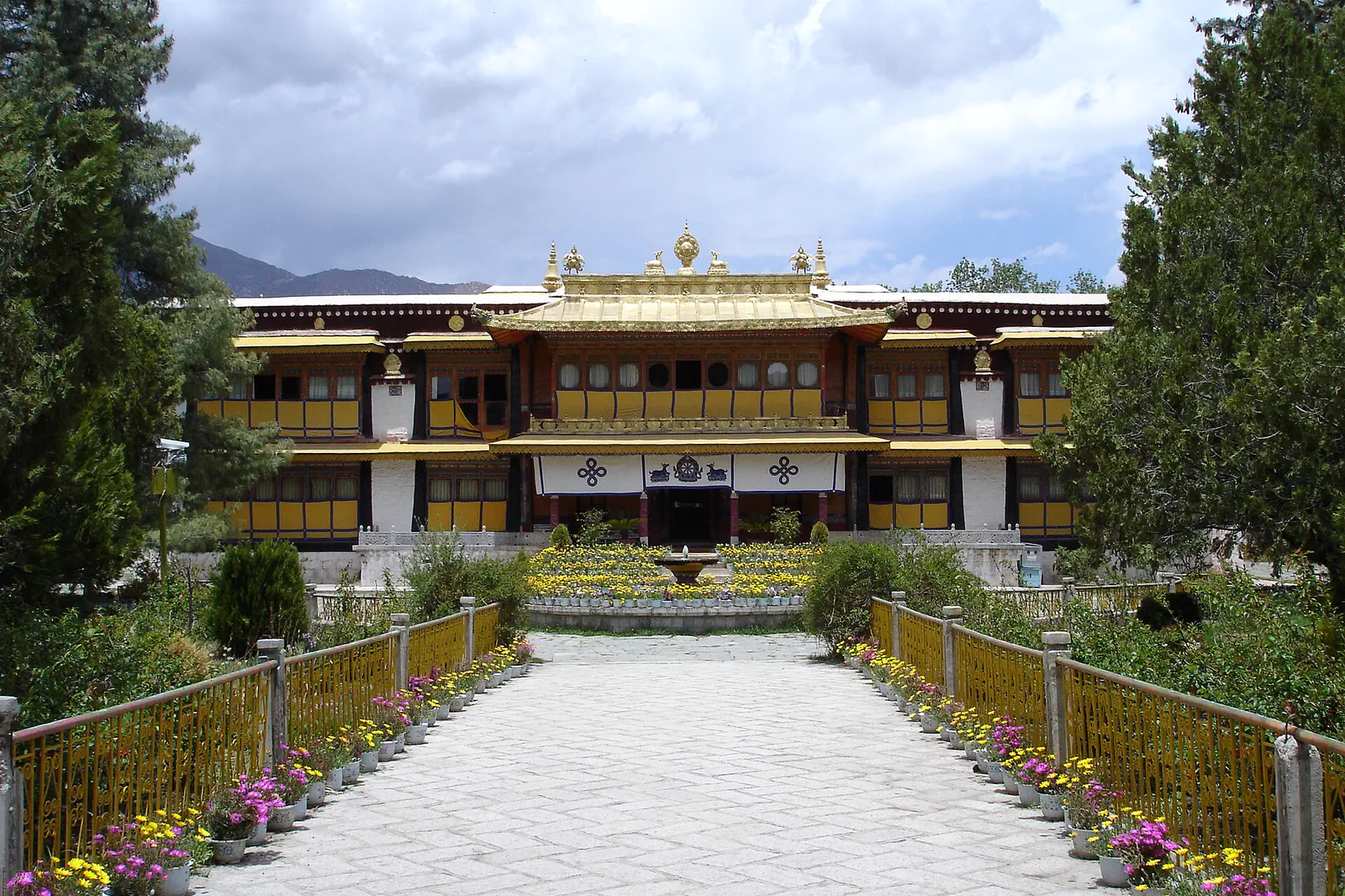
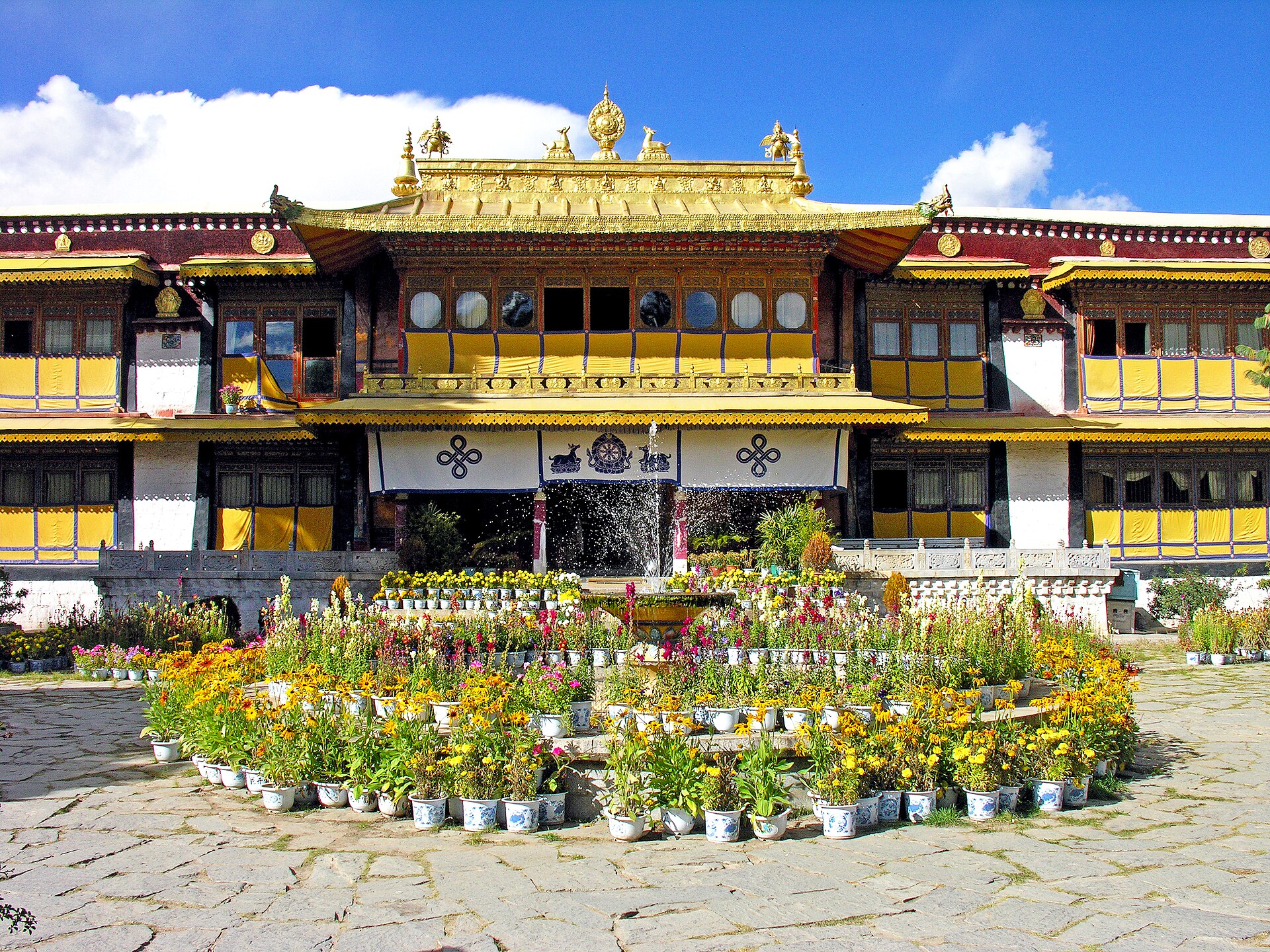
The most historically weighted building is the Takten Migyur Phodrang — the New Summer Palace — built between 1954 and 1956 for the 14th Dalai Lama. The rooms where the current Dalai Lama studied, slept, and held audiences before his March 1959 departure remain largely intact, with furnishings, murals depicting his life up to that point, and personal objects preserved. The palace offers a more intimate view of recent Tibetan political history than the Potala, which is concerned primarily with formal ceremony.
How to get there
Walking from western Lhasa hotels.
When to visit
Summer for the Sho Dun festival; otherwise mornings.
UNESCO inscription
“The Potala Palace, winter palace of the Dalai Lama since the 7th century, symbolizes Tibetan Buddhism and its central role in the traditional administration of Tibet. The complex, comprising the White and Red Palaces with their ancillary buildings, is built on Red Mountain in the centre of Lhasa Valley, at an altitude of 3,700m. Also founded in the 7th century, the Jokhang Temple Monastery is an exceptional Buddhist religious complex. Norbulingka, the Dalai Lama's former summer palace, constructed in the 18th century, is a masterpiece of Tibetan art. The beauty and originality of the architecture of these three sites, their rich ornamentation and harmonious integration in a striking landscape, add to their historic and religious interest.”
Gallery
Other attractions in Lhasa
Itineraries featuring this site
- Tibet — 8 days with permit guidance
8d · Lhasa, Yamdrok, Shigatse and Gyantse — the standard agency-tour Tibet circuit.
- Tibetan Plateau — Lhasa, Shigatse and Everest Base Camp, 10 days
10d · Ten days on the Tibetan Plateau visiting Lhasa's monasteries and palaces, the Tashilhunpo at Shigatse, and the Rongbuk Monastery approach to Everest Base Camp — with practical permit guidance.
- Overnight train romance — soft-sleeper journeys across China, 10 days
10d · Ten days structured around China's overnight soft-sleeper trains — Beijing to Xi'an, Xi'an to Chengdu, Chengdu to Lhasa — experiencing the transition from one landscape to the next at a human pace, through the night.
- Three weeks deep — adds Yunnan and Tibet
21d · Two weeks comprehensive plus Yunnan loop (Kunming, Dali, Lijiang) and a Tibet permit-tour to Lhasa.
Other historic sites in China
- Ancient Villages of Southern Anhui — Xidi and Hongcun皖南古村落—西递、宏村
UNESCO · UNESCO-listed pair of Ming-Qing Huizhou merchant villages in southern Anhui, renowned for whitewashed walls, inky horsehead gables and moon-shaped ponds.
- Anqing Zhenfeng Pagoda安庆振风塔
A seven-storey Ming Dynasty pagoda standing on the bank of the Yangtze River in Anqing, considered one of the finest riverside pagodas in southern China and long used as a navigation landmark by Yangtze river pilots.
- Archaeological Ruins of Liangzhu City良渚古城遗址
UNESCO · UNESCO-listed archaeological site in Hangzhou preserving the remains of a 5,000-year-old city with a sophisticated water-management system, jade ritual culture and social hierarchy — regarded as one of the earliest state-level societies in East Asia.
- Capital Cities and Tombs of the Ancient Koguryo Kingdom高句丽王城、王陵及贵族墓葬
UNESCO · UNESCO-listed capital cities and royal tombs of the Koguryo Kingdom in Jian, Jilin — the Chinese portion of a transnational heritage property shared with North Korea, representing one of the most powerful states of ancient East Asia.
- Classical Gardens of Suzhou (UNESCO)苏州古典园林
UNESCO · UNESCO-listed collection of private gardens in Suzhou — four inscribed in 1997 and five more added in 2000 — representing the pinnacle of Chinese garden design through the refined integration of architecture, water, rock and plant.
- Danba Tibetan Watchtowers丹巴碉楼
Clusters of ancient stone watchtowers rising above Tibetan village complexes in the Dadu River valley, said to be among the oldest surviving examples of Tibetan defensive architecture.
- Drum Tower and Bell Tower鼓楼钟楼
Yuan-dynasty drum and bell towers that kept official time for imperial Beijing. Climbable; daily drum performances.
- Dujiangyan Irrigation System都江堰
UNESCO · 2,300-year-old irrigation system on the Min River. Still in use. UNESCO-listed jointly with Mt Qingcheng. Engineering rather than architecture, but one of the great works.
Other UNESCO World Heritage sites in China
- Ancient Villages of Southern Anhui — Xidi and Hongcun皖南古村落—西递、宏村
UNESCO-listed pair of Ming-Qing Huizhou merchant villages in southern Anhui, renowned for whitewashed walls, inky horsehead gables and moon-shaped ponds.
- Archaeological Ruins of Liangzhu City良渚古城遗址
UNESCO-listed archaeological site in Hangzhou preserving the remains of a 5,000-year-old city with a sophisticated water-management system, jade ritual culture and social hierarchy — regarded as one of the earliest state-level societies in East Asia.
- Badain Jaran Desert — Lakes and Dunes巴丹吉林沙漠—沙山湖泊群
UNESCO Natural World Heritage site in Inner Mongolia — the third largest desert in China, featuring some of the world's tallest stationary dunes and a unique network of freshwater and saline lakes sustained by a still-unexplained subterranean water system.
- Capital Cities and Tombs of the Ancient Koguryo Kingdom高句丽王城、王陵及贵族墓葬
UNESCO-listed capital cities and royal tombs of the Koguryo Kingdom in Jian, Jilin — the Chinese portion of a transnational heritage property shared with North Korea, representing one of the most powerful states of ancient East Asia.
- China Danxia中国丹霞
UNESCO Natural World Heritage site — a serial property of six Danxia landscapes across six provinces, representing China's defining red-cliff-and-pillar sandstone landform type, including Danxia Mountain, Zhangye, Taining and Langshan.
- Classical Gardens of Suzhou (UNESCO)苏州古典园林
UNESCO-listed collection of private gardens in Suzhou — four inscribed in 1997 and five more added in 2000 — representing the pinnacle of Chinese garden design through the refined integration of architecture, water, rock and plant.
- Couple's Retreat Garden耦园
UNESCO-listed Suzhou garden organised symmetrically around a central residence. Less crowded than the four most-visited gardens.
- Drepung Monastery哲蚌寺
Once the largest monastery in the world (10,000+ monks). 8 km west of Lhasa. Active Gelugpa monastery; debating courtyard sessions in the afternoon.
Frequently asked questions
- How much does Norbulingka cost to visit?
- Adult entry to Norbulingka is ¥60, ¥30 for children.
- When is Norbulingka open?
- Norbulingka opening hours: 9am–5pm.
- How long do you need at Norbulingka?
- Allow 2–3 hours for Norbulingka. Add buffer time if you plan to visit at peak season or include nearby sights in the same trip.
- When is the best time to visit Norbulingka?
- Summer for the Sho Dun festival; otherwise mornings.
- How do you get to Norbulingka?
- Walking from western Lhasa hotels.
Spotted something out of date? Submit a correction.
Research
Cross-checked against primary sources
Verified
Address, hours, fees confirmed at the date shown
Updated
Re-verified periodically; corrections welcome