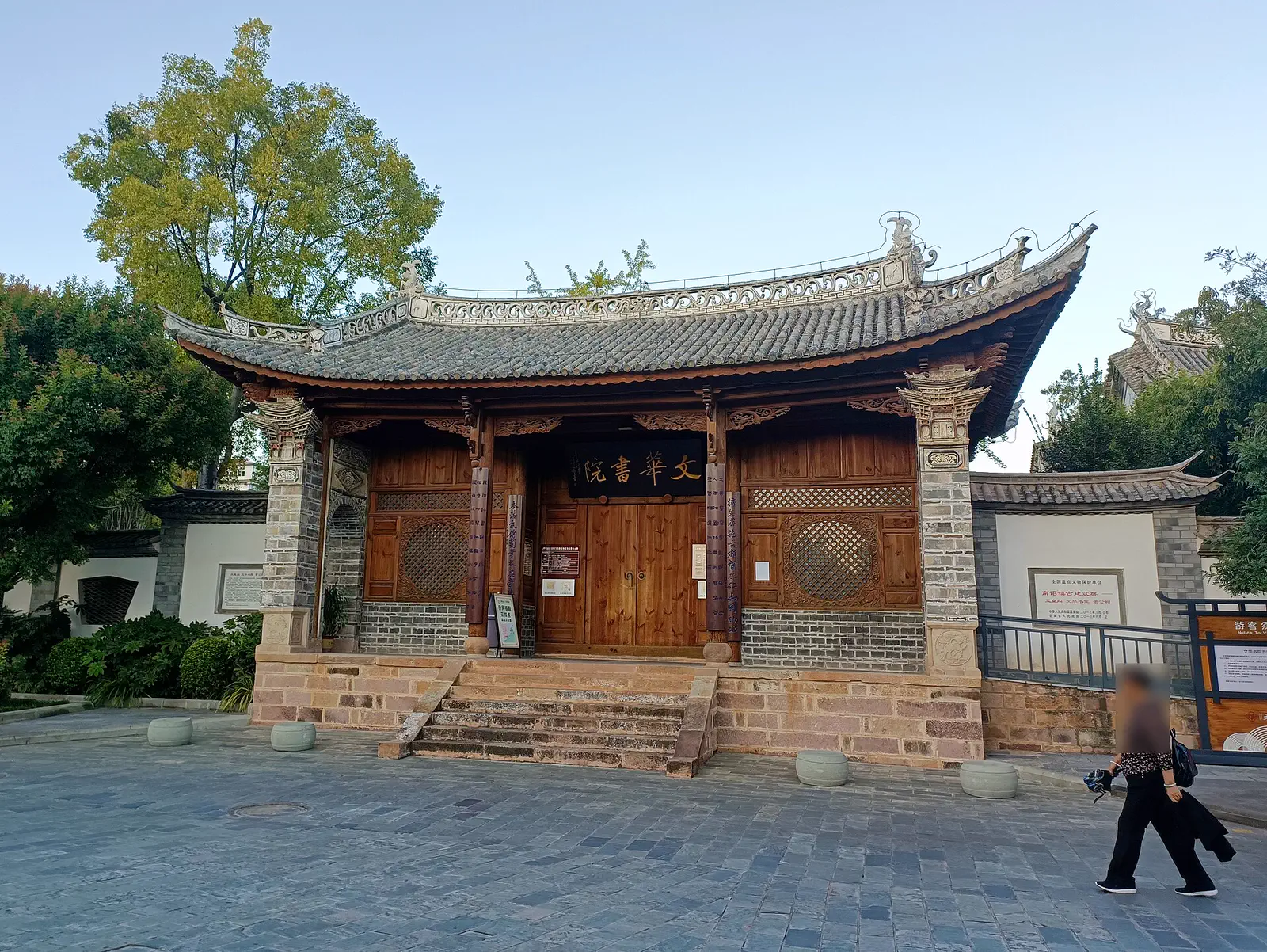
Historic site · YUNNAN
Weishan Ancient Town
巍山古城 · Wēishān Gǔchéng
About
A quiet Ming-era walled town south of Dali that served as the capital of the Nanzhao Kingdom, preserving a grid of cobbled streets, Bai architecture, and active Daoist temples largely unknown to international visitors.
Weishan was for two centuries the capital of the Nanzhao Kingdom (738–902 CE), the most powerful state in what is now Yunnan and a major player in the geopolitics of Tang Dynasty China. At its peak, Nanzhao controlled most of Yunnan and extended influence into modern-day Sichuan, Guizhou, and Southeast Asia. Weishan's historical significance predates its time as a Nanzhao capital, with evidence of occupation stretching back to the Neolithic.
The surviving old town dates primarily from the Ming and Qing dynasties, when Weishan was rebuilt on a formal grid plan around a central Arch Tower (Gong Chen Lou), a two-storey wooden gatehouse that remains standing and intact. The streets radiating from this central point follow a pattern that is exceptionally well-preserved for a Yunnan town — the absence of major tourism development having been something of an accidental preservation.
Weishan is home to a significant Bai and Yi ethnic population alongside Han residents, and the town's culture reflects this plurality. The mosques serving the Hui community share street space with Daoist temples, Buddhist halls, and folk-religion shrines. The Daoist temples on nearby Weibaoshanjin Mountain, a short drive from town, constitute one of the more intact concentrations of Daoist monastic architecture in Yunnan.
The twice-weekly market — particularly the horse market — draws traders from surrounding villages and is a window into the agricultural rhythms of the Weishan basin.
How to get there
Bus from Dali South Bus Station to Weishan (approximately 1.5–2 hours). Local buses or taxis to Weibaoshantemple from Weishan County Town.
When to visit
Year-round. Market days (check locally for current schedule) offer the most vivid atmosphere. November to April dry season is most comfortable.
Other attractions in Dali
Other historic sites in China
- Ancient Villages of Southern Anhui — Xidi and Hongcun皖南古村落—西递、宏村
UNESCO · UNESCO-listed pair of Ming-Qing Huizhou merchant villages in southern Anhui, renowned for whitewashed walls, inky horsehead gables and moon-shaped ponds.
- Anqing Zhenfeng Pagoda安庆振风塔
A seven-storey Ming Dynasty pagoda standing on the bank of the Yangtze River in Anqing, considered one of the finest riverside pagodas in southern China and long used as a navigation landmark by Yangtze river pilots.
- Archaeological Ruins of Liangzhu City良渚古城遗址
UNESCO · UNESCO-listed archaeological site in Hangzhou preserving the remains of a 5,000-year-old city with a sophisticated water-management system, jade ritual culture and social hierarchy — regarded as one of the earliest state-level societies in East Asia.
- Capital Cities and Tombs of the Ancient Koguryo Kingdom高句丽王城、王陵及贵族墓葬
UNESCO · UNESCO-listed capital cities and royal tombs of the Koguryo Kingdom in Jian, Jilin — the Chinese portion of a transnational heritage property shared with North Korea, representing one of the most powerful states of ancient East Asia.
- Classical Gardens of Suzhou (UNESCO)苏州古典园林
UNESCO · UNESCO-listed collection of private gardens in Suzhou — four inscribed in 1997 and five more added in 2000 — representing the pinnacle of Chinese garden design through the refined integration of architecture, water, rock and plant.
- Danba Tibetan Watchtowers丹巴碉楼
Clusters of ancient stone watchtowers rising above Tibetan village complexes in the Dadu River valley, said to be among the oldest surviving examples of Tibetan defensive architecture.
- Drum Tower and Bell Tower鼓楼钟楼
Yuan-dynasty drum and bell towers that kept official time for imperial Beijing. Climbable; daily drum performances.
- Dujiangyan Irrigation System都江堰
UNESCO · 2,300-year-old irrigation system on the Min River. Still in use. UNESCO-listed jointly with Mt Qingcheng. Engineering rather than architecture, but one of the great works.
Frequently asked questions
- How much does Weishan Ancient Town cost to visit?
- Entry to Weishan Ancient Town is free. Old town free. Weibaoshantemple area ¥30.
- When is Weishan Ancient Town open?
- Weishan Ancient Town opening hours: Old town streets open at all times. Weibaoshantemple complex 8am–6pm.
- How long do you need at Weishan Ancient Town?
- Allow 3–6 hours for Weishan Ancient Town. Add buffer time if you plan to visit at peak season or include nearby sights in the same trip.
- When is the best time to visit Weishan Ancient Town?
- Year-round. Market days (check locally for current schedule) offer the most vivid atmosphere. November to April dry season is most comfortable.
- How do you get to Weishan Ancient Town?
- Bus from Dali South Bus Station to Weishan (approximately 1.5–2 hours). Local buses or taxis to Weibaoshantemple from Weishan County Town.
Spotted something out of date? Submit a correction.
Research
Cross-checked against primary sources
Verified
Address, hours, fees confirmed at the date shown
Updated
Re-verified periodically; corrections welcome