CITY · JIANGSU
Wuxi
无锡 · Wúxī
Overview
Prosperous Jiangnan city on the shore of Taihu, one of China's largest freshwater lakes. Known for lake crab, the canal quarter of Nanchan Temple, Lingshan Grand Buddha, and the traditional gardens of Jichang Yuan.
Wuxi is a prosperous city in southern Jiangsu, positioned between the northern shore of Taihu (Lake Tai) and the Grand Canal, roughly 130 km northwest of Shanghai and 50 km from Suzhou. The city's modern economy is driven by manufacturing and the semiconductor industry, but its historical character is that of a Jiangnan canal town — a lakeside and waterway city that for centuries traded silk, grain and pottery along the network of rivers and canals connecting the Yangtze Delta.
Taihu, covering roughly 2,400 square kilometres, is the third-largest freshwater lake in China and the economic and scenic heart of the Wuxi region. The lake's western and southern shores, accessible by boat or road from the city, hold fishing villages, small islands and the hills of Mashan. Taihu hairy crabs — the mitten crabs of the lake, harvested from October — are among the most prized freshwater crustaceans in Chinese cuisine and draw seasonal visitors from Shanghai and further afield.
In the old city, the Nanchan Temple commercial area around the Grand Canal preserves a stretch of traditional architecture alongside canal life — older brick warehouses, stone bridges and narrow lanes that have been partly restored for tourism. The Qingming Bridge area nearby is a more authentically preserved stretch of canal streetscape from the Ming and Qing periods.
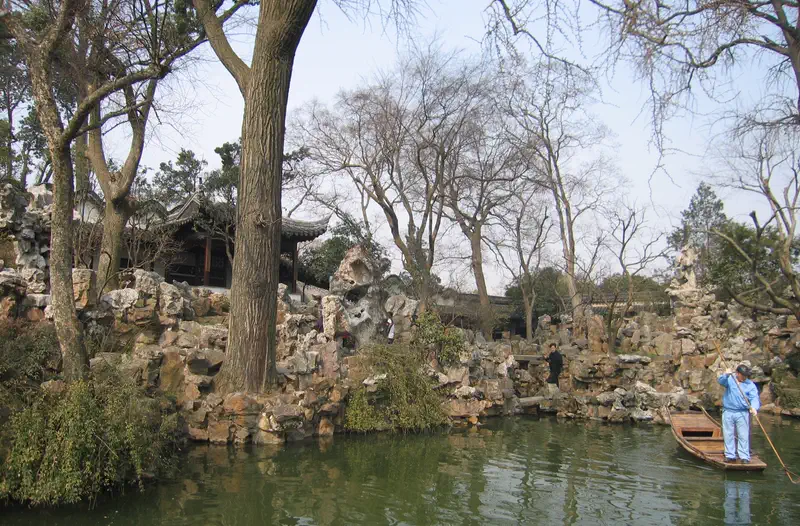
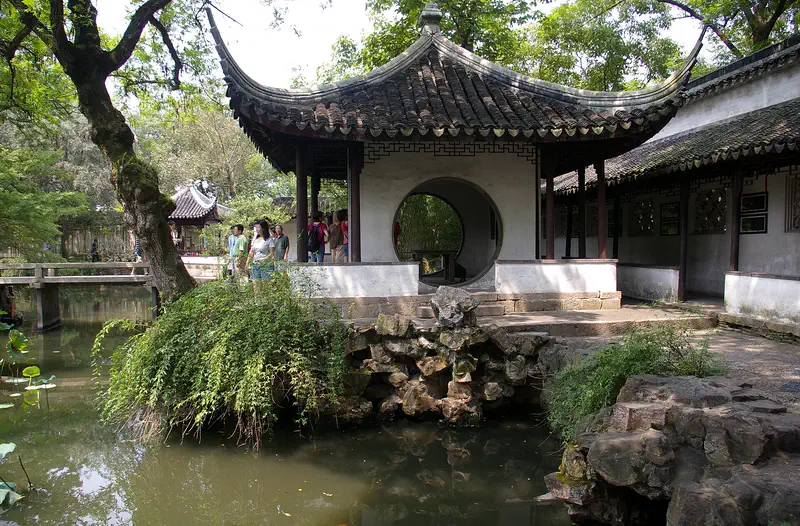
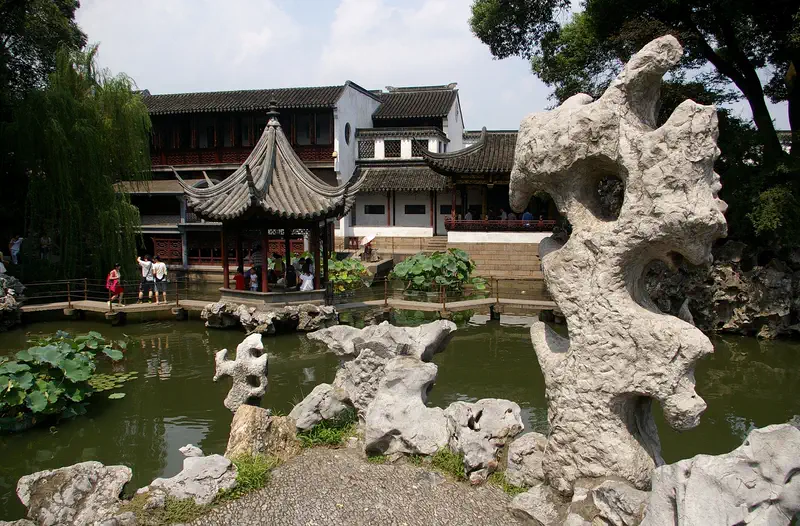
Lingshan, on the western lakeshore, holds a 88-metre bronze figure of Sakyamuni Buddha (completed 1996) within a large Buddhist complex — one of the taller outdoor standing Buddha figures in China. Jichang Garden, a classical garden from the Ming dynasty (16th century), is smaller and less commercially managed than Suzhou's famous gardens and is sometimes preferred by visitors who find Suzhou's major gardens too crowded.
What to see
- Taihu Lake — boat trips, Mashan and Sanshan Island
- Lingshan Grand Buddha — 88m bronze figure on the western lakeshore
- Jichang Garden — Ming-dynasty classical garden
- Nanchan Temple commercial and canal quarter
- Qingming Bridge historical area — canal streetscape, Ming-Qing architecture
- Yuantouzhu (Turtle Head Isle) — lake peninsula park with Taihu views
- Wuxi Museum and local history collections
- Zhongshan Road old commercial street
What to eat
- Taihu hairy crab (seasonal: October–November) — the lake's signature product
- Wuxi pork ribs (Wúxī páigǔ) — sweet soy-braised ribs, a distinctly Wuxi dish
- Lake whitebait (tàihú sān bái) — three small fish species from Taihu, steamed or fried
- Sweet-and-sour mandarin fish (sōngshǔ guìyú)
- Wuxi-style wontons (húntun) with pork and shrimp
- Guo Xinglong white pork — a local Jiangnan cold-cut tradition
Getting there
Wuxi Shuofang Airport (WUX) has flights from domestic destinations. By high-speed rail: from Shanghai Hongqiao approximately 30 minutes; from Nanjing approximately 30 minutes; from Suzhou approximately 12 minutes — Wuxi is well-connected on the Shanghai-Nanjing HSR corridor.
Getting around
Metro (5 lines as of 2025) covers the main urban areas. Taxis and ride-hailing are plentiful. Buses run to the Taihu lakeshore scenic areas.
Where to stay
Hotels in the city centre near the train station for convenience. Taihu lakeshore hotels (Mashan area) for a resort-style stay with lake access.
We list neighbourhoods, not specific hotels — we don't endorse hotels.
When to go
March–May (spring blossoms) and October–November (Taihu crab season) are the most rewarding times. Summer is hot and humid. The crab harvest (October) is a genuine reason to visit in autumn.
Budget guide (CNY per day)
| Backpacker | ¥280 |
| Mid-range | ¥580 |
| Comfortable | ¥1400 |
Nearby attractions
Day trips within 150 km
Other cities in Jiangsu
- Nanjing南京
Former capital of the Ming dynasty and the Republic of China, on the Yangtze. Imperial walls, presidential palace, the Nanjing Massacre Memorial, and Purple Mountain.
- Suzhou苏州
City of canals and classical gardens, half an hour from Shanghai. UNESCO-listed gardens, the cradle of Kunqu opera, and the historic centre of Chinese silk production.
- Yancheng盐城
Coastal city in east Jiangsu, centre of China's salt-pan heritage, and home to the Yancheng National Nature Reserve — a UNESCO World Heritage Site and critical staging post for millions of migratory birds on the East Asian-Australasian Flyway, including endangered red-crowned cranes and Black-faced Spoonbills.
- Yangzhou扬州
Grand Canal city in central Jiangsu. The Slender West Lake, classical gardens, and Yangzhou's signature breakfast tea-and-dumplings tradition.
Food of Eastern China
- Beggar's Chicken叫花鸡
A whole chicken stuffed with aromatics, wrapped in lotus leaves and clay, then slow-baked until the meat steams in its own juices.
- Drunken Chicken醉鸡
Chicken steamed and marinated in Shaoxing rice wine, served chilled. A Shanghai banquet starter.
- Eight-Treasure Rice八宝饭
A steamed dome of glutinous rice layered with red bean paste and decorated with eight types of preserved fruits and nuts.
- Hairy Crab大闸蟹
Yangcheng Lake mitten crab — the autumn delicacy of the Yangtze Delta. Eaten steamed with vinegar dip.
Wuxi weather by month
| Month | Jan | Feb | Mar | Apr | May | Jun | Jul | Aug | Sep | Oct | Nov | Dec |
|---|---|---|---|---|---|---|---|---|---|---|---|---|
| High °C | 9 | 11 | 17 | 21 | 26 | 29 | 31 | 32 | 28 | 23 | 18 | 10 |
| Low °C | 1 | 3 | 7 | 11 | 17 | 22 | 25 | 26 | 21 | 14 | 9 | 1 |
| Rain mm | 61 | 63 | 83 | 69 | 100 | 193 | 292 | 129 | 110 | 49 | 49 | 30 |
| Rain days | 9 | 10 | 9 | 8 | 11 | 15 | 18 | 15 | 10 | 6 | 8 | 6 |
2019–2023 average via Open-Meteo ERA5 (ERA5 reanalysis). "Rain days" = days per month with ≥1 mm precipitation.
Frequently asked questions
- When is the best time to visit Wuxi?
- The best months to visit Wuxi are March, April, May, October, and November. March–May (spring blossoms) and October–November (Taihu crab season) are the most rewarding times. Summer is hot and humid.
- How many days do you need in Wuxi?
- Plan 4 to 5 days for Wuxi if you want to see the headline sights without rushing — Taihu Lake, Lingshan Grand Buddha, Jichang Garden. Add an extra day for day trips from the city or for repeat visits to your favourite neighbourhood.
- How do you get around Wuxi?
- Metro (5 lines as of 2025) covers the main urban areas. Taxis and ride-hailing are plentiful. Buses run to the Taihu lakeshore scenic areas.
- What's the daily budget for Wuxi?
- Budget guide for Wuxi: backpackers from around ¥280/day, mid-range travellers ¥580/day, comfortable trips from ¥1400/day. These ranges cover accommodation, food, local transport and one paid sight per day, and exclude flights to and from the city.
- Where should you stay in Wuxi?
- Hotels in the city centre near the train station for convenience. Taihu lakeshore hotels (Mashan area) for a resort-style stay with lake access.
Spotted something out of date? Submit a correction.
Research
Cross-checked against primary sources
Verified
Address, hours, fees confirmed at the date shown
Updated
Re-verified periodically; corrections welcome