CITY · GUANGDONG
Guangzhou
广州 · Guǎngzhōu
Overview
Capital of Guangdong, the historic southern trading port and the home of Cantonese cooking. The first Chinese city to industrialise, the centre of dim sum, and a working megacity less polished than Shanghai but with deeper food roots.
Guangzhou (older Western name: Canton) sits on the Pearl River, 120 km up from its mouth at Hong Kong. It has been the major southern trading port for more than two thousand years — the southern terminus of the maritime Silk Road, the only Chinese port open to foreign merchants for much of the 18th and 19th centuries, and the birthplace of the modern Chinese revolution. It is also the cultural and culinary capital of Cantonese China, the home of dim sum, of Cantonese opera, of the morning yum cha tradition that still defines daily life.
The city today is a working megacity rather than a tourist polish job. The historic Liwan and Yuexiu districts contain the temples (Chen Clan, Bright Filial Piety, Six Banyan), the riverside arcades and the Shamian Island colonial concession. The Tianhe district to the east is the modern CBD, with the Canton Tower, the IFC and the high-speed rail terminus. The Pearl River separates them.
The climate is the southernmost in mainland China outside Hainan: summers are long, hot and very humid (April–October regularly exceeds 30°C with high humidity); winters are mild (10–20°C) and short. Typhoons hit the city occasionally between July and September. The dry, mild months from November to early March are the best time to visit.
Guangzhou's relationship with Hong Kong is close — the high-speed rail to Hong Kong West Kowloon is 47 minutes; many travellers combine Guangzhou with a Hong Kong stop. The city is also the launchpad for the Pearl River Delta industrial cluster — Shenzhen, Foshan, Dongguan, Zhuhai are all within an hour by train.
Cultural & access notes
Cantonese is the local spoken language; older residents may not speak fluent Mandarin. Restaurant menus are usually bilingual in tourist areas; written Chinese is the same. Yum cha in the morning is a social institution — going alone is fine; going with locals is better. Don't tip in dim sum houses; tea is poured continuously and the tea fee (¥3–¥10 per person) is on the bill.
What to see
- Chen Clan Ancestral Hall (Chen Family Academy) — the most ornate Lingnan-style courtyard complex in the country
- Shamian Island — small island in the Pearl River with restored late-19th-century European concession architecture
- Canton Tower observation deck for sunset over the Pearl River
- Yuexiu Park and the Five Goats Statue — the founding myth of the city
- Bright Filial Piety Temple and Six Banyan Temple — active Buddhist sites in the old city
- Sun Yat-sen Memorial Hall — the modernist 1931 octagonal hall
- Liwan / Xiguan old district — late-Qing wooden shophouses, the morning food street on Enning Road
- The Pearl River night cruise — touristy but the way locals show off the city
- Whampoa Military Academy site (Pazhou) — for revolutionary history
What to eat
- Dim sum — yum cha is the core daily ritual; institutions include Tao Heung, Lin Heung, Guangzhou Restaurant, Diandude. Order from the trolley or the menu.
- Roast goose, char siu pork, soy-sauce chicken — the canonical roasted meats; eat them at any siu mei stall
- Wonton noodles (Cantonese style) — try the Liwan Plaza area
- Cantonese congee (粥) — the long-simmered version, eaten morning or late night
- Shahe noodles (沙河粉) and stir-fried beef ho fun
- Cantonese desserts — double-skinned milk pudding, mango pomelo sago
- Lunchtime soup (老火汤) — the slow-simmered tonic soup, central to Cantonese home cooking
Getting there
Guangzhou Baiyun (CAN) is the airport, 28 km north — Line 3 metro to the city centre in ~50 minutes (¥7), or airport express bus, or taxi (~¥120). Guangzhou South high-speed rail station serves the major HSR lines: Beijing 8h, Shanghai 7–8h, Hong Kong West Kowloon 47 min, Shenzhen 30 min. Guangzhou East and Guangzhou Railway stations handle conventional rail. Getting in or out via Hong Kong is straightforward; remember it is treated as crossing a border.
Getting around
Metro: 16 lines, English signage, ¥2–¥14 per trip, scan QR with Alipay/WeChat. Lines 1, 2, 3 and 5 cover the tourist areas. Didi works. Buses are extensive but harder for non-Chinese readers. Walking the old town around Shamian, Liwan and Yuexiu is the way to see the historic core. Pearl River ferries (¥2) link the two banks and are useful as well as scenic.
Where to stay
Tianhe (Zhujiang New Town / Canton Tower) for the modern CBD, hotels with skyline views, near the South high-speed station. Yuexiu / Beijing Road for central historic Guangzhou, walking to Liwan and the temples. Shamian Island for boutique heritage hotels with Pearl River views. Pazhou for the convention/exhibition area. Avoid the airport area unless flying very early.
We list neighbourhoods, not specific hotels — we don't endorse hotels.
When to go
Late October to early April is the comfortable window. November–February is dry and mild, the consensus best time. March is warming up. April–early October is hot and humid; July–September add typhoon risk. Chinese New Year (late January or February) sees the Canton Fair come alive again afterward, but Spring Festival itself is quiet — many shops close.
Budget guide (CNY per day)
| Backpacker | ¥320 |
| Mid-range | ¥700 |
| Comfortable | ¥1700 |
Safety notes
Guangzhou is generally safe. The Liwan area at night is fine. Be alert at the long-distance bus stations and around Guangzhou Railway Station, which attract more petty crime than other parts of the city. The standard taxi rule applies — use the airport taxi rank, not solicitors at arrivals.
Nearby attractions
China Visit Guide
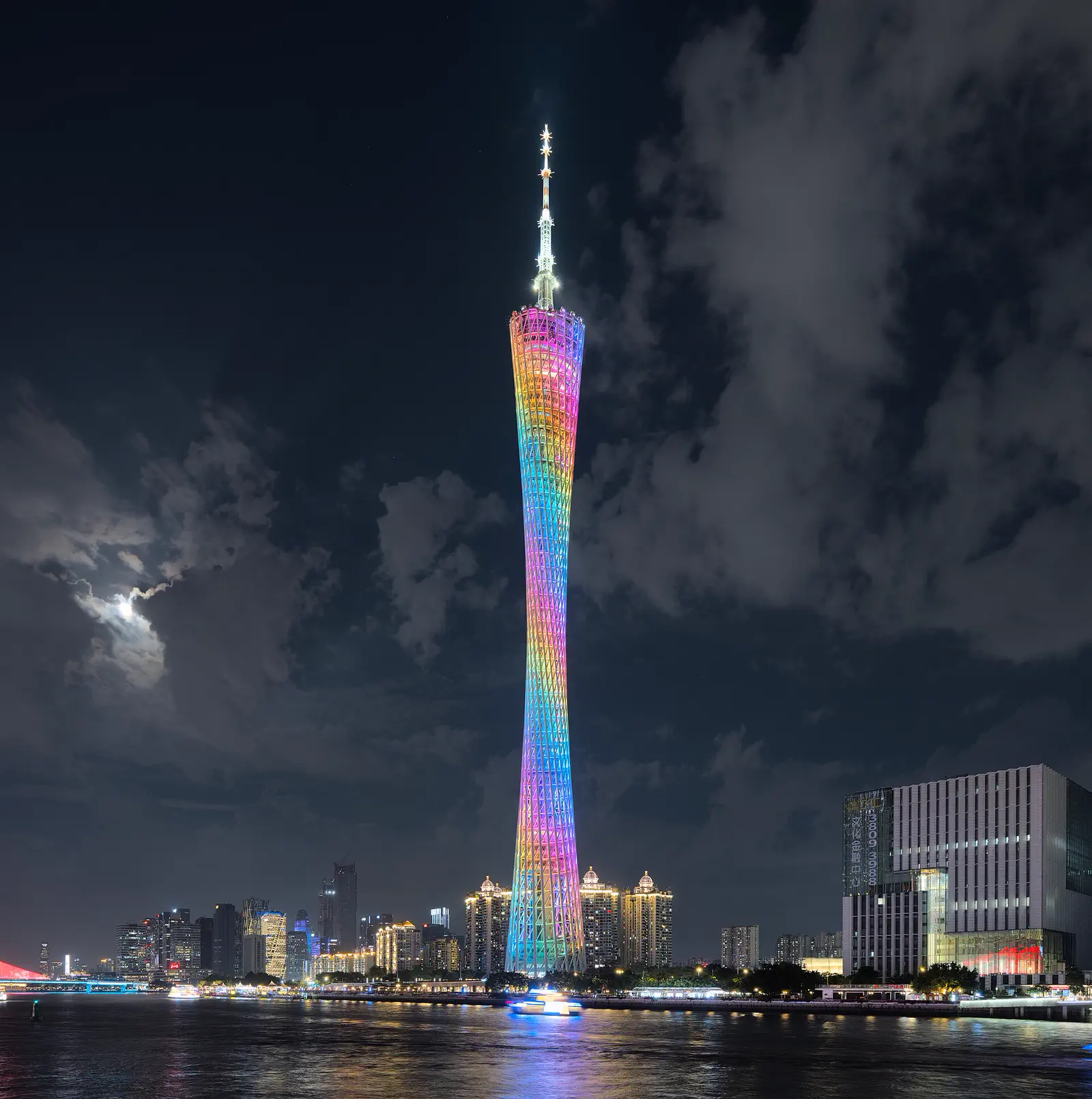
Canton Tower
Canton Tower 广州塔
604m broadcast tower with three observation decks, glass-floor sky-walk, and the 'Bubble Tram' Ferris wheel on top.
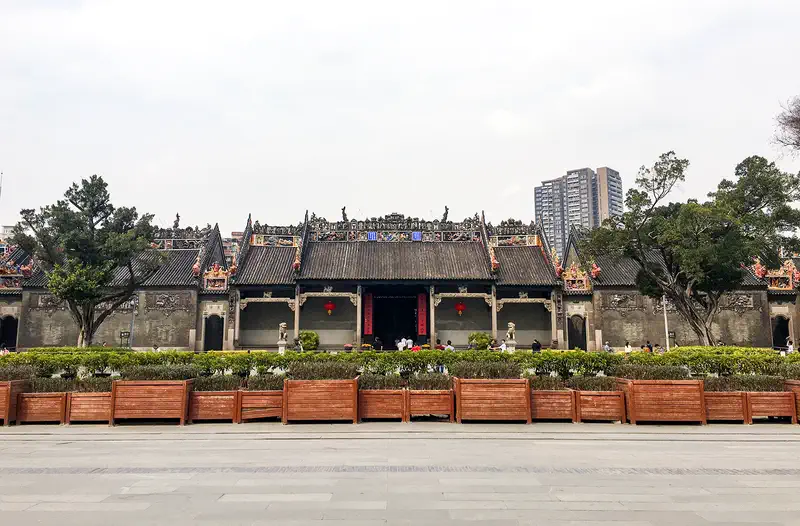
Chen Clan Ancestral Hall 陈家祠
The most ornate Lingnan-style courtyard complex in China, built 1894 as the academy and ancestral hall for the Chen clan of Guangdong.
China Visit Guide
China Danxia
China Danxia 中国丹霞
UNESCO Natural World Heritage site — a serial property of six Danxia landscapes across six provinces, representing China's defining red-cliff-and-pillar sandstone landform type, including Danxia Mountain, Zhangye, Taining and Langshan.
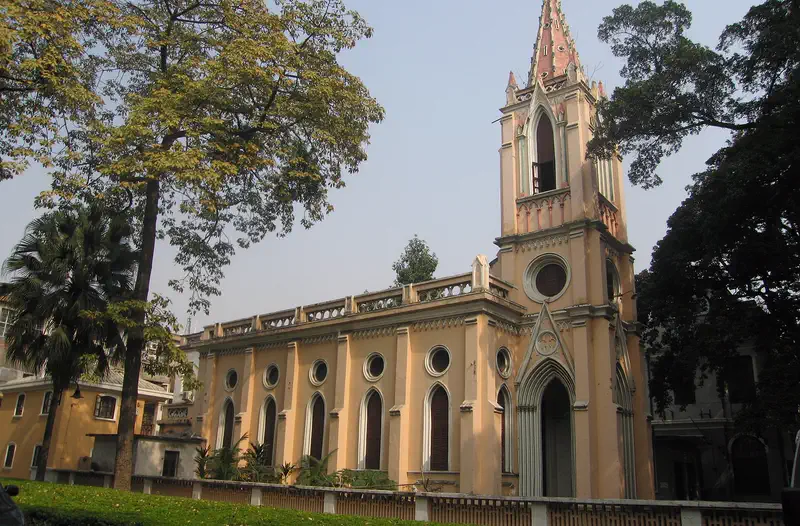
Shamian Island 沙面
Small Pearl River island that was the British and French concession from 1859. Restored late-19th-century European-style buildings, plane-tree streets.
Day trips within 150 km
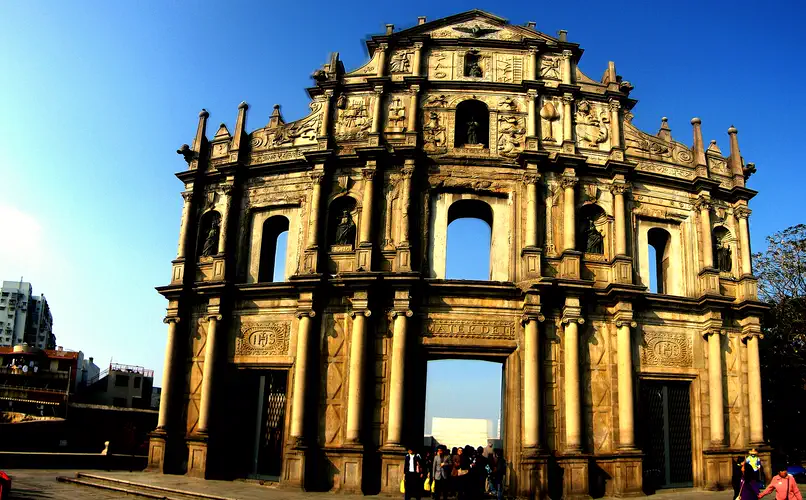
Ruins of St Paul's 大三巴牌坊
Façade of a 17th-century Jesuit cathedral, destroyed by fire in 1835. The most-photographed image of Macau, at the heart of the UNESCO historic centre.
≈ 110 km from Guangzhou
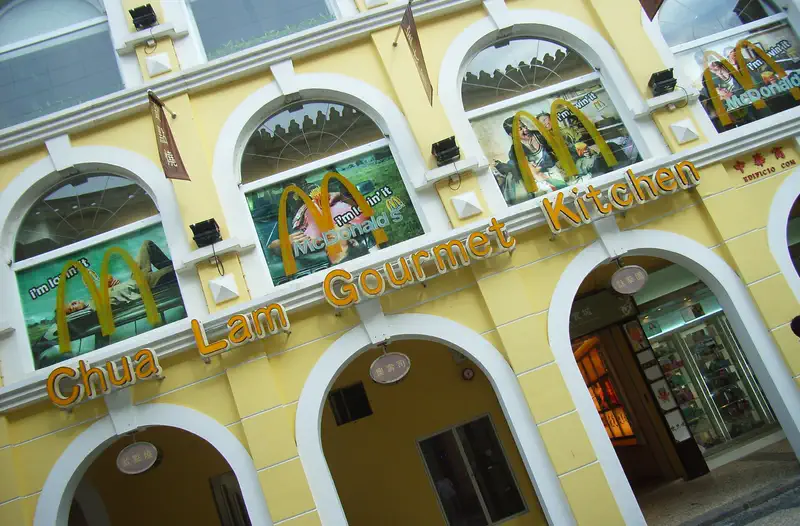
Senado Square 议事亭前地
Central pedestrian square paved in Portuguese mosaic stonework, surrounded by colonial-era public buildings. UNESCO-listed.
≈ 110 km from Guangzhou
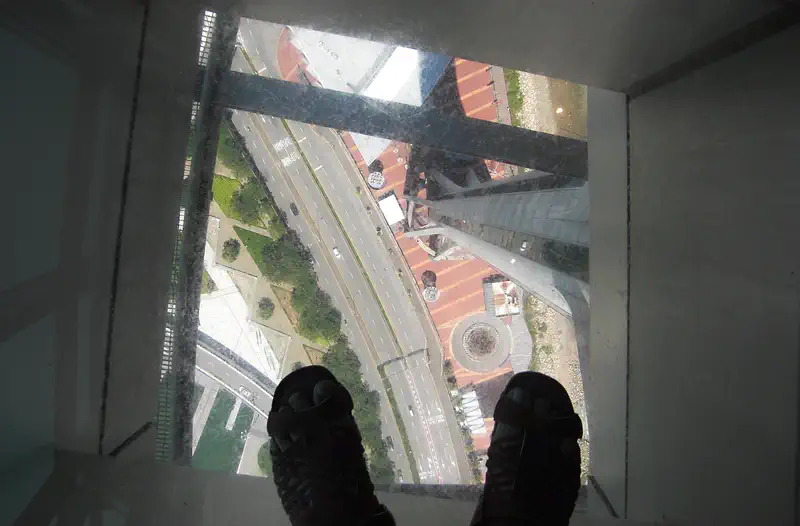
Macau Tower 澳门旅游塔
338m sightseeing tower in central Macau. Bungee jump (the world's highest commercial), Skywalk, observation deck.
≈ 110 km from Guangzhou
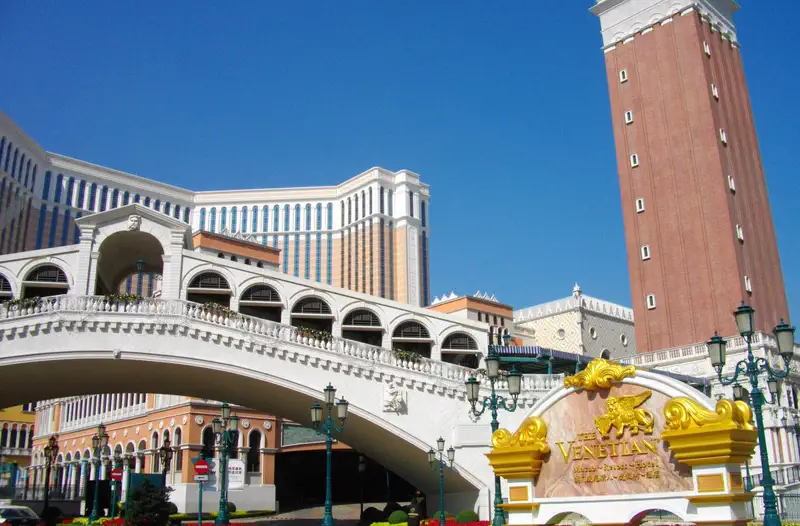
The Venetian Macau 威尼斯人
The world's largest casino by floor area. Mock-Italian streetscape with gondolas on canals; 3,000-room resort hotel.
≈ 115 km from Guangzhou
More on Guangzhou
Living here?
We have a dedicated expat guide covering cost of living, neighbourhoods, international schools, hospitals, and community life in Guangzhou.
Guangzhou expat living guide →Other cities in Guangdong
- Dongguan东莞
Manufacturing megacity in the Pearl River Delta corridor between Guangzhou and Shenzhen, with a population of 7.5 million (most migrant workers). Home to Keyuan Garden, a preserved Lingnan classical garden, and the Yumin Garden. Provides an honest window into Pearl River Delta industrial urbanism.
- Foshan佛山
Pearl River Delta city famous for ceramics, Cantonese opera, and martial-arts heritage. Bruce Lee's family hometown; the modern Cantonese-opera tradition's institutional base.
- Shenzhen深圳
Mainland China's youngest megacity, just over the Hong Kong border — the original Special Economic Zone, now home to Tencent, Huawei, DJI, BYD and a tech industry that powers most of what's in your pocket.
- Zhuhai珠海
Special Economic Zone facing Macau across the Pearl River estuary. The most-walkable mainland Chinese city — a 53 km Lover's Road coastal promenade, 146 km of beaches, and the world's longest sea-crossing bridge.
Itineraries visiting Guangzhou
- Guangzhou–Hong Kong–Macau triangle in 5 days
5d · Two days in Guangzhou's ancestral halls and food streets, two in Hong Kong, one in Macau.
- Modern architecture tour — Shanghai, Beijing and Guangzhou, 7 days
7d · Seven days focused on China's architectural output since 1990 — Shanghai's Pudong towers, Beijing's Olympic-era structures and Guangzhou's Zaha Hadid and Rem Koolhaas commissions.
- China shopping circuit: Yiwu, Guangzhou, and Shanghai in 10 days
10d · Yiwu wholesale market, Guangzhou factory-to-buyer districts, and Shanghai for retail and design sourcing.
- South China — Hong Kong, Guangzhou, Yangshuo and Guilin, 10 days
10d · Ten days through the south: Hong Kong as the entry point, Guangzhou for Cantonese food culture, then the karst river landscape of Yangshuo and Guilin before flying home.
Food of Southern China
- Beef Chow Fun干炒牛河
Flat rice noodles dry-fried with silky marinated beef, beansprouts and spring onion over a fierce wok flame.
- Bubble Tea珍珠奶茶
Taiwanese milk tea served with chewy tapioca pearls (boba) through a wide straw. The foundational format — oolong or black tea shaken with milk and ice — has spawned hundreds of variations across China's enormous tea-chain industry.
- Buddha Jumps Over the Wall佛跳墙
Fujian's banquet centrepiece — a slow-simmered soup of dried abalone, sea cucumber, scallop, ham and 20+ other ingredients.
- Cantonese Roast Goose烧鹅
Whole goose roasted to crisp-skinned tenderness. The most prized of the Cantonese siu mei roasted meats.
Guangzhou weather by month
| Month | Jan | Feb | Mar | Apr | May | Jun | Jul | Aug | Sep | Oct | Nov | Dec |
|---|---|---|---|---|---|---|---|---|---|---|---|---|
| High °C | 20 | 22 | 25 | 27 | 30 | 31 | 33 | 32 | 32 | 29 | 26 | 20 |
| Low °C | 12 | 13 | 17 | 20 | 23 | 26 | 27 | 26 | 25 | 21 | 18 | 12 |
| Rain mm | 25 | 107 | 148 | 175 | 300 | 378 | 201 | 363 | 276 | 126 | 46 | 23 |
| Rain days | 5 | 10 | 14 | 16 | 23 | 25 | 20 | 27 | 21 | 9 | 5 | 4 |
2019–2023 average via Open-Meteo ERA5 (ERA5 reanalysis). "Rain days" = days per month with ≥1 mm precipitation.
Frequently asked questions
- When is the best time to visit Guangzhou?
- The best months to visit Guangzhou are October, November, December, and March. Late October to early April is the comfortable window. November–February is dry and mild, the consensus best time.
- How many days do you need in Guangzhou?
- Plan 4 to 5 days for Guangzhou if you want to see the headline sights without rushing — Chen Clan Ancestral Hall (Chen Family Academy), Shamian Island, Canton Tower observation deck for sunset over the Pearl River. Add an extra day for day trips from the city or for repeat visits to your favourite neighbourhood.
- Is Guangzhou safe for tourists?
- Guangzhou is generally safe. The Liwan area at night is fine. Be alert at the long-distance bus stations and around Guangzhou Railway Station, which attract more petty crime than other parts of the city.
- How do you get around Guangzhou?
- Metro: 16 lines, English signage, ¥2–¥14 per trip, scan QR with Alipay/WeChat. Lines 1, 2, 3 and 5 cover the tourist areas. Didi works.
- What's the daily budget for Guangzhou?
- Budget guide for Guangzhou: backpackers from around ¥320/day, mid-range travellers ¥700/day, comfortable trips from ¥1700/day. These ranges cover accommodation, food, local transport and one paid sight per day, and exclude flights to and from the city.
- Where should you stay in Guangzhou?
- Tianhe (Zhujiang New Town / Canton Tower) for the modern CBD, hotels with skyline views, near the South high-speed station. Yuexiu / Beijing Road for central historic Guangzhou, walking to Liwan and the temples. Shamian Island for boutique heritage hotels with Pearl River views.
Spotted something out of date? Submit a correction.
Research
Cross-checked against primary sources
Verified
Address, hours, fees confirmed at the date shown
Updated
Re-verified periodically; corrections welcome