
CITY · GUANGDONG
Foshan
佛山 · Fóshān
Overview
Pearl River Delta city famous for ceramics, Cantonese opera, and martial-arts heritage. Bruce Lee's family hometown; the modern Cantonese-opera tradition's institutional base.
Foshan ('Buddha Mountain') is one of the four ancient market towns of southern China, the others being Zhuxianzhen (Henan), Jingdezhen (Jiangxi) and Hankou (Hubei). It produced ceramics — particularly the Shiwan kilns' high-fired stonewares, animal figures and roof ornaments — for over 800 years; the Shiwan tradition remains active and the pottery district is one of the more honest industrial-heritage areas in Guangdong.
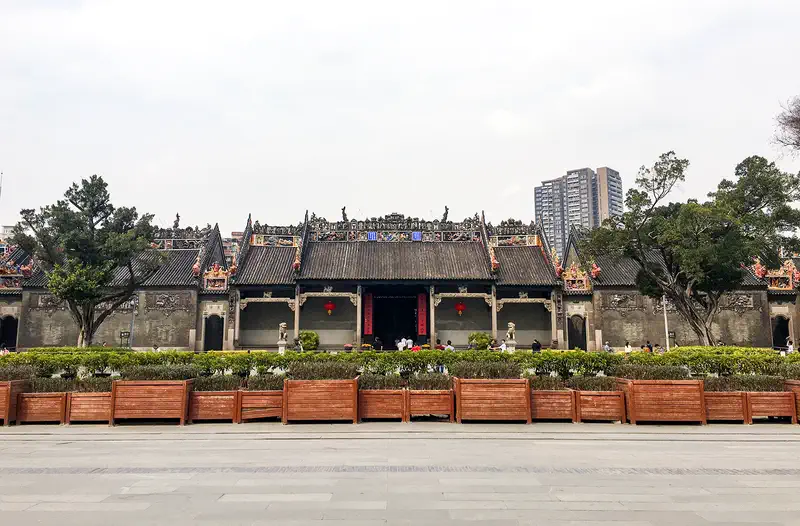
The modern city is one of the Pearl River Delta's manufacturing engines for furniture, household appliances and ceramics exports, but the Chancheng old-town core preserves a concentrated heritage district. The Foshan Ancestral Temple (Zumiao, rebuilt 1078 CE after an earlier structure) serves as both civic ceremonial centre and a major folk-religion site dedicated to the northern god Xuantian Shangdi; it doubles as the Foshan Museum and houses a notable collection of Wan Fung opera-related material. Cantonese opera is institutionally based in Foshan — the Guangdong Yueju Institute trains performers here.
The Wong Fei Hung Memorial Hall in nearby Nanhai commemorates the late-Qing southern-style (Hung Gar) martial artist who became the subject of over 100 Hong Kong films, most famously the Once Upon a Time in China series. Bruce Lee's family hometown is Junan township in Shunde district; the Bruce Lee Paradise theme park near his family's ancestral home attracts substantial diaspora-Chinese visitors.
Foshan and Guangzhou now operate an integrated metro system — commuting between the two cities takes under 30 minutes.
What to see
- Foshan Ancestral Temple (1078 CE)
- Wong Fei Hung Memorial Hall and martial-arts museum
- Shiwan Pottery Industry Museum and the kilns
- Liang Garden — late-Qing scholar's residence
- Lingnan Tiandi (restored old-town complex)
What to eat
- Foshan double-skinned milk pudding (the regional original)
- Shunde fresh-water fish (river carp, river shrimp)
- Stuffed lotus root
- Cantonese tongshui sweet-soup desserts
Getting there
No airport — fly to Guangzhou Baiyun (40 km) or Hong Kong. Foshan West HSR: Guangzhou 20 min, Hong Kong 90 min.
Getting around
Metro 4 lines + Foshan-Guangzhou intercity metro. Foshan and Guangzhou are now effectively one metro system.
Where to stay
Chancheng district (central, walkable to the Ancestral Temple).
We list neighbourhoods, not specific hotels — we don't endorse hotels.
When to go
October–April.
Budget guide (CNY per day)
| Backpacker | ¥240 |
| Mid-range | ¥550 |
| Comfortable | ¥1300 |
Nearby attractions
Day trips within 150 km
China Visit Guide
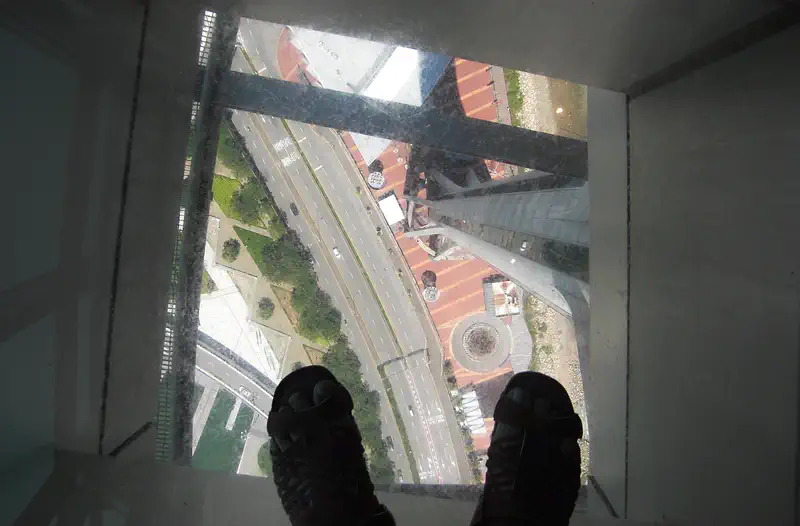
Canton Tower
Canton Tower 广州塔
604m broadcast tower with three observation decks, glass-floor sky-walk, and the 'Bubble Tram' Ferris wheel on top.
≈ 25 km from Foshan
Other cities in Guangdong
- Dongguan东莞
Manufacturing megacity in the Pearl River Delta corridor between Guangzhou and Shenzhen, with a population of 7.5 million (most migrant workers). Home to Keyuan Garden, a preserved Lingnan classical garden, and the Yumin Garden. Provides an honest window into Pearl River Delta industrial urbanism.
- Guangzhou广州
Capital of Guangdong, the historic southern trading port and the home of Cantonese cooking. The first Chinese city to industrialise, the centre of dim sum, and a working megacity less polished than Shanghai but with deeper food roots.
- Shenzhen深圳
Mainland China's youngest megacity, just over the Hong Kong border — the original Special Economic Zone, now home to Tencent, Huawei, DJI, BYD and a tech industry that powers most of what's in your pocket.
- Zhuhai珠海
Special Economic Zone facing Macau across the Pearl River estuary. The most-walkable mainland Chinese city — a 53 km Lover's Road coastal promenade, 146 km of beaches, and the world's longest sea-crossing bridge.
Food of Southern China
- Beef Chow Fun干炒牛河
Flat rice noodles dry-fried with silky marinated beef, beansprouts and spring onion over a fierce wok flame.
- Bubble Tea珍珠奶茶
Taiwanese milk tea served with chewy tapioca pearls (boba) through a wide straw. The foundational format — oolong or black tea shaken with milk and ice — has spawned hundreds of variations across China's enormous tea-chain industry.
- Buddha Jumps Over the Wall佛跳墙
Fujian's banquet centrepiece — a slow-simmered soup of dried abalone, sea cucumber, scallop, ham and 20+ other ingredients.
- Cantonese Roast Goose烧鹅
Whole goose roasted to crisp-skinned tenderness. The most prized of the Cantonese siu mei roasted meats.
Foshan weather by month
| Month | Jan | Feb | Mar | Apr | May | Jun | Jul | Aug | Sep | Oct | Nov | Dec |
|---|---|---|---|---|---|---|---|---|---|---|---|---|
| High °C | 20 | 22 | 25 | 27 | 30 | 32 | 34 | 32 | 32 | 29 | 26 | 20 |
| Low °C | 12 | 13 | 17 | 20 | 23 | 26 | 27 | 26 | 25 | 21 | 18 | 12 |
| Rain mm | 25 | 105 | 150 | 169 | 293 | 306 | 193 | 375 | 279 | 136 | 55 | 27 |
| Rain days | 5 | 9 | 15 | 16 | 22 | 25 | 19 | 26 | 21 | 9 | 5 | 4 |
2019–2023 average via Open-Meteo ERA5 (ERA5 reanalysis). "Rain days" = days per month with ≥1 mm precipitation.
Frequently asked questions
- When is the best time to visit Foshan?
- The best months to visit Foshan are October, November, December, and March. October–April.
- How many days do you need in Foshan?
- Plan 3 days for Foshan if you want to see the headline sights without rushing — Foshan Ancestral Temple (1078 CE), Wong Fei Hung Memorial Hall and martial, Shiwan Pottery Industry Museum and the kilns. Add an extra day for day trips from the city or for repeat visits to your favourite neighbourhood.
- How do you get around Foshan?
- Metro 4 lines + Foshan-Guangzhou intercity metro. Foshan and Guangzhou are now effectively one metro system.
- What's the daily budget for Foshan?
- Budget guide for Foshan: backpackers from around ¥240/day, mid-range travellers ¥550/day, comfortable trips from ¥1300/day. These ranges cover accommodation, food, local transport and one paid sight per day, and exclude flights to and from the city.
- Where should you stay in Foshan?
- Chancheng district (central, walkable to the Ancestral Temple).
Spotted something out of date? Submit a correction.
Research
Cross-checked against primary sources
Verified
Address, hours, fees confirmed at the date shown
Updated
Re-verified periodically; corrections welcome