CITY · GUANGDONG
Dongguan
东莞 · Dōngguǎn
Overview
Manufacturing megacity in the Pearl River Delta corridor between Guangzhou and Shenzhen, with a population of 7.5 million (most migrant workers). Home to Keyuan Garden, a preserved Lingnan classical garden, and the Yumin Garden. Provides an honest window into Pearl River Delta industrial urbanism.
Dongguan is the manufacturing engine of the Pearl River Delta. It does not try to be a tourist city and largely succeeds in that ambition. The city has been a global hub for electronics, textiles, shoes, and furniture production since the 1980s, when Hong Kong and Taiwanese factories began relocating across the border to take advantage of lower costs. The result is a city of 7.5 million people — the vast majority migrants from inland provinces — spread across an industrialised plain between Guangzhou and Shenzhen, with a skyline of factory sheds, logistics warehouses, and residential blocks for the workforce.
For the traveller willing to look past the industrial surface, Dongguan contains two elements of genuine cultural interest. Keyuan Garden (可园), in the Dongguan city centre district, is one of the four great Lingnan classical gardens — a compact, intricately designed garden-and-compound from the mid-nineteenth century, with characteristic Cantonese architectural features including curved roof ridges, coral stone piers, and rooms arranged around a central pool. It was the private estate of a Qing official and is now a public park and museum. Yumin Garden (虎门余荫山房 is in Panyu, but Dongguan's Yumin Garden deserves note) and the Keyuan complex are the main heritage draws.
The Humen area, 30 km south of the city centre, was the site of Lin Zexu's famous destruction of British opium in 1839 — the event that triggered the First Opium War. The Humen Opium War Museum and the Weiyuan Island fort battery are serious historical sites covering this pivotal episode from a Chinese perspective, and are among the most candid colonial-history museums in Guangdong.
Dongguan's food scene is Cantonese with an industrial-city practicality — inexpensive, good, and designed for the working population. The seafood along the Dongcheng riverfront is notably good.
Cultural & access notes
The Humen Opium War sites are presented from a Chinese nationalist perspective — a useful lens to understand Chinese collective memory of the nineteenth century. Cantonese culture is the baseline here: the dialect, the food, the tea culture, and the dim sum rituals all follow Guangdong patterns rather than northern or Mandarin-sphere ones.
What to see
- Keyuan Garden — Lingnan classical garden, Qing dynasty, city centre
- Humen Opium War Museum — 1839 opium destruction site, First Opium War history
- Weiyuan Island Fort Battery — Qing-era coastal defences, now a scenic area
- Dongguan Expo Centre — large trade fair venue, reflects the city's commercial character
- Songshan Lake Science and Technology Industrial Park — tech campus with artificial lake
- Nancheng district waterfront — riverside promenade, restaurants
- Shilong town — preserved commercial streets, Cantonese-style shophouses
What to eat
- Dongguan-style wonton noodles — thinner broth and smaller wontons than Guangzhou
- Cantonese dim sum — yum cha is a serious morning institution in local teahouses
- Eel congee — a Cantonese staple done well in Dongguan's riverfront restaurants
- Roast goose — local Cantonese wood-fired preparations are excellent
- Seafood — fresh and priced for the local market, not inflated for tourists
- Factory-district lunch sets — the ¥15–25 set meal in workers' canteens is sociologically interesting and edible
Getting there
Dongguan is served by two major airports: Shenzhen Bao'an (SZX), approximately 60 km south, and Guangzhou Baiyun (CAN), approximately 60 km north. Both are connected by intercity rail and expressway. Within the Pearl River Delta, Dongguan is best reached by the Guangzhou–Dongguan–Shenzhen intercity railway (GDS line), with fast frequent services. High-speed rail connections run to Beijing (9 hours) and Shanghai (5 hours) from Dongguan North station.
Getting around
The GDS intercity railway is the most useful line for visitors, connecting Dongguan's main districts to Guangzhou and Shenzhen. Within the city, the Dongguan Metro (opened in stages since 2016) covers the main commercial areas. Taxis and Didi are plentiful.
Where to stay
Major chain hotels in Dongcheng and Nancheng districts. The Songshan Lake area has several resort hotels in a landscaped setting away from the urban core. Dongguan has benefited from Pearl River Delta business travel — hotels are generally well-maintained.
We list neighbourhoods, not specific hotels — we don't endorse hotels.
When to go
October to March is the most comfortable period — subtropical winter is mild (15–22°C) and dry. The spring Canton Fair (April and October) in nearby Guangzhou brings hotel price spikes across the Pearl River Delta, including Dongguan. Summer is hot and humid.
Budget guide (CNY per day)
| Backpacker | ¥180 |
| Mid-range | ¥380 |
| Comfortable | ¥750 |
Safety notes
Dongguan is a large industrial city with no specific safety concerns for visitors. The labour activism history of the manufacturing sector is well-documented but does not affect tourism.
Nearby attractions
Day trips within 150 km
China Visit Guide
Canton Tower
Canton Tower 广州塔
604m broadcast tower with three observation decks, glass-floor sky-walk, and the 'Bubble Tram' Ferris wheel on top.
≈ 45 km from Dongguan
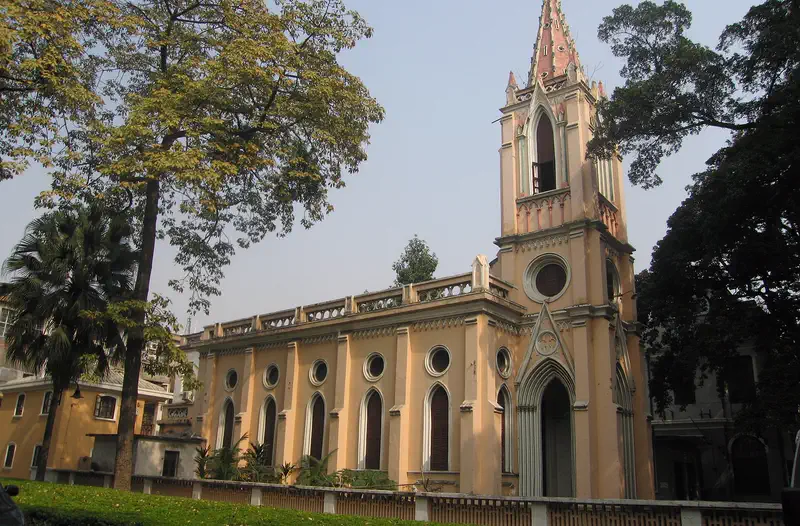
Shamian Island 沙面
Small Pearl River island that was the British and French concession from 1859. Restored late-19th-century European-style buildings, plane-tree streets.
≈ 55 km from Dongguan
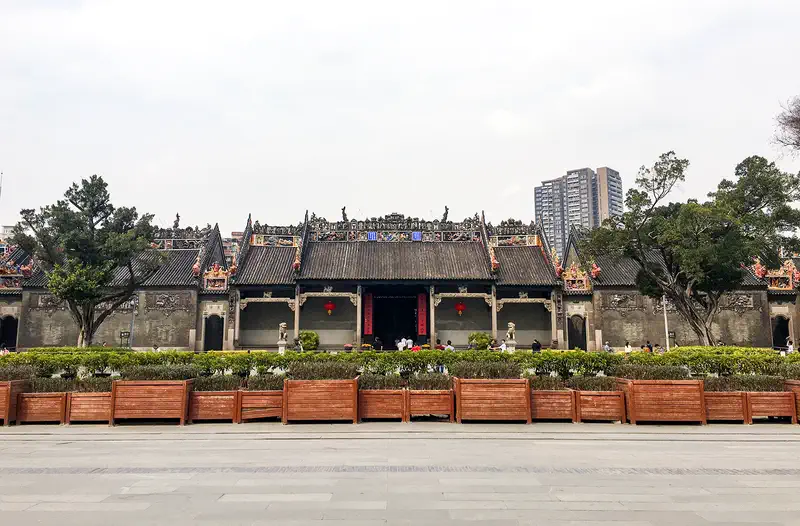
Chen Clan Ancestral Hall 陈家祠
The most ornate Lingnan-style courtyard complex in China, built 1894 as the academy and ancestral hall for the Chen clan of Guangdong.
≈ 55 km from Dongguan
China Visit Guide
Hong Kong Disneyland
Hong Kong Disneyland 香港迪士尼乐园
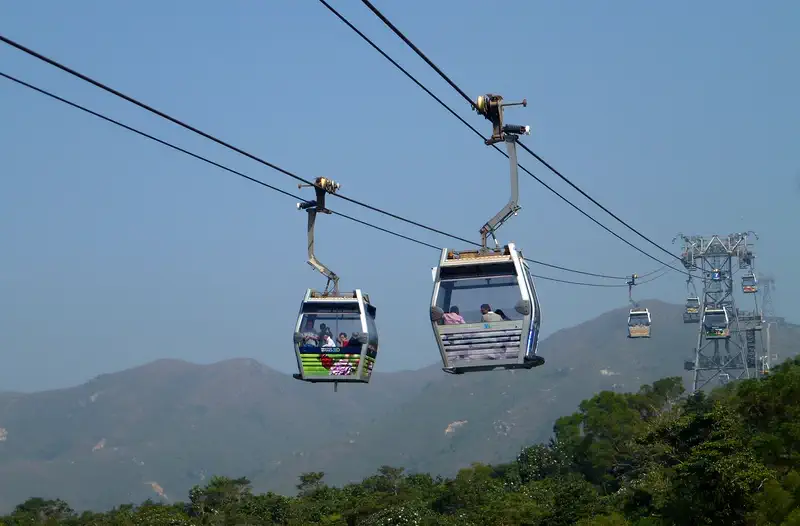
Hong Kong Disneyland — the smaller of the two Chinese Disney parks but with classic-Disney charm. On Lantau.
≈ 85 km from Dongguan
Other cities in Guangdong
- Foshan佛山
Pearl River Delta city famous for ceramics, Cantonese opera, and martial-arts heritage. Bruce Lee's family hometown; the modern Cantonese-opera tradition's institutional base.
- Guangzhou广州
Capital of Guangdong, the historic southern trading port and the home of Cantonese cooking. The first Chinese city to industrialise, the centre of dim sum, and a working megacity less polished than Shanghai but with deeper food roots.
- Shenzhen深圳
Mainland China's youngest megacity, just over the Hong Kong border — the original Special Economic Zone, now home to Tencent, Huawei, DJI, BYD and a tech industry that powers most of what's in your pocket.
- Zhuhai珠海
Special Economic Zone facing Macau across the Pearl River estuary. The most-walkable mainland Chinese city — a 53 km Lover's Road coastal promenade, 146 km of beaches, and the world's longest sea-crossing bridge.
Food of Southern China
- Beef Chow Fun干炒牛河
Flat rice noodles dry-fried with silky marinated beef, beansprouts and spring onion over a fierce wok flame.
- Bubble Tea珍珠奶茶
Taiwanese milk tea served with chewy tapioca pearls (boba) through a wide straw. The foundational format — oolong or black tea shaken with milk and ice — has spawned hundreds of variations across China's enormous tea-chain industry.
- Buddha Jumps Over the Wall佛跳墙
Fujian's banquet centrepiece — a slow-simmered soup of dried abalone, sea cucumber, scallop, ham and 20+ other ingredients.
- Cantonese Roast Goose烧鹅
Whole goose roasted to crisp-skinned tenderness. The most prized of the Cantonese siu mei roasted meats.
Dongguan weather by month
| Month | Jan | Feb | Mar | Apr | May | Jun | Jul | Aug | Sep | Oct | Nov | Dec |
|---|---|---|---|---|---|---|---|---|---|---|---|---|
| High °C | 21 | 23 | 26 | 27 | 30 | 31 | 32 | 31 | 31 | 29 | 26 | 21 |
| Low °C | 12 | 13 | 17 | 19 | 23 | 25 | 26 | 25 | 24 | 21 | 17 | 12 |
| Rain mm | 23 | 104 | 153 | 175 | 311 | 390 | 218 | 375 | 297 | 123 | 73 | 35 |
| Rain days | 6 | 11 | 15 | 16 | 23 | 26 | 23 | 26 | 21 | 9 | 6 | 4 |
2019–2023 average via Open-Meteo ERA5 (ERA5 reanalysis). "Rain days" = days per month with ≥1 mm precipitation.
Frequently asked questions
- When is the best time to visit Dongguan?
- The best months to visit Dongguan are October, November, December, January, February, and March. October to March is the most comfortable period — subtropical winter is mild (15–22°C) and dry. The spring Canton Fair (April and October) in nearby Guangzhou brings hotel price spikes across the Pearl River Delta, including Dongguan.
- How many days do you need in Dongguan?
- Plan 3 days for Dongguan if you want to see the headline sights without rushing — Keyuan Garden, Humen Opium War Museum, Weiyuan Island Fort Battery. Add an extra day for day trips from the city or for repeat visits to your favourite neighbourhood.
- Is Dongguan safe for tourists?
- Dongguan is a large industrial city with no specific safety concerns for visitors. The labour activism history of the manufacturing sector is well-documented but does not affect tourism.
- How do you get around Dongguan?
- The GDS intercity railway is the most useful line for visitors, connecting Dongguan's main districts to Guangzhou and Shenzhen. Within the city, the Dongguan Metro (opened in stages since 2016) covers the main commercial areas. Taxis and Didi are plentiful.
- What's the daily budget for Dongguan?
- Budget guide for Dongguan: backpackers from around ¥180/day, mid-range travellers ¥380/day, comfortable trips from ¥750/day. These ranges cover accommodation, food, local transport and one paid sight per day, and exclude flights to and from the city.
- Where should you stay in Dongguan?
- Major chain hotels in Dongcheng and Nancheng districts. The Songshan Lake area has several resort hotels in a landscaped setting away from the urban core. Dongguan has benefited from Pearl River Delta business travel — hotels are generally well-maintained.
Spotted something out of date? Submit a correction.
Research
Cross-checked against primary sources
Verified
Address, hours, fees confirmed at the date shown
Updated
Re-verified periodically; corrections welcome