Natural site · JIANGXI · UNESCO
Mt Lu (Lushan)
庐山 · Lúshān
About
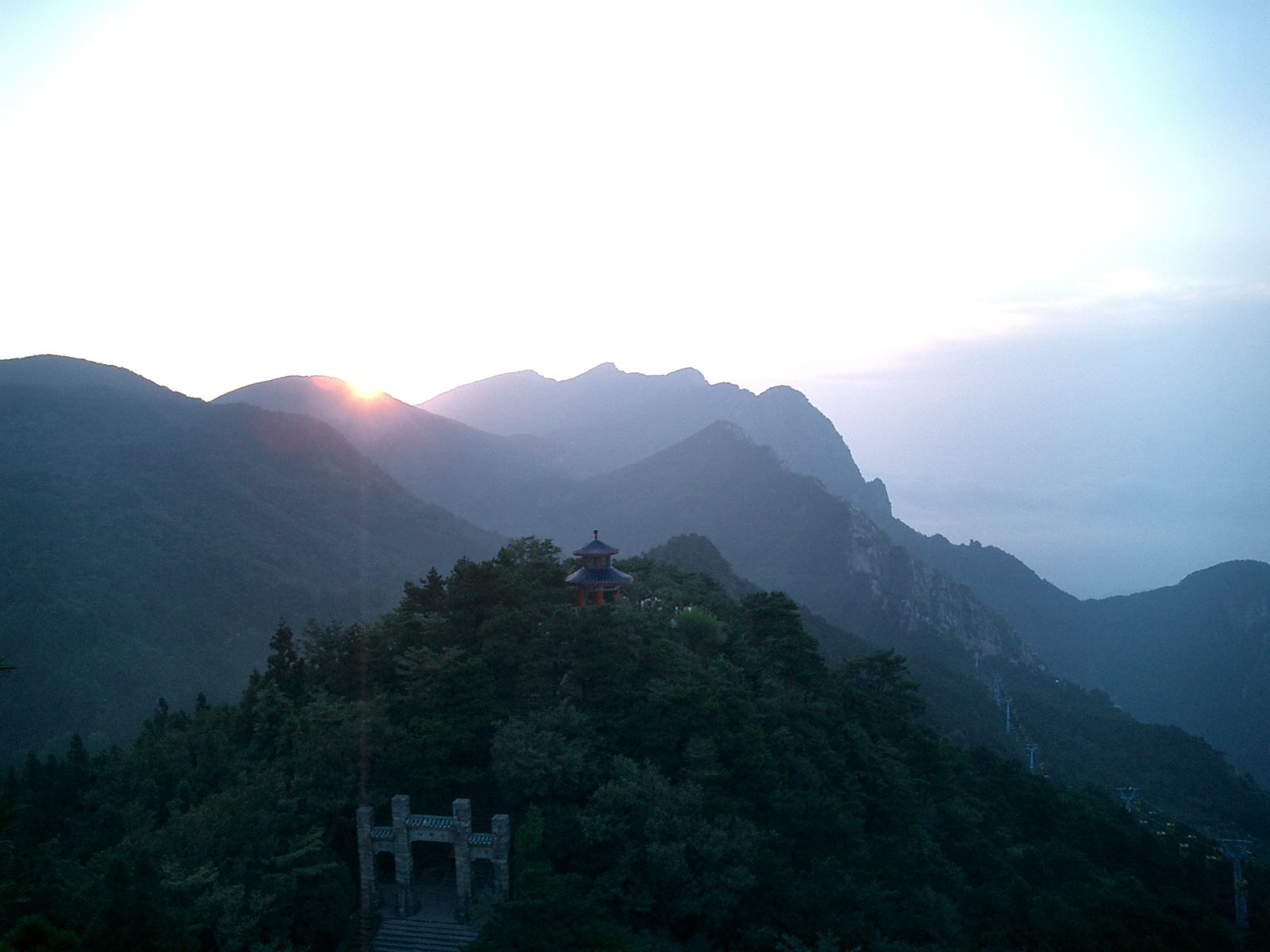
UNESCO-listed Buddhist holy mountain in northern Jiangxi. Densely wooded, with substantial early-20th-century European-style summer houses at altitude.
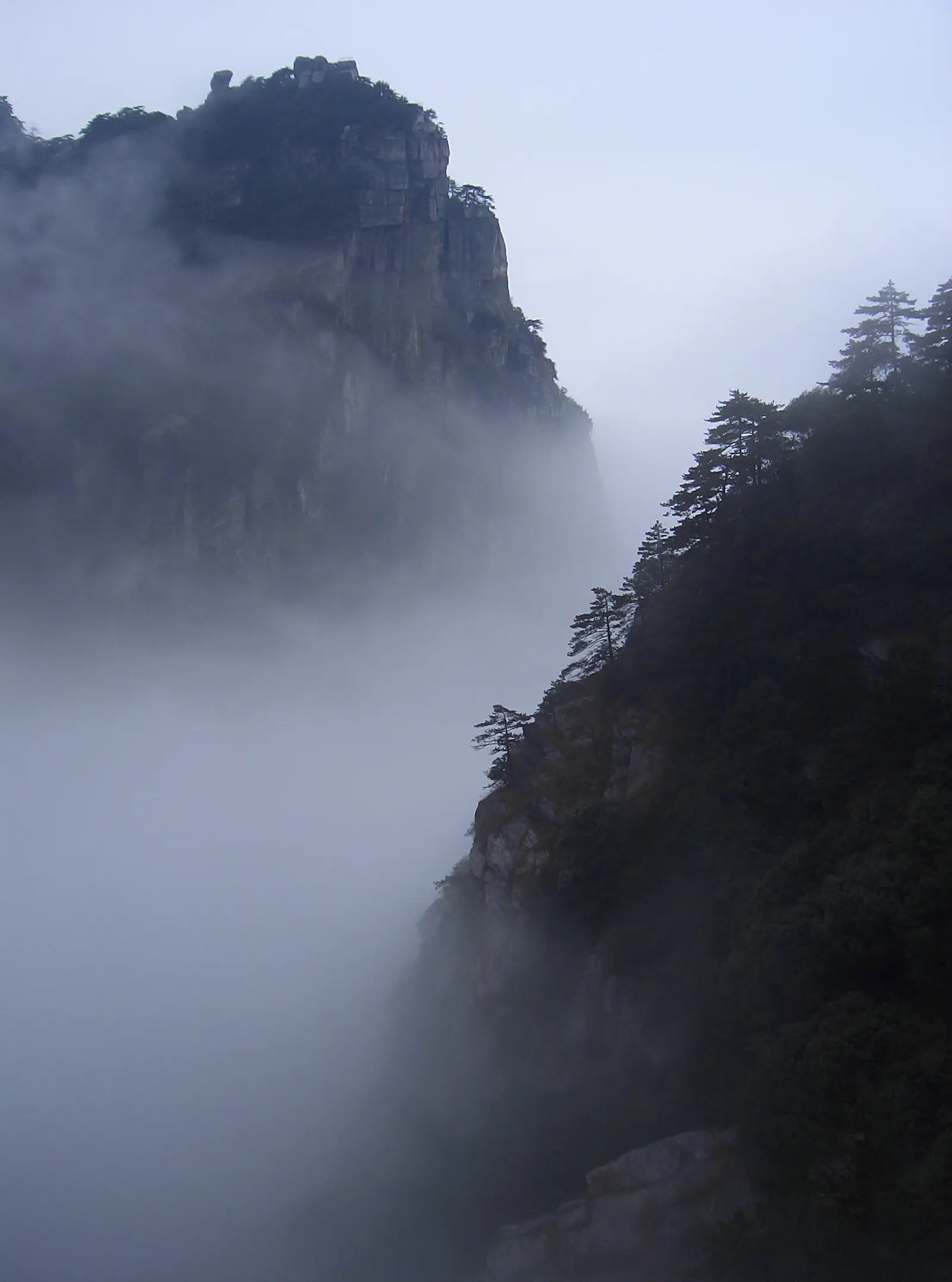
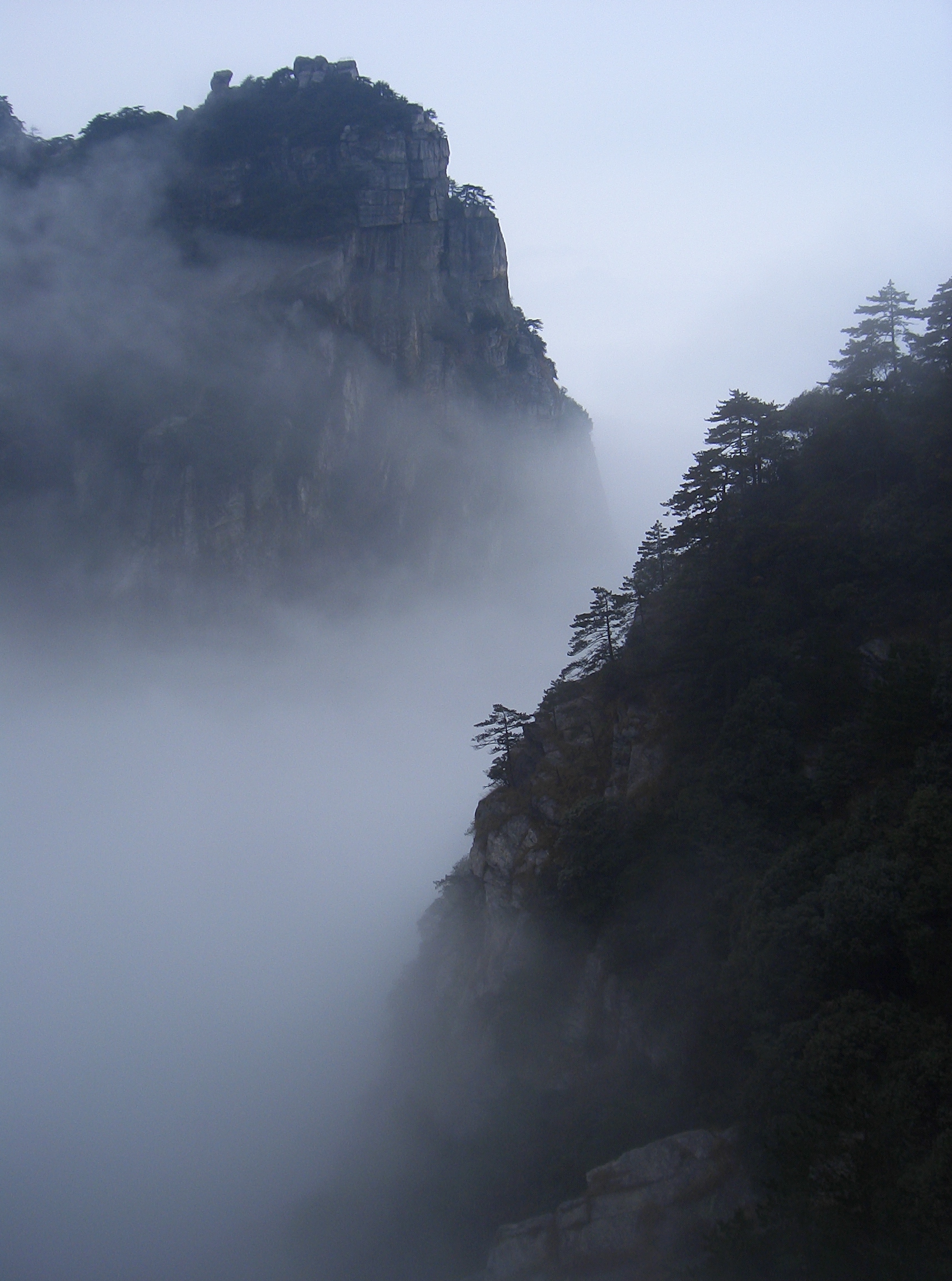
Mt Lu — Lushan — rises from the south shore of Poyang Lake in northern Jiangxi to peaks reaching 1,474 metres, its summits typically shrouded in cloud and mist that have made it one of the canonical subjects of Chinese landscape painting since the Tang dynasty. The specific visual quality — granite peaks and forested gorges appearing and disappearing through moving cloud — has attracted poets, painters, and monks for two thousand years. Su Dongpo's Song-dynasty quatrain 'Looking at Lushan from the side it forms ridges; from the front it forms peaks; near and far, high and low — different shapes everywhere' is the most-quoted observation, and also one of the more precisely accurate descriptions of a mountain.
UNESCO listed Mt Lu in 1996 as a World Cultural Landscape, a designation that acknowledged both the natural environment and the accumulation of cultural sites: Donglin Temple (founded 386 CE, associated with the Pure Land school of Buddhism), the Daoist Qingyan Cave, the White Deer Grotto Academy (Bailudong Shuyuan, revived by Zhu Xi in 1179 and subsequently one of the most influential Confucian schools in China), and numerous other historical structures across the mountain.
Guling town, at approximately 1,000 metres altitude on the main plateau, is the visitor base and a distinct historical layer in its own right. In the late 19th century, Western missionaries and diplomats began building summer residences on Lushan to escape the Yangtze valley heat; by the 1920s and 1930s, Guling had several hundred European-style stone cottages and had become the summer retreat of the Nationalist government. Chiang Kai-shek's residence, where he spent significant time including the days before the Marco Polo Bridge Incident in 1937, is preserved as a museum. The mix of walking trails, historical sites, and cooler summer temperatures make Lushan a more complex destination than a typical sacred mountain.
How to get there
HSR to Jiujiang or Nanchang, then bus or driver.
When to visit
May–October. Avoid Golden Week.
UNESCO inscription
“Mount Lushan, in Jiangxi, is one of the spiritual centres of Chinese civilization. Buddhist and Taoist temples, along with landmarks of Confucianism, where the most eminent masters taught, blend effortlessly into a strikingly beautiful landscape which has inspired countless artists who developed the aesthetic approach to nature found in Chinese culture.”
Gallery
Itineraries featuring this site
Other natural sites in China
- Badain Jaran Desert — Lakes and Dunes巴丹吉林沙漠—沙山湖泊群
UNESCO · UNESCO Natural World Heritage site in Inner Mongolia — the third largest desert in China, featuring some of the world's tallest stationary dunes and a unique network of freshwater and saline lakes sustained by a still-unexplained subterranean water system.
- China Danxia中国丹霞
UNESCO · UNESCO Natural World Heritage site — a serial property of six Danxia landscapes across six provinces, representing China's defining red-cliff-and-pillar sandstone landform type, including Danxia Mountain, Zhangye, Taining and Langshan.
- Crescent Lake & Mingsha Mountain月牙泉与鸣沙山
Spring-fed crescent-shaped lake at the foot of 250m sand dunes, 5 km south of Dunhuang. Camel rides, sand-sledding, sunset viewing.
- Daocheng Yading Nature Reserve稻城亚丁
A remote highland sanctuary in south-western Sichuan centred on three sacred snow peaks venerated by Tibetan Buddhism, often called the 'last Shangri-La'.
- Dianchi Lake Kunming滇池
The largest freshwater lake in Yunnan at 300 km², historically the scenic centrepiece of the Kunming basin and now being restored after decades of water-quality degradation.
- Erhai Lake洱海
250 km² freshwater lake east of Dali Old Town. 130 km cycling loop; Bai-minority lakeside villages on the eastern shore.
- Fanjingshan梵净山
UNESCO · UNESCO Natural World Heritage site in Guizhou — an isolated mountain island rising from subtropical forest, home to two critically endangered endemic species: the Guizhou snub-nosed monkey and the Fanjingshan fir.
- Hailuogou Glacier National Park海螺沟冰川
The lowest-altitude glacier accessible in Asia, flowing from the slopes of Mount Gongga down through a bamboo and subtropical forest valley to just 2,980 m above sea level.
Other UNESCO World Heritage sites in China
- Ancient Villages of Southern Anhui — Xidi and Hongcun皖南古村落—西递、宏村
UNESCO-listed pair of Ming-Qing Huizhou merchant villages in southern Anhui, renowned for whitewashed walls, inky horsehead gables and moon-shaped ponds.
- Archaeological Ruins of Liangzhu City良渚古城遗址
UNESCO-listed archaeological site in Hangzhou preserving the remains of a 5,000-year-old city with a sophisticated water-management system, jade ritual culture and social hierarchy — regarded as one of the earliest state-level societies in East Asia.
- Badain Jaran Desert — Lakes and Dunes巴丹吉林沙漠—沙山湖泊群
UNESCO Natural World Heritage site in Inner Mongolia — the third largest desert in China, featuring some of the world's tallest stationary dunes and a unique network of freshwater and saline lakes sustained by a still-unexplained subterranean water system.
- Capital Cities and Tombs of the Ancient Koguryo Kingdom高句丽王城、王陵及贵族墓葬
UNESCO-listed capital cities and royal tombs of the Koguryo Kingdom in Jian, Jilin — the Chinese portion of a transnational heritage property shared with North Korea, representing one of the most powerful states of ancient East Asia.
- China Danxia中国丹霞
UNESCO Natural World Heritage site — a serial property of six Danxia landscapes across six provinces, representing China's defining red-cliff-and-pillar sandstone landform type, including Danxia Mountain, Zhangye, Taining and Langshan.
- Classical Gardens of Suzhou (UNESCO)苏州古典园林
UNESCO-listed collection of private gardens in Suzhou — four inscribed in 1997 and five more added in 2000 — representing the pinnacle of Chinese garden design through the refined integration of architecture, water, rock and plant.
- Couple's Retreat Garden耦园
UNESCO-listed Suzhou garden organised symmetrically around a central residence. Less crowded than the four most-visited gardens.
- Drepung Monastery哲蚌寺
Once the largest monastery in the world (10,000+ monks). 8 km west of Lhasa. Active Gelugpa monastery; debating courtyard sessions in the afternoon.
Frequently asked questions
- How much does Mt Lu (Lushan) cost to visit?
- Adult entry to Mt Lu (Lushan) is ¥160, ¥80 for children. Through-ticket valid 7 days.
- When is Mt Lu (Lushan) open?
- Mt Lu (Lushan) opening hours: 24/7 on the mountain.
- How long do you need at Mt Lu (Lushan)?
- Allow 24–48 hours for Mt Lu (Lushan). Add buffer time if you plan to visit at peak season or include nearby sights in the same trip.
- When is the best time to visit Mt Lu (Lushan)?
- May–October. Avoid Golden Week.
- How do you get to Mt Lu (Lushan)?
- HSR to Jiujiang or Nanchang, then bus or driver.
Spotted something out of date? Submit a correction.
Research
Cross-checked against primary sources
Verified
Address, hours, fees confirmed at the date shown
Updated
Re-verified periodically; corrections welcome