3 days
Day 1: Xiamen — Gulangyu island, Nanputuo Temple. Day 2: Tulou day trip from Xiamen (long day, 5–6h driving). Day 3: Quanzhou — mosque, Kaiyuan Temple, Maritime Silk Road museums.
Province · East China
福建省 · Fújiàn Shěng — capital Fuzhou, fujian / min (buddha jumps over the wall, fish ball soup, peanut sauces, hokkien noodles).
History & character
Fujian is mountainous — over 80% hill or mountain — and was historically isolated from the rest of China by terrain. Its coastline, however, faces directly onto the South China Sea trade routes, and from the Song dynasty (10th century) onwards Fujianese ports were among the most cosmopolitan in the world. Quanzhou was the largest port in China and arguably the world during the Yuan, and Marco Polo's "Zayton" — the source of the word "satin" in European languages.
The province's diaspora is enormous. Most overseas Chinese in Southeast Asia, Taiwan, the Philippines, and increasingly Italy and Spain trace their roots to coastal Fujian. The Hokkien and Hakka migrations from here built much of the Chinese-language commerce of the Pacific Rim.
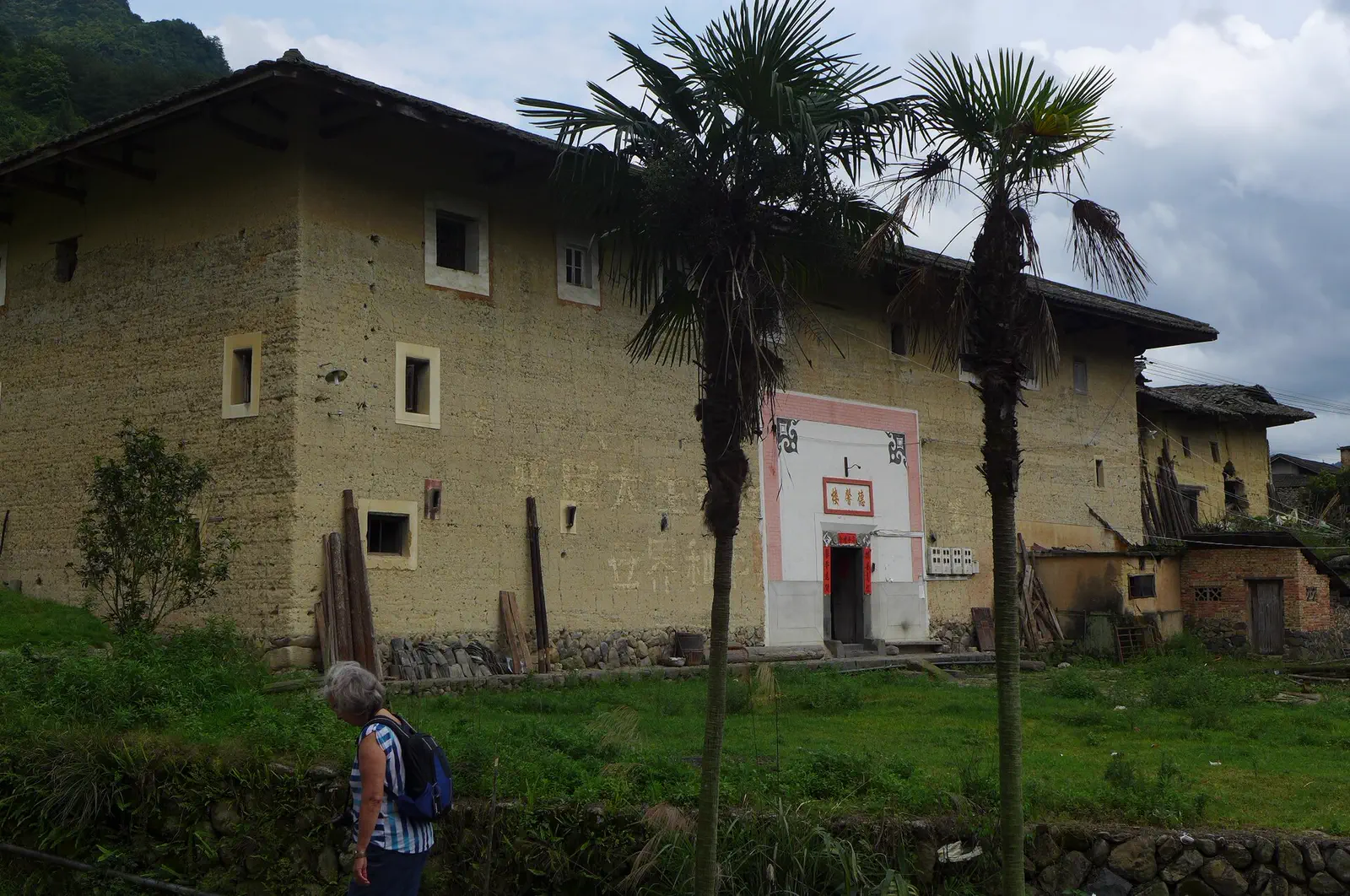
Architecturally, Fujian is famous for the tulou — large multi-storey communal earthen buildings constructed by Hakka clans in the southern hills, UNESCO listed in 2008. Xiamen's Gulangyu island preserves an extraordinary concentration of treaty-era international architecture. Quanzhou's mosques, Hindu temples, and Christian gravestones speak to its medieval cosmopolitanism.
When to visit
October–December is the strong window. March–May is humid but workable. Avoid July–September typhoon season unless committed.
How to get there
Xiamen Gaoqi (XMN), Fuzhou Changle (FOC), and Quanzhou Jinjiang (JJN) are the main airports. HSR from Shanghai to Xiamen 5h30m. Ferry from Xiamen to Kinmen (Taiwan) operates with a Taiwan-issued permit.
Key cities
All cities →Key attractions
All attractions →More cities in Fujian
Sample itineraries
Day 1: Xiamen — Gulangyu island, Nanputuo Temple. Day 2: Tulou day trip from Xiamen (long day, 5–6h driving). Day 3: Quanzhou — mosque, Kaiyuan Temple, Maritime Silk Road museums.
Add Wuyishan (UNESCO mountains, Da Hong Pao tea), Fuzhou's Three Lanes and Seven Alleys, Pingtan island, and Mount Tai Mu.
Dishes of Fujian
A whole chicken stuffed with aromatics, wrapped in lotus leaves and clay, then slow-baked until the meat steams in its own juices.
Chicken steamed and marinated in Shaoxing rice wine, served chilled. A Shanghai banquet starter.
A steamed dome of glutinous rice layered with red bean paste and decorated with eight types of preserved fruits and nuts.
Yangcheng Lake mitten crab — the autumn delicacy of the Yangtze Delta. Eaten steamed with vinegar dip.
Autumn hairy crab stir-fried with chewy Shanghai rice cake slices in a savoury-sweet ginger sauce.
Large pork meatballs (the size of a lion's head) braised in clear broth with cabbage. A Yangzhou banquet centrepiece.
Itineraries touching Fujian
3d · A compact three-day break to the source of Da Hong Pao oolong: bamboo raft through the Nine-Bend gorge, summit hike, and a tea ceremony in a cliffside guesthouse.
5d · The source of Da Hong Pao oolong and the landscape that inspired Chinese rock tea: five days hiking the Nine-Bend River gorge, visiting tea farms, and learning to brew properly.
7d · Xiamen's colonial island of Gulangyu, the Hakka earthen fortress villages of the tulou, Quanzhou's medieval Islamic and Confucian heritage, and the tea mountain of Wuyi — a Fujian round-trip.
10d · Ten days through three of China's most significant tea-growing regions: Longjing (Dragon Well) green tea in Hangzhou, Wuyi rock oolong in Fujian, and Pu'er aged tea in Yunnan — each with its own landscape and tea-house culture.
Other East China regions
Spotted something out of date? Submit a correction.
Research
Cross-checked against primary sources
Verified
Address, hours, fees confirmed at the date shown
Updated
Re-verified periodically; corrections welcome